• We are currently experiencing technical difficulties. We sincerely apologize for the inconvenience.

Television The Star Trek Thread V6.0

I saw a buddy on facebook whos watching DS9 for the first time, post about it, so I had to give it a rewatch tonight. Chilling. Star Trek has been pretty accurate at predicting the future. If its right we have WW3 and then the Eugenics wars to look forward too, before the Vulcans come....

The Eugenics Wars were in 1996. Don’t you remember?

tos-spaceseed23.jpg
 
How the Brannon Braga and the Voyager writers planned to make "Year in Hell" a season-long arc, only to be shut down by Rick Berman

Often considered the highlight of the series, the “Year of Hell” two-parter in Star Trek: Voyager’s fourth season injects messy timeline shenanigans and high drama into the series, which typically focused on less serialized, less intense stories than its immediate forebear, Deep Space Nine. According to Bryan Fuller, who talked about working on Voyager in a recent episode of the Inglorious Treksperts podcast, the initial concept was for the story in these two episodes to comprise a full season arc.

“The ‘Year of Hell’ and the behind-the-scenes drama not only to craft episode, but that season, was fascinating because we wanted ‘Year of Hell’ to last the entire season,” Fuller said (as transcribed by Trek Movie). “We wanted to see Voyager get its ass kicked every episode and through that season was going to be marbled the story of Annorax and the time ship that was changing things. So, we would go back to it every once in a while to remind the audience that is the larger story. But [it was rejected] because Deep Space Nine made [Voyager co-creator and executive producer] Rick Berman allergic to serialized storytelling, violently so.”

While Berman would eventually nix the idea, Fuller said that it was animating, one of the most exciting concepts to move through the Voyager writer’s room.

“We are really going to be on the outskirts of the galaxy and we are going to be fighting enemies that are kicking us when we are down. The crew is going to have to separate and we are going to be following episodes that are going to deal with people on shuttlecrafts with escape pods that are electrically buoyed together,” Fuller explained. “There would be an episode where you never saw Janeway and never saw Voyager because you are with the people who are on the escape pods trying to find a new source of power or safety. It was like creative crack for the writers’ room, because all of a sudden there were so many opportunities.”

“I remember [showrunner Brannon Baga] going over to Rick’s office with all of this enthusiasm and coming back broken and his head hanging low and having to break it to the writing staff. We all felt like we were doing it, we are making great Star Trek. For him to come back and say we can’t and we can only do two episodes as opposed to twenty-two, it was heartbreaking,” Fuller said.

That tension, between writerly ambition and Berman’s strong opinions, was a significant source of the unique and not always successful vibe of Voyager, according to Fuller. While the show did find its footing, it’s disappointing to know that such a neat arc could have been a whole lot more.
 

Attachments

How the Brannon Braga and the Voyager writers planned to make "Year in Hell" a season-long arc, only to be shut down by Rick Berman

Often considered the highlight of the series, the “Year of Hell” two-parter in Star Trek: Voyager’s fourth season injects messy timeline shenanigans and high drama into the series, which typically focused on less serialized, less intense stories than its immediate forebear, Deep Space Nine. According to Bryan Fuller, who talked about working on Voyager in a recent episode of the Inglorious Treksperts podcast, the initial concept was for the story in these two episodes to comprise a full season arc.

“The ‘Year of Hell’ and the behind-the-scenes drama not only to craft episode, but that season, was fascinating because we wanted ‘Year of Hell’ to last the entire season,” Fuller said (as transcribed by Trek Movie). “We wanted to see Voyager get its ass kicked every episode and through that season was going to be marbled the story of Annorax and the time ship that was changing things. So, we would go back to it every once in a while to remind the audience that is the larger story. But [it was rejected] because Deep Space Nine made [Voyager co-creator and executive producer] Rick Berman allergic to serialized storytelling, violently so.”

While Berman would eventually nix the idea, Fuller said that it was animating, one of the most exciting concepts to move through the Voyager writer’s room.

“We are really going to be on the outskirts of the galaxy and we are going to be fighting enemies that are kicking us when we are down. The crew is going to have to separate and we are going to be following episodes that are going to deal with people on shuttlecrafts with escape pods that are electrically buoyed together,” Fuller explained. “There would be an episode where you never saw Janeway and never saw Voyager because you are with the people who are on the escape pods trying to find a new source of power or safety. It was like creative crack for the writers’ room, because all of a sudden there were so many opportunities.”

“I remember [showrunner Brannon Baga] going over to Rick’s office with all of this enthusiasm and coming back broken and his head hanging low and having to break it to the writing staff. We all felt like we were doing it, we are making great Star Trek. For him to come back and say we can’t and we can only do two episodes as opposed to twenty-two, it was heartbreaking,” Fuller said.

That tension, between writerly ambition and Berman’s strong opinions, was a significant source of the unique and not always successful vibe of Voyager, according to Fuller. While the show did find its footing, it’s disappointing to know that such a neat arc could have been a whole lot more.
That woulda been so great. I enjoyed Voyager but it was very hit-and-miss, I see why meow, Berman was cancer to ST. A full season of that story would have been amazing. I like when a series veers into a different direction for a little while, it breaks up the show so it doesn't get stale.
 
Generally I think Voyager tended to be at tis best with two partners, maybe more of a "Dr Who" like approach inbetween the two would have worked best ala Enterprise season 4, give the story arcs 3-4 episodes to play out.
 
I always skip year of hell. Same with the one where you all need to work in a factory and
lost their memories. They did it in SG1 as well, same plot.
Also in SG1 was the space race element same as Voyager.
 
Last edited:
TNG "Inner Light"

Explain how these people have the technology to simulate living an entire life. (Which is essentially holodeck technology)

But they can't figure out how to fix their sun? Or how to make water?

Picard couldn't show them how to fix shit?

The episode is good but I feel like it could have been a whole lot better with another hour of runtime.

Just seems like it should have been a two part episode.

Lots of stuff happens too quickly, Picards fake wife dying randomly is an example. Picards best friend dying off screen....is another example.

Picard not really spending time with his daughter or his son save for 1 or 2 scenes. You don't really get to see the chemistry or the relationship between them.

It also seemed like Picard gives up trying to get back to the enterprise way too easily. I don't fucking buy it. Why would he do that? Its fucking bullshit.
 
Last edited:
How the Brannon Braga and the Voyager writers planned to make "Year in Hell" a season-long arc, only to be shut down by Rick Berman

Often considered the highlight of the series, the “Year of Hell” two-parter in Star Trek: Voyager’s fourth season injects messy timeline shenanigans and high drama into the series, which typically focused on less serialized, less intense stories than its immediate forebear, Deep Space Nine. According to Bryan Fuller, who talked about working on Voyager in a recent episode of the Inglorious Treksperts podcast, the initial concept was for the story in these two episodes to comprise a full season arc.

“The ‘Year of Hell’ and the behind-the-scenes drama not only to craft episode, but that season, was fascinating because we wanted ‘Year of Hell’ to last the entire season,” Fuller said (as transcribed by Trek Movie). “We wanted to see Voyager get its ass kicked every episode and through that season was going to be marbled the story of Annorax and the time ship that was changing things. So, we would go back to it every once in a while to remind the audience that is the larger story. But [it was rejected] because Deep Space Nine made [Voyager co-creator and executive producer] Rick Berman allergic to serialized storytelling, violently so.”

While Berman would eventually nix the idea, Fuller said that it was animating, one of the most exciting concepts to move through the Voyager writer’s room.

“We are really going to be on the outskirts of the galaxy and we are going to be fighting enemies that are kicking us when we are down. The crew is going to have to separate and we are going to be following episodes that are going to deal with people on shuttlecrafts with escape pods that are electrically buoyed together,” Fuller explained. “There would be an episode where you never saw Janeway and never saw Voyager because you are with the people who are on the escape pods trying to find a new source of power or safety. It was like creative crack for the writers’ room, because all of a sudden there were so many opportunities.”

“I remember [showrunner Brannon Baga] going over to Rick’s office with all of this enthusiasm and coming back broken and his head hanging low and having to break it to the writing staff. We all felt like we were doing it, we are making great Star Trek. For him to come back and say we can’t and we can only do two episodes as opposed to twenty-two, it was heartbreaking,” Fuller said.

That tension, between writerly ambition and Berman’s strong opinions, was a significant source of the unique and not always successful vibe of Voyager, according to Fuller. While the show did find its footing, it’s disappointing to know that such a neat arc could have been a whole lot more.

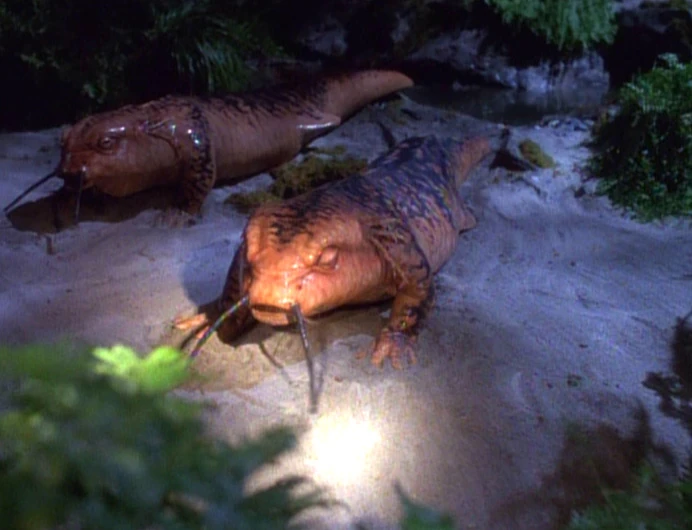
I like Year of Hell, but I have to say I’m kind of glad that they didn’t do that idea. The reason I say that is because they tried that with season 3 of Enterprise and I didn’t really care for that one at all, I thought it was the worst season of the four that the series had. I could see Year of Hell going the same way.

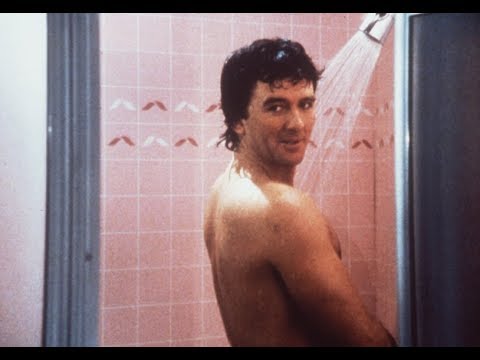
The other reason it would have sucked is because of the way it ended, with everything being completely undone when they destroyed the time ship. It would have been too much like Dallas. All the drama and destruction only for it to be like it never happened. Might as well end it with Janeway waking up to find Patrick Duffy in her shower.

hqdefault.jpg
 
I like Year of Hell, but I have to say I’m kind of glad that they didn’t do that idea. The reason I say that is because they tried that with season 3 of Enterprise and I didn’t really care for that one at all, I thought it was the worst season of the four that the series had. I could see Year of Hell going the same way.

The other reason it would have sucked is because of the way it ended, with everything being completely undone when they destroyed the time ship. It would have been too much like Dallas. All the drama and destruction only for it to be like it never happened. Might as well end it with Janeway waking up to find Patrick Duffy in her shower.

hqdefault.jpg

I thought Red Forman character arch in Year of Hell was the best part
 
Hello from rural Alaska. Caught 6 King Salmon this morning before 7am, so back home early and just watched best of both worlds, since I have the DVD version. It is interesting seeing some of the thing the took from the finale and added into Picard.

Here's a new interview with Patrick Stewart, talking about season 2

As part of its FYC Emmy campaign, CBS sent Picard star Sir Patrick Stewart and showrunner Michael Chabon to LA Times’ The Envelope to talk about crafting the first season. They also talked a bit about season two.

Echoing recent comments from executive producer Akiva Goldsman about how they were applying lessons from season one into season two, Michael Chabon said, “The first season of Picard, especially the first half, was about learning how to make Picard.” For his part, Stewart focused on how the developing cast chemistry off the set is informing season two:

Stewart: There was no socializing [between the actors] for the first five months — we were shooting. When we came to the end of the [season], we had promotional activities to engage with and we were traveling together on airplanes and got to know one another so much better. This is going to be a new element in Season 2, that there is a lot of mutual respect everywhere. If you know you can take risks, and there is a network around you that if you crash land, they will catch you, it’s a wonderful feeling. That’s how I feel now. I feel safe.

The main cast is all expected to be back, with the exception of Harry Treadaway (Narek). Star Trek: Voyager’s Seven of Nine was a recurring character and appeared in the closing scene of the season one finale—and Jeri Ryan recently confirmed she will be back for season two, which is expected to start shooting in the fall. It has also been confirmed that Whoopi Goldberg will be reprising her TNG role as Guinan, and LeVar Burton indicated he’ll be bringing in Geordi LaForge as well.

Not much is known about where season two is headed. Akiva Goldsman has said the writers are using the extra time given to them during the pandemic lockdown to refine scripts and stories, which includes ensuring that early episodes tie in neatly with payoffs that come later in the serialized season. He also described the idea behind the season as “cool.” Chabon has previously stated that season two will address the repercussions of Picard’s consciousness being transferred into an android body.


Picard and the Borg
The arc of the first season of Picard was tied to Picard’s past and the guilt he carried regarding the death of Data in Star Trek: Nemesis as well as his involvement with the Romulans. While there may still be some other loose ends, the season provided a sense of closure in both of those cases. However, there is still a major issue that the former commander of the USS Enterprise-D is still grappling with in 2399.

In the LA Times interview, while talking about how Picard was influenced by the 2017 X-Men film Logan (in which Patrick Stewart played an older and infirm version of Professor X), Stewart pointed out how Chabon brought a significant piece of Jean-Luc’s history into Picard season one:

Michael, you also introduced emotional disturbances in Picard which had not been present before… like his experience as a partially assimilated [cybernetic organism] Borg. There was no real residue from it. But there has to have been. What has it been like for the past 25 years, having gone through that incredibly traumatic experience and never having had the chance to talk about it or reckon with it or purge it?

The Borg were also a significant part of the first season of Picard, with the liberated “xBs” from a captured cube that eventually crash-landed on the Synth homeworld. The fate of those former Borg was one of the loose threads left at the end of the season, along with the trauma Stewart pointed out he still carries from being assimilated and everything he did as Locutus. Finding closure for this and exploring the Borg more in season two would seem to flow naturally from season one—if not front and center, at least as one element.
 
I've wanna talk about some shit I've noticed from rewatching TNG
  • Miles O'Brien: I like this motherfucker. He doesn't get a lot of screen time but I still feel like you get a really good idea on what type of guy he is. A good example is the episode "The Wounded" where Miles's old captain returns and Miles needs to convince him to stop his murderous rampage. Furthermore, I feel like Miles really believes in the Federation and Starfleet. Out of all the characters on Enterprise, Miles might represent Starfleet the best. I know that Miles shows up on Deep Space Nine and while I've never seen that show, I expect he is even further expanded upon. I suspect that TNG might have actually wasted the Miles character. That's how good I think this character is.

  • Jean Luc-Picard: I used to think that Picard was the perfect Star Trek character, however, after repeated rewatches it has become clear to me that Picard is often a complete douche bag. Is there anyone who is more judgmental and hypocritical than there is Picard? Picard judges and even condemn other captains and admirals for things he says go against Starfleet, however, an episode later, Picard is doing the same shit. In the episode "Pegasus" about the cloaking device and shit. Picard yells at Riker's former captain for violating some bullshit treaty. Picard then shows the Romulans that Enterprise can cloak which exposes the entire thing. Picard than threatens to incarcerate Rikers former captain for violating these rules. Flash forward to the episode "Lower Decks" and Picard on his own accord launches a probe into Cardassian space, WHICH PICARD KNOWS WOULD BE A VIOLATION OF THE TREATY. PICARD HIMSELF RISKED WAR TO LAUNCH THIS FUCKING PROBE. Explain to me, how is this any different than what these other asshole Captains were doing? Picard picks and chooses when he wants to follow Starfleet code. He is a hack and a conman and I don't trust him anymore
 
Dude.

Change that

Yeah I will eventually.

Pretty upsetting that they are unable to do a Bluray release of Deep Space Nine or Voyager.

That might be one reason why I have yet to watch it.

TNG has spoiled with how good it looks.
 

Forum statistics

Threads
1,280,218
Messages
58,267,400
Members
175,988
Latest member
xindispider
Back
Top