Movies Serious Movie Discussion

after finishing this wildly ambitious seven hour long adaption

Ah, yes. The reason I have not seen this adaption yet. Very well summarized.;)

as well as absolutely immense battle sequences which I would not hesitate to say are easily the best I have ever seen

Well, this begs the question then. Have you seen...

83aaa706c8ec1a18db71952005612434.jpg


2a172045ec795372f5725873251722ba.jpg


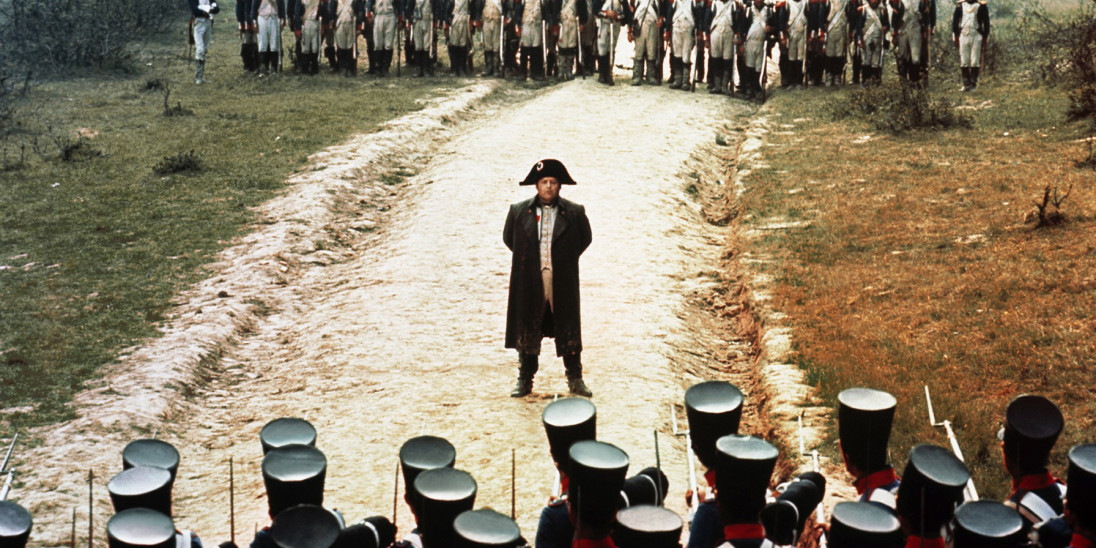
I'll await your answer like Napoleon awaited the 5th Infantry Regiment answer at Grenoble!!!

film__13706-waterloo--hi_res-5a36b802.jpg


Pretty dreadful for the most part.


Ok, I'm not going to pull on your tail to hard for this. Even by Italian horror standards this film is bafflingly incoherent. The first half doesn't even seem like it belongs in the same narrative as when they show up at the church.

It opens in the 12th century with a woeful, cliched depiction of Teutonic Knights

Expecting The Church to properly depict history is like expecting Suspiria to properly depict ballet. Italian horror is entirely in the realm of the senses, it's the visual and impressionable stimulus the film is aiming for, not well-researched history. I mean, look at this Templar! It's history warped through a Heavy Metal album!

vlcsnap-2017-03-31-00h44m14s181-620x374.png


There were maybe one or two scenes which were somewhat unsettling, or even intriguing.

C'mon! Don't undersell it! Where else are you going to see imagery like this in film!? For as bafflingly slapdash as the movie is, it does lure with truly out-there Luciferian imagery.

church2.png
 
War and Peace (1966)
18warandpeace-videoSixteenByNineJumbo1600.jpg

Holy shit...

...was pretty much my initial reaction after finishing this wildly ambitious seven hour long adaption of Tolstoy's most famous tome. I am honestly not sure I have ever seen a film that is on such an awe-inspiring, epic scale as this one. I have seen multi-part films with a similar running time (for instance Jan Troell's quiet masterpiece The Emigrants / The New Land), and of course there are big blockbusters which aim for a similar grandiose scale (not to say they are good films). Bondarchuk's War and Peace swings for the fences on both fronts and totally hits the mark.

With this epic run- time, innovative film-making techniques and a deep sense of authenticity (featuring genuine priceless antiques from the era) it brings both the book and the historical reality it depicts to life in unparalleled fashion. Just a totally singular experience. Perhaps it's even unfair to compare it to any similar films. The whole project had the entire state apparatus of the Soviet Union behind it and would have been totally inconceivable within a conventional Western production model.

But cold war politics aside, it really is a spectacular film. Over the whole of the seven hours we are given a curious brew of aristocratic romance and historical drama (with more than a pinch of melodrama), as well as absolutely immense battle sequences which I would not hesitate to say are easily the best I have ever seen. Maybe the only thing I can think of which even comes close are those in The Lord of the Rings trilogy. And if I need to add the obvious point, that film uses modern CGI to achieve it's sense of scale. Bondarchuk on the other hand was able to film with thousands of real soldiers. Thousands of real human beings! I was almost speechless. At times it felt like we are being shown real footage of the Napoleonic Wars.

These battle scenes are incredible, all the more so when combined with the excellent cinematography and innovative camera techniques, but as in the book they perfectly underscore and undercut the petty intrigues and romance of Moscow's high society. And alongside all of this this there are also philosophical inquiries into man's place in the world, the nature of suffering, of love, and various other grand questions.

It's a testament to the direction of the film (and to the book of course) that this doesn't come across as trite nonsense, which it might easily have done. In these sequences the film is actually somewhat reminiscent of the work of Soviet Russia's more famous auteurs. At least it hints towards that. It's like arthouse tendencies suddenly appearing intermittently throughout a Hollywood blockbuster. And yet in this film it works seamlessly in capturing the myriad aspects of human existence, both the particular and the general, much in the way Tolstoy does in the original book.

Boy, what a film.

I am a huge fan of Napoleon and I really like Tolstoy (He spent all his time with peasants and loved them, I bet the commies had a field day with the details of his life in their propaganda)

Wasn’t aware this movie existed until this post. Excited to watch it.
 
10/22: Frankenstein Created Woman (1967)

10/23: Blackenstein (1973)

10/24: Asylum (1972)
 
Last edited:
War and Peace (1966)
18warandpeace-videoSixteenByNineJumbo1600.jpg

Holy shit...

...was pretty much my initial reaction after finishing this wildly ambitious seven hour long adaption of Tolstoy's most famous tome. I am honestly not sure I have ever seen a film that is on such an awe-inspiring, epic scale as this one. I have seen multi-part films with a similar running time (for instance Jan Troell's quiet masterpiece The Emigrants / The New Land), and of course there are big blockbusters which aim for a similar grandiose scale (not to say they are good films). Bondarchuk's War and Peace swings for the fences on both fronts and totally hits the mark.

With this epic run- time, innovative film-making techniques and a deep sense of authenticity (featuring genuine priceless antiques from the era) it brings both the book and the historical reality it depicts to life in unparalleled fashion. Just a totally singular experience. Perhaps it's even unfair to compare it to any similar films. The whole project had the entire state apparatus of the Soviet Union behind it and would have been totally inconceivable within a conventional Western production model.

But cold war politics aside, it really is a spectacular film. Over the whole of the seven hours we are given a curious brew of aristocratic romance and historical drama (with more than a pinch of melodrama), as well as absolutely immense battle sequences which I would not hesitate to say are easily the best I have ever seen. Maybe the only thing I can think of which even comes close are those in The Lord of the Rings trilogy. And if I need to add the obvious point, that film uses modern CGI to achieve it's sense of scale. Bondarchuk on the other hand was able to film with thousands of real soldiers. Thousands of real human beings! I was almost speechless. At times it felt like we are being shown real footage of the Napoleonic Wars.

These battle scenes are incredible, all the more so when combined with the excellent cinematography and innovative camera techniques, but as in the book they perfectly underscore and undercut the petty intrigues and romance of Moscow's high society. And alongside all of this this there are also philosophical inquiries into man's place in the world, the nature of suffering, of love, and various other grand questions.

It's a testament to the direction of the film (and to the book of course) that this doesn't come across as trite nonsense, which it might easily have done. In these sequences the film is actually somewhat reminiscent of the work of Soviet Russia's more famous auteurs. At least it hints towards that. It's like arthouse tendencies suddenly appearing intermittently throughout a Hollywood blockbuster. And yet in this film it works seamlessly in capturing the myriad aspects of human existence, both the particular and the general, much in the way Tolstoy does in the original book.

Boy, what a film.

Watched Bondarchuk's Waterloo yet ?
 
10/22: Frankenstein Created Woman (1967)

Isn't this the totally bonkers entry where they use satellite dishes to transport the soul?

frankensteincreatedwoman8.jpg


Yeah I remember being quite baffled by this one. The whole "man inside a woman's body aspect" seemed more like some marijuana-fueled fascination on Terence Fisher part then an natural evolution of the series. Frankenstein dealing in souls as oppose to the raw stuff of human viscera is just... counterpoised to the very series itself. Fisher made a lot of classics but... he was also a big freaking weirdo. :D

10/24: Asylum (1972)

The antology film?

I remember thinking that the first segment was fairly eery but after that the film devolved into duds and anticlimaxes. Also a waste of Peter Cuishing.

tumblr_mihyjebspq1qi66kho1_5003.gif
 
Isn't this the totally bonkers entry where they use satellite dishes to transport the soul?

frankensteincreatedwoman8.jpg


Yeah I remember being quite baffled by this one. The whole "man inside a woman's body aspect" seemed more like some marijuana-fueled fascination on Terence Fisher part then an natural evolution of the series. Frankenstein dealing in souls as oppose to the raw stuff of human viscera is just... counterpoised to the very series itself. Fisher made a lot of classics but... he was also a big freaking weirdo. :D


The antology film?

I remember thinking that the first segment was fairly eery but after that the film devolved into duds and anticlimaxes. Also a waste of Peter Cuishing.

tumblr_mihyjebspq1qi66kho1_5003.gif

Funnily enough, Martin Scorsese once listed Frankenstein Created Woman as a favorite of his precisely because the Baron goes beyond the body:

"If I single this one out it's because here they actually isolate the soul... The implied metaphysics are close to something sublime." - Scorsese

Peter Cushing being one of my favorite actors, I agree with your assessment of Asylum. They also used Herbert Lom for half a day.
 
Last edited:
Funnily enough, Martin Scorsese once listed Frankenstein Created Woman as a favorite of his precisely because the Baron goes beyond the body:

"If I single this one out it's because here they actually isolate the soul... The implied metaphysics are close to something sublime." - Scorsese

I'm going to go ahead and say it, Scorsese's opinions on horror movies seem to come from the parts of his brain that were atrophied by all that 80's cocaine. He also called notorious wacko-picture Excorcist 2 better then the original. It was more then a decade since I saw Created Woman, but damned if I were to believe that it's metaphysical subtext could ever be described as "sublime".

But at least he didn't pick the sequel Frankenstein Must be Destroyed where Dr Frankenstein turns into a rapist out of nowhere.<45>
 
I'm going to go ahead and say it, Scorsese's opinions on horror movies seem to come from the parts of his brain that were atrophied by all that 80's cocaine. He also called notorious wacko-picture Excorcist 2 better then the original. It was more then a decade since I saw Created Woman, but damned if I were to believe that it's metaphysical subtext could ever be described as "sublime".

But at least he didn't pick the sequel Frankenstein Must be Destroyed where Dr Frankenstein turns into a rapist out of nowhere.<45>
Haha...maybe so, but I liked it well enough, perhaps my soft spot for Cushing shows.

And as far as Frankenstein Must be Destroyed, apparently everybody put the producers were against it....Anything for more tits I guess
 
I'm going to go ahead and say it, Scorsese's opinions on horror movies seem to come from the parts of his brain that were atrophied by all that 80's cocaine. He also called notorious wacko-picture Excorcist 2 better then the original.
Maybe (a decade of) cocaine is the secret ingredient required to enjoy Exorcist II and Excalibur.
 
10/25: Maniac (1980)

10/26: Carrie (1976)

10/27: Jaws (1975)
 
Ah, yes. The reason I have not seen this adaption yet. Very well summarized.;)


Well, this begs the question then. Have you seen...

2a172045ec795372f5725873251722ba.jpg


I'll await your answer like Napoleon awaited the 5th Infantry Regiment answer at Grenoble!!!

film__13706-waterloo--hi_res-5a36b802.jpg

No I haven't (also @KOQ24), have heard it's nowhere near as good a film as War and Peace. Though I must get round to it as I have heard the battles are pretty damn spectacular.

Ok, I'm not going to pull on your tail to hard for this. Even by Italian horror standards this film is bafflingly incoherent. The first half doesn't even seem like it belongs in the same narrative as when they show up at the church.

Baffingly incoherent was this films modus operandi.

Expecting The Church to properly depict history is like expecting Suspiria to properly depict ballet. Italian horror is entirely in the realm of the senses, it's the visual and impressionable stimulus the film is aiming for, not well-researched history. I mean, look at this Templar! It's history warped through a Heavy Metal album!

vlcsnap-2017-03-31-00h44m14s181-620x374.png

Ok...granted, but that doesn't mean I have to like it! lol

C'mon! Don't undersell it! Where else are you going to see imagery like this in film!? For as bafflingly slapdash as the movie is, it does lure with truly out-there Luciferian imagery.

church2.png

There was some damn weird imagery, I will give it that.
 
Don't Look Now (1973)
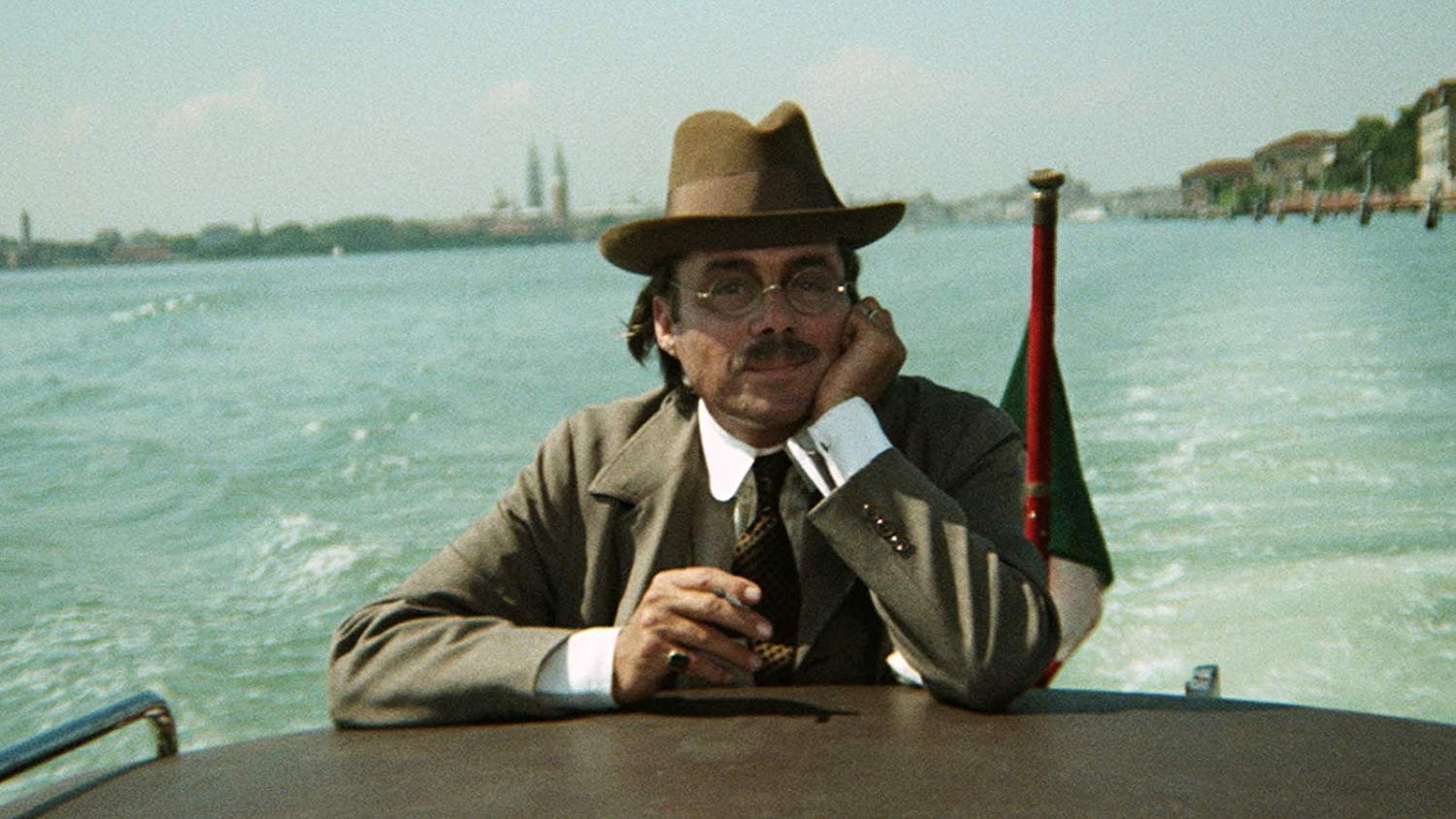
Wenn-die-Gondeln-Trauer-tragen.jpg


Despite it's reputation, when I first watch this a few years ago I was actually pretty lukewarm on it. I thought it was quite good, but fairly overrated from what I read beforehand. I recently re-watched it on a 4K restoration and this time I loved it. Seems to be the sort of film which benefits from a re-watch and I definitely appreciated it a lot more the second time round.

Hired to restore an old church in Venice following the accidental drowning of their young daughter, John and Laura Baxter struggle to come to terms with this personal tragedy. Their grief provides the backbone for this lightly supernatural thriller. It's not quite a true 'horror film', but it possesses an extremely uncanny quality throughout. The wintry Venice of this film is not a romantic setting but a labyrinth of dark, decaying streets and furtive faces.

The unusual editing style employed by Roeg further enhances the general feeling of unease which hangs over the film. There is a strange jumble of associated images, which seem frequently to hint towards something sinister while not being at all clear exactly what, if indeed anything. The camera will often cut in an extremely jarring, abrupt fashion, while at other moments seem to inexplicably linger, refusing to cut. It's a curious effect, but it really adds to the films intriguing atmosphere where we are never quite sure where we stand.
 
Last edited:
Death in Venice (1971)
death-in-venice-1971-image-1.jpg


For me this was a perfect example of a work of literature failing to translate to the screen. It's a shame because I thought that Visconti did an incredible job adapting di Lampedusa's The Leopard (1963), a film that I absolutely loved. Judging by the reviews some people seem to love this one too, with some praising it as an incredible adaptation. Unfortunately for me it just felt totally flat and uninspiring and I'm honestly shocked it seems to enjoy so many wonderful plaudits. Or else shocked that I failed to 'get it'.

Within the novels decidedly controversial story of an aging artists pederastic infatuation with a 14 year-old boy there are several interesting themes to be drawn out - the tension between asceticism and aestheticism, between the intellect and the senses, the Apollonian and the Dionysian. It can be read alternately as a tale of aesthetic and artistic liberation, or as the tragedy of disastrous obsession. Perhaps it is both. Of course, this is apparent in the film as well but here it all seemed rather hollow and surface-level to me.

The language of the book and the manner in which it reflects the internal nature of our main character Gustav von Aschenbach (including his often dense philosophical musings on Greek literature and so on) is one of it's key strengths. There is large degree of subtlety and symbolism, with much implied rather said. Obviously homosexuality is also crucial theme to the book and it is this subtext that the film chooses to foreground more than anything else. This is fair enough as it is undoubtedly crucial, but for me the book possesses a greater depth which the film cannot quite translate to celluloid.

Like a lot of Visconti's films Death in Venice does provide a wonderfully elegiac depiction of the swiftly decaying world of the 19th century aristocracy, but sumptuous visuals were not enough to save it for me. Mostly I was just bored and firmly unengaged. Even if I could clearly grasp intellectually what Visconti was aiming for, it just failed to stir any real interest. Given the themes of the novella I found this all the more tragic.
 
Death in Venice (1971)
death-in-venice-1971-image-1.jpg


For me this was a perfect example of a work of literature failing to translate to the screen. It's a shame because I thought that Visconti did an incredible job adapting di Lampedusa's The Leopard (1963), a film that I absolutely loved. Judging by the reviews some people seem to love this one too, with some praising it as an incredible adaptation. Unfortunately for me it just felt totally flat and uninspiring and I'm honestly shocked it seems to enjoy so many wonderful plaudits. Or else shocked that I failed to 'get it'.

Within the novels decidedly controversial story of an aging artists pederastic infatuation with a 14 year-old boy there are several interesting themes to be drawn out - the tension between asceticism and aestheticism, between the intellect and the senses, the Apollonian and the Dionysian. It can be read alternately as a tale of aesthetic and artistic liberation, or as the tragedy of disastrous obsession. Perhaps it is both. Of course, this is apparent in the film as well but here it all seemed rather hollow and surface-level to me.

The language of the book and the manner in which it reflects the internal nature of our main character Gustav von Aschenbach (including his often dense philosophical musings on Greek literature and so on) is one of it's key strengths. There is large degree of subtlety and symbolism, with much implied rather said. Obviously homosexuality is also crucial theme to the book and it is this subtext that the film chooses to foreground more than anything else. This is fair enough as it is undoubtedly crucial, but for me the book possesses a greater depth which the film cannot quite translate to celluloid.

Like a lot of Visconti's films Death in Venice does provide a wonderfully elegiac depiction of the swiftly decaying world of the 19th century aristocracy, but sumptuous visuals were not enough to save it for me. Mostly I was just bored and firmly unengaged. Even if I could clearly grasp intellectually what Visconti was aiming for, it just failed to stir any real interest. Given the themes of the novella I found this all the more tragic.
Yeah, it's disappointing. Bogarde's cringy performance started to alienate me very early on. I did like the movie more towards the end as the overall decadence got denser.
 
10/25: Maniac (1980)

10/26: Carrie (1976)

10/27: Jaws (1975)

I've only watched the remake of Maniac and hated it so much that I've never even watched the original.

Carrie and Jaws!? Sir, I am offended! Both those movies are waaay to well-known for a respectable snob like myself to comment on them.:cool:

10/28: Piranha (1978)

The only thing that I remember about this movie is that I didn't think it was the B-movie classic it's often hailed as.

10/30: The Devil Rides Out (1968)

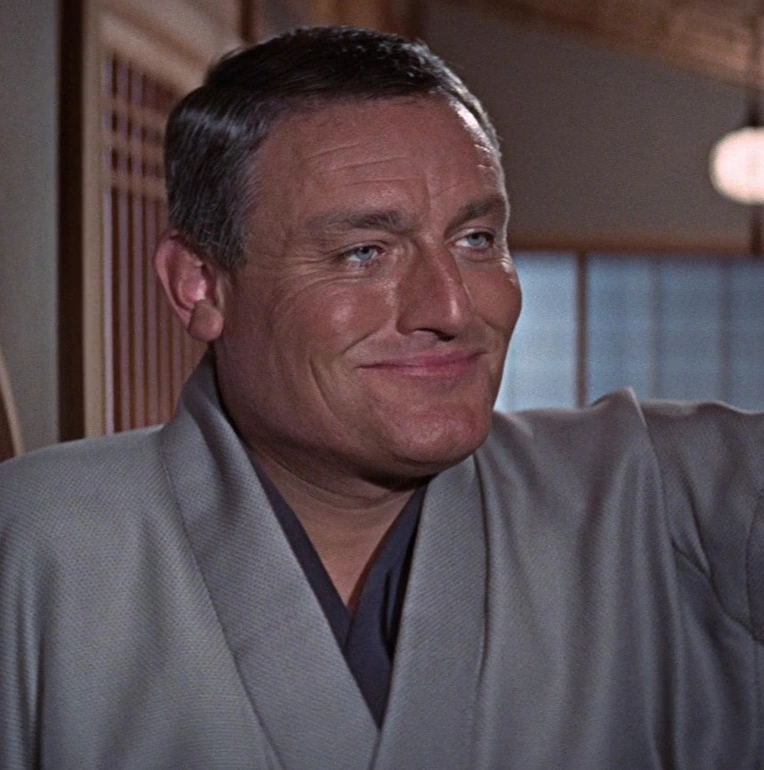
You gotta love that smirk on the devil. He looks profoundly amused at what's an rite he has been summoned too.

11bf307ff65254f8c399f1dbe2e9769d.jpg


Devil Rides Out has some real graivtas to its acting (Christoper Lee and Charles Grey) but the occult stuff itself is to flimsy and tame for it to really work. It's a very... stiff-upper lip take on satanism.

10/31: The Wicker Man (1973)

Talk about a great ending!
 
I've only watched the remake of Maniac and hated it so much that I've never even watched the original.

Carrie and Jaws!? Sir, I am offended! Both those movies are waaay to well-known for a respectable snob like myself to comment on them.:cool:


The only thing that I remember about this movie is that I didn't think it was the B-movie classic it's often hailed as.


You gotta love that smirk on the devil. He looks profoundly amused at what's an rite he has been summoned too.

11bf307ff65254f8c399f1dbe2e9769d.jpg


Devil Rides Out has some real graivtas to its acting (Christoper Lee and Charles Grey) but the occult stuff itself is to flimsy and tame for it to really work. It's a very... stiff-upper lip take on satanism.


Talk about a great ending!


Maniac has probably the best shotgun to the face effect I have ever seen.

Piranha is pretty fun and a fair enough Jaws ripoff. Classic though? Maybe to some.

I literally laughed out loud when I saw the devil's dopey face.
And Charles Grey always has the expression of a guy who is watching you brush your teeth after he secretly scrubbed his butt with your toothbrush:

e7b6fb940817cfe38521cd831260f041.jpg

latest


And I would gladly be sacrificed if I could have had a shot at Britt Elkland and Ingrid Pitt.
 
Last edited:
but the occult stuff itself is to flimsy and tame for it to really work. It's a very... stiff-upper lip take on satanism.
Here comes the Satanism expert again...
<{titihmm}>
...enlightening us about what "occult stuff" works and what does not.
{<BJPeen}

Yours,

Milhouse the Magician
 
Back
Top