Movies Serious Movie Discussion

Black Souls (2014)
135605.jpg

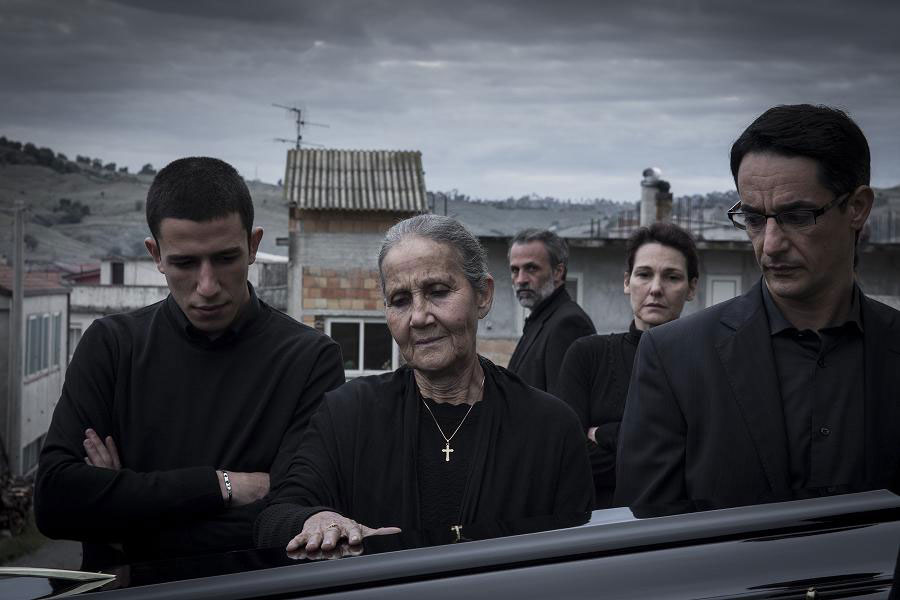
This is an excellent, slow-burning gangster film utterly without cliche. The pace is slow...very slow, yet it draws you with an unsettlingly quiet intensity, moving inexorably towards it’s tragic climax. The film concerns three brothers from a powerful crime syndicate, the elder of which has attempted to retire to a quiet, honest life as a goat-herd in the mountains. As befits its title Black Souls is leaden with an oppressive, almost funereal tone but it makes for a very compelling, if slow moving, watch.

The film shys away from the overwrought exposition that you might find in a stereotypical ‘mob-movie’, opting instead for a more subtle approach and for a film about the “mafia”, there is rather little direct mention of it. It opens with a meeting between Luigi and some Spanish drug traffickers, but this is presented matter-of-factly and without any real explanation. We get to know our characters simply by observing them in their day-to-day lives - Luigi the youngest, a charismatic drug dealer; Rocco, the family book-keeper and seemingly legitimate businessman; and the eldest Luciano, who tends to his goats. It can be a tad confusing to begin with, but slowly but surely things come into place.

Of course, the mafia in question here is not the Sicilian Cosa Nostra of ‘mob movie’ fame, but the so-called “unpronounceable Mafia”, the Calabrian ‘Ndrangheta. Unlike the Sicilian or American Mafia, the shadowy ‘Ndrangheta operates as a collection of such local family clans, bound by blood or marriage. Deep in the desolate mountains of Calabria this tangled web of alliances and vendettas dates back centuries and it is this which provides the setting for this dynastic tragedy. When Luciano’s resentful son attempts to force himself into the rather more lucrative business of his uncles, he ignites a long-dormant blood-feud with another local ‘Ndrangheta clan leading to terrible consequences...

Has put me in the notion to watch Gomorrah (2008) again soon.
 
Last edited:
Il Camorrista / The Professor (1986)
730191.jpg


A fairly serviceable rise-and-fall gangster saga, in a similar vein to the likes of Scarface but with an Italian slant. It tells the story of the “Vesuvian Professor” (based on real-life crime boss Raffaele Cutoro), an intelligent megalomaniac with a penchant for violence. Put in a Neapolitan prison for murder at the age of 21, ‘The Professor’ acquires power and prestige among the other inmates over the following decade. From inside prison, he sets about re-organising the structure of the Camorra, bringing back traditional initiation ceremonies and inspiring loyalty amongst the younger prisoners. The criminal organisation he creates - the so-called Nuova Camorra Organizzata, or New Organised Camorra - rapidly becomes the dominant force within the Neapolitan underworld following a bloody conflict with the old Camorra clans.

It is all a bit generic. It depicts the charisma of Cutoro reasonably well even if there isn’t much in the way of character development (I suppose how can there be). There is some interesting stuff here and there, for instance the manner in which the film depicts the deep corruption in Italian society at this time - the intersection of violence and politics. I suppose this must have been one of the first proper depictions of the Camorra on screen? Though I confess I don’t know much about the history of Italian crime cinema. While the film runs the typical gamut of stabbings and shootings, some of these are very well-staged as well.

However it definitely felt extremely dated at a number of points, particularly as a consequence of the soundtrack. It also suffered from very strange pacing issues. It’s fairly lengthy, coming in just shy of three hours long, but I read it was originally conceived as a 6 hour long TV mini-series. That certainly comes across for me and it definitely seems like it was missing certain scenes, and simply trying to cram too much into it’s run-time.

Not a bad film and probably worth a watch if you are interested in the Camorra, or gangster films in general, but nothing particularly special either.
 
The Boxer (1997)
the-boxer-1200-1200-675-675-crop-000000.jpg


Both as a film about boxing and a film about the NI conflict I am not sure why it took me so long to get round to watching this one.

Well, it was pretty solid. A hard-hitting drama about a Northern Ireland which is on the precipice of peace, but in which many individuals remain trapped in a ceaseless cycle of memory and vengeance. Within this broader societal narrative the film tells the story of a Danny Flynn, a boxer and ex-IRA volunteer who, having just been released from prison, is trying to turn his life around and move on from the sectarian violence while carving out a career as a professional boxer. He re-opens his old gym and rekindles his relationship with an old lover, who just happens to be the daughter of the local IRA commander - Joe Hamill - and the wife of another IRA prisoner to boot. As it turns out, Joe is as war-weary as Flynn and is trying to move things towards peace. Of course, precipitating the rise of IRA break-away groups, the film shows us that will not be acceptable to everyone...

The film did feel a bit muddled at times, sort of caught half-way between a boxing melodrama and a political thriller. Obviously the intention was to show how the conflict impacted upon ordinary life, but it comes off a bit half-baked at points. It's also an especially strange choice of sport to tell this story given the real history of boxing during The Troubles, which was remarkably free from the kind of sectarian hatred which plagued other areas of Irish life, even other sports. Though the film does throw some homage to the real Holy Family boxing club.

Daniel-Day Lewis was in fine fettle as usual, continuing on from his performance from In The Name of the Father (1993). I found Emily Watson significantly less convincing, her accent was very poor which makes the whole performance seem contrived, whereas with DDL his accent - barring the odd slip here and there which is natural - feels very worn and lived in. I also have to praise the boxing scenes, which are probably the best I have ever seen in a film. Not surprising as Barry McGuigan was onboard as a consultant.

But with all that said, despite a few drawbacks in terms of the script the film nonetheless manages to land a solid punch (get it) and leaves you with a strong emotional impression.
 
Mishima: A Life in Four Chapters (1985)
[...]

A life turned "into a line of poetry written with a splash of blood".
This sums it up really well. I was very confused at first after seeing the movie as it seems to be all about Mishima's death while "A Life in Four Chapters" would suggest it tells the story of his life, but yeah, the movie shows how those two got entwined as that line you cited suggests.

Funny thing: Many times while I was watching the movie I was thinking, that much what Mishima was idolising had been embodied in Gabrielle D'Annunzio half a century before. Then in bluray extras some expert told that Mishima was actually pretty obsessed by D'Annunzio. Now there's a guy who really needs a biopic too!
 
Last edited:
Two Irish gangland dramas, very differing tones from each, unfortunately neither much good...

Cardboard Gangsters (2017)

000e012b-1600.jpg


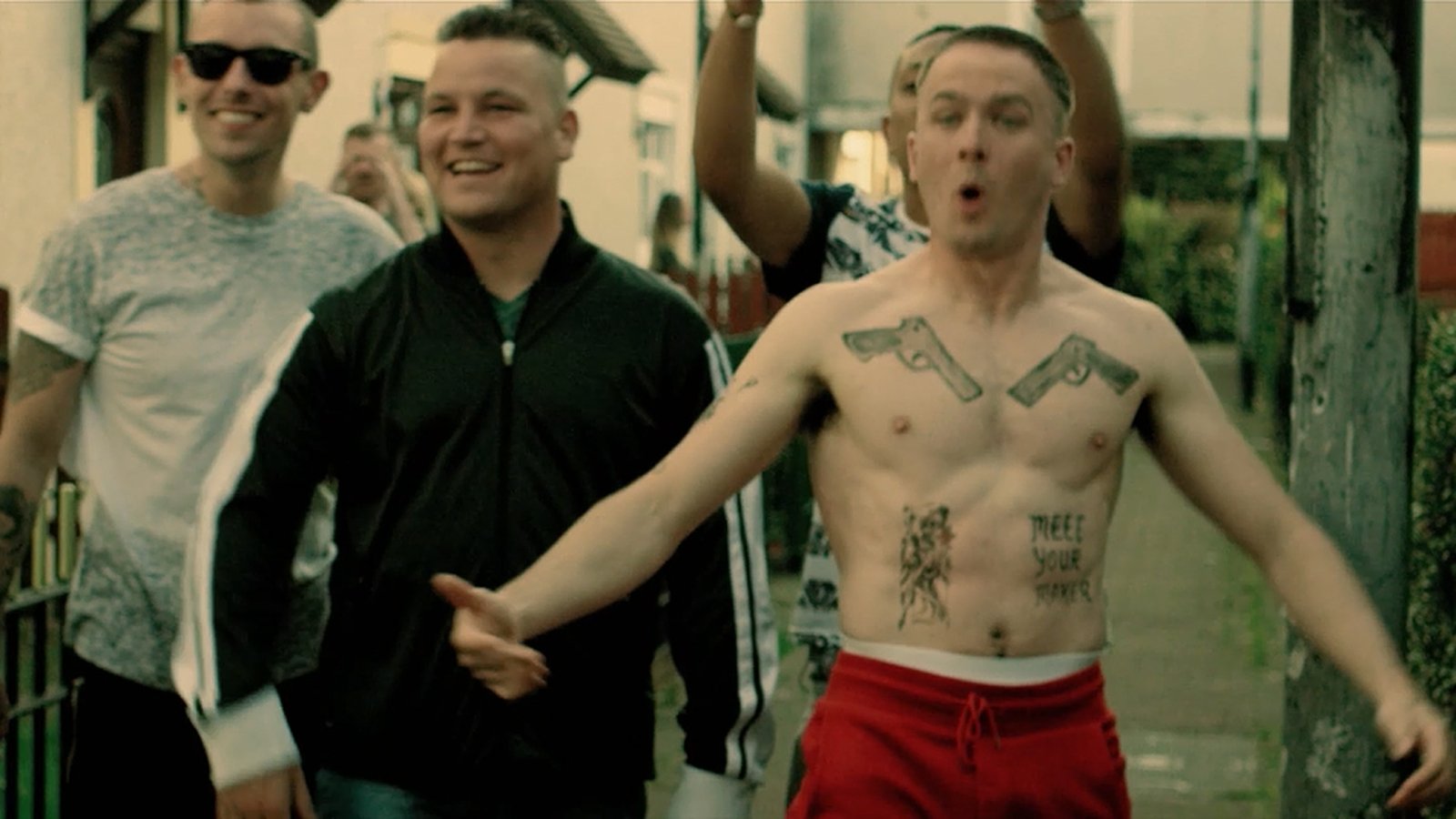
Nothing to see here that hasn't been seen in scores of other gangster films - hard men and brutalised women as brash youngsters attempt to seize control of the drug trade. Set in Dublins incredibly deprived Darndale estate the story is granted some striking relevance due to an association with real-life events in Darndale (the Kinahan-Hutch feud and ensuing violence). The violence of the film is quite well staged for a film like this, managing to come across as effectively shocking and brutal rather than something that simply par for the course. The story itself is touching in a crude sort of way, even if it is absolutely nothing new.

Ultimately enjoyable enough watch as a time-killer, but Cardboard Gangsters is as formulaic as it gets so can't really give it more than a couple of stars.

Calm With Horses (2019)
1000.jpg


One I was excited to see in the cinema originally. Unfortunately now that I finally got round to watching it I found myself pretty much totally unable to connect with it. There are few moments which approach something genuinely poignant, but mostly I was unimpressed.

It could be praised for the style employed, in that it at least aspires towards something more than a generic "gangster" film. In terms of style if not plot. However I ultimately didn't really find this that successful either. It creates a particularly dark and atmospheric tone, with an especially a gloomy portrayal of some indeterminate rural Irish hellscape, but it felt a bit flat given the broader story and character development.

I also found the soundtrack - tonally aiming for something like Refns Drive - incredibly obnoxious and neither was I convinced by Cosmo Jarvis' performance (which many have praised) as a hulking brute with a sensitive side. His face just seemed permanently contorted into some weird grimace. Keoghan was pretty solid; he didn't really have much to work with. Niamh Algar was probably the best of the performances.

Ultimately a few moments here and there isn't enough to save the film for me, the whole thing just didn't feel cohesive and what few good elements it possesses ultimately lead towards an incredibly uninspiring ending.
 
Last edited:
Exorcist 2 the better movie? That's like saying Psycho 2 is better than Hitch's original.
Or American Psycho 2 is better than the original.

Besides Terminator 2, Empire Strikes Back, Dark Knight*, and Wrath of Khan, not many sequels are actually better.
 
Les Misérables (2019)
merlin_164868339_5d9fd282-1fb2-4dc5-ac4c-ad2b42b31366-mobileMasterAt3x.jpg


I liked this one a lot, even if much of it is rather predictable in terms of its Training Day-esque "good cops first day on the job" dynamic. In spite of this though, it still delivers an effectively incendiary portrait of class conflict and racial tensions in the Parisian banlieues. Comparisons to La Haine (1995) are inevitable. While it doesn't quite reach those heights, it's still a very strong debut from Ladj Ly (who grew up in the same ghetto depicted in the film).

The title is very telling. On the one hand it simply takes its name from the setting (Montfermeil, the very same district where Victor Hugo wrote his famous novel and set much of the action). But by choosing to name the film after such a titan of French literature, something so essential to “French culture”, the film sets up a fascinating dicohtomy between French identity in theory and the reality of life in in the banlieue, poverty traps almost exclusively inhabited by French of foreign descent and more recent immigrants. The opening scene makes this notion explicit. We see a group of Black kids celebrating France’s World Cup victory in 2018, a small part of part of a massive crowd of people from many different cultural and social backgrounds, all united under the French flag. The film sharply undercuts that idealised picture of French society and identity as it shifts to life in one of France’s most deprived banlieues - "les Bosquets".

Where La Haine depicts a day in the life of three disenfranchised young men of differing racial backgrounds, Les Misérables perhaps deliberately takes the opposite approach by showing this social deprivation from the perspective of three cops. I won’t go into the story itself to avoid spoilers, but we are shown these three men - Chris and Gwada, a pair of hardened veterans and Stéphane Ruiz, a newcomer who has just moved to Paris from the country - as they contend with various issues around “les Bosquets”. With this approach I suppose Ly was attempting to humanize the cops as individuals placed in an extremely difficult situation, while at the same time showing the hardships and brutality faced by the local populace. It’s a balancing act I am not sure the film gets totally right, but it’s a valiant effort. Overall it is a very good film which conveys it’s themes well, even if it is perhaps not shedding any new light on the situation.

As Ladj Ly aims to show us, all people are a product of particular circumstances - both the police and the inhabitants of the banlieu. Yet it seems that little has changed since La Haine was released in 1995. Even since Hugo wrote his novel in the 1860s. Over a century may have passed and the colours of the faces may have changed, but those who live in Montfermeil are still Les Misérables, the wretched poor...
 
Last edited:
A Hidden Life (2019)
merlin_165534831_f98ad7a7-772a-4da3-95ca-9f9eaa4ba50d-superJumbo.jpg

Malick’s films typically walk a very fine line between lyrical transcendence on the one hand and portentous abstraction on the other. His best films sit firmly in the first category, but when he slips into the second the results can be pretty abysmal - To the Wonder, Knight of Cups etc. Naturally there are some who just don’t go in for his style at all, but when he gets it right there’s no doubt that Malick’s unique film making approach allows him to perfectly translate his Heideggerian philosophy into the language of cinema. A Hidden Life straddles that line mentioned above. It does feel a little lethargic at points, while the usual Malick hallmarks of sweeping visuals and half-whispered voiceover can seem a little trite. However, I think it ultimately possesses enough of those moments of transcendence, as found in his best work, to be considered something of a return to form. Perhaps not coincidentally it also marks his return to using a proper script. While not Malicks very best, taken in its totality I’d say it’s much closer to his best films than it is to the string of disappointing shite since The Tree of Life (2011).

In the film Malick tells - in his own unique way - the true story of Franz Jägerstätter, an Austrian farmer who is imprisoned and sentenced to death for his refusal to take the Hitler Oath and fight for Nazi Germany. The film opens in the idyllic landscape of the Austrian countryside, where Franz lives with his wife Franziska and their three young daughters. Life in the village of Sankt Radegund is simple and happy. Naturally this serves to set-up the inevitable contrast with the War that the audience knows is coming. At times we are shown newsreel footage of WWII, Nazi Rallies or home videos of Hitler, interjecting themselves into the narrative almost at random. These sudden interjections link the events of the film to the wider horrors of the War, but the focus is almost exclusively on the perspective of Franz and his wife. Actually I liked this approach. The audience already knows the horrors perpetrated by the Nazis and to attempt to render it on screen just because it’s a “WWII film” almost seems redundant. That evil doesn’t need to be made explicit, it is inherent to the setting of the film. Malick does attempt to convey some of this by showing the change in the other townspeople - the rise of nationalism and anti-semitism, their ostracism of Franz’s family as a result of his political stance. This does almost seem like it happens overnight in a way that doesn’t really capture the historical complexity, but as a narrative tool it is effective nonetheless.

As well as a family man, Franz is also a devout Catholic. His defiance has a profoundly religious dimension, but in refusing to submit to the Nazi Authorities he also puts a great strain on his family. This moral dilemma is the main theme of the film. Malick delivers a meditation on the nature of martyrdom and of faith, providing a powerful portrait of a man willing to suffer and even face death as a consequence of his spiritual convictions. Even willing to allow his family to suffer as a result, accepting that he may never see them again. Franz is told many times that his actions will make no difference in the grand scheme of things and is offered assurances that if he signs the oath he will be granted non-combatant work, and yet still he refuses to compromise. The ecstatic exuberance of the film's early portions serves as a stark contrast to Franz’s brutal imprisonment, a reminder of what he is giving up. Inevitably the ending is a fatalist one (it is a true story after all) but it is nevertheless a compelling study of, if not quite internal struggle, one man’s internal resolution in the face of evil.

Maybe not the film I’d choose to try and convert someone to Malick (though my girlfriend claimed she liked it and this is the first she has seen), but for those who are already open to Malick’s idiosyncratic approach and allow themselves to carried along with it, A Hidden Life reinforces his brilliance after his last few duds
 
I watched terminator dark fate and I thought it was great i don't know why everyone hated on it.
 
Also worth adding I watched A Hidden Life on 4K and it looked pretty damn stunning.

But now to other films I have watched this past few weeks and not got round to reviewing.

Sputnik (2020)

Actually started off incredibly promising. The Alien/Thing-esque story is hard to breathe any new life into but this one seemed to manage it with an Soviet-era take on things and an intriguing mystery. For a while I was wondering was this going to mark a return to the glory days for Soviet science-fiction. Unfortunately that impression did not last very long at all. Very quickly it descends into the same generic sci-fi monster movie we have seen countless times, replete with sinister government agents et al. Wouldn't recommend it to be quite honest.

Down by Law (1986)

Absolutely loved this one from Jim Jarmusch, his second film. A black and white indie-comedy about three men from incredibly different backgrounds find themselves stuck together in a jail cell in New Orleans. Zack (Tom Waits, even better) is a radio DJ and drunk oddball, Jack is a smooth-talking pimp. Both of them were framed for the crimes they are imprisoned for. The third man is Bob, an eccentric Italian tourist with a loose grasp on the English language. The three men seem to annoy each other in equal measure, but soon enough strike up an unlikely friendship and plot an escape from prison. However this is the sort of film where describing the particulars of the plot really doesn't do it any justice. It's all about the wonderfully bizarre off-the-wall tone. Just an incredibly charming and surprisingly heartwarming comedy. Definitely recommended.
 
Hey @Rimbaud82, @chickenluver, and @moreorless87: Are you aware that HBO is remaking Bergman's Scenes from a Marriage? Oscar Isaac and Jessica Chastain are going to play the married couple and the dude who did the HBO show In Treatment and the Showtime show The Affair is the showrunner. Honestly, I'm not entirely sold on either Isaac's or Chastain's acting ability, so this is definitely going to be a serious test for them. But I'm intrigued at the prospect of this remake if for no other reason because it'll give me an excuse to rewatch the original.

And then I don't know about any of you guys, but I never knew what the word busy really meant until this pandemic. Teaching all that I've been teaching online instead of in-person has literally quadrupled the amount of time that it takes me to do my lectures. But after nearly two years now and I don't even know how many classes, across multiple different universities and both in-person and online, I've finally amassed a big enough archive of lecture material to where I won't have to be starting from scratch week to week. I'm hoping that I'll start to have free time again and that I'll finally be able to post some shit in here about how my students have been responding to the movies that I'm showing them and about some of the old movies that I've rewatched and even some new movies that I'd never seen before.

On the subject of new movies, any of you artsy-fartsy foreign film connoisseurs big into Middle Eastern cinema? (I didn't tag you earlier because I know that you're not the biggest Bergman guy, but this question includes you, too, @europe1.) I just did a lecture on Middle Eastern movies and prior to that I would've picked Middle Eastern cinema as my biggest blind spot after African cinema. But the reason that I put it on my syllabus was so that I myself could have an excuse to learn and watch more and I'm so glad that I did. I got big into Middle Eastern (and especially Iranian) coming of age movies. Maybe it's because I was already in the zone seeing as I did a lecture earlier on American coming of age movies of the 80s and 90s, but I really dug films like Amir Naderi's The Runner, Abbas Kiarostami's Where is My Friend's House?, Jafar Panahi's The White Balloon, and Majid Majidi's Children of Heaven.

The best Middle Eastern coming of age movie, though, is a movie that I'd seen before but rewatched and enjoyed even more, Haifaa al-Mansour's Wadjda, which was al-Mansour's debut film, the very first film shot entirely in Saudi Arabia, and the first film from a Saudi female director. The screening that I assigned for the Middle Eastern week, though, was an earlier film from a prior female filmmaking pioneer, Marzieh Meshkini's The Day I Became a Woman, which is an anthology film that weaves together the stories of three different female characters from three different age ranges (a girl, a middle-aged woman, and an elderly woman). It's a great film overall, but the first story with the little girl is easily the best part of the film.

So those Middle Eastern coming of age movies were a lot of fun. However, from a technical filmmaking perspective, I think that the most aesthetically impressive film that I watched was the 1964 Turkish film Dry Summer. The only way that I can describe the visual design is if Tarkovsky showed up on set having just done a few lines of coke. The richness of the black-and-white visuals reminded me instantly of Ivan's Childhood (there's even a brief little scene in the beginning with a guy chasing after his girl through some trees that called to mind the forest scene from Ivan's Childhood) but the cinematography was WAY more dynamic and fast-paced than anything that Tarkovsky ever did, almost as if it was shot through Tarkovsky's eyes but with someone like Martin Scorsese's or Spike Lee's tempo. And the opening sequence features some absolutely bravura cinematography with Bergman-esque framings and Preminger-style reframings with no cuts.

Anyway, any of you guys ever see any of this stuff?
 
Also, now that I'm thinking about it, it's been so long that I don't remember ever posting about Tenet. I was shocked by all of the disappointment and even hate directed at that movie. I thought that it was fucking astounding. I watched it 4 or 5 times the first week that it was available OnDemand. And in one of my film history classes I'm ending with back-to-back screenings of films which use inventive editing for the sake of a thematic meditation on time, first with a screening of Irréversible - yes, I'm really making my students watch Irréversible - and then with a screening of Tenet.

Brisco-sneaky-evil-smile-gif.gif
 
Hey @Rimbaud82, @chickenluver, and @moreorless87: Are you aware that HBO is remaking Bergman's Scenes from a Marriage? Oscar Isaac and Jessica Chastain are going to play the married couple and the dude who did the HBO show In Treatment and the Showtime show The Affair is the showrunner. Honestly, I'm not entirely sold on either Isaac's or Chastain's acting ability, so this is definitely going to be a serious test for them. But I'm intrigued at the prospect of this remake if for no other reason because it'll give me an excuse to rewatch the original.

I was not aware I must say, whens it due for release? Likewise must give the original a rewatch.

And then I don't know about any of you guys, but I never knew what the word busy really meant until this pandemic. Teaching all that I've been teaching online instead of in-person has literally quadrupled the amount of time that it takes me to do my lectures. But after nearly two years now and I don't even know how many classes, across multiple different universities and both in-person and online, I've finally amassed a big enough archive of lecture material to where I won't have to be starting from scratch week to week. I'm hoping that I'll start to have free time again and that I'll finally be able to post some shit in here about how my students have been responding to the movies that I'm showing them and about some of the old movies that I've rewatched and even some new movies that I'd never seen before.

Thankfully I have not found this. My workload is more or less steady and if anything I have a lot more free time as I dont have to factor in travelling home from work, or getting up as early, so I have an extra hour or two in the evenings. Do I actually do anything with this extra time? Absolutely not.

On the subject of new movies, any of you artsy-fartsy foreign film connoisseurs big into Middle Eastern cinema? (I didn't tag you earlier because I know that you're not the biggest Bergman guy, but this question includes you, too, @europe1.) I just did a lecture on Middle Eastern movies and prior to that I would've picked Middle Eastern cinema as my biggest blind spot after African cinema. But the reason that I put it on my syllabus was so that I myself could have an excuse to learn and watch more and I'm so glad that I did. I got big into Middle Eastern (and especially Iranian) coming of age movies. Maybe it's because I was already in the zone seeing as I did a lecture earlier on American coming of age movies of the 80s and 90s, but I really dug films like Amir Naderi's The Runner, Abbas Kiarostami's Where is My Friend's House?, Jafar Panahi's The White Balloon, and Majid Majidi's Children of Heaven.

The best Middle Eastern coming of age movie, though, is a movie that I'd seen before but rewatched and enjoyed even more, Haifaa al-Mansour's Wadjda, which was al-Mansour's debut film, the very first film shot entirely in Saudi Arabia, and the first film from a Saudi female director. The screening that I assigned for the Middle Eastern week, though, was an earlier film from a prior female filmmaking pioneer, Marzieh Meshkini's The Day I Became a Woman, which is an anthology film that weaves together the stories of three different female characters from three different age ranges (a girl, a middle-aged woman, and an elderly woman). It's a great film overall, but the first story with the little girl is easily the best part of the film.

Personally it's not something I have yet delved into, I do vaguely remember having a discussion before where someone - possibly europe - recommended some.

However, from a technical filmmaking perspective, I think that the most aesthetically impressive film that I watched was the 1964 Turkish film Dry Summer. The only way that I can describe the visual design is if Tarkovsky showed up on set having just done a few lines of coke. The richness of the black-and-white visuals reminded me instantly of Ivan's Childhood (there's even a brief little scene in the beginning with a guy chasing after his girl through some trees that called to mind the forest scene from Ivan's Childhood) but the cinematography was WAY more dynamic and fast-paced than anything that Tarkovsky ever did, almost as if it was shot through Tarkovsky's eyes but with someone like Martin Scorsese's or Spike Lee's tempo. And the opening sequence features some absolutely bravura cinematography with Bergman-esque framings and Preminger-style reframings with no cuts.

Sounds pretty damn interesting, I must look it up.
 
I was not aware I must say, whens it due for release? Likewise must give the original a rewatch.

According to Google, it's going to premiere on HBO on April 21st. But I have no idea how it's going to work broadcasting-wise or how it's structured length-wise. According to IMDb, there are only two episodes. Whether that means two standard 45-60 minute episodes (aired weekly?), or longer 90-120 minute episodes (aired weekly?), etc., I have no idea. Regardless, since they're doing it as a limited series like the original rather than stretching it out and adding new material across multiple seasons, I'm going to wait until I can watch the whole thing beginning to end.

Thankfully I have not found this. My workload is more or less steady and if anything I have a lot more free time as I dont have to factor in travelling home from work, or getting up as early, so I have an extra hour or two in the evenings. Do I actually do anything with this extra time? Absolutely not.

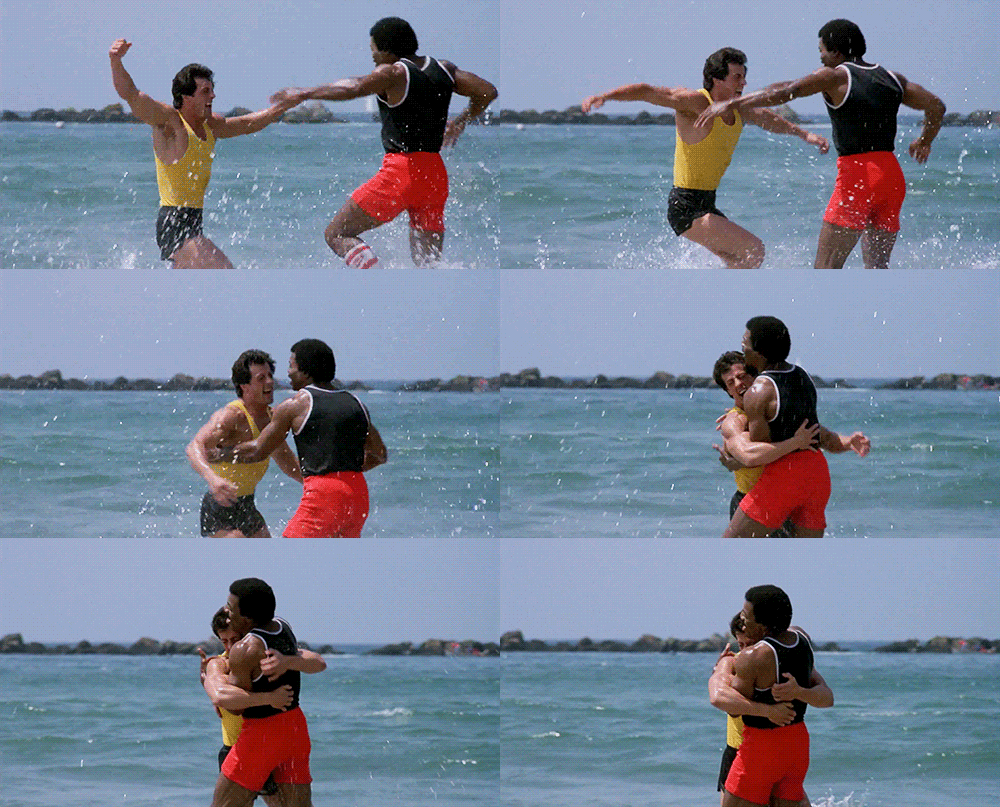
Ha, when I do get some free time, I don't do anything either. I've actually gotten to points where I get some free time and don't want to watch a movie. So instead I watch TV shows or podcasts. Although I have had some epic movie marathons in the last few months, including a marathon of every single Rocky movie from Rocky through Creed II.

TLDR version: Rocky III is the best and it's not even close. I pity the fool who disagrees.

tumblr_owa8dsXT0N1u2ragso6_500.gifv


Personally it's not something I have yet delved into, I do vaguely remember having a discussion before where someone - possibly europe - recommended some.

If Italy has Fellini, Japan has Kurosawa, etc., the Middle East has Kiarostami. He's the most famous and the most revered, so his films would be the logical place to start, even if I personally find Makhmalbaf's and Panahi's films more interesting. And for Kiarostami I'd recommend Where is My Friend's House? or Taste of Cherry to start, as they're IMO his two most accessible and also most accomplished films. The former is more enjoyable and has more charm while the latter is more interesting and has more substance.

Sounds pretty damn interesting, I must look it up.

Aesthetically, it's certainly a marvelous watch, even if narratively it's a bit weak. (Interesting themes but not the best writing or acting.) I watched it on the Criterion Channel, which I know we've talked about before, but I've been using a VPN recently and even when I set it to non-US spots it doesn't keep me from being able to view it. Some films might not appear (just like some Netflix titles won't appear depending on where you have it set) but you might be able to access the Criterion Channel that way if you really wanted to. Otherwise it's one of the landmark Turkish films and it's in excellent quality, so I'm sure it wouldn't be too hard to track down.
 
Also, now that I'm thinking about it, it's been so long that I don't remember ever posting about Tenet. I was shocked by all of the disappointment and even hate directed at that movie. I thought that it was fucking astounding. I watched it 4 or 5 times the first week that it was available OnDemand. And in one of my film history classes I'm ending with back-to-back screenings of films which use inventive editing for the sake of a thematic meditation on time, first with a screening of Irréversible - yes, I'm really making my students watch Irréversible - and then with a screening of Tenet.

Brisco-sneaky-evil-smile-gif.gif
I liked tenet too but didn't really care for irreversible. You should make them watch memento too, that was great
 
Hey @Rimbaud82, @chickenluver, and @moreorless87: Are you aware that HBO is remaking Bergman's Scenes from a Marriage? Oscar Isaac and Jessica Chastain are going to play the married couple and the dude who did the HBO show In Treatment and the Showtime show The Affair is the showrunner. Honestly, I'm not entirely sold on either Isaac's or Chastain's acting ability, so this is definitely going to be a serious test for them. But I'm intrigued at the prospect of this remake if for no other reason because it'll give me an excuse to rewatch the original.

And then I don't know about any of you guys, but I never knew what the word busy really meant until this pandemic. Teaching all that I've been teaching online instead of in-person has literally quadrupled the amount of time that it takes me to do my lectures. But after nearly two years now and I don't even know how many classes, across multiple different universities and both in-person and online, I've finally amassed a big enough archive of lecture material to where I won't have to be starting from scratch week to week. I'm hoping that I'll start to have free time again and that I'll finally be able to post some shit in here about how my students have been responding to the movies that I'm showing them and about some of the old movies that I've rewatched and even some new movies that I'd never seen before.

On the subject of new movies, any of you artsy-fartsy foreign film connoisseurs big into Middle Eastern cinema? (I didn't tag you earlier because I know that you're not the biggest Bergman guy, but this question includes you, too, @europe1.) I just did a lecture on Middle Eastern movies and prior to that I would've picked Middle Eastern cinema as my biggest blind spot after African cinema. But the reason that I put it on my syllabus was so that I myself could have an excuse to learn and watch more and I'm so glad that I did. I got big into Middle Eastern (and especially Iranian) coming of age movies. Maybe it's because I was already in the zone seeing as I did a lecture earlier on American coming of age movies of the 80s and 90s, but I really dug films like Amir Naderi's The Runner, Abbas Kiarostami's Where is My Friend's House?, Jafar Panahi's The White Balloon, and Majid Majidi's Children of Heaven.

The best Middle Eastern coming of age movie, though, is a movie that I'd seen before but rewatched and enjoyed even more, Haifaa al-Mansour's Wadjda, which was al-Mansour's debut film, the very first film shot entirely in Saudi Arabia, and the first film from a Saudi female director. The screening that I assigned for the Middle Eastern week, though, was an earlier film from a prior female filmmaking pioneer, Marzieh Meshkini's The Day I Became a Woman, which is an anthology film that weaves together the stories of three different female characters from three different age ranges (a girl, a middle-aged woman, and an elderly woman). It's a great film overall, but the first story with the little girl is easily the best part of the film.

So those Middle Eastern coming of age movies were a lot of fun. However, from a technical filmmaking perspective, I think that the most aesthetically impressive film that I watched was the 1964 Turkish film Dry Summer. The only way that I can describe the visual design is if Tarkovsky showed up on set having just done a few lines of coke. The richness of the black-and-white visuals reminded me instantly of Ivan's Childhood (there's even a brief little scene in the beginning with a guy chasing after his girl through some trees that called to mind the forest scene from Ivan's Childhood) but the cinematography was WAY more dynamic and fast-paced than anything that Tarkovsky ever did, almost as if it was shot through Tarkovsky's eyes but with someone like Martin Scorsese's or Spike Lee's tempo. And the opening sequence features some absolutely bravura cinematography with Bergman-esque framings and Preminger-style reframings with no cuts.

Anyway, any of you guys ever see any of this stuff?


If we include Turkey in the ME category i'd highly recommend Nori Bilghe Ceylan's Wild Pear Tree.It even fits the coming-of-age category.Once upon a Time in Anatolia is another great one by Ceylan.
Also Mustang by Deniz Gamze Ergüven.

I loved pretty much anything i've seen from Ashgar Farhadi.Fireworks Wednesday,A Separation,The Salesman

Ziad Doueiri's The Insult (Lebanon) was great too.
 
Oh crap! I was supposed to respond to this!

And then I don't know about any of you guys, but I never knew what the word busy really meant until this pandemic. Teaching all that I've been teaching online instead of in-person has literally quadrupled the amount of time that it takes me to do my lectures. But after nearly two years now and I don't even know how many classes, across multiple different universities and both in-person and online, I've finally amassed a big enough archive of lecture material to where I won't have to be starting from scratch week to week. I'm hoping that I'll start to have free time again and that I'll finally be able to post some shit in here about how my students have been responding to the movies that I'm showing them and about some of the old movies that I've rewatched and even some new movies that I'd never seen before.

Sadly you will be unable to do so once realizing that 75% of that spent time wasn't actually lecturing and teaching but the age-old: "Your image froze," or "You let the microphone off" or "User disconnected from your channel"<45>

On the subject of new movies, any of you artsy-fartsy foreign film connoisseurs big into Middle Eastern cinema?

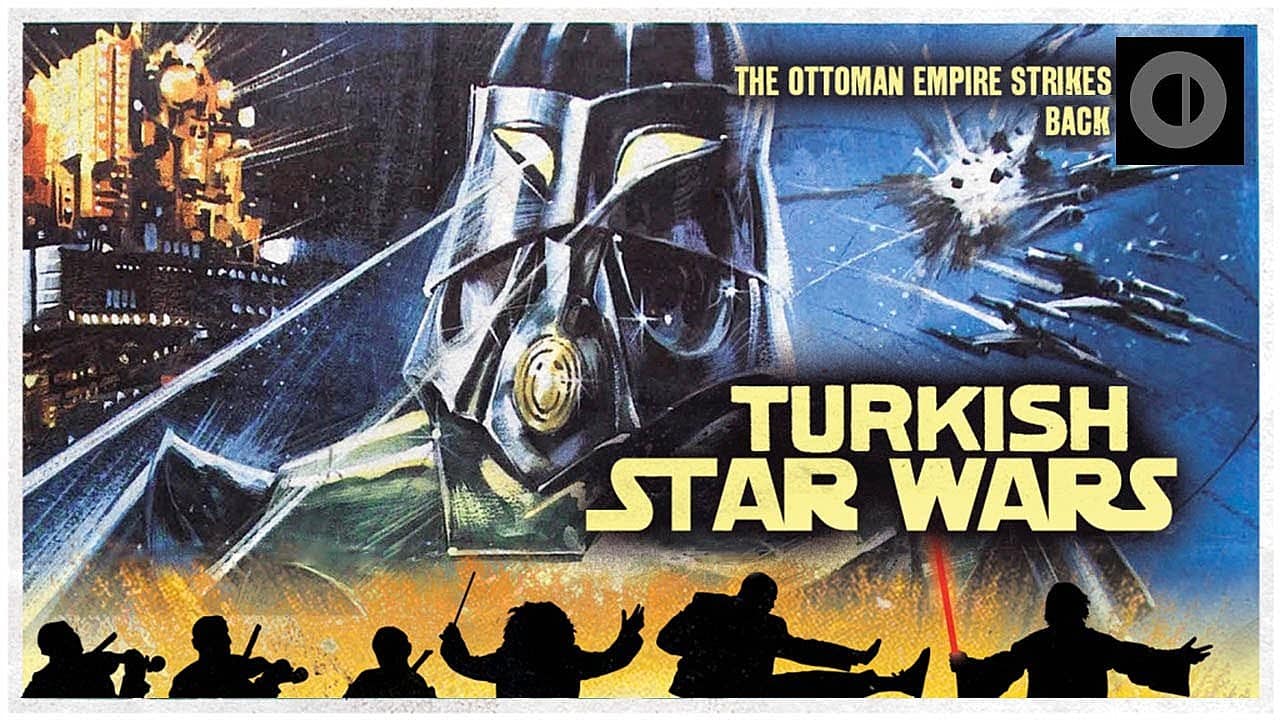
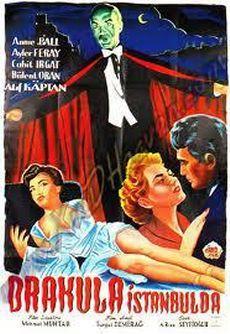
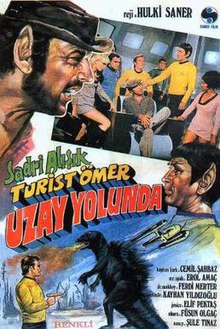
Bullitt68 you fool! You have been approaching this subject from an entirely wrong direction! You should not be trying to watch Middle Eastern cinema! You should do what smart people (like me!) do and instead only watch trashy Middle Eastern remakes of American cinema! That way you get two cultures in one!

220px-Rampagekorkusuzposter.jpg

(There are actually two Turkish rambo remakes, one of the second and one of the first.)

Turkish-Star-Wars-Review.jpg


Dracula_in_Istanbul-764636951-large.jpg


From Egypt you have stuff like Fangs (Anyab 1981) , their remake of the Rocky Horror Picture Show, which is much better then the cult-classic original, but that isn't saying much.

images

MV5BZDIwMzUzNmEtYTkzZC00NTU2LTgxNjUtNDA0OTYzNTVhMDhlXkEyXkFqcGdeQXVyMTU0NTQyMjk@._V1_UY268_CR1,0,182,268_AL_.jpg


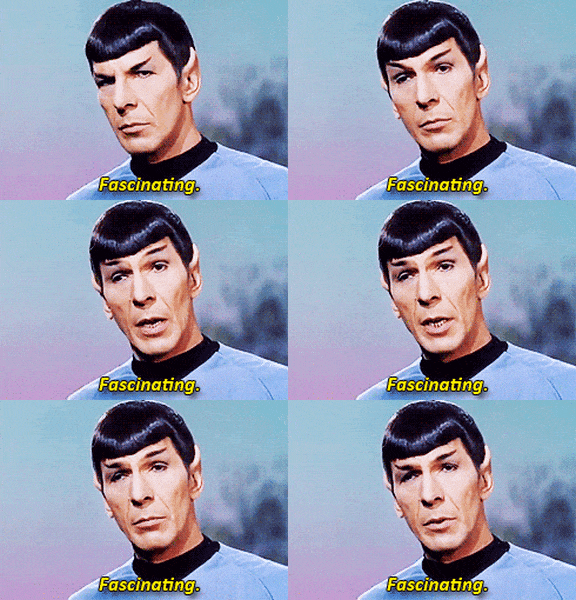
Seriously though, the only one of these foreign remakes that I would heartily (as oppose to cheekily) recommend would be Turkish Star Trek. Essentially, it's the Star Trek crew accidentally picking up a Turkish hobo. 75% of the movie is him getting into nonsensical arguments with uber-logical Spock. <45>

220px-OmertheTouristinStarTrek.jpg


Ahem... I fear that I have revealed to much of my true colors in this reply. Time to try and look respectable again.

almost as if it was shot through Tarkovsky's eyes but with someone like Martin Scorsese's or Spike Lee's tempo
200.gif


Haifaa al-Mansour's Wadjda

I've seen this movie and thought it pretty good but man if I remember anything about it.

Jafar Panahi's The White Balloon

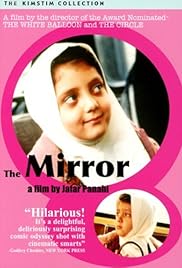
Never seen White Balloon only the Mirror and Taxi from Panahi. The Mirror you might be interested in since... the tiny girls are apparently different actresses but lord to they look alike. Based on those two films, Panahi seems like one of those directors who is constantly trying to make "film and reality blend with one another". Honestly I consider this approach not that profound and its message kind of... obvious? Like, trying to blur the lines between cinema and reality in the audiences mind isn't going to make the thematic impact hit any stronger or weaker.

MV5BMTM5NDA2ODA2MF5BMl5BanBnXkFtZTcwMTM5NDgyMQ@@._V1_UY268_CR3,0,182,268_AL_.jpg


I think my favorite Middle Eastern movie that I can think of would be Paradise Now, dealing with two suicide bombers.

MV5BNDI5ODQxNTUxMV5BMl5BanBnXkFtZTcwMTgzMDEzMQ@@._V1_UX182_CR0,0,182,268_AL_.jpg


MV5BNzk3NjEyODcyNV5BMl5BanBnXkFtZTcwMjIyMDUyMQ@@._V1_UY268_CR5,0,182,268_AL_.jpg


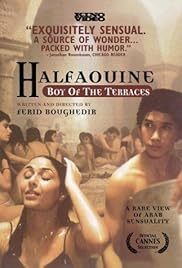
Boy of the Terraces is a Tunisian film I remember really liking. It's more of an "ethnographic" type film in that it deals with the difference between the world of men and the world of women, good if you want to get a look into that sort of dynamic. Spoilers: All men want to do is punch each other and all women want to do is have sex.

Under the Bombs is another movie that I remembered liking. Though memory of exactly why has kind of faded from memory.

MV5BMjA0ODczNTg2Nl5BMl5BanBnXkFtZTcwNjU4MzkzMg@@._V1_UY268_CR4,0,182,268_AL_.jpg


Safe modern picks I know. Sorry but 95% of all the Middle Eastern movies I've seen are trashy fodder that would make @HenryFlower gasp and drop his monocle upon witnessing.

PkmRRzZ.gif
 
So those Middle Eastern coming of age movies were a lot of fun. However, from a technical filmmaking perspective, I think that the most aesthetically impressive film that I watched was the 1964 Turkish film Dry Summer. The only way that I can describe the visual design is if Tarkovsky showed up on set having just done a few lines of coke. The richness of the black-and-white visuals reminded me instantly of Ivan's Childhood (there's even a brief little scene in the beginning with a guy chasing after his girl through some trees that called to mind the forest scene from Ivan's Childhood) but the cinematography was WAY more dynamic and fast-paced than anything that Tarkovsky ever did, almost as if it was shot through Tarkovsky's eyes but with someone like Martin Scorsese's or Spike Lee's tempo. And the opening sequence features some absolutely bravura cinematography with Bergman-esque framings and Preminger-style reframings with no cuts.

Anyway, any of you guys ever see any of this stuff?

Ivan's Childhood is really more a mix of Tarkobvskys latter style and soviet new wave such as The Cranes Are Flying I'd say, almost the end point to that kind of cinema rather than the start of it moving away from the more dramatic camera work.

For Turkish Tarkovsky like cinema Nuri Bilge Ceylan obviously comes to mind, doesnt have the high concept element to his work(so maybe more like Nostalgia than the others?) more focusing on down to earth drama but using a pretty similar style of long slow takes and atmosphere. Uzak even has characters watching and talking about Tarkovsky in it.
 
Ahem... I fear that I have revealed to much of my true colors in this reply.
I remember that you used to baffle your local Turks by your quest for this stuff. Do they still point at you in the streets and whisper to their grand children that there goes a true soul mate of the Turkish people!
 
Back
Top