Movies Serious Movie Discussion

Been in a folk horror mood of late; Satans Claw along with Witchfinder General and The Wicker Man seem to be the big three from the 70s, but there's a host of other made for TV ones. Might rewatch The Wicker Man tomorrow though, my gf has never seen it.

Yeah I got into the genre as well after watching The Witch. I have a harder time with the older ones though. I find them interesting but a little boring. I think Eggers and Aster and the like have found a way to distill the genre into something more interesting and terrifying.

Have you seen the Suspiria remake?
 
Been in a folk horror mood of late; Satans Claw along with Witchfinder General and The Wicker Man seem to be the big three from the 70s, but there's a host of other made for TV ones. Might rewatch The Wicker Man tomorrow though, my gf has never seen it.
except you can't justify your like of the films in any verbal context
 
Yeah I got into the genre as well after watching The Witch. I have a harder time with the older ones though. I find them interesting but a little boring. I think Eggers and Aster and the like have found a way to distill the genre into something more interesting and terrifying.

Have you seen the Suspiria remake?

Have yet to see either Suspiria actually
 
I just saw Parasite. I was incredibly underwhelmed. It seems like people would go on and on about the artsy brilliance of class warfare without actually delving into the movie itself. Its the kind of movie that gets judged on what it intends to do instead of how well it does it or how entertaining it is.

I wouldn't call it a bad movie. I dont regret sitting down and watching it. Without seeing it, I would bet any amount of money that 1917 is a better movie.
 
Occured to me I never actually put my thoughts about this one in here.

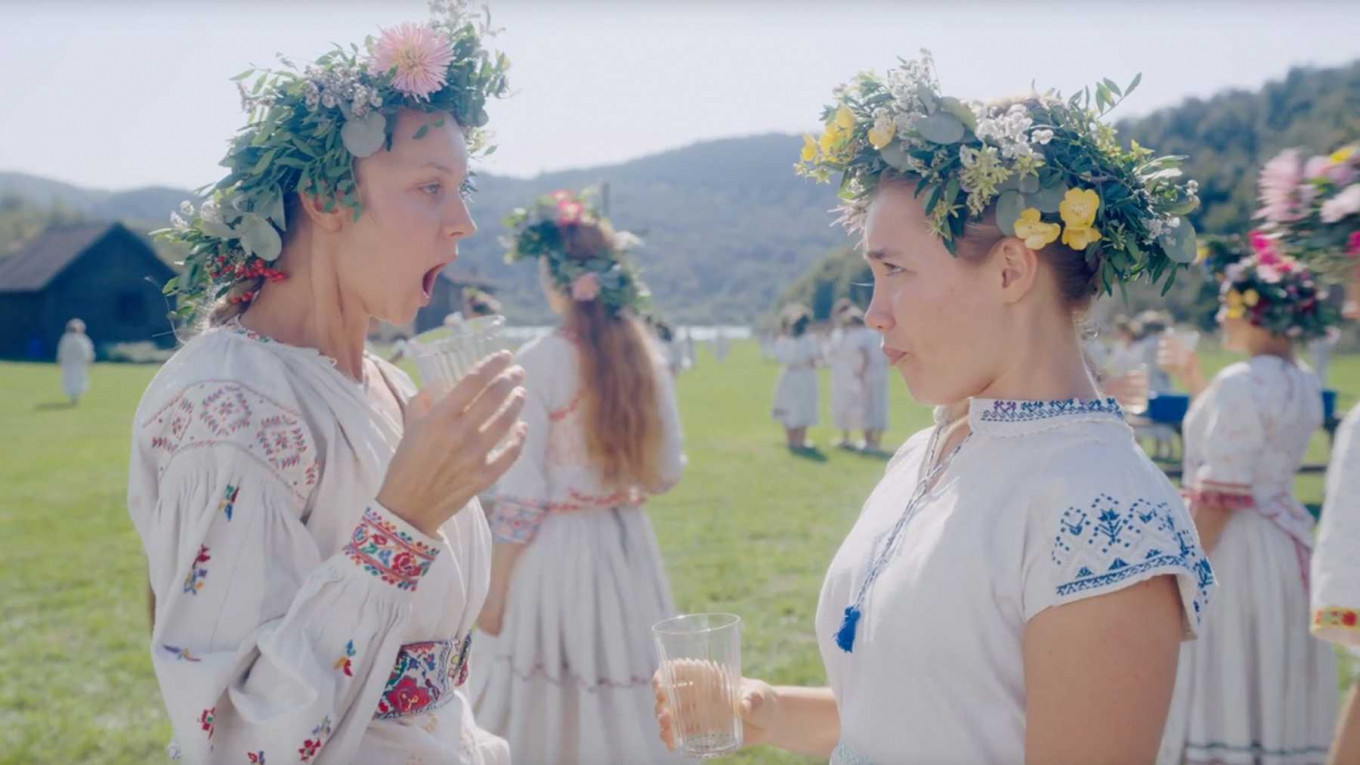
Midsommar (2019)
2019_09_13_79449_1568343393._large.jpg

There's a lot to like in Midsommar, but I have to say I wasn't blown away by it. Now disclaimer: I missed this in the cinema and first watched the Directors Cut which approaches a run-time of 3 hours. Perhaps I'd have different thoughts if I watched the original, but I can only judge what I did see.

For me it suffers from pacing issues. This is a criticism which could be levelled at Aster's previous work, but it is particularly pronounced here. Like Hereditary, Midsommar is a slow-burn leading to a dramatic climax. There I felt it worked very well, whereas for the most part I found Midsommar's climax a bit flat. I didn't feel that the slow-burn built enough tension to lead to an effective pay off. I simply wasn't invested in the characters enough, they are almost nothing more than puppets on to which Dani's grief is projected.

I just found that the tone of the film was extremely lifeless. I can understand everything Aster was going for (and appreciate it) in terms of it being a "horror-adjacent" story of psychological trauma, dealing with family loss and going through a rough break-up. The film is incredibly bound-up with Dani's perspective and the ending, when it comes, is clearly supposed to be cathartic. Yet, I just couldn't connect with it on an emotional level.

In terms of it being a "folk horror", there are some interesting themes of course. Even simply the fact that it's shot in bright sunshine is an interesting choice (not uncommon for that sub-genre of course). The Wicker Man is obviously a key influence for instance. But equally I feel that those comparisons can be a bit overdone in that, although the element of outsiders coming upon a pagan cult is there in both, the way in which Dani actually interacts with them is completely different than how Sgt. Howie does in their respective films. This pagan cult is - in their religion and their rites - much more connected with nature and the cycles of life. They are a loving, close-knit community... They are also sinister, violent and extremely manipulative. Yet Dani, despite plenty of misgivings eventually comes to find in the Hårga the sense of family and belonging that she lacks. It's simultaneously horrible and beautiful, it's clearly not supposed to be read in a purely positive light.

As folk horror both films play upon the dialectical tension between the violent, mythological past encroaching upon the rational, secular present. This rational element in Midsommar is obviously underscored by the fact that other than Dani, these are all PhD students. So there were some interesting components, but ultimately I just did not find it packed much of a punch despite all its constituent elements suggesting it should. Certainly, still engaging enough to watch however. Perhaps my thoughts will change if I watch the cinematic version.
 
Penda's Fen (1974)
pendas-fen-1974-005-masked-creature-sleeve-image_1496479490.jpg


"What mystery of this land went down with him forever..."

Part psychological drama and bildungsroman, with more than a hint of folk mystery, Penda's Fen explores the politico-religious fault lines and mythic memory of modern Britain. While clearly showing it's made-for-TV origins in terms of the style, it's still a fascinating curio from the 1970s. It is a story in which the continuum of past and present is entirely ruptured; the past seeps into the present, just as dreams seep into reality.

Our protagonist, Stephen, is an overly-precious, awkward teenager struggling with his latent homosexuality, his Christian dogma and the stifling influence of his traditional schooling. He begins to have a series of strange dreams and visions which lead him to an exploration of his own sense of self, as well as a broader reflection on England's historical roots. Our story is set in the small village of Pinvin...or is it Pinfin? Pendefen? or, indeed, Penda's Fen...

It takes the folkloric relics of the past contained in the etymology of this place-name as a starting point for a examination of England's pagan past. King Penda was the last non-Christian king in England according to tradition. This sets the stage for a fluid expression of various ideas relating to sexuality, ancestry, ecology, marxism and many more... It's a bit of hodge-podge and it doesn't present these ideas as any kind of coherent analysis. Indeed, all of this is seen through the confused perspective of a young adolescent struggling to find his place in the world.

There's quite a few of these TV adaptions which fit into this vague folk sub-genre, I'll probably work my way through some others soon. An interesting little gem like I say, for a TV drama it is particularly strange and all the more fascinating.
 
For Those in Peril (2013)
fake-news-disinformazione.jpg

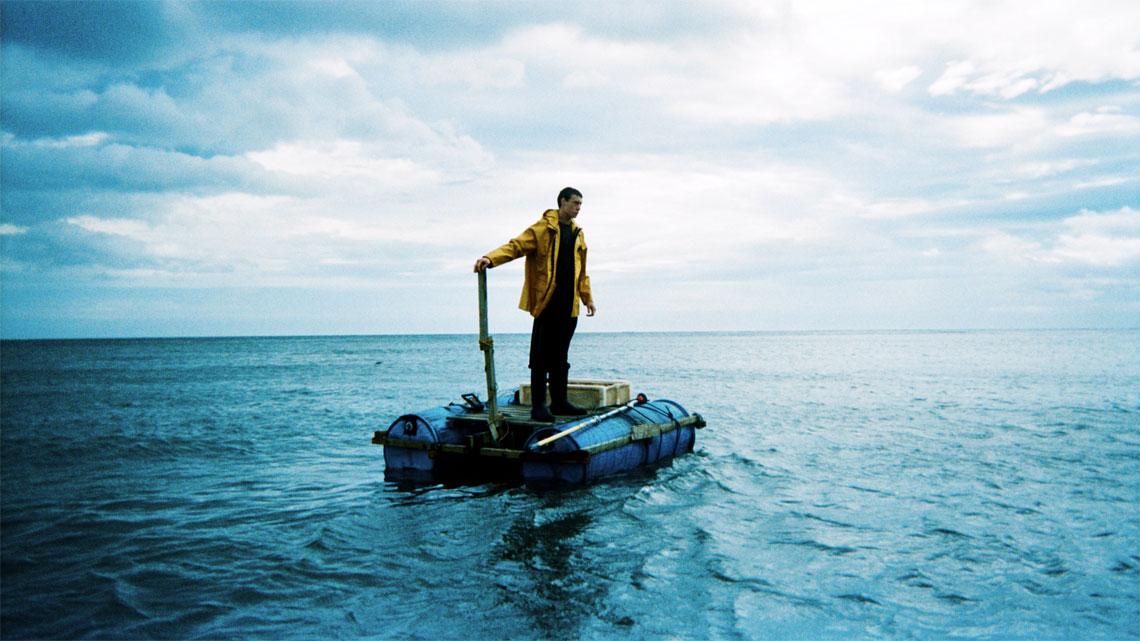
In it's depiction of severe psychological trauma it takes an experimental approach. Whispered voice-overs, home video flashbacks, and grainy footage is all interwoven with grimly realist scenes to reflect the fractured mental state of our protagonist Aaron - the sole survivor of a mysterious and unexplained fishing accident.

Obsessed with a fable his mother told him as a child about an evil devil which lives at the bottom of the sea, Aaron struggles to cope with the psychological stress of the incident. Furthermore, he has become a pariah in his local village, as superstition and sinister rumours surround him and the incident. His older brother was also among those killed, yet Aaron can remember nothing. We follow this dark tale with mounting tension and unease, until an extremely dramatic ending which introduces an element of the fantastical and completely changes how the whole thing might be read...

Stylistically I found it be very Malick-ian actually. As with some of his recent work, the effect can be interesting. However, while I can appreciate the experimental approach the film was trying to take, I also found it could be bit irritating and actually quite tedious at points. Mostly it is just absolutely fucking miserable.
 
Midsommar was disappointing.
There was nothing original about it esp. for me since i've seen most Folk Horror Classics (The Wicker Man,Witchfinder General,Kill List).
The Characters made some pretty dumb decisions in order to perish.
The running time is an issue (How about less feasts ?).

Production design and camera work were great, but not enough.
Netflix' The Ritual was also superior
 
Le Tempestaire (1947)
epstein_la+tempestaire+3.jpg


Stunning short film from Jean Epstein, this is cinema as a pure poetry.

The plot is extremely simple and elemental - during a storm, a young woman has a premonition about her lover who is off at sea. Fearing for his life she seeks the assistance of the 'Tempestaire', an old lighthouse keeper who may have the power to control the storms...

Epstein tells this tale with the sparse elegance of a folk-story. There is very little dialogue, everything is conveyed through mood and tone. The film delivers stunning visuals of roaring waves and the rugged Breton coastline. Combined with experimental visual techniques (slow motion and time lapse) and a haunting score, it captures the wonder and the mystery of the sea. Sublime, mystical cinema.

I will be sure to watch some more Epstein films now after this one.
 
Last edited:
Hour of the Wolf (1968)
hour-of-the-wolf-md-web.jpg


While far from Bergman's best, Hour of the Wolf is a still a fascinating and unique part of his body of work. An unsettling psychological horror, with elements of the surreal and uncanny. Bergman utilises the trappings of Gothic fiction in order to explore the psychological fractures of the tortured artist.

Living on a remote island with his wife, our protagonist Johan Borg (a painter) is tormented by a series of disturbing visions, insomnia, paranoia and by the spectre of his past. There is one scene at the very beginning in which Johan happily teases and plays with his wife Alma as he paints her. One happy scene. Apart from this, the entire film depicts Johan's descent into complete madness and despair. Along with this comes his increasingly fraught relationship with his wife, who suspects that something bad will soon happen.

Very early on we come to understand that Johan is plagued with terrifying visions of all kinds of perverse individuals. Yet, one day the pair are invited to a feast at an old castle...here we see the Gothic element. This is to be hosted by the island's Baron and his peculiar friends. This perverse group of aristocrats seem to push the artist further and further into madness. Yet it is never made entirely clear just what is real or what is imagined. As Johan's visions bleed into reality it becomes impossible to untangle the twisted web of his mind - memories of childhood trauma, sexual obsession, nightmares and hallucinations (brought on by insomnia, or not?) all blend into one.

It is a fascinating film for sure. Not perfect by any stretch. Indeed, it is a bit oblique and some scenes could have perhaps been handled differently. Equally, it is perhaps overlooked. It's not a Bergman film you hear a whole lot about but it is certainly worth watching. It possesses a singularly uneasy atmosphere, accentuated by Bergman's stylistic choices. The camerawork is at times disorientating to reflect the confused mental state of our artist. The lighting is extremely dark, at times almost threatening to submerge him entirely. There are several striking images, and some incredibly surreal imagery. A very good film, but just not quite great.
 
Last edited:
Can't say I remember this one very well but...

I dunno I remember thinking that Hour of the Wolf was kinda crappy. The set-up is interesting with them living in the remoteness and the promises of John's nightmares visions. But the unreality of it all never pays off in its execution. Just feels like a bunch of trite humbug with all those patrons and noble-people. The visuals are the only saving grace.

There was one moment that I remember thinking was just uber-pretentious. When one of those noblewomen is stating to Johan and his wife that since they own one of his artworks, they now also own "a part of him." As if by owning the painting they've gained a vampiric possession of his soul or something. And this is presented as some sort of grand tragedy, the woe of being an artist, to have your art be possessed by superficial blood-sucking rich-people. I mean, give me a break. Of all the things to bemoan in the world, that seems like the least worthy to blow up. It's like to Bergman, a minor irritation is amplified to some existential-level dread... and it just comes across as quasi-comedical.

Plus... Liv Ullmann's Norwegian-esque Swedish is super-freaky (she spoke with her actual accent in this one). It's truly the real monster of the film. Like some sort of mutated abomination out of Lovecraftian horror.

But hey, at least it isn't Dreams or Summer With Monica ;)
 
Can't say I remember this one very well but...

I dunno I remember thinking that Hour of the Wolf was kinda crappy. The set-up is interesting with them living in the remoteness and the promises of John's nightmares visions. But the unreality of it all never pays off in its execution. Just feels like a bunch of trite humbug with all those patrons and noble-people. The visuals are the only saving grace.

There was one moment that I remember thinking was just uber-pretentious. When one of those noblewomen is stating to Johan and his wife that since they own one of his artworks, they now also own "a part of him." As if by owning the painting they've gained a vampiric possession of his soul or something. And this is presented as some sort of grand tragedy, the woe of being an artist, to have your art be possessed by superficial blood-sucking rich-people. I mean, give me a break. Of all the things to bemoan in the world, that seems like the least worthy to blow up. It's like to Bergman, a minor irritation is amplified to some existential-level dread... and it just comes across as quasi-comedical.

Plus... Liv Ullmann's Norwegian-esque Swedish is super-freaky (she spoke with her actual accent in this one). It's truly the real monster of the film. Like some sort of mutated abomination out of Lovecraftian horror.

But hey, at least it isn't Dreams or Summer With Monica ;)

I think it does toe the line a bit with pretentiousness, or at least preciousness, but I guess it's a hard thing to balance when you have an artist making a film about the struggles of being an artist :p

There were a few scenes like the one you mention, mainly the stuff with the nobles, which could definitely have been handled better. But I did like it on the whole, it certainly feels a bit different from your typical Bergman.

Have yet to see either of those two, that bad huh?
 
Have yet to see either of those two, that bad huh?

Dreams (Women's Dreams in Swedish) is just a mediocre drama where what you see is what you get. Nothing special. Summer with Monica is one of those movies where the main conceit of the movie is easily figured out very early on and then you're just waiting for the prophecy to be fulfilled as it goes through the motions. Plus it has a lot of illogical plot-points. At one time, some random yokel just shows up and starts thrashing the protagonists' boat and then they have to fight him! Why is never explained and it occurs out of nowhere. And this is on the Swedish Riviera, a real fancy place, not in some backwater hillbilly country. It was kinda bizarre to see it happen in a Bergman flick.<45>

mainly the stuff with the nobles

Icky and superficial old people are hard to work as an antagonist, I suppose.
 
The Lighthouse Keepers (1929)
the_lighthouse_keepers.jpg


Two men, father and son, are trapped on a remote lighthouse as a result of a wild storm. The two men long for home and the women they left behind, but hope it will be a quick month on the island. However, it soon transpires that prior to landing the son was bitten by a rabid dog... Within the constricting confines of this lighthouse setting he begins to go mad, slowly succumbing to delirium and fits of violence. Initially believing him to simply be ill, the father attempts to care for his son. When he turns aggressive, the father is forced to attempt to man this important lighthouse by himself. All while coping with the psychological stress imposed upon him.

Through Grémillon's impressive visual language, the internal is made external. Much of it is filmed in a naturalistic style - everyday duties around the lighthouse for instance - but there are flashes of psychedelic visuals to reflect the worsening mental state of the son. The imagery is extremely dramatic. The crashing waves of the stormy sea also serve as an exterior representation of the inner turmoil of the son, as well as a dividing force between them and those they love on the other shore. It is a dark and foreboding tale of profound isolation, family connections, of love and stoic duty in the face of the all-powerful forces of nature.

A great film, sorely needing a proper restoration. Quite obviously a huge influence on Robert Eggers' recent lighthouse film...
 
The Lighthouse (2016)
lighthouse_banner.jpg


aka the film also called The Lighthouse which is a literal take on the real story which partly inspired The Lighthouse (2019)....

The very definition of meh. Boring dialogue, poor direction, a bland visual style and a thin plot. Completely forgettable.
 
Rosemary's Baby (1968)
rosemarys_baby.jpg


Finally got round to this. Simply put, it is an absolute masterpiece of slow-burn, psychological horror.

Looking to move into a lavish apartment in New York City, Guy and Rosemary Woodhouse are warned by a friend that the Bramford building in which it is located is a haunted house of sorts, connected with all kinds of monstrous and diabolic deeds at the turn of the century - primarily cannibalism and witchcraft. From the very start of the film then, this element of occult horror is introduced. Introduced, but not dwelt upon. Rather it remains in the background, constantly lurking and bubbling beneath the surface of the films more worldly horrors (namely that of a young woman deprived of her autonomy and shackled by social exceptions). Of course, that is, until all of these elements come to the fore in the films utterly horrifying conclusion.

In the film we get the sense that there is something strange, perhaps sinister afoot, but the particulars are less clear. The old, strange couple next door appear to be overly-friendly, are they simply eccentric or is it something else? Constantly through the film there is a deliberate ambiguity with just a hint of something darker. As the pregnant Rosemary becomes increasingly frail something is clearly happening, but exactly who is involved and what are their motivations? Polanski expertly takes us through this uneasy, unsettling world of paranoia.

Being literally about a suspected plot involving a satanic cult and the Prince of Darkness himself, of course this provides the film with a firm footing in the realm of occult horror. But as I mentioned before, this element is largely in the background, darkly hinted at. The supernatural sometimes comes to the surface (as in Rosemary's terrifying dream), but what is perhaps equally horrible is her treatment by those nearest to her. Her husband Guy is an ambitious yet largely unsuccessful actor. Throughout the film he is distant, selfish and controlling towards Rosemary. Seemingly he cares more about his career than he does about her. Other characters - whether doctors, neighbors or her husband - always know what is best for her.

Stifled by social norms and financial dependence on her husband Rosemary can exercise little autonomy of her own. These themes are tragically interwoven with the occult and supernatural elements. Rosemary is being preyed upon by the forces of evil - there are “plots against people” after all - but had she possessed more personal autonomy there would have been more hope of escaping it. She is trapped within the confines of her role, as much as she is beset by satanic forces and it is the two that combine to chilling effect. It is simply an outstanding film, full of psychological and emotional complexity.
 
Diabel (1972)
ezgif-3-2eef8a007ece.jpg


An absolutely merciless period film from Andrzej Żuławski.

Taking the violent upheavals of 1790s Poland as it's historical basis, the plot concerns Jakub, a young nobleman who has been imprisoned for conspiring to kill the King. Amidst the violent bloodshed of a Prussian invasion, a mysterious figure, clad in black, comes to rescue him from his cell. Given the title of the film, this creepy figure surely seems to represent The Devil himself (Diabel being Polish for Devil), or at the very least the essence of Evil. He shows Jakub what has become of his family, along with the other horrors of this depraved world. As a consequence of what he witnesses, and at the constant instigation of this strange figure, Jakub descends into complete madness, becoming a murderous psychopath...

With a crazed, psychedelic soundtrack we are taken on a journey through this demented historical hellscape. I often cite Klimov's Come and See as possibly the most brutal film I have seen, but this is certainly in the same league. It is absolutely relentless psychological horror. In this film Żuławski attempts to peel back the layers of human nature and make sense of the existence of evil in the world, but to no avail...

Even the acting performances are, in general, absolutely hysterical, and I mean that in the truest sense of that word. They are exaggerated and overwrought in a manner which goes far, far beyond something like melodrama into a complete and utter frenzy. The cinematography further serves to underscore this. Żuławski makes very effective use of the Polish wilderness to create some extremely dramatic shots. But the camera is nearly in constant motion, creating a dizzying, disorientating effect which only adds to the absolutely manic feel of the film.

There are some pretty clear parallels to the contemporary political situation in Poland at the time, and a strong element of allegory, which explains it's censorship by the communist government. I think at least a vague idea of both the actual historical setting and the 60s/70s context in which it was made is beneficial, but not necessarily essential to viewing the film (I am certainly no expert in Polish history). Diabel is as much about the depravity of human nature in general, and the horrible things men are capable of doing to one another, as it is a specific place in time.

Had downloaded this about two years ago but for some reason or other never got round to watching. That was only a DVD rip, so glad I waited as I was able to find a much better HD copy now.

 
Last edited:
SadLegalAldabratortoise-small.gif


There is something funny about that fervent devil cult consisting primarily of crusty old people. ;)

Stifled by social norms and financial dependence on her husband Rosemary can exercise little autonomy of her own. These themes are tragically interwoven with the occult and supernatural elements. Rosemary is being preyed upon by the forces of evil - there are “plots against people” after all - but had she possessed more personal autonomy there would have been more hope of escaping it.

I think that there is a particularly clever way with which this theme is played with in the ending.

She's given birth to the Antichrist, and despite reacting in horror, she's soon overwhelmed with an instinct to nurture and foster this incarnation of evil. She's literally been conditioned to internalized her role to such an extent that she will even unreflectively act as a mother for Satan Jr.

Maternal instincts are often depicted as the heights of goodness (though, for pretty good reasons, I suppose:D). But here Rosemary's Baby presents a scenario where that socially-pressurized, doctornated instincts gets turned into something evil. She knows that it's a monster, yet will raise it anyways, because she's so blinded by motherly love. It's a good instinct manipulated to facilitate evil. Kind of how like how the goodness of motherhood is often facilitated to serve repressive ends on a social level.
 
Back
Top