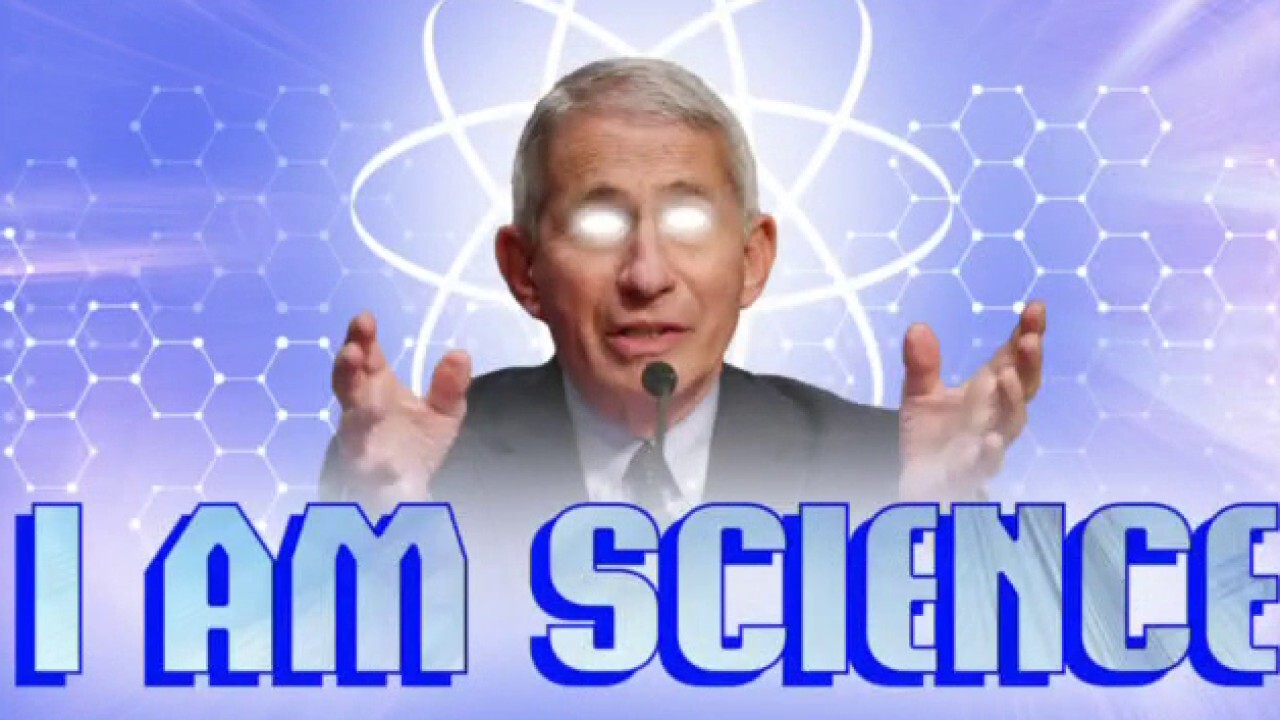
Opinion What's the deal with layman(s) questioning the credentials and scientific ability of actual experts?

Just looked it up and there was a study in the New England Journal of Medicine about microplastics allegedly causing strokes and heart attacks. Why would a material scientist think he understands medicine? Doesn't sound like that audience member was retarded at all. Even people within the same field disagree on things. What you're describing is cookie cutter stuff when discussing any subject with anyone, meaning people disagree. The difference is that you think you know everything and you assume the person you're talking to is an idiot while they may not be. Audience members at conferences are often experts themselves or involved in constellation fields. It's not a good look... for you.
 
What do you do when two people with medical degrees and labs have differing opinions?
This will always happen, even when there’s no malice or political influence just based on probabilities and how one chooses to reject the null hypothesis.

The answer is peer review and reproducibility.

One of the theories should ultimately fail because it provides less explanatory value than the other. Generally, the sum of the evidence produces a consensus in the community; which is to say that Theory A has proven more valuable than Theory B given the third party testing.

In reality that may not always work, but that’s how it should be done.
 
For my job, I often have to speak at conferences and events sharing aspects of my research, or being asked to comment about certain topical issues.

I make a fairly concerted effort to be as neutral as possible and rely on what the available data is telling me - in fact, my talks are often specifically about something called "material agnosticism" (there is no such thing as a good or bad material, it depends on the context and application in which it is being used). It is a position that is gaining a lot of traction in the product design space, as it doesn't ascribe value based characteristics to something like plastics vs. paper.

On several occasions now, I have had members of the audience make baseless claims completely divorced from scientific reality. The most recent examples were about micro-plastics - at one conference, an audience member said "Microplastics cause heart attacks". The exact opposite occurred at a different event, where somebody claimed that microplastics don't exist. Trying to explain to people what the data is actually suggesting is a fools errand. They either accuse me of being a paid shill, or that they read their own trusted sources (usually on reddit/facebook/youtube).

I don't go into a mechanic and say "I know more about fixing a transmission because I watched a youtube video", so why are these people with no background questioning my knowledge? It takes every ounce of restraint not to call them retarded, and I am forced to be conciliatory and feign respect for their opinions.


I think unintentionally you answered your own question with the mechanic because you absolutely should be very wary of mechanics because they use the fact that they have expertise to lie to you and scam you. Reader's digest did a test on 10 different dentists and seven of them lied completely and charged up to $5,000 for work that didn't need done. The list can go on and on.

And I think the backlash against the scientific community in part comes from the fact that scientists and scientific organizations have lied and been very wrong and partaken in nefarious activity.

There's also the saying that some ideas are so stupid that only an intellectual could believe them.

So we are in an age where people realize that experts can be wrong unintentionally and they can be wrong intentionally and you can't always take their word for things.

But that's further complicated by the fact that scientific advancement and inquiry is our very best means of gaining truth. So that if we get rid of our experts, we will get rid of human progress on a number of very important fronts.


But it's also true that the layperson is not equipped to analyze the data of many scientific studies and so they can never really vet those things for themselves. And so there's a problem with the whole situation humanity is in in terms of how we know things to be true...

There is no perfect way to navigate this reality. There is no guarantee of certainty. Doctors can be wrong and harm your children. They often are. They can also be right and save your child's life and this priblem runs across all spectrums of expertise.

Personally, I've thought about this a lot and I think that the only real solution is for people to stop lying and manipulating data for selfish ends because this really comes down to an issue of trust and the only way we can move forward collectively is if there's deep trust among all institutions and and humanity itself. Ultimately, this all comes down to moral issues.

But we don't have that trust and so now we have people reacting in various ways, causing all kinds of disorder. But there is no way to fix that unless everyone stops lying.

At bottom this isn't a problem with education or the scientific method... this is a problem with honesty. Human beings lie trust is broken and many people are not in a position to analyze the data to see for themselves.

On the part of people who overreact and just go to distrusting all institutions that's an emotional and psychological weakness. Instead of becoming comfortable with the fact that we can't have certainty in this world and that there is no certainty in this world, they automatically distrust all institutions and experts as if that is somehow going to keep them safe and give them certainty. But what it's really about is shielding them from the psychological discomfort of uncertainty.

And you have people that go the other way and shame anyone for distrusting any institutions or organizations because we have to trust the experts when that is also a psychological weakness that fulfills a need of having certainty when we have none.


And again, all of this is solved by humanity ceasing to lie.

Edit-- this issue is further complicated by scientific materialism believing that we have no spiritual connection, there is no God and that the only way to attain truth is through discursive knowledge. That flatly flies in the face of people's lived experience where they sometimes do know things through intuition that they couldn't have known otherwise. This creates further distrust between the so-called materialists and the lay people and scientists who don't hold to materialism because too many experts wrongly say there is no such thing as intuition and there's no such thing as a connection to knowledge other than through discursive learning. And this distrust is also further fueled by people who put way too much trust in their intuition and are wrong a lot and won't admit it.

The truth is humanity is limited. We have many weaknesses and many unsolved dilemmas and problems and misunderstandings and we have to be comfortable with a melting pot of uncertainties in this world.

 
Last edited by a moderator:
What do you do when two people with medical degrees and labs have differing opinions?
Not a question for me, but I would ask them in what their opinions are based. Different studies?
Then I would try to read the studies, but I mean read the studies instead of just the abstract and conclusion.
If I've tried to read and made no sense of it, I would try to either look for a third opinion or ask said two people what they think about the different opinion.
 
If all the experts in your field always agree on everything 100%, why do you need to have conferences?

I have no idea how that was the take away from what I said. I am an academic scientist that is invited to give talks about my research and (occasionally) comment on certain political or legislative decisions that are of interest to a certain group. There isn't a congregation of experts who share universal consensus - this is about someone (me) presenting to a group of industry stakeholders (mostly largely petro-chemical and plastic companies), who want to learn more about an alternative framework for evaluating material performance (material agnosticism). People present new technologies, approaches, ideas - some of which that garner significant consensus, and others that are more controversial.

The purpose is to educate and participate in a knowledge exchange -not achieve universal consensus on every possible topic. The people asking these dumb ass questions are just people from the public who chose to register for the event.
 
I speak at events often and get challenged. I use it as an opportunity to dive deeper and expose how their question/comment has merit or not and why not. It's a good practice to improve your ability to defend your positions without being adversarial, even if they are. I will say, the public does not attend our nuclear energy events.

I am interested though... what is the deal with microplastics?
 
Too many journalism majors thinking they are trained scientific thinkers because they can spill the bounds of the English language without really saying much or sometimes really anything at all.
 
Probably has something to do with the fact that science has been weaponized post Enlightenment to push scientistic propaganda on the unsuspecting public and now it's glaringly obvious because of social media.

Maybe more people will start studying the philosophy of science and get a better grasp of what science is, and what it isn't. This includes scientists as well. More likely the case will be that people will just watch tiktok videos and then blame it on the left/right dialectic. Like you already see in this thread.


There is so much tuth to this man.. but I have to say whenever you post in particular I find myself wishing you would say a lot more..


I would think many of the people on the left have never heard these kinds of discussions that are really cutting edge philosophically in the world right now having to do with the crisis of meaning and having to do with the religion of scientific materialism and what that has done to people.


On another note... apophaticism is one of the foundational principles/approaches of spiritual growth in the Orthodox Church. The notion that all of our divine revelation is true but that we can't really know what it means except by direct mystical experience and so we must approach our union with God, which is the truth itself, through unknowing, through letting go of concepts, emptying ourselves until we come to divine simplicity, which prepares us to have mystical encounter with God directly.

But I've noticed that everyone who has this is also extremely comfortable with uncertainty and they are much less likely to fall into any kinds of propaganda or arrogance based on what they know because they've become comfortable with uncertainty and they've seen past discursive knowledge.

I remember the celebration some of us felt when we heard certain scientists begin to postulate that maybe we weren't smart enough to understand the whole universe, that maybe we didn't evolve to understand the whole universe and that we could be forever in mystery concerning the universe. I and a bunch of my friends felt a certain kinship with scientists when we heard them start to speak in this way... the way we had already been taught by Christian spirituality to think about Revelation and God.
 
For my job, I often have to speak at conferences and events sharing aspects of my research, or being asked to comment about certain topical issues.

I make a fairly concerted effort to be as neutral as possible and rely on what the available data is telling me - in fact, my talks are often specifically about something called "material agnosticism" (there is no such thing as a good or bad material, it depends on the context and application in which it is being used). It is a position that is gaining a lot of traction in the product design space, as it doesn't ascribe value based characteristics to something like plastics vs. paper.

On several occasions now, I have had members of the audience make baseless claims completely divorced from scientific reality. The most recent examples were about micro-plastics - at one conference, an audience member said "Microplastics cause heart attacks". The exact opposite occurred at a different event, where somebody claimed that microplastics don't exist. Trying to explain to people what the data is actually suggesting is a fools errand. They either accuse me of being a paid shill, or that they read their own trusted sources (usually on reddit/facebook/youtube).

I don't go into a mechanic and say "I know more about fixing a transmission because I watched a youtube video", so why are these people with no background questioning my knowledge? It takes every ounce of restraint not to call them retarded, and I am forced to be conciliatory and feign respect for their opinions.


We've always had anti-intellectualism as a species across cultures.

You'll always have a core group of people that despise education, science, academic credentials and logic.


Im quite sure the internet, specifically social media, has exacerbated this.

In the US we now have leadership that epitomizes and galvanizes an anti-intellectual base.

A few sherbros up here are the - "I dont believe in no science" type.
 
The faith in scientific institutions and "experts" have gone down - both for legitimate and illegitimate reasons.

1. Misinformation and pseudoscience thrives in this day and age of social media, Youtube, and Tiktok. Retarded and moronic ideas can easily flourish and be disseminated.

Unscientific ideas like "healthy at any weight" have flourished on social media for years.

2. As @Fox by the Sea detailed, a lot of official scientific and medical organizations have been ideologically captured by politics. Instead of finding actual truth, they're there to give legitimacy to political beliefs.

A prime example is the whole "scientific community" behind the trans movement in the United States. They present trans ideology as a medical fact that is settled science, when it is far from that. All the European organizations have significantly scaled back on things like giving gender drugs to children.

Scientific American magazine was pushing the idea that females are less athletic and do less well in sports solely due to social conditioning and misogyny in our society.

2. A lot of organizations have been corrupted by money and a profit motive. Of course, this existed decades before, but now it is more prevalent as well as more people knowing about it.

Older examples would be Philip Morris paying "experts" to downplay the bad health effects of cigarettes. Or the sugar industry.

A more recent example may be Oxycontin being deemed as not that addictive by the FDA leading to one of the worst opioid epidemics we've ever had in human history.

 
Last edited:
Just looked it up and there was a study in the New England Journal of Medicine about microplastics allegedly causing strokes and heart attacks. Why would a material scientist think he understands medicine? Doesn't sound like that audience member was retarded at all. Even people within the same field disagree on things. What you're describing is cookie cutter stuff when discussing any subject with anyone, meaning people disagree. The difference is that you think you know everything and you assume the person you're talking to is an idiot while they may not be. Audience members at conferences are often experts themselves or involved in constellation fields. It's not a good look... for you.

image.jpg


Great post. I've been that "expert" in the crowd more than once that put a speaker on their heels because they didn't know as much as they thought they knew about something the audience specializes in. It's often the Scientists that make this error. I find the Engineers are far superior in delivering solutions at events, but most of those guy hate doing it... I can't blame them.
 
I speak at events often and get challenged. I use it as an opportunity to dive deeper and expose how their question/comment has merit or not and why not. It's a good practice to improve your ability to defend your positions without being adversarial, even if they are. I will say, the public does not attend our nuclear energy events.

I am interested though... what is the deal with microplastics?
I'm here for this part too!
 
Michael Jordan missed shots all the time, so I feel qualified to play for the Lakers based upon my film study of Magic Johnson on YouTube.
I have a masters
Fucking retarded... You still believing everything they're telling you?


This Asshole is still giving presentations on the National Stage for Climate Change. And worse, world leaders listen to him... lol

Yeah... I'm anti-science and education. I'm a Civil Engineer in Water Treatment. My career is strictly almost all a meritocracy. Can you do the job or not. Because it's immediately apparent when you lie about your abilities and what you can do. lol

However, I collide on the world where politics fuck up public projects. I see it all from the inside from the Government and Design side, including the incompetence and negligence of so called "experts". I know how to design and build these projects... that's all I care about. But that's not the real world.

I've about a jaded as you can get with politics, big corporations or anyone with agendas. I've seen massive fuck ups and how the news gets almost every detail wrong.

Dunnig Kreger is right. You're fucking clueless... as we all are. And the so called "experts" are likely clueless or worse, compromised, for an agenda. If they can lie about one topic, they're definitely lying about other topics. Why wouldn't they? And why would you believe anything "they" say.

And you're dumb as fuck if you take anyone's statement of "Fact" on face value. In one of the biggest government fiascos of human history, Fauci fucking lied several times. Why? To protect his ass and his associates.

Lockdowns? Face mask? 6' social distancing... Social Distancing. Are you fucking kidding. A term they grabbed out of their ass and shoved down your throat. The set back US Children several years over their incomptence.

Who are you supposed to trust now? CNN? MSNBC? Fox? Are you fucking kidding?

We just watching the Biden Admin literally lie about everything from the border to the economy for 4 years. Including Biden's health and mental competency.

lol...

I believe in twitter/X science
 
Back
Top