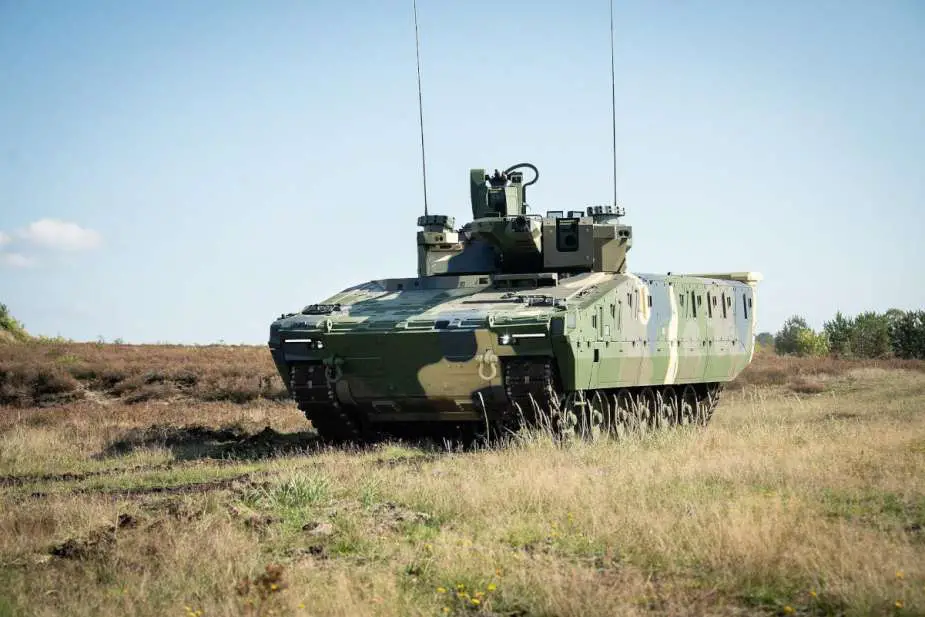
The XM30 Mechanized Infantry Combat Vehicle aims to bring substantial improvements compared to its predecessor, the
M2A3 Bradley. It is expected to deliver enhanced mobility, adaptability, lethality, agility, and safety features. The Lynx team, consisting of Textron Systems, Raytheon, Allison Transmission, and Anduril Industries, will play a crucial role in the development of this advanced combat vehicle, which is intended to replace the current Bradley IFV.
Prior to this contract award, on June 26, 2023, the United States Army
announced its approval of contracts with two firms, General Dynamics Land Systems and American Rheinmetall Vehicles. These contracts are for the next phases of the Optionally Manned Fighting Vehicle (OMFV) program, which has been rebranded as the XM30 Mechanized Infantry Combat Vehicle.
The awarded contracts encompass Phases III and IV of the XM30 program, which include detailed design, prototype build, and testing phases. The Army is eager to refine the XM30 designs, validate prototype performance, and have its first units equipped with this modern combat vehicle by the year 2029. The XM30 Mechanized Infantry Combat Vehicle program is a crucial part of the Army's future ground combat capabilities.
The
Lynx KF41, proposed by American Rheinmetall Vehicles and the likely foundation for the $700 million contract, offers a versatile combat vehicle that can be configured as an Infantry Fighting Vehicle (IFV), armored personnel carrier, command vehicle, recovery vehicle, or ambulance. Its design includes a common drive module, flexible mission kit arrangement, manned turret with multiple armament options, modular protection systems, Active Protection System (APS), and advanced optronics for situational awareness. The
Lynx KF41's 850 kW (1140 hp) Liebherr engine enables a top speed of 70 km/h and a cruising range of 500 km, providing a robust platform for maneuverability and deployment over extended distances. The Lynx KF41, along with the competing
Griffin III, is designed with a focus on adaptability, offering various mission configurations to cater to the diverse operational requirements of the U.S. Army.
The XM30 Mechanized Infantry Combat Vehicle, formerly known as the OMFV, is designed to replace the aging M-2 Bradley Infantry Fighting Vehicle, which has been in service since 1981. The Bradley IFV serves to transport infantry, provide fire support to dismounted troops, and destroy enemy fighting vehicles. However, it is widely considered to have reached its technological limits in accommodating new electronics, armor, and defensive systems.
The XM30 is a significant milestone for the Army as it is the first ground combat vehicle designed using modern, digital engineering tools and techniques. It follows a Modular Open Systems Architected (MOSA) platform based on an Army-defined and -owned open standard, allowing for the integration of emerging technologies as they mature. This approach aims to facilitate rapid OMFV modernization at a reduced cost and provide more opportunities for industry competition and innovation during upgrades.
As the Army's Infantry Fighting Vehicle, the XM30 will maneuver through the enemy's security zone as part of a combined arms team. Its primary objectives are to establish a favorable position relative to the enemy, offer protection, deliver direct fire lethality while operated by personnel or remotely controlled, enable platoon-level and higher command and control, engage and destroy enemy infantry fighting vehicles beyond the range of the enemy's primary weapon system, and enhance organizational effectiveness by reducing logistics burdens on the Armored Brigade Combat Team (ABCT) through improved reliability, maintenance, and supply chain optimization.

 .
. .
.