First off, I appreciate the sincere and well-researched reply.
I'm skeptical that the Cuban regime is being honest about that data but in fairness there are other countries that are "poorer" than the US in the sense of having smaller economies and lower GDP per capita figures that nonetheless have higher life expectancies.
It is not super unbelieveable when you look at how much more seriously that they took the AIDS crisis in contrast to the Reagan Admin....
Cuba’s success in limiting the epidemic stems partly from harsh early tactics and universal basic health care.

www.nytimes.com
The HISTORY Channel - Geschichte erleben! The HISTORY Channel ist der deutschsprachige Pay-TV-Sender für spannende Dokumentationen und macht die Faszination von Menschen und Ereignissen täglich greifbar!

www.history.com
If you want to argue the market isn't fair for some reason that's one thing, depending on the specific issue I might very well agree. The goal though should be to work towards a more fair market but populists, especially left wing populists, aren't in favor of fairer markets as much as they are anti-market.
So for example housing costs are rising and that is an issue. The unfairness in the system is that the excessive rules and regulations makes it hard for those who want to build housing while the current tax policy incentivizes land speculation. If your neighbors can veto your housing project and instead make money based on appreciation of land values you will have less housing.
IMO the solution is to create a fairer market by cutting some of that red tape so that its easier for all developers, whether big corporations or families looking to renovate their own homes, can more easily build while taxing land values to discourage land speculation. Left wing populists on the other hand tend to support anti-market policies like rent control which doesn't work.
Yeah, I don't disagree with much said here. I am not an anti-capitalist but I don't think everything should be monopolized. Essential things like water, food, and healthcare shouldn't be corporatized to the extent that they are imo. I think maybe to a naive extent that food and healthcare can coexist as socialized and privatized. Belgium, Netherlands and Austria has implemented such a system for healthcare. We even have such a system for education with private vs. public schools.
See I disagree and I think this gets at a widely held myth, namely that there's so much waste in government that if we merely cut it out we could fund social programs without raising taxes. The reality is there isn't a lot of invisible waste.
Now I do think there is some waste, for example I don't believe in programs like SNAP and Section 8 as I think its better to have fewer welfare programs that exist as direct cash transfers than many different ones for specific goods that create their own bureaucracies. In other words having a SNAP program and a Section 8 program is like getting someone two $50 gift cards, one for groceries and one for rent, whereas I think its better to just give that person $100 outright. At the individual scale the savings aren't obvious but when you scale these programs up to millions of people you can see that having two parallel welfare programs that transfer funds for different goods is more wasteful than one that transfers the same amount of money but with less bureaucracy.
I did a shitty job honestly with expressing my point. I think Singapore is an anomaly, its essentially a glorified Silicon Valley so they can sustain without much tax.
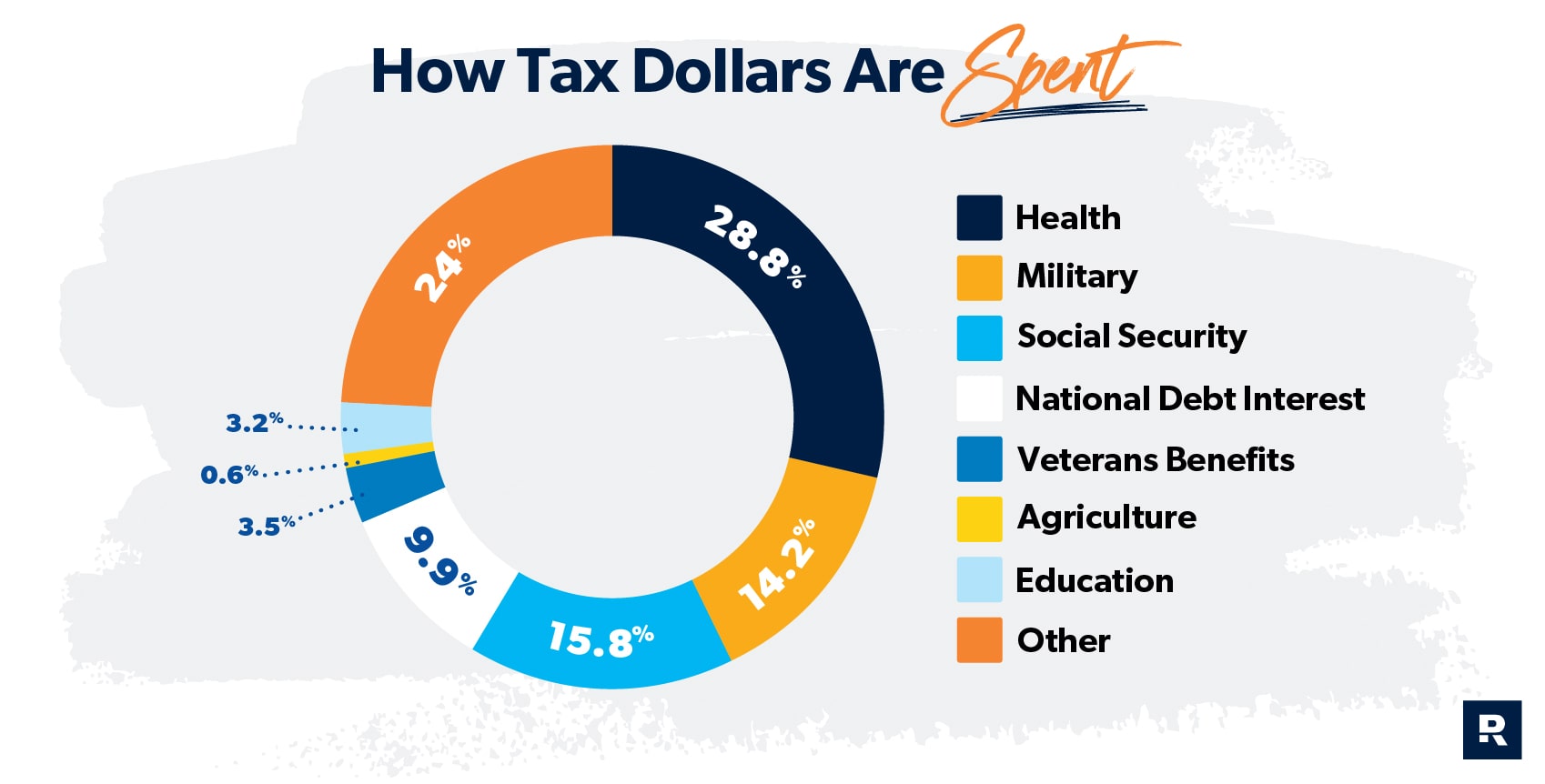
Nonetheless, if you take a look at the makeup of what American federal tax is spent on. It's apparent that a good portion is spent on militarization. Surely, some of that can be replaced in areas for communal well being. Our military is second to none and our lead is so apparent,I don't see a point in off-shoring so much money to bolstering our military. For example, Ukraine is managing to fight off Russian Imperialism by utilizing our retro equipment from the 90s.
Honestly, I'll have to skew through where all the healthcare spending is spread around. Belgium gets by with spending 11% of its GDP yet we are relying on nearly ~30% of our GDP for much less desireable results.
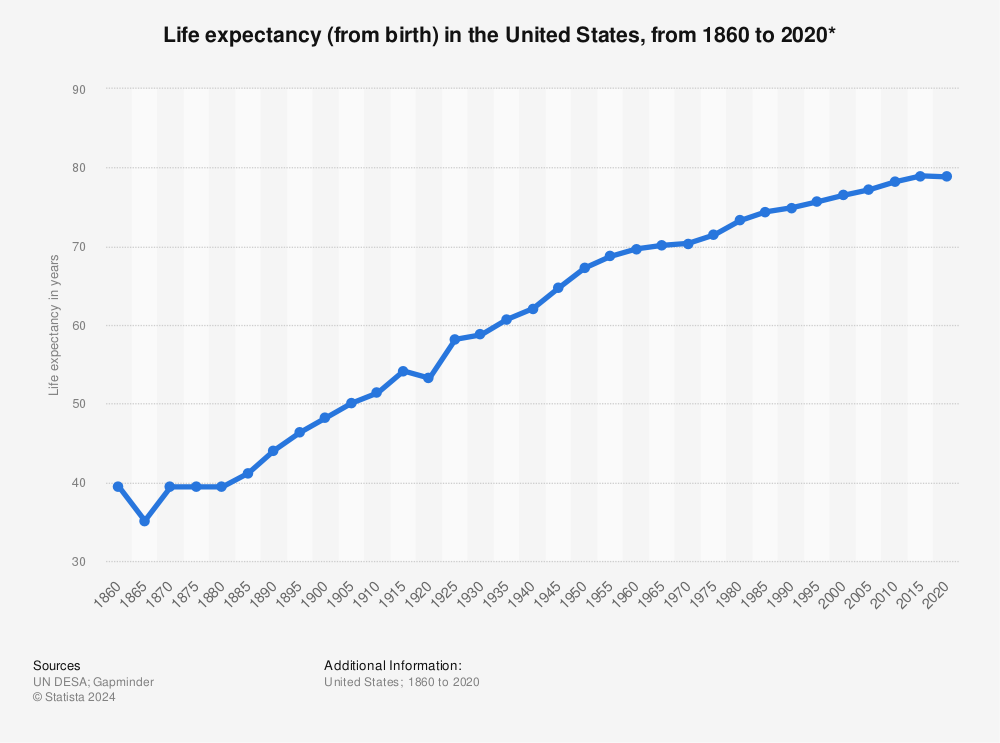
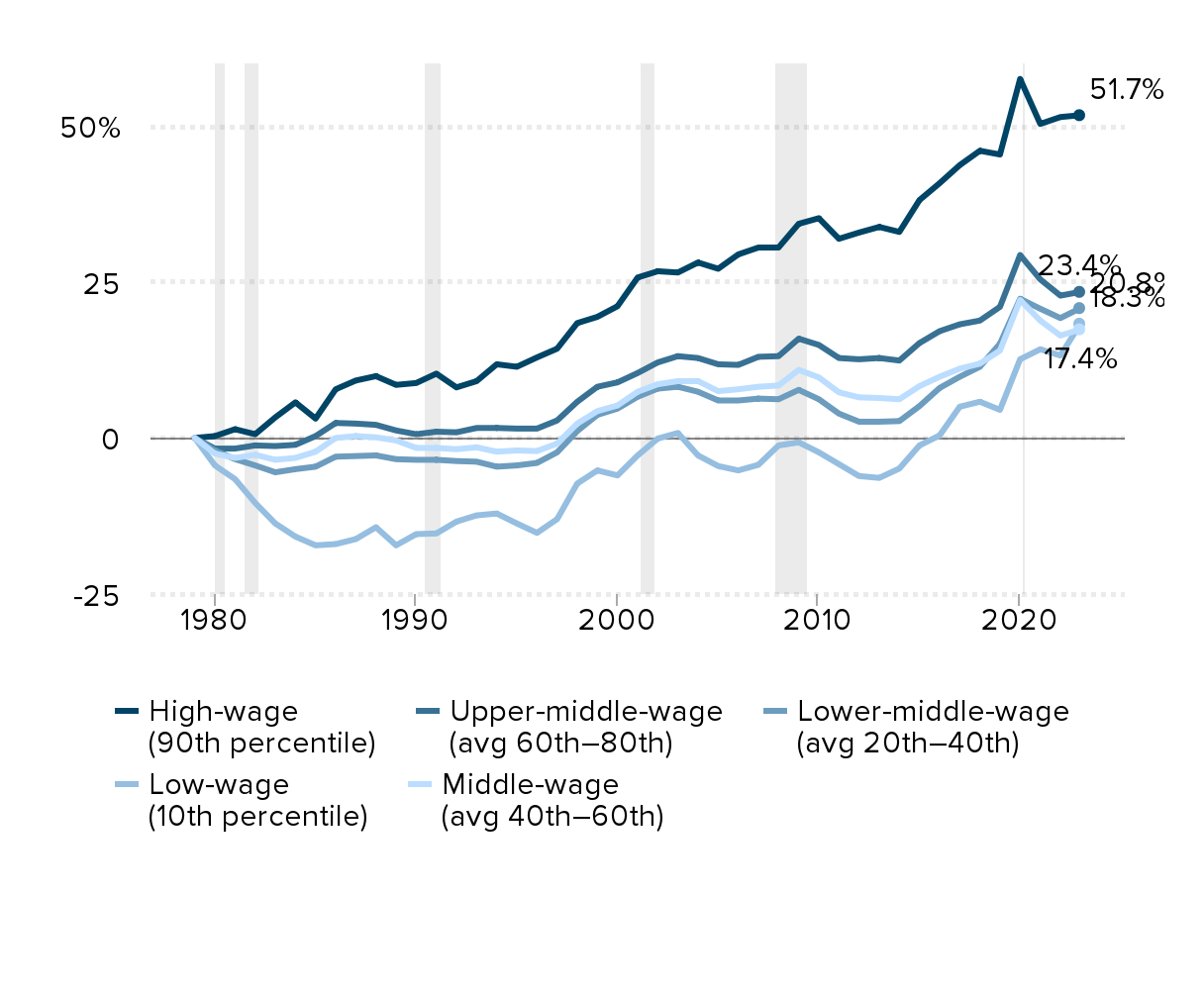
I certainly won't deny we're dealing with serious issue even today but I think in general the average American is better off today than 50 years ago.
Life expectancy and
average wages have both significantly increased for example
I don't want to overstate the importance of two stats but Americans are significantly wealthier and live longer than Americans of 50 years ago so that suggests overall improvement.
There are serious recent issues like the opioid crisis and later fentanyl which has lead to spikes in overdoses so intense that if you break life expectancy down into various age and geographic cohorts some of them have seen overall declines compared to 15-20 years. That said I think we can address these specific issues without buying into the gloom and doom narrative that we're worse off than 50 years ago. I say this as someone who is intensely pessimistic about the damage the incoming admin is going to do.
I feel like even
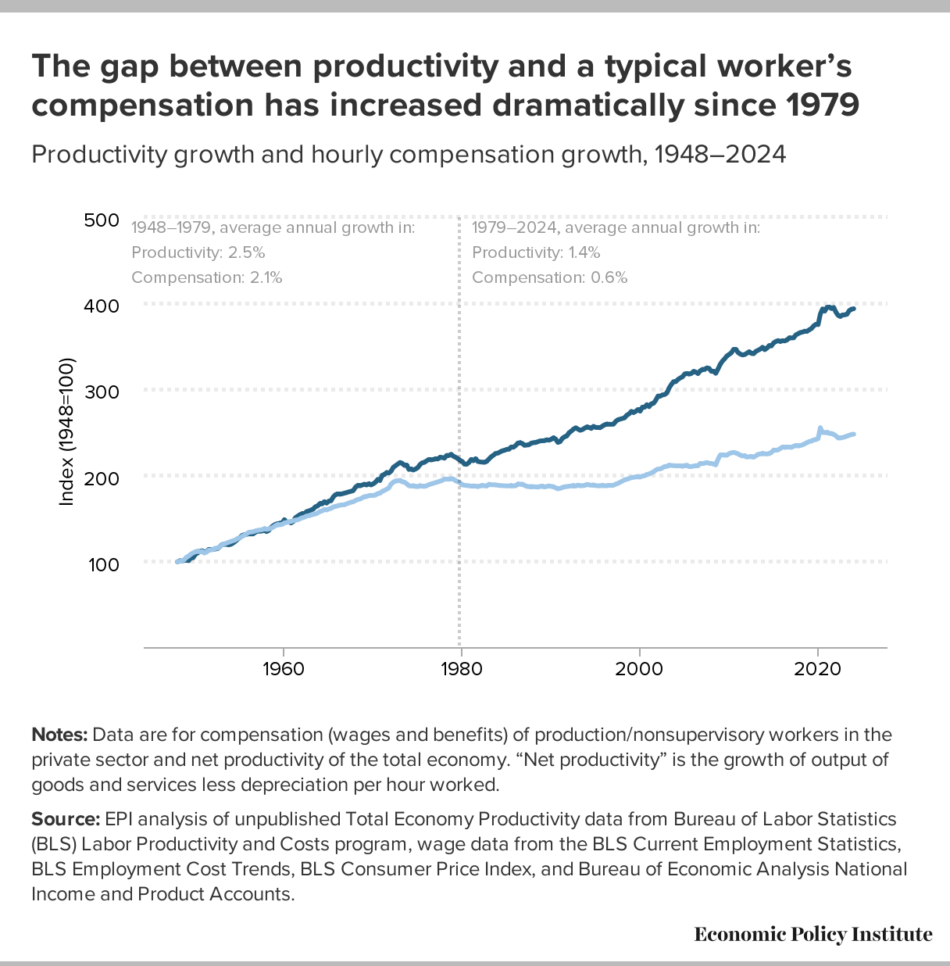
@deviake agrees with you here. There are obviously improvements in pay and life expectancy. That is only natural when you are a first world country that makes advancements via tech. The issues stem with proportionality, I think he's being a bit hyperbolic, I don't think he thinks that America is literally a Russia tiered oligarchy. But when you look at the productivity, the rates of the top 0.01%'s growth and you compare it with the middle classes. It is clear that it didn't all "trickle down". Productivity has grown ~3x more than the amount that the average pay has.
The huge gap between rising incomes at the top and stagnating pay for the rest of us shows that workers are no longer benefiting from their rising productivity. Before 1979, worker pay and productivity grew in tandem. But since 1979, productivity has grown eight times faster than typical worker...

www.epi.org
Also, we should chill on
@kflo lol, he's out of touch on some things, I think he is genuinely well meaning and empathetic. He's one of the few Trump Voters that isn't voting out of spite towards trans-people or immigrants. I suspect that he believes that the tax cuts benefit him less than it does. The Trumpist tariffs will definetely outweight the benefit of tax cuts imo and don't get me started on the social complications....