Recently read these books -
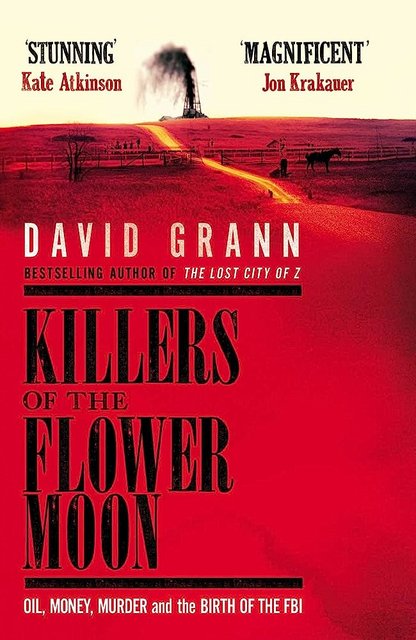
David Grann's
Killers of the Flower Moon: Oil, Money, Murder and the Birth of the FBI
Wanted to read it before the Scorcese film comes out later in the year (curious how they will handle what is a fairly sprawling narrative), but the book itself is absolutely phenomenal. Not to mention eye-opening. Yes, obviously I am well aware that the native peoples of North America were, to put it lightly, fucked over by the white settlers and the American state. But even having some general historical sense of this, the book is incredibly striking in revealing just how much they were fucked over and, more specifically in the books case, how recently.
The narrative deals with the so-called Osage murders, also known as the "Reign of Terror", which occured in Oklahoma in the 1920s. The cliff notes version is that due to previously being fucked off their own territory (forcefully resettled, if you will) by the US government, the Osage had purchased some land in some rocky shithole that no one else wanted. They had the foresight to include a provision in the contract that they and their descendents would own the mineral rights to anything found on the land. When a veritable ocean of oil was later discovered in this territory, this made the Osage living there with a "headright" (kind of like a share in the communal mineral rights, inherited by descent) very wealthy indeed. Some of the most wealthy people per capita in the USA, if not the world. This state of affairs provoked a heady mixture of fascination and disgust on the part of white America, not to mention jealousy.
In the 1920s several wealthy Osage men and women started turning up dead in mysterious circumstances, either shot dead, poisoned, and even blown up with a bomb in one instance. The death rate of the Osage at this time was ludicrously high on a per capita basis, way more than the national average. And, it will become clear, all because of the oil money and the headrights. Killers of the Flower Moon unravels an extensive conspiracy surrounding these murders, exposing both the corruption of the local authorities and wider societal prejudices. It is somehow even more fucked up than I imagined: a vast network of white Oklahomans across multiple walks of life arranging to murder innocent Osage men and women for their oil money. Some of these people married Osage purely to try and kill them off for this purpose, or otherwise attemped to force their way into their lives in order to benefit from it.
Really well-written book on an extremely important and disturbing subject. The structure worked very well, with the first part tracing the history of the Osage peoples, the first murders and some necessary background info; the second delving more into a hardboiled true-crime sort of thing, tracking the FBI investigation and outcome. The tag-line refers to the "birth of the FBI", which suggests the critical role they had in solving the case and unravelling the criminal conspiracy. The third, and perhaps most important chapter, deals with the aftermath of the case, the authors own investigation and his discussions with current Osage members.
As this third part makes painfully clear, the FBI investigation was far from the full picture. The FBI solved one, albeit particularly widespread and comprehensive conspiracy relating to one set of murders. There were many other Osage members who were murdered in similarily mysterious circumstances and whose deaths were never even investigated at the time. In other words, we aren't dealing with some narrow criminal conspiracy headed by one mastermind - though that is part of the story - but with a government aparatus and local populace that was almost rotten to the core. Naturally, for the specifics, I highly recommend the book. I couldn't put it down and blitzed through it in a few days.
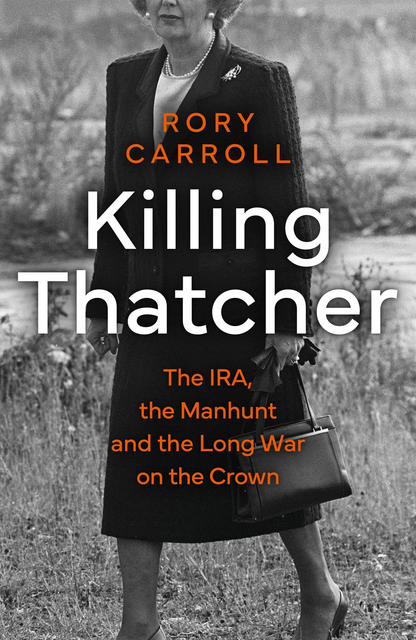
Rory Caroll’s
Killing Thatcher: The IRA, the Manhunt and the Long War on the Crown
Absolutely brilliant, definitely the best Troubles-related book since 2018’s Say Nothing. As the title suggests the book deals with the Brighton Bombing and the IRAs attempt to assassinate Margaret Thatcher. The most audacious assasination attempt in Britain since the Gunpowder Plot. It is meticulously researched and extremely well-written, providing a gripping account of the initial planning and execution of the plot, as well as the extensive investigation which followed as all the resources of Britain’s security forces were deployed to catch those responsible. It’s all written with the pace and intrigue of a le Carré-esque thriller, only of course it is all true.
The main strength though is how the book weaves the main narrative of the bombing and the manhunt with various tangents and autobiographical details which humanise the people involved - the victims of IRA atrocities, the policemen and soldiers responsible for catching them, but also the IRA volunteers themselves. Caroll certainly doesn’t hold any IRA sympathies and his descriptions of bombing attacks and their aftermaths are incredibly hard-hitting, bringing home the brutal reality of this “long war”. This is obvious perhaps, but it can be forgotten when the IRA is often discussed in an abstract political sense.
If not outright adopting each characters ‘side’, the chapters are written using language appropriate to the person being discussed. Given how contentious language and terminology can be here, I thought it was a good choice. In this way the book takes us inside IRA Army Council meetings and Active Service Units (mostly the so-called England Department, of course), just as effectively as it does through Tory cabinet meetings and British security force operations.
The book does also take great pains in at least attempting to explain historical forces within Irish history (linking these events to the Fenian Dynamite campaign of the 1880s for instance), as well as the more immediate political ferment out of which the Provos emerged in the 1960s. Caroll seems to want to understand what would drive seemingly ordinary people to commit such acts. Around the tighter main narrative of the bombing, it recounts the early history of the Troubles, the assassination of Mountbatten, the Narrow Water ambush, the Hunger Strikes, and various other events which would all play a part in leading up to Brighton.
However, this is all done with a lively style that comes naturally in the course of each chapter. It is journalism, not a thorough academic history. Would definitely recommend to anyone.
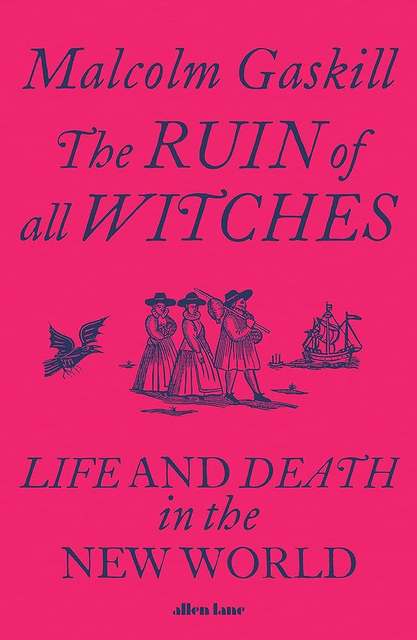
Malcolm Gaskill's
The Ruin of All Witches: Life and Death in the New World
Definitely one of the absolute best pop history books I’ve read. It deals with a little known incident of witch-hunting which took place on a remote New England plantation called Springfield in 1651. That is, some forty years before the more infamous Salem. The narrative of the book largely focuses on the stories of Hugh and Mary Parsons, the husband and wife who became embroiled in these events.
The book's initial portion deals with the early history of the Springfield plantation, sketching out some necessary background of the town and its inhabitants. Like other early settlements, this was conceived to be a kind of ‘city on a hill’, a godly community shining out in the wilderness. Of course, as the book makes clear this did not in any way prohibit commercial enterprise.. Right from the off there were some who did very well from their business ventures in the New World. But of course many more ordinary homesteaders who did not and who found themselves in significant debt.
Along with this, we also follow the stories of Hugh and Mary Parsons and their arrival into this strange land. This was a land of opportunity and perhaps of religious toleration, but it was also incredibly daunting. Especially out in the more remote settlements, far from Boston. These small communities were framed against the vastness of America’s then untamed wilderness, against inhospitable weather, the threat of disease, drought, and death. There was the threat - real and imagined - of the land's indigenous peoples. And, of course, there was an unseen supernatural menace too - witches and other diabolic forces which fitted very easily into this eerie landscape.
It’s a history book, but obviously it’s written as a narrative so I won’t simply ‘spoil’ the story and recount exactly what happens. The author, Malcolm Gaskill, is a historian who specialises in early modern witchcraft and The Ruin of All Witches does a brilliant job of bringing to life the mental world of the puritans who settled in New England. These were times of religious and political strife, which would come most prominently to the fore when the world was “turned upside down” following the English Civil War. Events which naturally had a huge impact in the New England just as in the old.
For me the book’s main strength is in how it successfully recounts much of this complex history through a microcosm, both through the story of Springfield and also the family drama of the Parsons. While telling this very human story, it manages to pull in a number of these other threads - contemporary theological debates, anxieties of societal decline and political fears. It is both a personal history of a particular place and people, and general intellectual history of New England.
It’s easy to be on our high horse looking back from our supposedly enlightened present, but as the book explains these witch-hunts were products of various different factors coalescing. Genuine and deeply held religious convictions collided with the anxieties mentioned above, which in turn fueled the fire of local rivalries, resentments, petty jealousies and long standing feuds. In the right circumstances this could lead to the tragedies like those covered in the book, or indeed like in Salem. Gaskill does a brilliant job of weaving all this together in a really riveting narrative.


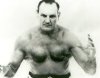




 ) and his infamous Stomach Crush hold which would lay out any wrestler