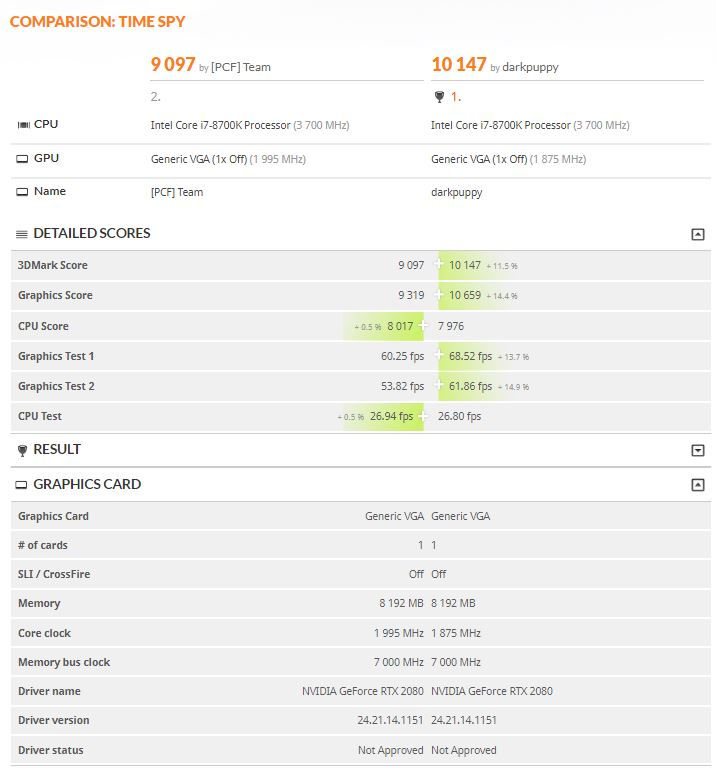
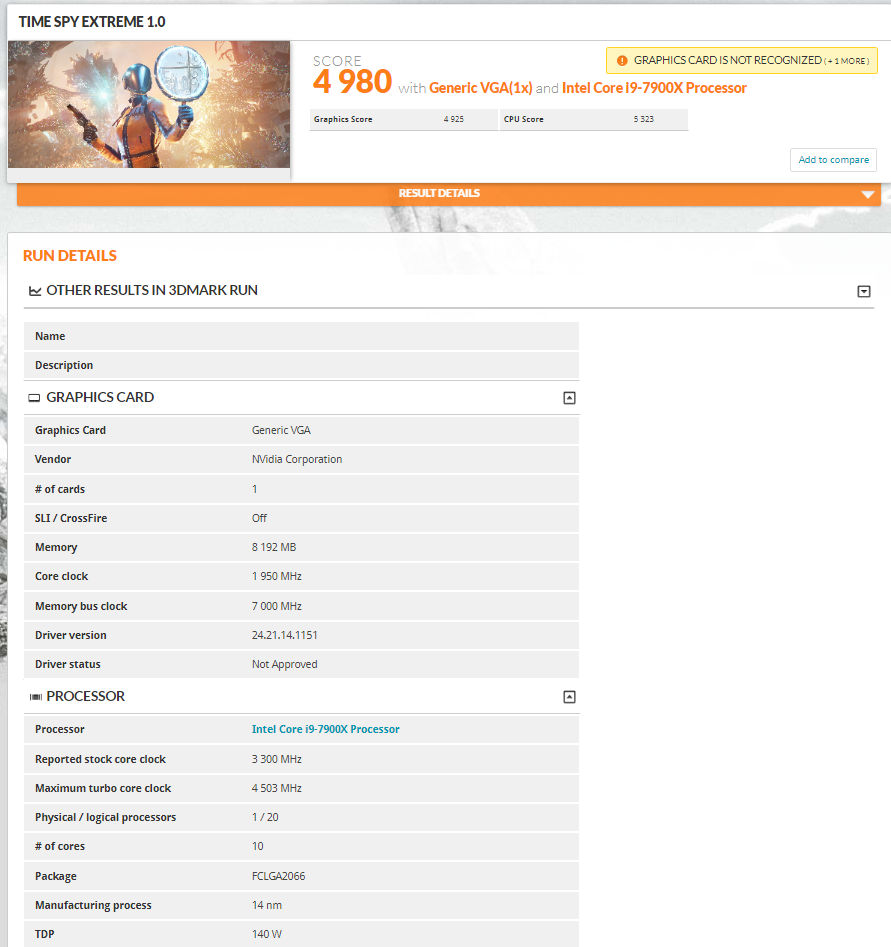
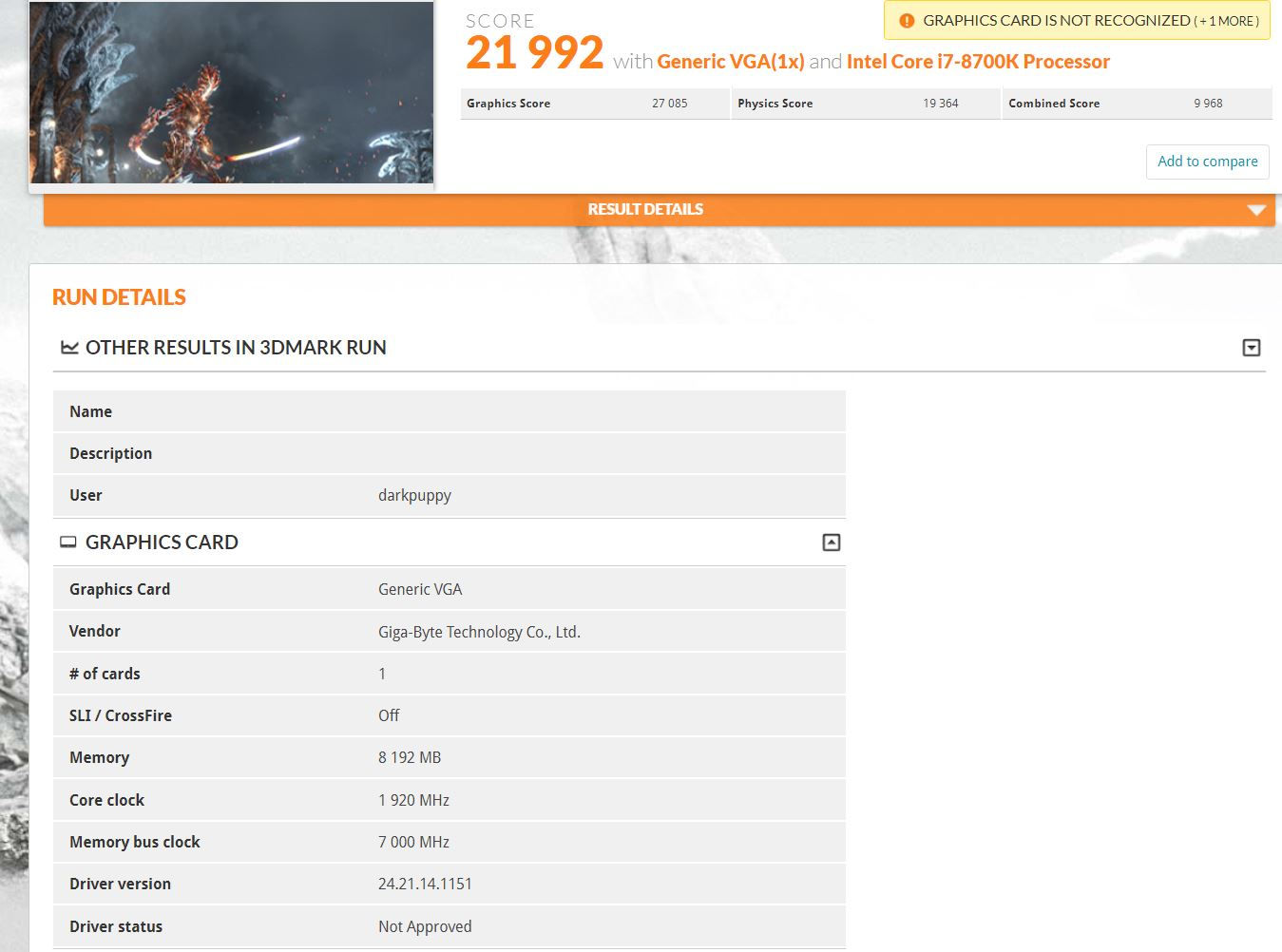
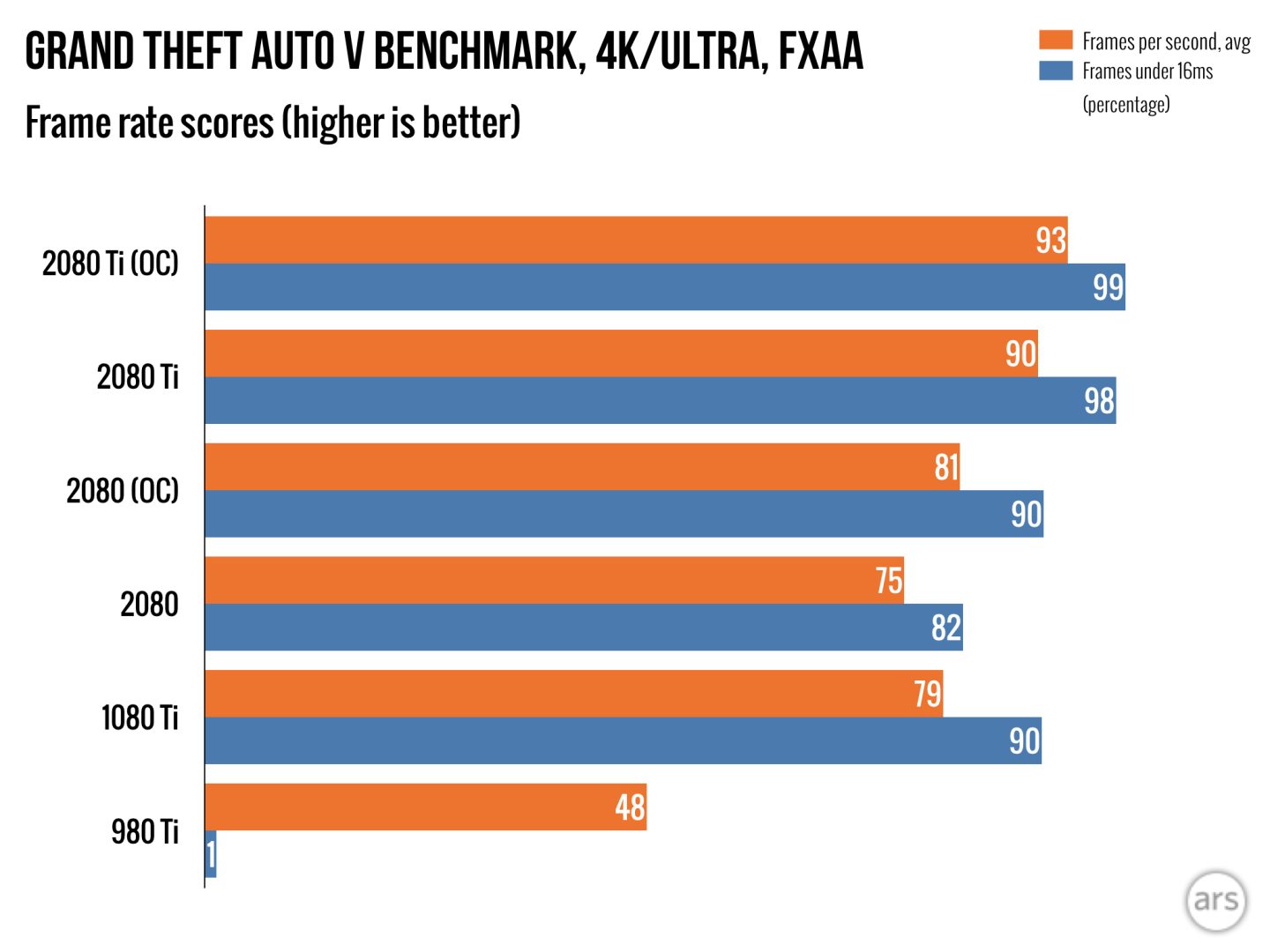
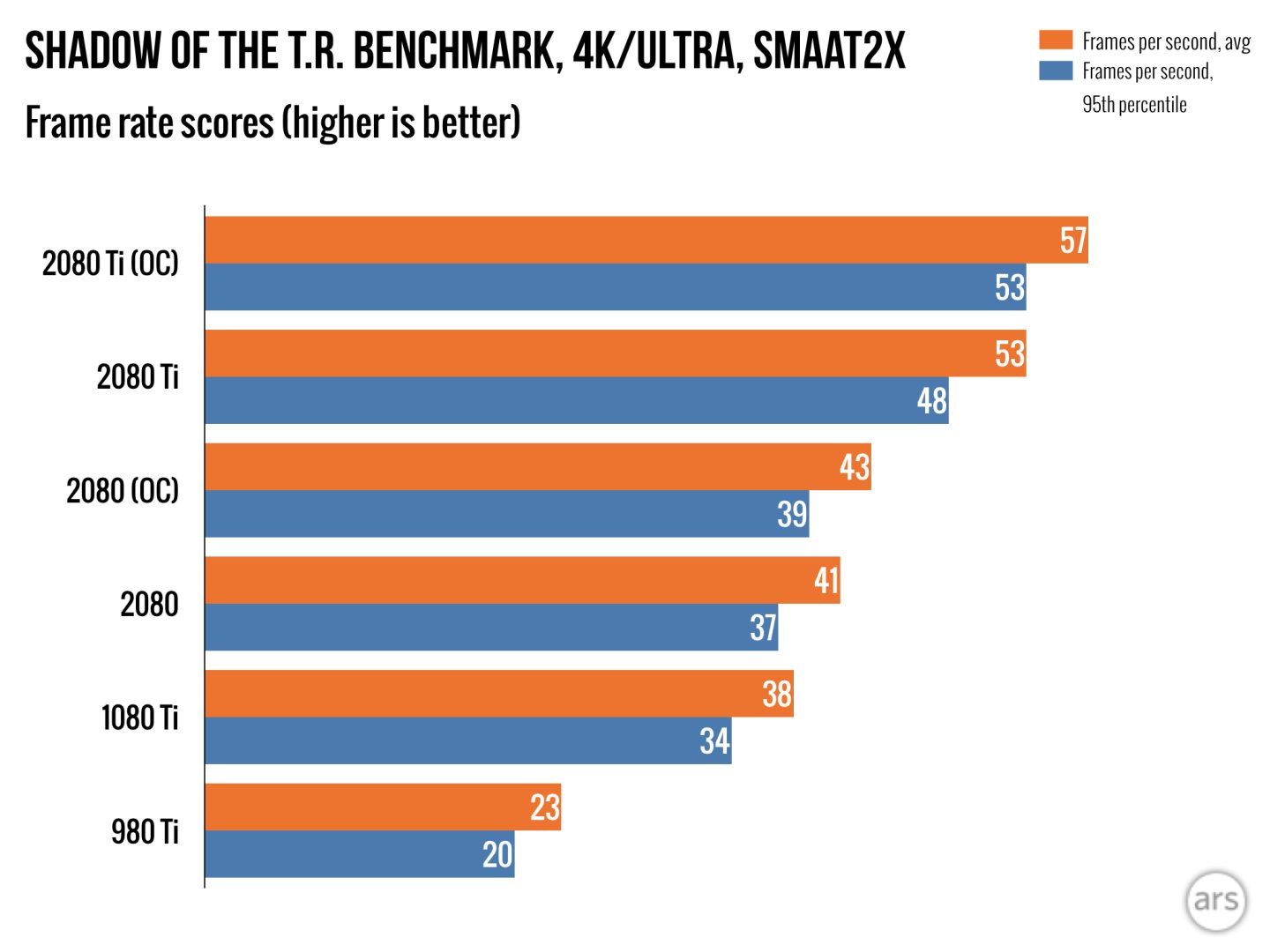
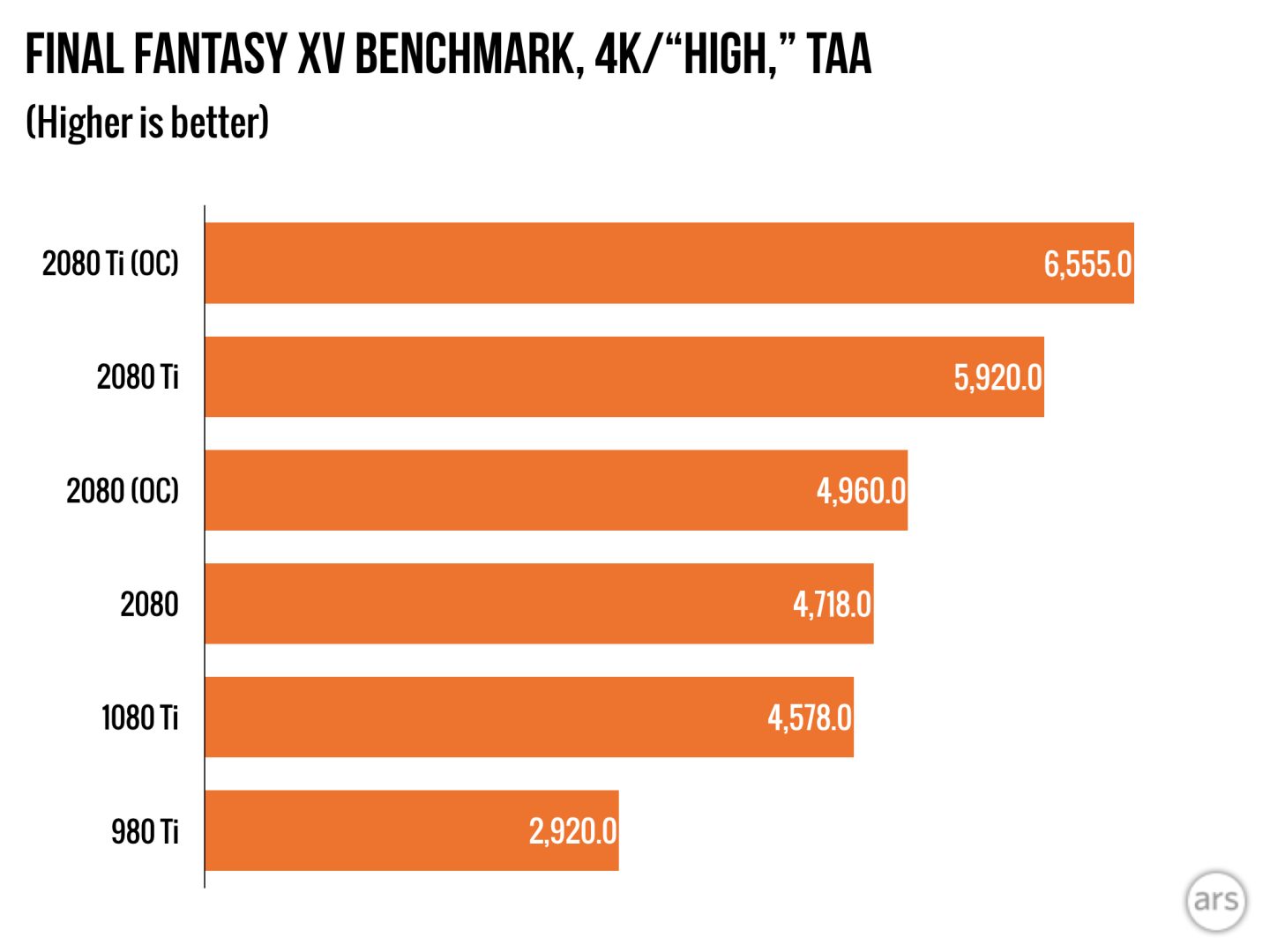
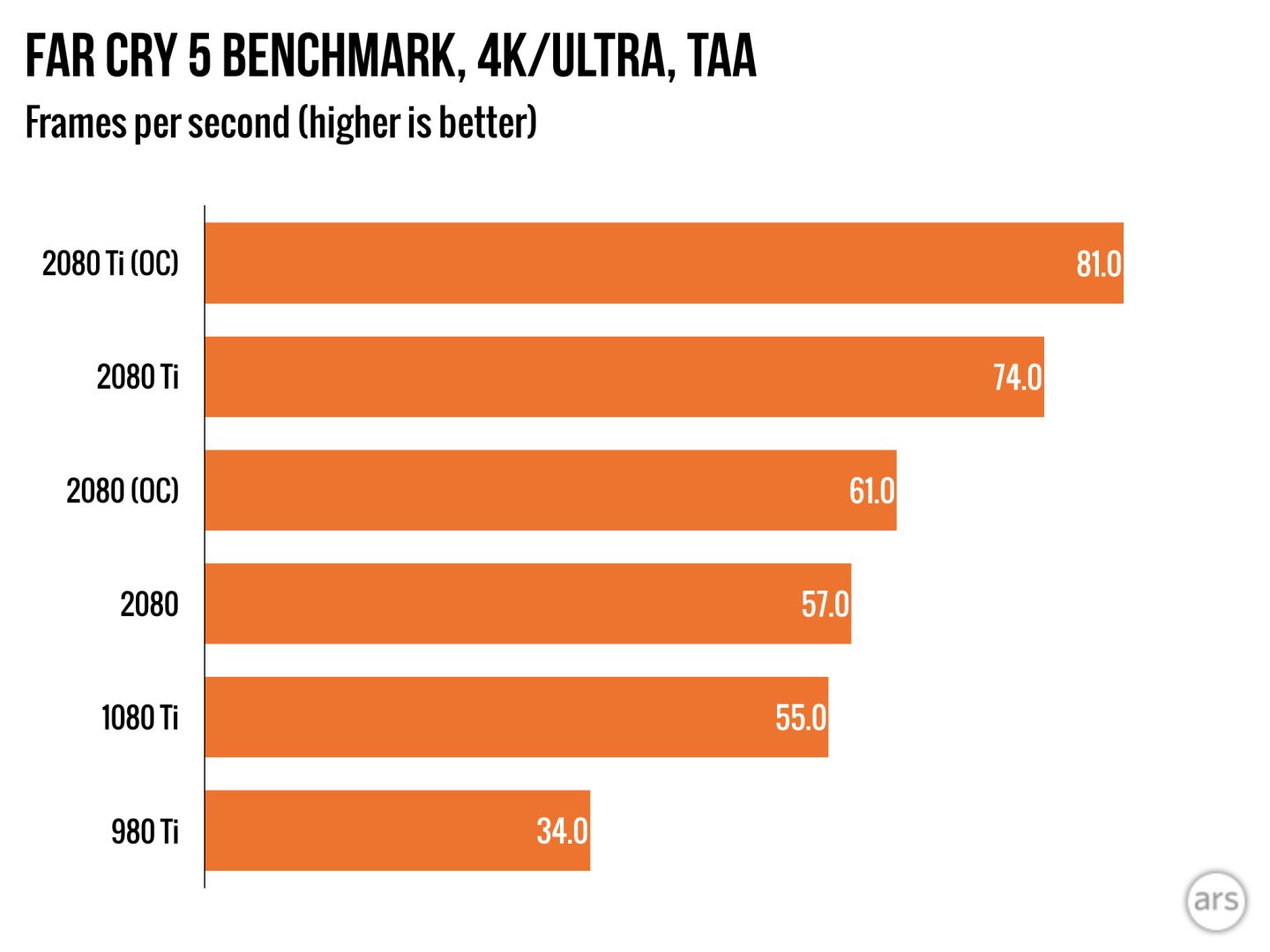
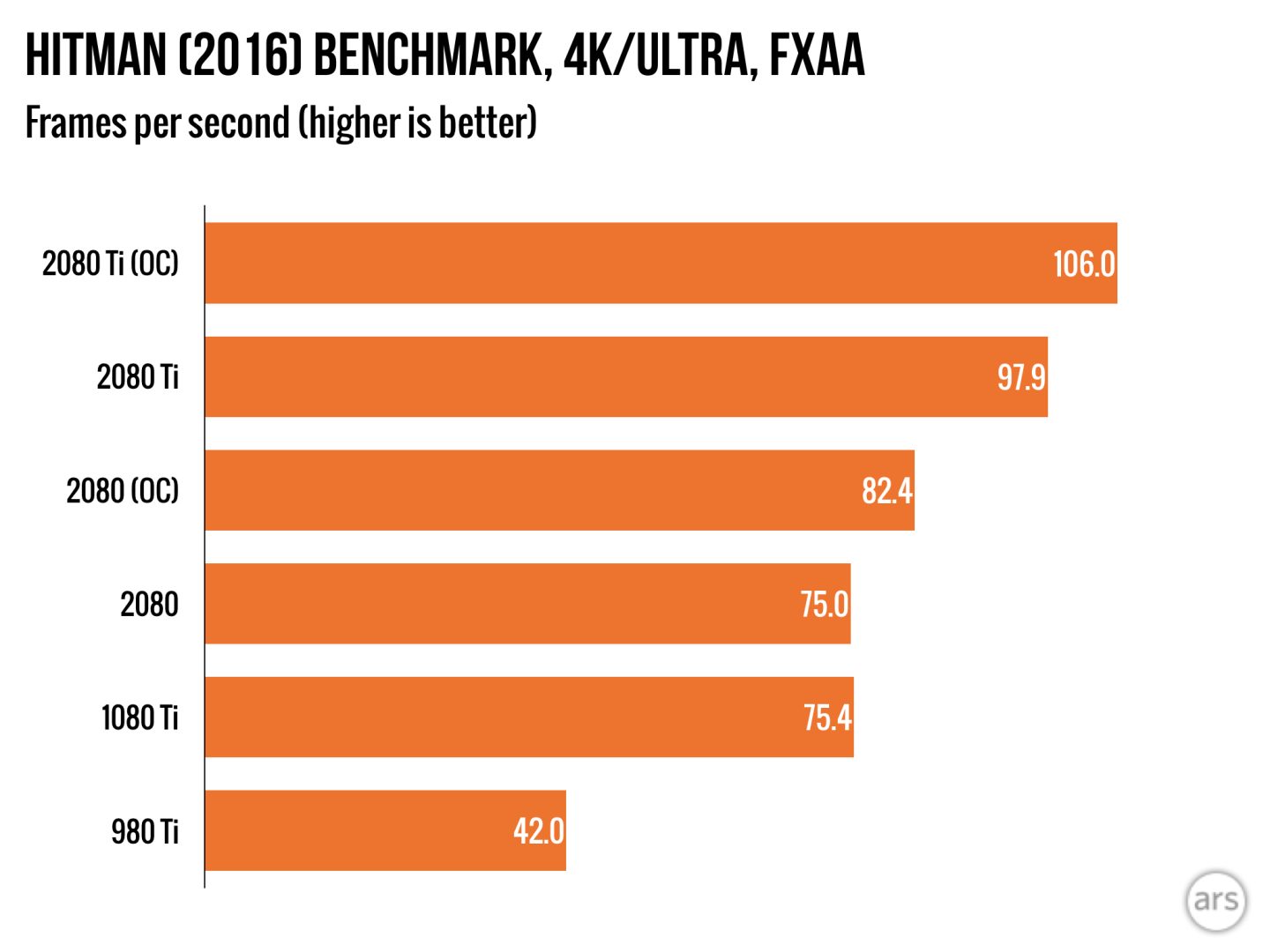
Im looking for a card and 1080 ti is what im looking at but the 2080 is stronger and costs roughly the same. The prelim benchmarks shows its better.
Is that so? Where are you able to pre-order the RTX 2080 right now?
- You haven't seen trustworthy independent benchmarks for RTX 2080 performance in games
- The RTX 2080 is debuting at $799 MSRP while the GTX 1080 Ti debuted at $699
- The cheapest GTX 1080 Ti on PCPP right now, which isn't even a sale, is $629.
- IGN has a pre-order guide page up for the new cards-- all of them at MSRP are out of stock (only the Founder's Edition at NVIDIA's home website appears to be available for $799)
In other words, if you're going to cite inflated post-crypto real world prices for the GTX 1080 Ti, then you're going to have to cite a real world price for this elusive RTX 2080.
Furthermore, this is a stupendously shortsighted metric for measuring the value of the RTX 2080. The
GTX 1080 was significantly more powerful than the GTX 980 Ti, in terms of real-world gaming benchmarks, too, and yet it didn't inflate the MSRP of its respective predecessor by this margin. That's because the value (performance per dollar) is supposed to be
increasing over time. That's why historically electronic components have depreciated immediately after release, always. I'll re-post from the last page:
MSRP
- RTX 2080 = $799 (September, 2018: +28 months)
- GTX 1080 = $599 (May, 2016: +20 months)
- GTX 980 = $549 (September, 2014: +16 months)
- GTX 780 = $499 (May, 2013: +14 months)
- GTX 680 = $499 (March, 2012: +16 months)
- GTX 580 = $499 (November, 2010)
It has a little to do with the Crypto market, and far more to do with a technological push-market. They're caught in the classic quandary, and they're the market driver (not AMD). NVIDIA anticipates the advent of VR taking over gaming, but software developers aren't going to waste time developing games for a market that doesn't exist because nobody's hardware can handle it. It's similar to electric cars, and the problem Elon and the auto industry has faced. You need demand to create the revenue in order to develop the new technology, and create the incentive for the market to build infrastructure around it, but nobody wants to buy it until it exists, so you lack the demand.
If you want to understand what is going on here I recommend-- as always-- Anandtech. The RTX cards are not about improving rasterization performance, and that's what actually matters to us gamers:
The NVIDIA Turing GPU Architecture Deep Dive: Prelude to GeForce RTX
He mentions anti-aliasing and how it was an absolute gimmick in the first generation. It took a long time before that hardware had enough market penetration, and processing power overhead, that developers really began to embrace it. Frankly, even today, I find anti-aliasing to be the
least noticeable graphic effect that has the worst cost-to-perception ratio within most games' graphic settings. In other words, anyone who pays these prices for RTX video cards is essentially being plundered for R&D capital while this technology moves forward, and gains market penetration. It's like Vulkan or DX12. You're being charged a $200 upcharge for hardware that you're not going to use because games that harness it almost certainly aren't going to be around, meaningfully, for a half decade or more.
There's a reason you're seeing all these 4K benchmarks. It's the only genuinely attractive feature. If you're someone who wants to game at 4K the GTX 10 series just doesn't cut it. Otherwise, if at all possible, this is the generation of video cards to "skip", or at least avoid until your system can't handle a game you want to play, to your satisfaction, in which case it's time to get out and get what you need at the best price.