What exactly makes the bench press less practical for athletes, especially fighters?

Explains why he sought out a S&C coach after the fight, perfectly. Everyone goes and trains the S&C for six months almost exclusively when they get out grappled, right?

Hughes was the better grappler AND the stronger man at the time.

Now to add to this Hughes max bench I believe was 300lbs which is decent but nothing special.
 
Explains why he sought out a S&C coach after the fight, perfectly. Everyone goes and trains the S&C for six months almost exclusively when they get out grappled, right?
Look at GSP's training. He isn't moving heavy weight.
 
Using the GSP vs Matt Hughes first fight is not being honest. Matt Hughes has thousands of hours of mat time already. He isn't some goon that isn't skillful. Hughes was a seasoned fighter with over 40 fights when he first fought GSP. GSP was taking 6-8 hours bus rides on the Friday nights to NYC to learn BJJ on Saturdays and Sundays then go home by Monday morning.

A better example is probably Bob Sapp vs Nog but there is a huge difference in weight. Maybe Lesnar vs Mir is the best example.
 
Last edited:
I'm a American football player, a lineman but I used to be a kickboxer. What's true for football is more so for fighters.

In football you very rarely get the opportunity to get both hands on someone, brace and win a rep by pushing them off your body. What wins reps is unilateral strength and the base that allows for that. It's basically all about that squat, cleans etc. Most of the upper body is about injury reduction when your applying force at odd angles or as you pass a target.

Fighting is that but more so as speed and power rule the day, not static strength. There's also almost no instance where the press is a variable in a fight.

The bench is a quick way to add some mass and strength in the upper body push, but once the early gains are made I think its way more advantageous to move to unilateral and power based movements.

 
Hughes was the better grappler AND the stronger man at the time.

Now to add to this Hughes max bench I believe was 300lbs which is decent but nothing special.
That surprises me as much as they echo'd how farmboy strong he was. But throwing a body around isn't benching. Hell they even praise Askrens strength and he looks like he would struggle with a plate.
 
It depends on what you mean by low weight and high rep. Low weight high rep scheme is like 12-15 range. When I used to train frequently at advanced classes. We would do a 3-5 round jump rope warmup and in between rounds. We had to do 50 of each pushups, situps and squats. They would randomly throw other workouts in the middle of the session to get you tired so you don't go balls out in sparring. I don't think I ever repped 50 of anything in a weight room. I am going to try it out. I will try to find a weight where I can successfully do 50 reps on a bench.
I used to do high rep squat workouts. I would do 100 squats, first set was 50, then 30 then 20. Ny thighs would be burning and would be really winded. It helped a lot with the physical fitness tests I was doing in the military and I also thought it really mimiced the exhaustion I felt in my lungs and lowerbody doing mma
 
Well I agree in principle that you don't need to be strong to be a good fighter why wouldn't spend time increasing the one attribute that's probably the easiest to increase? It's only at the top level well technical ability can overcome strength advantages and even then how many times have you seen someone who is overwhelmingly strong hang with somebody who's technically superior? If strengthen matter then there wouldn't be weight classes.
I think strength is pretty important for mma. Most of the champions I would say are stronger than most in their weight class but it isn't really worth it for a fighter to sacrifice their other training just to become strong. For example nate and nick naturally are lanky and not very strong, it wouldn't be worth it for them to go really hard into strength training so that they could be as strong as Usman or woodley who are naturally much stronger guys. It probably couldn't even be achieved without sacrificing their cardio and mobility, without peds and they would also have to take away time from actual fight training
 
If you're going to do a rated exercise with a dips are easier to load than weighted push-ups. But the question is what are you trying to accomplish I'm a firm believer that time spent in a gym should be spent on two things getting stronger getting bigger if you want to increase your endurance go for a run.
So you think that physical therapy, calisthenics, plyometrics and high rep training in general is useless?
 
I'm a American football player, a lineman but I used to be a kickboxer. What's true for football is more so for fighters.

In football you very rarely get the opportunity to get both hands on someone, brace and win a rep by pushing them off your body. What wins reps is unilateral strength and the base that allows for that. It's basically all about that squat, cleans etc. Most of the upper body is about injury reduction when your applying force at odd angles or as you pass a target.

Fighting is that but more so as speed and power rule the day, not static strength. There's also almost no instance where the press is a variable in a fight.

The bench is a quick way to add some mass and strength in the upper body push, but once the early gains are made I think its way more advantageous to move to unilateral and power based movements.
Pushups aren't a unilateral strength exercise either though yet they are pretty much a staple for fighters, especially in boxing
 
Pushups aren't a unilateral strength exercise either though yet they are pretty much a staple for fighters, especially in boxing

push ups has the benefits of training the serratus anterior because you push through your scapula at the top which you don't do in bench since you are locked in at the bench

the serratus anterior is often called the punchers muscle
 
push ups has the benefits of training the serratus anterior because you push through your scapula at the top which you don't do in bench since you are locked in at the bench

the serratus anterior is often called the punchers muscle
I feel like you could activate your scapula on bench if you use a light enough weight. I mean I've never tried it but, the serratus punch exercise that is popular in physical therapy is performed while lying on your back and using a light weight
 
I feel like you could activate your scapula on bench if you use a light enough weight. I mean I've never tried it but, the serratus punch exercise that is popular in physical therapy is performed while lying on your back and using a light weight

sure probably but now we're not really benching anymore, we're doing some gay version of a bench press
 
Explains why he sought out a S&C coach after the fight, perfectly. Everyone goes and trains the S&C for six months almost exclusively when they get out grappled, right?

Every serious fighter trains S&C of some form but no serious fighter trains it "almost exclusively" at the expense of skills training for 6 months. Maintaining even basic competitor proficiency (let alone elite skills) requires constant drilling and going live. Training requirements for fighting or grappling precludes maintaining a big bench for MOST competitors not withstanding it's not that relevant in the first place.

I'm a nobody but I've trained combat sports and S&C for many years. I am weak AF by powerlifting standards but have rarely felt underpowered vs. same size guys in combat sports, even elite guys. Despite training and even emphasizing it at one point, my bench has always sucked. As an adult I've mostly ranged between 160-170 lbs and for most of my late teens and 20's when I was competing regularly, my 1RM was between 225 and 245. Of course I'm a nobody but I've trained around high level guys and pro fighters. At my current gym there's one PFL guy and a former UFC top 5 who walk within 10 lbs of me. I've lifted with them and their numbers are similar to mine in the lifts we did including bench. Bear in mind these are strong dudes with aggressive TD and top control games who have imposed their games at the highest levels.

No one is arguing S&C doesn't matter for combat sports athletes. I've been saying it's advisable to be at "average trained athlete" levels i.e. you've milked your linear noob gains in the big lifts. That's easy to achieve but once there, diminishing returns and opportunity cost make further strength gains impractical for MOST competitors (without PEDs) while also maintaining and improving skills and other attributes. The two dudes I mention above are explosive AF and do lots of explosion training including flinging medicine balls, plyometrics, jump training and oly lifts with lighter weights. Exploding into positions with proper timing and technique is what elite competitors do.
 
Last edited:
Those bench press standards are low. You're saying 1.25x bodyweight bench is acceptable for a professional fighter?

My boxing coach weighs about 200 lbs and I'd be surprised if he can bench 220 lbs. It's probably more common in striking than you think, but I'd wager most that can wrestle would bench 1.25x pretty easily.
 
So you think that physical therapy, calisthenics, plyometrics and high rep training in general is useless?
Plyometrics isn't weight training, and if you check out my training log you will see that I'm a big proponent of calisthenic training as well as weighted calisthenics training. High rep work has its place but my belief is high rep work is best suited for connective tissue repair.

Everything has its place but there are certain attributes that take precedence movement efficiency IE skill work. timing and precision IE sparring, partner drills or two-step partner dress as examples. cardio although that should be built with your sport mostly cycling running and swimming are great for recovery and GPP. And finally strength. I think strength is the key attribute to develop one because it's the easiest and two because it has the most direct benefit to any sport not just fighting. Secondly would be flexibility/ mobility.

Rehab and injury prevention obviously priorities but they are not attributes the way flexibility and strength off.

So to answer your question are they useless no they are needed for a well-developed strength and conditioning program but they are not the most important
 
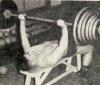
Kimura found it practical enough to be part of his regular routine.

F152F9AA-A97F-461B-85D5-597CE4469A3C.jpeg

(I have no idea what those plates weigh and I’ve never seen so many that are close yet different in size.)
 
Look at GSP's training. He isn't moving heavy weight.

I'm speaking specifically about after Hughes 1.

Using the GSP vs Matt Hughes first fight is not being honest.

It's entirely honest. It was an example of where a superior athlete was beaten because he was weaker rather than less skilled.

At my current gym there's one PFL guy and a former UFC top 5 who walk within 10 lbs of me. I've lifted with them and their numbers are similar to mine in the lifts we did including bench.

I believe you and I don't care. My argument has been simple. I'm not going to repeat myself.
 
He was less skilled though.
The GSP of 4 years later with the strength he had in the first fight would have won no doubt.
I don't get the GSP being more skilled part. He was on his 8th fight vs someone who has 40 fights and was training for years. Suddenly Hughes is unskilled? GSP didn't even meet Phil Nurse then. There is no Danaher or Greg Jackson in his corner. Firas wasn't even his head coach until way later too.
 
Back
Top