Nature & Animals THe Sherassic Park - A PaLeontologic adventure

Alaska’s Frigid North Slope Was Once a Lush, Wet, Dinosaur Hotspot, Fossils Reveal​


Conditions north of the Arctic Circle, where dinosaurs roamed in abundance during the mid-Cretaceous, were warmer than today, with rainfall comparable to “modern-day Miami”

Christian Thorsberg Daily Correspondent
March 20, 2024


Boreal forests, spongy tundra and perpetual sunshine mark summertime in Alaska’s North Slope—the state’s northernmost region, which borders the Arctic Ocean. And when autumn comes, the landscape transforms into a snow-covered darkness, a harsh place endured throughout winter and spring by both people and wildlife.

But 100 million years ago, the dinosaurs roaming this region didn’t have to contend with the frigid conditions of present-day Alaska, according to a study published in late January in the journal Geosciences. Instead, the researchers say, mid-Cretaceous Alaskan climates were warmer, rich in groundwater and more reminiscent of today’s tropics than the Arctic, at least in terms of rainfall.


Scientists uncovered a large swath of fossilized dinosaur tracks, plants, feces and tree trunks in the foothills of the DeLong Mountains along the Kukpowruk River in the state’s northwest—well within the Arctic Circle. From these preserved remains, the team of paleontologists and geologists could construct a picture of the mid-Cretaceous climate and dinosaur life.

“We were at a spot where we eventually realized that for at least 400 yards, we were walking on an ancient landscape,” study co-author Anthony Fiorillo, formerly a paleontologist at Southern Methodist University and now executive director of the New Mexico Museum of Natural History and Science, says in a statement. “We found large upright trees with little trees in between and leaves on the ground. We had tracks on the ground and fossilized feces… It was just like we were walking through the woods of millions of years ago.”

alaskadino3.webp

A ten-centimeter-wide theropod track found along the banks of the Kukpowruk River. Anthony Fiorillo

Researchers analyzed rocks, preserved logs and plant material, learning the area was once a network of rivers or deltas and floodplains. Fossilized tree stumps, some as wide as two feet in diameter, hinted at a former thick forest.

The site was also “crazy rich with dinosaur footprints,” says Fiorillo in the statement. Roughly 75 fossil tracks indicate the relatively warm area supported plant-eating and carnivorous dinosaurs, and it likely attracted prehistoric birds, which made 15 percent of the tracks.


Additionally, the warm, wet paleoclimate received up to 70 inches of precipitation annually. “The samples we analyzed indicate it was roughly equivalent to modern-day Miami,” Fiorillo adds in the statement.

The research was focused at and near the Nanushuk Formation, an outcrop of sedimentary rock between 94 million and 113 million years old—which, crucially, formed around the same time as an early version of the Bering Land Bridge connecting Asia and North America.

Almost every Cretaceous Period dinosaur that eventually lived in what came to be the American Southwest crossed that land bridge, the team told High Country News’ Emily Schwing in September. Studying the prehistoric creatures’ Alaska range, they say, helps shed light on their cross-continental journey.

But some of the greatest insights from the study are the clues it offers into ancient climates.

“The tracks are interesting, but I think the more important information in the paper is that there’s a geochemical record of high rainfall and fossils of decent-sized trees,” Matthew Carrano, a research geologist and Dinosauria curator at the Smithsonian’s National Museum of Natural History, tells Smithsonian magazine in an email.

images

While the polar region received varying amounts of sunlight throughout the year in the Cretaceous, similar to today, the findings show the weather was more consistently warmer and wet. How the region’s flora and fauna survived, the authors suggest in the statement, may offer clues into our climate-changing present and future, with the Arctic warming as much as four times faster than the rest of the world.

“Given that we have no similar ecosystems today, this is important because it provides us with a past window into times when increased global warmth permitted very different environments near the poles,” Carrano says.

For the team, this fossil site is a new jumping-off point for further research into the dynamics of the Cretaceous Arctic.

“I keep saying it’s like going to the candy store,” Fiorillo told High Country News. “Someone opened the door and here [the dinosaurs] are.”

2826ed_34024d8e5efa42188e234df443654989~mv2.jpg

https://www.smithsonianmag.com/smar...et-dinosaur-hotspot-fossils-reveal-180983990/
 

Fossil of ‘largest snake to have ever existed’ found in western India​

Scientists estimate Vasuki indicus was up to 15m long, weighed a tonne and would have constricted its prey

3195.jpg

Some of the vertebrae discovered in Gujarat, the largest of which was about 11cm wide. Photograph: AP

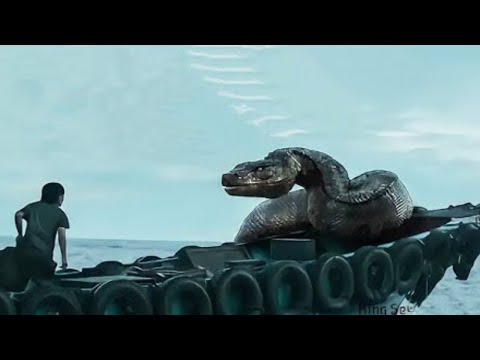
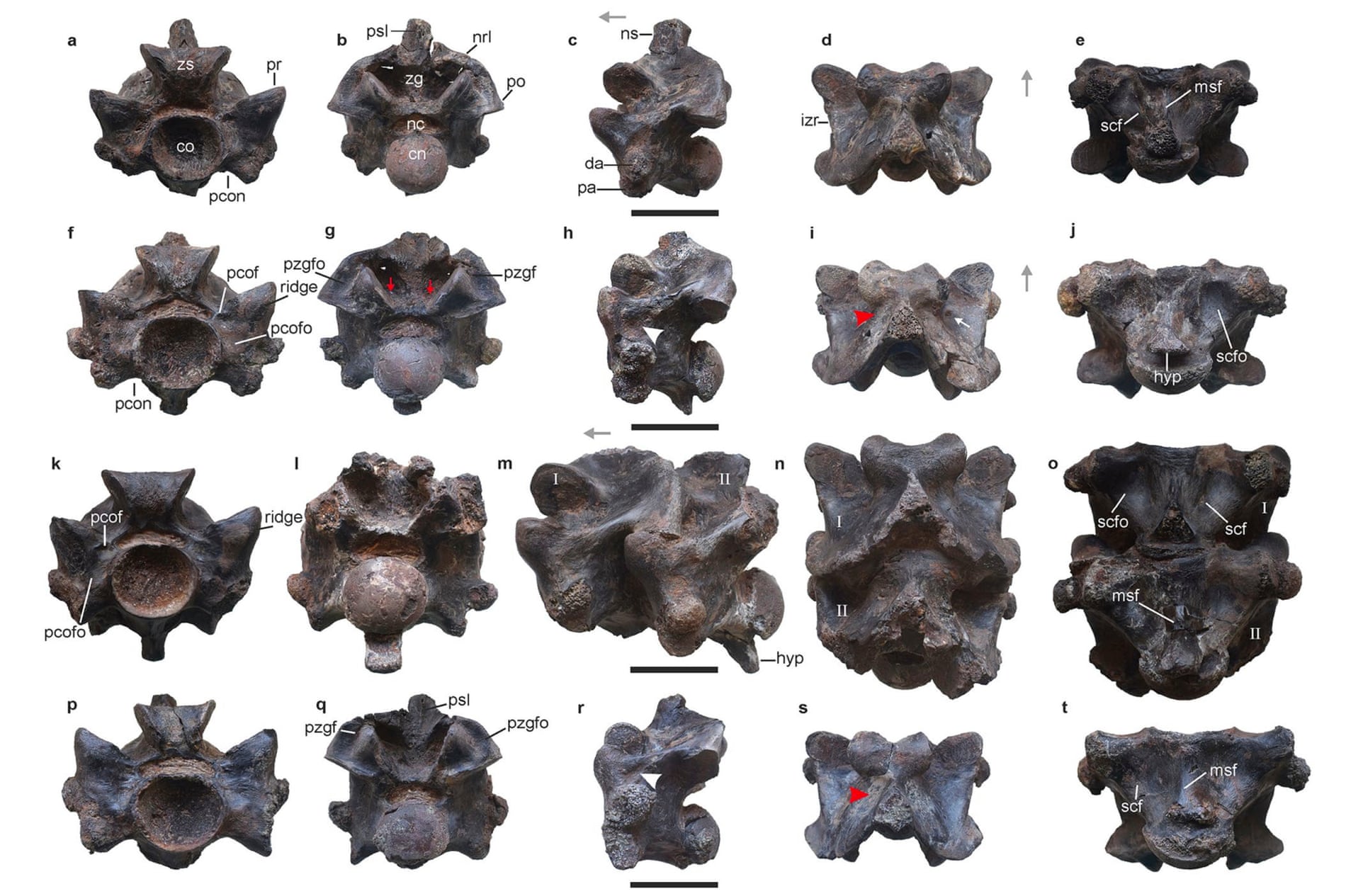
Fossil vertebrae unearthed in a mine in western India are the remains of one of the largest snakes that ever lived, a monster estimated at up to 15 metres in length – longer than a T rex.

Scientists have recovered 27 vertebrae from the snake, including a few still in the same position as they would have been when the reptile was alive. They said the snake, which they named Vasuki indicus, would have looked like a large python and would not have been venomous.

The lignite mine where the fossil was found is located in Panandhro, in the western state of Gujarat.
RAW_11272023RC_63140--938cbd0f2e33a73f726e521767322a1f.JPG

“Considering its large size, Vasuki was a slow-moving ambush predator that would subdue its prey through constriction like anacondas and pythons. This snake lived in a marshy swamp near the coast at a time when global temperatures were higher than today,” said Debajit Datta, a postdoctoral researcher in palaeontology at the Indian Institute of Technology Roorkee and the lead author of the study, published in the journal Scientific Reports on Thursday.

Because of the incomplete nature of the Vasuki remains, the researchers gave an estimated length range of 11-15 metres and 1 tonne in weight.


Vasuki, named after the snake king associated with the Hindu deity Shiva, rivals in size another huge prehistoric snake called Titanoboa, whose fossils were discovered in a coalmine in northern Colombia in 2009. Titanoboa, estimated at 13 metres long and more than 1 tonne, lived between 58m and 60m years ago. The largest living snake today is Asia’s reticulated python at 10 metres.

“The estimated body length of Vasuki is comparable to that of Titanoboa, although the vertebrae of Titanoboa are slightly larger than those of Vasuki. However, at this point, we cannot say if Vasuki was more massive or slender compared to Titanoboa,” said Sunil Bajpai, a palaeontologist, professor at Roorkee and the study’s co-author.
Randy-Orton.jpg

These huge snakes lived during the Cenozoic era, which began after the dinosaur age ended 66m years ago.

The biggest Vasuki vertebra was about 11cm (4in) wide. Vasuki appears to have had a broad, cylindrical body perhaps around 44cm wide. The skull was not found.

“Vasuki was a majestic animal,” Datta said. “It may well have been a gentle giant, resting its head on a high porch formed by coiling its massive body for most parts of the day or moving sluggishly through the swamp like an endless train.”

hqdefault.jpg


The researchers are unsure what prey Vasuki ate, but considering its size it could have included crocodilians. Other fossils found in the area included crocodilians and turtles, as well as fish and two primitive whales, Kutchicetus and Andrewsiphius.

Vasuki was a member of the madtsoiidae snake family that appeared roughly 90m years ago but went extinct about 12,000 years ago. These snakes spread from India through southern Eurasia and into north Africa after the Indian subcontinent collided with Eurasia about 50m years ago, Bajpai said.

This was a dominant snake family during the dinosaur age’s late stages and into the early Cenozoic before its diversity dropped, he added.

“Snakes are amazing creatures that often leave us stunned because of their size, agility and deadliness,” Datta said. “People are scared of them as some snakes are venomous and have a fatal bite. But snakes perhaps attack people out of fear rather than with an intent to attack. I believe snakes, like most animals, are peaceful creatures, and an important component of our ecosystem.”

https://www.theguardian.com/environment/2024/apr/18/fossils-largest-snake-found-western-india
 

‘Echidnapus’ hints at a lost age of egg-laying mammals​

The extinct creature's bizarre mix of features are reminiscent of platypuses and echidnas

060724_cg_echidnapus_feat.jpg

About 100 million years ago, a diverse community of egg-laying mammals inhabited Australia. The six known species, three of which are newly described, are shown in this artist’s rendition. Clockwise from lower left: Opalios splendens, or “echidnapus;” pig-sized Stirtodon elizabethae; Kollikodon ritchiei; Steropodon glamani; rat-sized Parvolapus clytiei; and Dharragarra aurora, the earliest known platypus.
PETER SHOUTEN


By Carolyn Gramling

The Australian platypus is one of Earth’s most unusual creatures — but there was a time when it might not have stood out in a crowd. In roughly 100-million-year-old rocks in Australia, scientists have unearthed three new species of monotremes, a group of egg-laying mammals that today include only the platypus and another Australian oddball, the echidna (SN: 11/18/16).

The fossil discoveries double the number of known monotreme species during this brief span of the Cretaceous Period, hinting at a bygone Age of Monotremes, mammal biologist Timothy Flannery and colleagues report May 26 in Alcheringa: An Australian Journal of Palaeontology.

Australia today is thought of as a land of marsupials, mammals that nurture developing young in pouches, including kangaroos, koalas and wombats. But a whole “civilization” of diverse monotremes, ranging from pig-sized to rat-sized, may have radiated across the continent first, says Flannery, of the Australian Museum in Sydney.

The modern platypus, native to eastern Australia and Tasmania, is one of the weirdest creatures on Earth (SN: 12/3/14). The creatures have a toothless, ducklike bill, a beaverlike tail and otterlike feet; their bills are also electro-sensory organs that allow them to detect prey in murky waters. Male platypuses even produce venom, delivered via spurs on the rear feet. The platypus’ Frankensteinian combination of parts was so surprising to 18th century European biologists that many initially thought it to be a hoax.

The three new Cretaceous species, along with new specimens of three previously identified extinct monotremes, were identified from fossil teeth and jaws found in the Lightning Ridge opal fields in New South Wales. These modest fossils, particularly when compared with previously found fossil monotremes, provide a wealth of information, the team notes: the animals’ relative sizes, number and orientation of teeth, even likely position on the family tree.

One of the newfound species, officially named Opalios splendens, earned the nickname “echidnapus” for its mix of features, which are found in modern echidnas and platypuses. These traits suggest it was an ancestor of both. Another of the new species, Parvopalus clytei, is among the smallest monotremes ever found, roughly the size of a rat. The third, Dharragarra aurora, is the earliest known species of platypus.

The discoveries also reveal a slow progression in monotremes from toothy to toothless. The earliest known monotreme, Teinolophos trusleri, was a beakless, shrew-sized creature that lived about 130 million years ago. It had five molar teeth — but by 100 million years ago, the newly discovered species suggest, some monotremes had only three molars, while modern platypuses and echidnas are essentially toothless. That shift may be related to a change in diet to softer, more slippery food — leaving crunchier fare like crustaceans and insects to a newly arrived competitor from New Guinea, the water rat.

https://www.sciencenews.org/article/echidnapus-newfound-species-mammal
 

Human activity contributed to woolly rhinoceros' extinction, suggest researchers​

by Johnny von Einem, University of Adelaide

human-activity-contrib-1.jpg

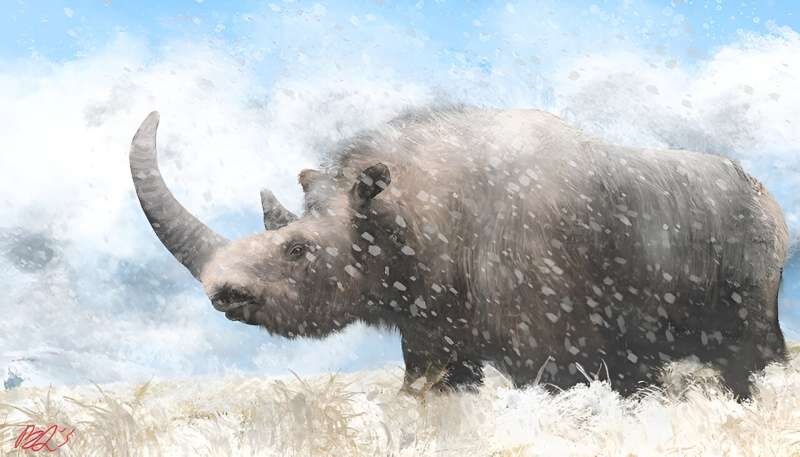
Researchers have discovered sustained hunting by humans prevented the woolly rhinoceros from accessing favorable habitats as Earth warmed following the Last Ice Age.

An international team of researchers, led by scientists from the University of Adelaide and University of Copenhagen, used computer modeling to make the discovery, shedding light on an eons-old mystery.

"Using computer models, fossils and ancient DNA, we traced 52,000 years of population history of the woolly rhinoceros across Eurasia at a resolution not previously considered possible," said lead author Associate Professor Damien Fordham, from the University of Adelaide's Environment Institute.

"This showed that from 30,000 years ago, a combination of cooling temperatures and low but sustained hunting by humans caused the woolly rhinoceros to contract its distribution southward, trapping it in a scattering of isolated and rapidly deteriorating habitats at the end of the Last Ice Age.

"As Earth thawed and temperatures rose, populations of woolly rhinoceros were unable to colonize important new habitats opening up in the north of Eurasia, causing them to destabilize and crash, bringing about their extinction."

An iconic species of megafauna, the woolly rhinoceros had thick skin and long fur, and it once roamed the mammoth step of northern and central Eurasia, before its extinction around 10,000 years ago.

This recent discovery, published in PNAS, contradicts previous research that found humans had no role in the extinction of the woolly rhinoceros—despite the animal co-occurring with humans for tens of thousands of years prior to its extinction.


"The demographic responses revealed by our analysis were at a much higher resolution to those captured in previous genetic studies," said Professor Eline Lorenzen, from the University of Copenhagen's Globe Institute.

"This allowed us to pinpoint important interactions that woolly rhinoceroses had with humans and document how these changed through space and time. One of these largely overlooked interactions was persistent low levels of hunting by humans, probably for food."

Humans pose a similar environmental threat today. Populations of large animals have been pushed into fragmented and suboptimal habitat ranges due to overhunting and human land-use change.

There were 61 species of large terrestrial herbivores—weighing more than one metric ton—alive in the late Pleistocene, and only eight of these exist today. Five of those surviving species are rhinoceroses.

"Our findings reveal how climate change and human activities can lead to megafauna extinctions," said Professor David Nogues-Bravo, from the University of Copenhagen, who was a co-author of this study.

"This understanding is crucial for developing conservation strategies to protect currently threatened species, like vulnerable rhinos in Africa and Asia. By studying past extinctions, we can provide valuable lessons for safeguarding Earth's remaining large animals."

https://phys.org/news/2024-06-human-contributed-woolly-rhinoceros-extinction.html
 

Newfound dinosaur with giant, horned headpiece named after iconic Norse god​

News
By Harry Baker

SU93nW7eMpAnoPiTGSzCDK-650-80.jpg.webp

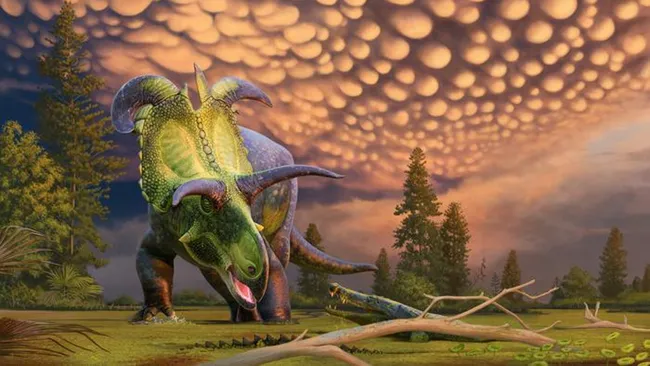
The new species of horned dinosaur lived in what is now North America around 78 million years ago. The curved horns at the very top of its head are the largest of their kind ever seen. (Image credit: ©Andrey Atuchin for the Museum of Evolution in Maribo, Denmark.)

Paleontologists have named a newly unearthed dinosaur after the Norse god Loki due to a striking similarity between its horns and the deity's regal headpiece, as it was depicted in recent superhero films and television shows.


Scientists described the new dino, Lokiceratops rangiformis, in a study published Thursday (June 20) in the journal PeerJ. The researchers identified the species based on the partial remains of a skull unearthed in 2019 at the Judith River Formation in Montana's Badlands, around 2 miles (3.2 kilometers) from the U.S.-Canada border.

The species belongs to the clade Ceratopsia — a group of herbivorous horned dinosaurs, including Triceratops, that is renowned for its members' large bony head plates, or frills, and long, pointed horns.
MV5BNjIwY2NiYmUtN2EzNC00NTU4LTgxZDItMDNiNGQzNGE3NDhmXkEyXkFqcGdeQXVyNDg1MTcyMDA@._V1_.jpg

However, L. rangiformis, which was likely around 22 feet (6.7 meters) long and weighed 5.5 tons (5 metric tons), "pushes the envelope on bizarre ceratopsian headgear" to extremes never seen before, study co-lead author Joseph Sertich, a paleontologist at Colorado State University, said in a statement.

L. rangiformis had a massive frill that was adorned with a pair of flattened, curvy horns at the top, in addition to the standard lance-like horns protruding from above its eyes. The frill horns are the largest ever seen in any ceratopsian. The unique headgear inspired the scientists to name the dinosaur's genus Lokiceratops in honor of the Norse trickster god Loki, who is often depicted wearing a helmet with similarly ornate horns — especially in modern comic-book portrayals by Marvel.

The newfound species also had a third pair of asymmetrical horns at the top of its frill, which earned it the species name rangiformis, meaning "looks like caribou" in Latin, because caribous (Rangifer tarandus) also have antlers that are longer on one side of their head than the other.

The dinosaur's skull also notably lacks a nose horn, a feature most other ceratopsians possess, including Triceratops.

https://www.livescience.com/animals...horned-headpiece-named-after-iconic-norse-god
 
I like to think there's a gigantic T-Rex waiting to be discovered by science.

T. rex could have been 70% bigger than fossils suggest, new study shows​

News
By Jennifer Nalewicki

The largest T. rex to ever live may have weighed up to 33,000 pounds.

There's no denying that Tyrannosaurus rex was one of the biggest and baddest dinosaurs to ever walk the planet. But exactly how big could this ferocious dinosaur get? In a new investigation, researchers attempted to answer that question.

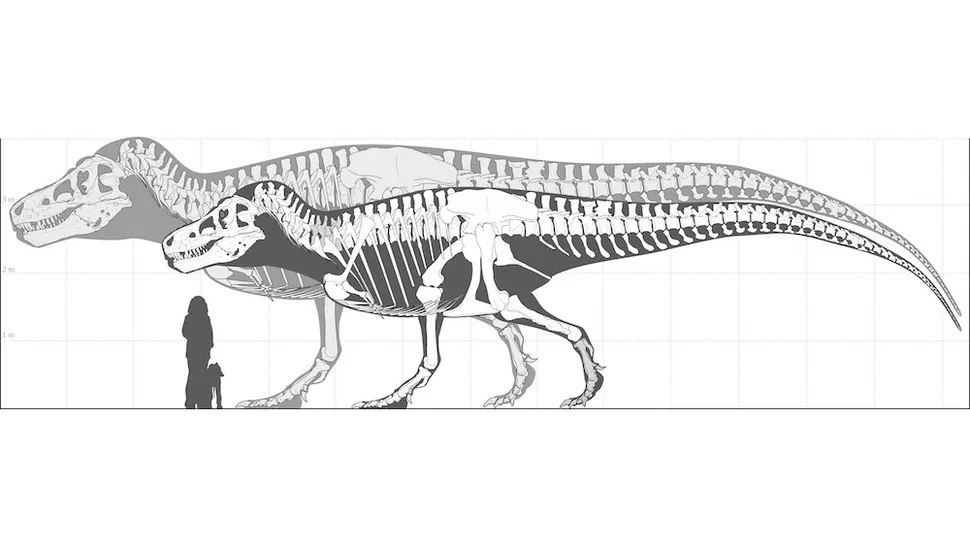
Paleontologists from the Canadian Museum of Nature in Ottawa, Ontario, estimated that the largest T. rex may have tipped the scales at a whopping 33,000 pounds (15,000 kilograms), making it heavier than an average school bus, which weighs about 24,000 pounds (11,000 kg).

The study was peer reviewed and published July 24 in the journal Ecology and Evolution.


Currently, the heftiest T. rex on record is a specimen nicknamed "Scotty," which weighed 19,555 pounds (8,870 kg) when it was alive — about as much as 6.5 Volkswagen Beetles.

According to the new research, the largest T. rex "would have been about 70% bigger" than Scotty, said study co-author Jordan Mallon, a research scientist and head of palaeobiology at the Canadian Museum of Nature. "That almost doubles the size of T. rex," Mallon told Live Science.

To reach this weighty conclusion, the scientists first examined the fossil record, which shows that approximately 2.5 billion T. rexes once lived on Earth. However, only a small fraction — just 32 adult fossils — have ever been discovered, giving the scientists a limited amount of information to pull from.

Mallon and co-author David Hone, a senior lecturer and deputy director of Education at Queen Mary University of London, also looked at population numbers and average life spans to create a model of the largest possible T. rex. They also considered variations in body size based on sexual dimorphism — size differences between the sexes of animals within a species.

"We wound up building two models — one exhibiting zero dimorphisms and one with strong dimorphism," Mallon said. "If T. rex was dimorphic, we estimate that it would have weighed up to 53,000 pounds (24,000 kg), but we rejected that model because if it were true, we would have found even larger individuals by now."

Using this data, the scientists were able to model T. rex’s growth curve throughout its lifetime — and estimate how big an adult might have grown.

nUpj9F2R4CKsoV537nCpX5-970-80.jpg.webp

An artist's illustration of how large T. rex could theoretically be when compared to "Scotty," the heftiest T. rex on record. (Image credit: Witton 2024)

Mallon cautioned that until a T. rex is found that is comparable in size to the one in the model, the model’s conclusions are purely speculative.

"This is simply a thought experiment with some numbers behind it. It's something that's fun to think about," Mallon said.

Indeed, the investigation highlights how challenging it is for paleontologists to draw conclusions about dinosaur species from a very limited fossil record.

"This reminds us that what we know about dinosaurs isn't much at all, since the sample sizes are so small," Thomas Carr, a vertebrate paleontologist from Carthage College in Kenosha, Wisconsin, who wasn't involved in the new research, told Live Science. "Right now, we are nowhere near the sample size needed, especially when compared to other species of animals."
Carr, who attended the conference where researchers presented their findings, added that it’s plausible T. rex may have been much bigger than any individual scientists have found so far
"It's truly a stupendous animal," Carr said. "To imagine a T. rex of that magnitude is extraordinary, and I think an animal of that size is within reach statistically."

Editor's note: This story was originally published on Nov. 17, 2022 when the research was presented at the Society of Vertebrate Paleontology's annual conference. It was updated on July 26, 2024 following the paper's publication in a peer-reviewed journal.

Jennifer Nalewicki

https://www.livescience.com/how-big-could-tyrannosaurus-rex-get

@Tyrannosaurus rex
 

T. rex could have been 70% bigger than fossils suggest, new study shows​

News
By Jennifer Nalewicki

The largest T. rex to ever live may have weighed up to 33,000 pounds.

There's no denying that Tyrannosaurus rex was one of the biggest and baddest dinosaurs to ever walk the planet. But exactly how big could this ferocious dinosaur get? In a new investigation, researchers attempted to answer that question.

Paleontologists from the Canadian Museum of Nature in Ottawa, Ontario, estimated that the largest T. rex may have tipped the scales at a whopping 33,000 pounds (15,000 kilograms), making it heavier than an average school bus, which weighs about 24,000 pounds (11,000 kg).

The study was peer reviewed and published July 24 in the journal Ecology and Evolution.


Currently, the heftiest T. rex on record is a specimen nicknamed "Scotty," which weighed 19,555 pounds (8,870 kg) when it was alive — about as much as 6.5 Volkswagen Beetles.

According to the new research, the largest T. rex "would have been about 70% bigger" than Scotty, said study co-author Jordan Mallon, a research scientist and head of palaeobiology at the Canadian Museum of Nature. "That almost doubles the size of T. rex," Mallon told Live Science.

To reach this weighty conclusion, the scientists first examined the fossil record, which shows that approximately 2.5 billion T. rexes once lived on Earth. However, only a small fraction — just 32 adult fossils — have ever been discovered, giving the scientists a limited amount of information to pull from.

Mallon and co-author David Hone, a senior lecturer and deputy director of Education at Queen Mary University of London, also looked at population numbers and average life spans to create a model of the largest possible T. rex. They also considered variations in body size based on sexual dimorphism — size differences between the sexes of animals within a species.

"We wound up building two models — one exhibiting zero dimorphisms and one with strong dimorphism," Mallon said. "If T. rex was dimorphic, we estimate that it would have weighed up to 53,000 pounds (24,000 kg), but we rejected that model because if it were true, we would have found even larger individuals by now."

Using this data, the scientists were able to model T. rex’s growth curve throughout its lifetime — and estimate how big an adult might have grown.

nUpj9F2R4CKsoV537nCpX5-970-80.jpg.webp

An artist's illustration of how large T. rex could theoretically be when compared to "Scotty," the heftiest T. rex on record. (Image credit: Witton 2024)

Mallon cautioned that until a T. rex is found that is comparable in size to the one in the model, the model’s conclusions are purely speculative.

"This is simply a thought experiment with some numbers behind it. It's something that's fun to think about," Mallon said.

Indeed, the investigation highlights how challenging it is for paleontologists to draw conclusions about dinosaur species from a very limited fossil record.

"This reminds us that what we know about dinosaurs isn't much at all, since the sample sizes are so small," Thomas Carr, a vertebrate paleontologist from Carthage College in Kenosha, Wisconsin, who wasn't involved in the new research, told Live Science. "Right now, we are nowhere near the sample size needed, especially when compared to other species of animals."
Carr, who attended the conference where researchers presented their findings, added that it’s plausible T. rex may have been much bigger than any individual scientists have found so far
"It's truly a stupendous animal," Carr said. "To imagine a T. rex of that magnitude is extraordinary, and I think an animal of that size is within reach statistically."

Editor's note: This story was originally published on Nov. 17, 2022 when the research was presented at the Society of Vertebrate Paleontology's annual conference. It was updated on July 26, 2024 following the paper's publication in a peer-reviewed journal.

Jennifer Nalewicki

https://www.livescience.com/how-big-could-tyrannosaurus-rex-get

@Tyrannosaurus rex

They should name Tyannosaurus Sherrex
 

New Carnivorous Dinosaur Species Unearthed in Kyrgyzstan​


A new genus and species of large theropod dinosaur being named Alpkarakush kyrgyzicus has been discovered in the Middle Jurassic Balabansai Formation in the northern part of the Fergana Depression, Kyrgyzstan.

image_13198-Alpkarakush-kyrgyzicus.jpg

Alpkarakush kyrgyzicus roamed our planet during the Callovian age of the Jurassic period between 165 and 161 million years ago.

The ancient predator was 7 to 8 m (23-26 feet) in body length, and had an extremely protruding ‘eyebrow’ on the so-called postorbital bone, a skull bone behind the eye opening, which indicates the presence of a horn at this point.

Alpkarakush kyrgyzicus belongs to Metriacanthosauridae, a group of medium to large-sized allosauroid theropod dinosaurs that are characterized by high arched skulls, plate-like elongate neural spines, and slender hindlimbs.

“Theropod dinosaurs are one of the most important large groups of dinosaurs, including well-known predators, such as Tyrannosaurus and Allosaurus, as well as modern birds,” said Professor Oliver Rauhut from the SNSB – Bayerische Staatssammlung für Paläontologie und Geologie and his colleagues.

“A variety of theropods are known from the Mesozoic Era, the age of the dinosaurs.”

“Just as lions today are mainly found in Africa and tigers only in Asia, Allosaurus, for example, was widespread in the Jurassic of North America and south-western Europe, while the similarly sized metriacanthosaurs lived in China.”

“However, the region in between, i.e. between central Europe and East Asia, was so far terra incognita — no large Jurassic predatory dinosaurs were previously known from this huge region.”

Two specimens of Alpkarakush kyrgyzicus were recovered from the upper section of the Balabansai Formation close to the town of Tashkumyr, Jalal-Abad, Kyrgyzstan.

“The type specimen represents a subadult individual, whereas the smaller specimen is a juvenile, possibly indicating gregarious behavior,” the paleontologists said.

Alpkarakush kyrgyzicus is the first diagnosable theropod species from the Jurassic of Central Asia west of China.”

They suggest that metriacanthosaurid dinosaurs originated in South-East Asia in the latest Early or Early Middle Jurassic and rapidly became the dominant group of theropodan apex predators in many ecosystems in the continent in the Jurassic.

“Although the affiliation of Alpkarakush kyrgyzicus with the metriacanthosaurids is not necessarily a surprise, this discovery closes a huge gap in our knowledge of the Jurassic theropods,” Professor Rauhut said.

“It leads us to important new insights into the evolution and biogeography of these animals.

The discovery is reported in a paper published this month in the Zoological Journal of the Linnean Society.

https://www.sci.news/paleontology/alpkarakush-kyrgyzicus-13198.html
 

New Abelisaurid Dinosaur Species Discovered in France​

Aug 27, 2024 by Enrico de Lazaro

Paleontologists have added another species to the Cretaceous-period dinosaur fauna of Europe, and this one was found in Normandy, France.

images

Caletodraco cottardi lived in what is now France durign the Cenomanian age of the Early Cretaceous epoch, some 100 million years ago.

The ancient species was a member of Furileusauria, a subgroup of derived abelisaurid dinosaurs (medium- to large-sized bipedal predators that were predominant in the carnivorous fauna during the Late Cretaceous of the ancient southern supercontinent Gondwana) previously known only from South America.
images

“When the family Abelisauridae was erected in 1985, it included the single species Abelisaurus comahuensis, a large carnivorous dinosaur from the Campanian of Patagonia,” said Dr. Eric Buffetaut from PSL Research University and his colleagues.

“It has since become apparent that the Abelisauridae actually constitute a major radiation of neoceratosaurian theropods that played an important part in the Cretaceous continental ecosystems of South America, Africa, the Indian subcontinent and Madagascar.”

“Although the Abelisauridae have a mainly Gondwanan distribution, an abelisaurid was reported from the Late Cretaceous of southern France as early as 1988, and they are now known from Cretaceous localities in several European countries, including France, Spain, Hungary and the Netherlands.”

Two blocks containing the fossilized bones and teeth of Caletodraco cottardi were unearthed the paleotnologist Nicolas Cottard at the foot of the sea cliffs at Saint-Jouin-Bruneval on the coast of the Pays de Caux, in the department of Seine-Maritime, Normandy, north-western France.

“The glauconitic chalk of the Pays de Caux is a marine deposit, as indicated in the present case by a shark tooth present in the matrix, close to one of the bones in the anterior block,” the paleontologists said.

“The nearest land area — where the dinosaur described below probably lived — must have been the Armorican Massif, about 100 km to the south-west.”
images

“The dinosaur specimen must somehow have been carried out to sea, possibly by a stream, after which it must have floated over a fairly long distance until it sank to the bottom.”

“Occurrences of dinosaur remains in marine deposits are rather frequent, although this seems to be the first record from the Late Cretaceous Chalk of the Pays de Caux, where the only relatively common vertebrate fossils are fish teeth.”

The presence of the furileusaurian abelisaurid Caletodraco cottardi in the Cenomanian of Normandy suggests that the history of the Abelisauridae in Europe was more complex than previosuly thought.

“The discovery of Caletodraco cottardi shows that dinosaur remains, although exceedingly rare, do occur in the Chalk of the Anglo-Paris basin and that a careful search for fossil vertebrates in these marine formations can yield surprising and important results,” the researchers said.

“The new species leads to a reassessment of the fossil record of abelisaurids in Europe, showing that, contrary to what could previously be assumed, majungasaurines were not the only abelisaurid subgroup present in that geographical area, since Caletodraco cottardi apparently belongs to the Furileusauria, a highly derived clade of Abelisauridae.”
images

Caletodraco cottardi is one of the earliest known Furileusauria and its occurrence in Europe leads to reconsider the biogeographical history of this group of theropods, hitherto known from South America.”

A paper on the findings was published online in the journal Fossil Studies.

https://www.sci.news/paleontology/caletodraco-cottardi-13210.html
 

Hong Kong unearths its first ever dinosaur fossils​

Official hails discovery ‘of great significance’ on Port Island, with remains of as yet unknown species to go on display in shopping district on Friday

Helen Davidson and agencies

3820.jpg

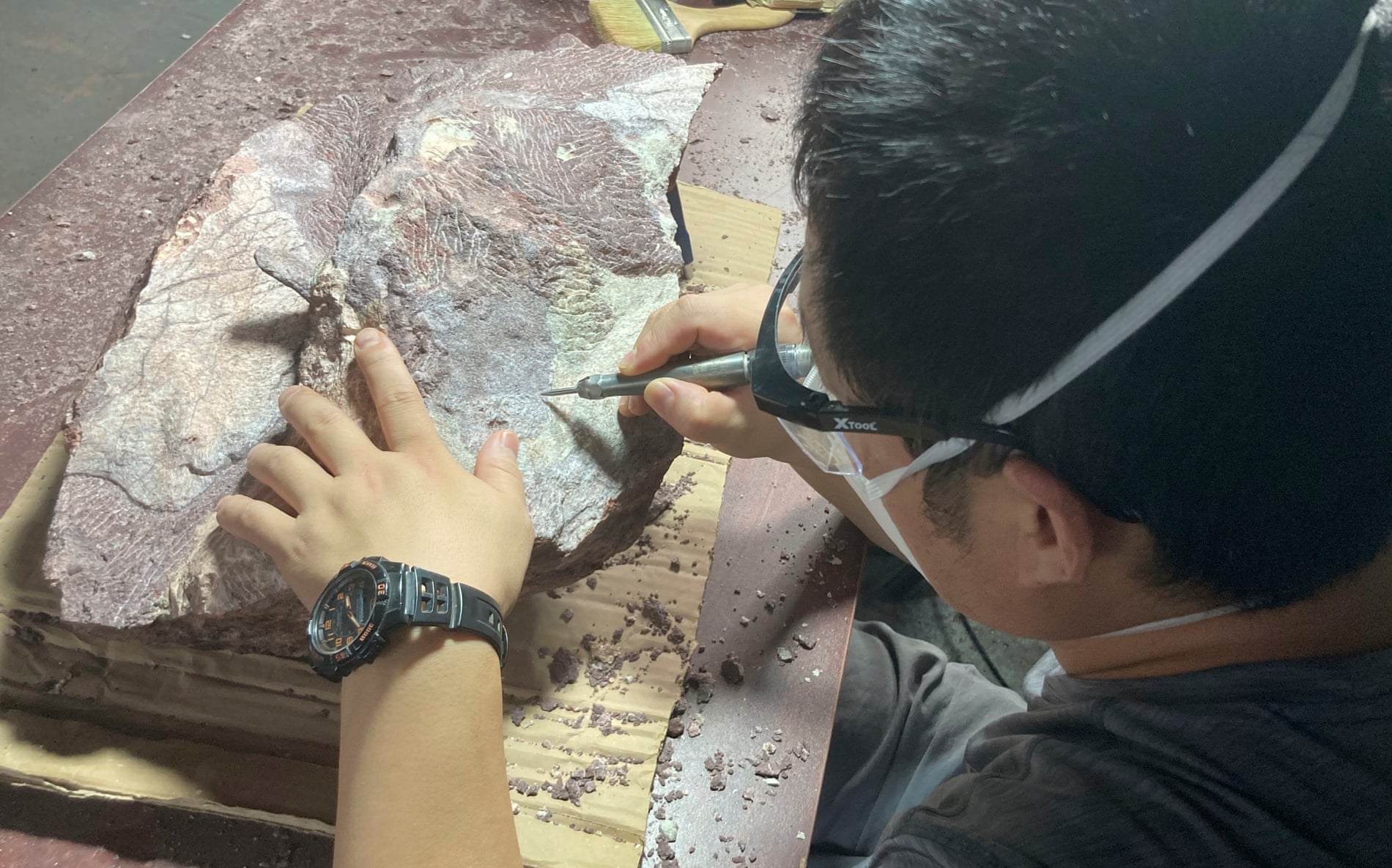
An expert cleans a rock containing dinosaur bone fossil, discovered in Hong Kong's Port Island. Photograph: Hong Kong’s Antiquities and Monuments Office/AP

Hong Kong officials say they have discovered dinosaur fossils in the city for the first time, on a remote and uninhabited island.

The fossils were part of a large dinosaur from the Cretaceous period, about 145m to 66m years ago, the government said in a statement. They will need to conduct further studies to confirm the species of the dinosaur.

The rock was found on Port Island in the Unesco Global Geopark in the city’s north-eastern waters, and the fossils are to be put on display on Friday at one of Hong Kong’s shopping districts.

The secretary for development, Bernadette Linn Hon-ho, said: “The discovery is of great significance and provides new evidence for research on palaeoecology in Hong Kong.”

Experts speculated that the dinosaur’s body was probably buried by sand and gravel and then resurfaced after a large flood, and was subsequently buried again at the discovery site, the statement said.

3707.jpg

The fossil belongs to an as yet unknown species of dinosaur. Photograph: Hong Kong’s Antiquities and Monuments Office/AP

The discovery came after the conservation department in March alerted its Antiquities and Monuments Office to some sedimentary rock containing substances suspected to be vertebrate fossils. Previously only a dinosaur-era fish fossil had been found in Hong Kong.


Prof Michael Pittman, a palaeontologist with the Chinese University of Hong Kong, said the discovery was an exciting moment for the city, which has long hosted extensive dinosaur research but had not yet been able to claim a discovery.

He said: “Hong Kong is famous for being a built-up landscape, but half of it is country park. In the countryside areas most of what you see are dinosaur-era rocks, but it’s volcanic rocks – and they are bad places to find fossils because fossils just melt.

“But Port Island is one of the islands that has dinosaur-age rocks of the right type and right environment.”
images

China is one of four nations leading dinosaur research – alongside the US, Canada and Argentina – and tens of thousands of dinosaur eggs have been found in Guangdong province, where Hong Kong sits.

Pittman said: “I’m hoping that looking at these fossils, we’ll see differences with ones from some of the famous sites in China like Sichuan and Yunnan. It could tell a really interesting story about the biogeography of the animals.”

The government said it had commissioned mainland Chinese experts to conduct field investigations.

Port Island is closed to the public from Wednesday until further notice to facilitate future investigations and excavations.

The fossils will be on display at the Hong Kong Heritage Discovery Centre in Tsim Sha Tsui, one of the city’s popular shopping districts, starting on Friday. The government is also planning to open a temporary workshop for the public to observe experts’ preparation of fossil specimens by the end of 2024.

https://www.theguardian.com/world/2024/oct/24/hong-kong-first-dinosaur-fossils-found-port-island
 

Saber-toothed kitten preserved in ice for 35,000 years​


Found encased in ice in 2020 along the Badyarikha River in the Republic of Sakha, a northeastern region of Russia that borders the East Siberian Sea of the Arctic Ocean, a well-preserved specimen offers a rare opportunity to examine an extinct predator that roamed Eurasia during the Late Pleistocene.

The specimen is a cub with short, thick, and dark brown fur, with longer hair on the back and neck. The front paws are rounded, featuring paws adapted for walking in snow. The claws are sharp and strongly curved, similar to those of modern felines.
Warrior-Sabretooth-Front.jpg

A team led by the Borissiak Paleontological Institute of the Russian Academy of Sciences has identified the frozen saber-toothed cat as belonging to Homotherium latidens. This makes it only the second evidence of H. latidens in the Late Pleistocene of Eurasia, the first being a mandible from the North Sea.

In the study, "Mummy of a juvenile sabre-toothed cat Homotherium latidens from the Upper Pleistocene of Siberia," published in Scientific Reports, researchers conducted radiocarbon dating, detailed morphological and tomographic analyses of the mummified carcass, comparing it to modern lion cubs of similar age.

The remains include the head, anterior body, partial pelvis, and limbs, all encased in ice. Radiocarbon dating places the specimen at approximately 35,471 to 37,019 calibrated years before present.
sabertoothed-kitten-pr-1.jpg

Estimated to be around three weeks old at death, the Homotherium cub exhibits significant anatomical differences from modern lions, including a more massive neck, elongated forelimbs, smaller ears, and a larger mouth opening.


The shape of the digital pads are adapted for navigating snowy environments, suggesting persistent dwelling in cold climates and hunting strategies that would be very distinct from those of contemporary big cats.

CT scans revealed features characteristic of the Machairodontinae subfamily and the genus Homotherium. The skull shows a pronounced mandibular flange, a short and low coronoid process, and an elevated position of the incisors relative to the cheek teeth row.
Chap-Mei-China-Sabertooth-tigre-he-man-vintage.webp

The braincase is more swollen compared to that of a modern lion cub, and the zygomatic arches are more widely spaced. Enlarged premaxillary bones house large, cone-shaped incisors forming a convex arch.

Comparative measurements indicate that the Homotherium cub's skull and forelimbs are proportionally larger than those of a similarly aged lion cub, confirming its unique developmental trajectory.

Homotherium latidens roamed across Eurasia, Africa, and the Americas during the Plio-Pleistocene. Historically, most Late Pleistocene fossils of Homotherium have been concentrated in North America, where over thirty localities have yielded specimens traditionally classified under the species H. serum.

Genetic analyses have since revealed that H. latidens from the North Sea is genetically identical to H. serum, consolidating on these classifications under the name H. latidens. The newly discovered mummy significantly broadens the known geographical range of the species and offers invaluable data on its physical characteristics and adaptations.

https://phys.org/news/2024-11-saber-toothed-kitten-ice-years.html
 

A new twist in an old origin story: Earliest dinosaurs may have emerged in the Amazon​


The remains of the earliest dinosaurs may lie undiscovered in the Amazon and other equatorial regions of South America and Africa, suggests a new study led by UCL (University College London) researchers.

Currently, the oldest known dinosaur fossils date back about 230 million years and were unearthed further south in places including Brazil, Argentina and Zimbabwe. But the differences between these fossils suggest dinosaurs had already been evolving for some time, pointing to an origin millions of years earlier.

The new study, published in the journal Current Biology, accounted for gaps in the fossil record and concluded that the earliest dinosaurs likely emerged in a hot equatorial region in what was then the supercontinent Gondwana—an area of land that encompasses the Amazon, Congo basin, and Sahara Desert today.

Lead author and Ph.D. student Joel Heath (UCL Earth Sciences and the Natural History Museum, London) said, "Dinosaurs are well studied but we still don't really know where they came from. The fossil record has such large gaps that it can't be taken at face value.
turma-da-monica-o-grande-livro-dos-dinossauros-e-outros-animais-pre-historicos-4d4d9665b0b4fedf3bc3f1d748b07b19.png

"Our modeling suggests that the earliest dinosaurs might have originated in western, low-latitude Gondwana. This is a hotter and drier environment than previously thought, made up of desert- and savanna-like areas.

"So far, no dinosaur fossils have been found in the regions of Africa and South America that once formed this part of Gondwana. However, this might be because researchers haven't stumbled across the right rocks yet, due to a mix of inaccessibility and a relative lack of research efforts in these areas."

The modeling study drew on fossils and evolutionary trees of dinosaurs and their close reptile relatives, as well as the geography of the period. It accounted for gaps in the fossil record by treating areas of the globe where no fossils had been found as missing information rather than areas where no fossils exist.
HoracioAmigosDinossaurosV1_des.jpg

Initially, early dinosaurs were vastly outnumbered by their reptile cousins.

These included the ancestors of crocodiles, the pseudosuchians (an abundant group including enormous species up to 10 meters long), and pterosaurs, the first animals to evolve powered flight (flying by flapping wings rather than gliding), who grew as big as fighter jets.

By contrast, the earliest dinosaurs were much smaller than their descendants—more the size of a chicken or dog than a Diplodocus. They walked on two legs (were bipedal) and most are thought to have been omnivores.

Dinosaurs became dominant after volcanic eruptions wiped out many of their reptile relatives 201 million years ago.

The new modeling results suggest that dinosaurs as well as other reptiles may have originated in low-latitude Gondwana, before radiating outwards, spreading to southern Gondwana and to Laurasia, the adjacent northern supercontinent that later split into Europe, Asia and North America.
sddefault.jpg

Support for this origin comes from the fact it is a midpoint between where the earliest dinosaurs have been found in southern Gondwana and where the fossils of many of their close relatives have been discovered to the north in Laurasia.


As there is uncertainty about how the most ancient dinosaurs were related to one another and to their close relatives, the researchers ran their model on three proposed evolutionary trees.

They found the strongest support for a low-latitude Gondwanan origin of the dinosaurs in the model that counted silesaurids, traditionally regarded as cousins of dinosaurs but not dinosaurs themselves, as ancestors of ornithischian dinosaurs.

Ornithischians, one of the three main dinosaur groups that later included plant eaters Stegosaurus and Triceratops, are mysteriously absent from the fossil record of these early years of the dinosaur era. If silesaurids are the ancestors of ornithischians, this helps to fill in this gap in the evolutionary tree.

Senior author Professor Philip Mannion (UCL Earth Sciences) said, "Our results suggest early dinosaurs may have been well adapted to hot and arid environments. Out of the three main dinosaur groups, one group, sauropods, which includes the Brontosaurus and the Diplodocus, seemed to retain their preference for a warm climate, keeping to Earth's lower latitudes.

"Evidence suggests the other two groups, theropods and ornithischians, may have developed the ability to generate their own body heat some millions of years later in the Jurassic period, allowing them to thrive in colder regions, including the poles."

The earliest known dinosaurs include Eoraptor, Herrerasaurus, Coelophysis, and Eodromaeus.

https://phys.org/news/2025-01-story-earliest-dinosaurs-emerged-amazon.html
 

Discovery reveals giant flying squirrel once soared over Southern Appalachia​


A giant flying squirrel—about the size of today's house cats—once soared through the skies over what is now Southern Appalachia, gliding above rhinos, mastodons and red pandas.

The discovery marks one of the latest finds from the Gray Fossil Site and Museum, a prehistoric treasure trove unearthed 25 years ago.

The findings, published in the Journal of Mammalian Evolution, come from a team of researchers, including Montserrat Grau-Camats and Dr. Isaac Casanovas-Vilar from the Institut Català de Paleontologia in Barcelona, Spain, along with Dr. Joshua Samuels of the East Tennessee State University Department of Geosciences and Gray Fossil Site and Cheyenne Crowe, an alumna of ETSU's paleontology master's program.

etsu-fossil-site-revea.jpg


"Finding Miopetaurista in North America was quite unexpected as this genus is only known from Eurasia," said Casanovas-Vilar. "There had been some uncertain reports from Florida, but the specimen of the Gray Fossil Site provided new information and helped to confirm that somehow these giant flying squirrels crossed the Bering Land Bridge alongside other mammals about 5 million years ago."

An ancient environment​

Appalachians today might be tempted to think of these ancient critters as closely related to the squirrels they regularly see. But their closest relatives are the giant flying squirrels in Japan, China and Indonesia.

These giant flying squirrels had a lightweight build, weighing around three pounds—and were quite agile in the treetops.

When they arrived in what is now Tennessee, the world was much warmer than it is now. That warmer climate allowed the squirrel's ancestors to cross into North America, likely gliding through dense, humid forests like those preserved in the fossil record at Gray millions of years ago.

But the Ice Ages brought sweeping changes.

"As the climate cooled over time, the Pleistocene Ice Ages led to the isolation of these giant flying squirrels in warmer refuges like Florida, and ultimately contributed to their extinction," said Grau-Camats. "The last American Miopetaurista lived millions of years after all Eurasian species of this genus had disappeared, meaning at the time they were 'living fossils.'"

Still making history​

Overseen by the Don Sundquist Center of Excellence in Paleontology at East Tennessee State University, the Gray Fossil Site is still rewriting the history of Appalachia's ancient forests.

The giant flying squirrel is the latest in a string of fascinating discoveries, including the bone-crushing dog.

"It is amazing to imagine these giant flying squirrels gliding over rhinos and mastodons living in the forests of Tennessee 5 million years ago," Samuels said. "This really points to the potential of the Gray Fossil Site to keep surprising us after 25 years."

More information: Montserrat Grau-Camats et al, Gliding between continents: a review of the North American record of the giant flying squirrel Miopetaurista (Rodentia, Sciuridae) with the description of new material from the Gray Fossil Site (Tennessee), Journal of Mammalian Evolution (2025). DOI: 10.1007/s10914-025-09751-w

https://phys.org/news/2025-02-discovery-reveals-giant-flying-squirrel.html
 

Dark coats may have helped the earliest mammals hide from hungry dinosaurs​

The spots and stripes familiar to us today didn't arise until later in mammalian evolution


031225_jb_mammal-color_feat.jpg

Small mammals during the Mesozoic Era (some illustrated) may have had uniformly dark coloring, allowing them to blend into nocturnal environments.
CHUANG ZHAO, RUOSHUANG LI


By Jake Buehler


Zebra stripes? Leopard print? Neither were in vogue among the earliest mammals during the Age of Dinosaurs.

Early mammals and their close relatives probably sported dark, drab coats from snout to tail, researchers report in the March 14 Science. The monochrome ensembles may have helped ancient mammals blend into their nighttime surroundings and evade predators.

Many dinosaurs — especially birds — showcase a vibrant array of colorful feathers. But the diversity of fur color among modern mammals is underappreciated, says Matthew Shawkey, an evolutionary biologist at Ghent University in Belgium. “There’s obviously lots of patterns, stripes, spots, blotches, all those types of things,” he says. “But also fairly diverse colors: grays, yellows, oranges.”
c4cbfa571464f72d9e2457af6a9c570c.jpg

Yet very little is known about the evolution of mammals’ colors or their presence in the fossil record, Shawkey says. Though pigment-containing structures called melanosomes have yielded details about the bright feathers of extinct birds, details about fossilized mammals’ coat colors remain scarce, save for recent evidence of reddish fur in a 3-million-year-old mouse fossil.

Shawkey and his colleagues used a scanning electron microscope to analyze melanosomes in the hairs of 116 modern mammals, linking their shapes and sizes to the colors they produce. After organizing the known melanosomes by various physical features, the team used statistics to test their ability to predict which colors others would produce. Melanosomes responsible for brighter colors, such as reds and oranges, are rounder, the researchers found, while blacks and browns generally come from elongated melanosomes.
hqdefault.jpg

Working with colleagues in China, the team applied this predictive power to melanosomes in preserved hairs from six early mammals and close relatives that lived in China 120 million to 167 million years ago, mostly during the Jurassic Period — the middle phase of the Mesozoic Era. While modern mammals exhibit an extensive range of these pigment-bearing structures, those from the six protomammals fell within a narrow range associated with dark grays and browns across their bodies, suggesting the ancient beasts had the same dark shade throughout.

The early mammals in this study — like many during the Mesozoic Era — were small creatures much like rodents, shrews or moles. They also appear to have had similarly gray and brown coats. It’s not unexpected given the world they evolved in, Shawkey says.

“They were basically dinosaur food,” he says. “They’re going to be hiding in the shadows. So it makes sense that they were dark.”

Despite being a mix of gliders, burrowers and scamperers, all the mammals in the study had dull, dark fur. This suggests a nocturnal existence was ubiquitous for Mesozoic mammals and their relatives, regardless of their ecological role.

“I think this is the first good evidence that we have of an antipredation strategy among early mammals,” says Luke Weaver, a paleontologist at the University of Michigan in Ann Arbor who was not involved with the research.
images

Dark, melanin-rich fur may have been useful in other ways. It heats up easily, and potentially helped early mammals stay warm. The dark hairs may have also been particularly tough and wear-resistant, protecting the mammals’ skin.

Shawkey notes that the study was limited to six extinct species, leaving the possibility that some early mammals exhibited patterns or bright colors. The team’s monochrome hypothesis could be upended, he says, if paleontologists “find a [fossil] rat with a giant orange mohawk.”

Determining when those kinds of fashion statements first arose is a natural next step, Shawkey says. “When do we start seeing spots and these patterns? When do we start seeing light browns and oranges and things like that?”

It’s possible the extinction of nonavian dinosaurs some 66 million years ago played a key role. Mammalian diversity exploded in response, and the movement to a wide range of finally-safe daytime habitats may have triggered a broader spectrum of colors, too.
e54578d3303e1d864c67a16aaf470e02ce196aac07ba424d0467935e4e862c15_product_card_v2_mobile_slider_639.jpg

However, Weaver notes, some studies suggest that this diversification might have begun earlier. “There’s emerging evidence to suggest that [mammals] might have been diversifying ecologically — and potentially inhabiting more daylight habitats — prior to the extinction of dinosaurs,” he says. Sampling melanosomes from mammals that lived during the late Cretaceous Period, at the twilight of the Age of the Dinosaurs, would be particularly informative.

Maria McNamara, a paleontologist at University College Cork in Ireland, would like to know if mammals that lived in different biomes or latitudes during the Jurassic Period were similarly dark.

“We need more papers like this to be published,” McNamara says. “It’s really important to demonstrate that modern paleontology is much more than describing dusty old bones. It’s a thriving analytical science.”

https://www.sciencenews.org/article/dark-coats-earliest-mammals-dinosaurs
 

Mongolia's 'Dragon Prince' dinosaur was forerunner of T. rex​

By Will Dunham

FP5XY43BLBMEZFW4RMWTP2FC6A.jpg

  • Khankhuuluu mongoliensis lived about 86 million years ago
  • It was the precursor to the lineage called tyrannosaurs
  • It was 13 feet (4 meters) long and 1,600 pounds (750 kg)
June 11 (Reuters) - A newly identified mid-sized dinosaur from Mongolia dubbed the "Dragon Prince" has been identified as a pivotal forerunner of Tyrannosaurus rex in an illuminating discovery that has helped clarify the famous predator's complicated family history.

Named Khankhuuluu mongoliensis (pronounced khan-KOO-loo mon-gol-ee-EN-sis), it lived roughly 86 million years ago during the Cretaceous Period and was an immediate precursor to the dinosaur lineage called tyrannosaurs, which included some of the largest meat-eating land animals in Earth's history, among them T. rex. Khankhuuluu predated Tyrannosaurus by about 20 million years.

JD6ROGSGQ5LK3HNCFOH7EYU2Q4.jpg

It was about 13 feet (4 meters) long, weighed about 1,600 pounds (750 kg), walked on two legs and had a lengthy snout with a mouthful of sharp teeth. More lightly built than T. rex, its body proportions indicate Khankhuuluu was fleet-footed, likely chasing down smaller prey such as bird-like dinosaurs called oviraptorosaurs and ornithomimosaurs. The largest-known T. rex specimen is 40-1/2 feet long (12.3 meters).

Khankhuuluu means "Dragon Prince" in the Mongolian language. Tyrannosaurus rex means "tyrant king of the lizards."

"In the name, we wanted to capture that Khankhuuluu was a small, early form that had not evolved into a king. It was still a prince," said paleontologist Darla Zelenitsky of the University of Calgary in Canada, co-author of the study published on Wednesday in the journal Nature

6JNVWZNGGNKGXMZWISFCIPXA5Q.jpg


Tyrannosaurs and all other meat-eating dinosaurs are part of a group called theropods. Tyrannosaurs appeared late in the age of dinosaurs, roaming Asia and North America.

Khankhuuluu shared many anatomical traits with tyrannosaurs but lacked certain defining characteristics, showing it was a predecessor and not a true member of the lineage.

"Khankhuuluu was almost a tyrannosaur, but not quite. For example, the bone along the top of the snout and the bones around the eye are somewhat different from what we see in tyrannosaurs. The snout bone was hollow and the bones around the eye didn't have all the horns and bumps seen in tyrannosaurs," Zelenitsky said.

"Khankhuuluu had teeth like steak knives, with serrations along both the front and back edges. Large tyrannosaurs had conical teeth and massive jaws that allowed them to bite with extreme force then hold in order to subdue very large prey. Khankhuuluu's more slender teeth and jaws show this animal took slashing bites to take down smaller prey," Zelenitsky added.

The researchers figured out its anatomy based on fossils of two Khankhuuluu individuals dug up in the 1970s but only now fully studied. These included parts of its skull, arms, legs, tail and back bones.

The Khankhuuluu remains, more complete than fossils of other known tyrannosaur forerunners, helped the researchers untangle this lineage's evolutionary history. They concluded that Khankhuuluu was the link between smaller forerunners of tyrannosaurs and later true tyrannosaurs, a transitional animal that reveals how these meat-eaters evolved from speedy and modestly sized species into giant apex predators.

"What started as the discovery of a new species ended up with us rewriting the family history of tyrannosaurs," said University of Calgary doctoral student and study lead author Jared Voris. "Before this, there was a lot of confusion about who was related to who when it came to tyrannosaur species."

Some scientists had hypothesized that smaller tyrannosaurs like China's Qianzhousaurus - dubbed "Pinnochio-rexes" because of their characteristic long snouts - reflected the lineage's ancestral form. That notion was contradicted by the fact that tyrannosaur forerunner Khankhuuluu differed from them in important ways.

"The tyrannosaur family didn't follow a straightforward path where they evolved from small size in early species to larger and larger sizes in later species," Zelenitsky said.

Voris noted that Khankhuuluu demonstrates that the ancestors to the tyrannosaurs lived in Asia.

"Around 85 million years ago, these tyrannosaur ancestors crossed a land bridge connecting Siberia and Alaska and evolved in North America into the apex predatory tyrannosaurs," Voris said.

One line of North American tyrannosaurs later trekked back to Asia and split into two branches - the "Pinnochio-rexes" and massive forms like Tarbosaurus, the researchers said. These apex predators then spread back to North America, they said, paving the way for the appearance of T. rex.

Tyrannosaurus ruled western North America at the end of the age of dinosaurs when an asteroid struck Earth 66 million years ago.
"Khankhuuluu was where it all started but it was still only a distant ancestor of T. rex, at nearly 20 million years older," Zelenitsky said. "Over a dozen tyrannosaur species evolved in the time between them. It was a great-great-great uncle, sort of."

https://www.reuters.com/science/mongolias-dragon-prince-dinosaur-was-forerunner-t-rex-2025-06-11/
 

Earth's early primates evolved in the cold — not the tropics​

By Jason Gilchrist

Fossil spore and pollen data reveal our early ancestors evolved in cold, dry environments, with some even colonizing Arctic regions.

Most people imagine our early primate ancestors swinging through lush tropical forests. But new research shows that they were braving the cold.


As an ecologist who has studied chimpanzees and lemurs in the field in Uganda and Madagascar, I am fascinated by the environments that shaped our primate ancestors. These new findings overturn decades of assumptions about how — and where — our lineage began.

The question of our own evolution is of fundamental importance to understanding who we are. The same forces that shaped our ancestors also shape us, and will shape our future.

The climate has always been a major factor driving ecological and evolutionary change: which species survive, which adapt and which disappear. And as the planet warms, lessons from the past are more relevant than ever.


The cold truth​

16.bmp

The new scientific study, by Jorge Avaria-Llautureo of the University of Reading and other researchers, maps the geographic origins of our primate ancestors and the historical climate at those locations. The results are surprising: rather than evolving in warm tropical environments as scientists previously thought, it seems early primates lived in cold and dry regions.

These environmental challenges are likely to have been crucial in pushing our ancestors to adapt, evolve and spread to other regions. It took millions of years before primates colonised the tropics, the study shows. Warmer global temperatures don't seem to have sped up the spread or evolution of primates into new species. However, rapid changes between dry and wet climates did drive evolutionary change.

One of the earliest known primates was Teilhardina, a tiny tree dweller weighing just 28 grams — similar to the smallest primate alive today, Madame Berthae's mouse lemur. Being so small, Teilhardina had to have a high-calorie diet of fruit, gum and insects.

Fossils suggest Teilhardina differed from other mammals of the time as it had fingernails rather than claws, which helped it grasp branches and handle food — a key characteristic of primates to this day. Teilhardina appeared around 56 million years ago (about 10 million years after the extinction of the dinosaurs) and species dispersed rapidly from their origin in North America across Europe and China.
images

It is easy to see why scientists had assumed primates evolved in warm and wet climates. Most primates today live in the tropics, and most primate fossils have been unearthed there too.

But when the scientists behind the new study used fossil spore and pollen data from early primate fossil environs to predict the climate, they discovered that the locations were not tropical at the time. Primates actually originated in North America (again, going against what scientists had once believed, partly as there are no primates in North America today).

Some primates even colonised Arctic regions. These early primates may have survived seasonally cold temperatures and a consequent lack of food by living much like species of mouse lemur and dwarf lemur do today: by slowing down their metabolism and even hibernating.
hq720.jpg

Challenging and changeable conditions are likely to have favoured primates that moved around a lot in search of food and better habitat. The primate species that are with us today are descended from these highly mobile ancestors. Those less able to move didn't leave any descendants alive today.

From past to future​

The study demonstrates the value of studying extinct animals and the environment they lived in. If we are to conserve primate species today, we need to know how they are threatened and how they will react to those threats. Understanding the evolutionary response to climate change is crucial to conserving the world's primates, and other species beyond.

prehistoric-clan.jpg

When their habitats are lost, often through deforestation, primates are prevented from moving freely. With smaller populations, restricted to smaller and less diverse areas, today's primates lack the genetic diversity to adapt to changing environments.

But we need more than knowledge and understanding to save the world's primate species, we need political action and individual behaviour change, to tackle bushmeat consumption — the main reason primates are hunted by humans — and reverse habitat loss and climate change. Otherwise, all primates are at risk of extinction, ourselves included.

This edited article is republished from The Conversation under a Creative Commons license. Read the original article.

https://www.livescience.com/animals...-primates-evolved-in-the-cold-not-the-tropics
 

'Jaw-droppingly weird' dinosaur from Morocco was studded with spikes​

By Will Dunham

  • Spicomellus lived 165 million years ago during Jurassic
  • It was roughly 13 feet (4 meters) long and weighed 1-2 tons
  • Spicomellus is a member of the ankylosaur dinosaur group
Aug 27 (Reuters) - Around 165 million years ago on a coastal floodplain in what is now Morocco lived one of the most extreme dinosaurs on record, lavishly adorned with armor and spikes - some about three feet (one meter) long - unlike that of any other known creature.

Researchers on Wednesday described extensive fossilized remains discovered in the Atlas Mountains near the Moroccan town of Boulemane of a Jurassic Period dinosaur named Spicomellus. Roughly 13 feet (four meters) long and weighing perhaps one to two tons, Spicomellus is the oldest-known member of a group of tank-like armored dinosaurs called ankylosaurs, squat and slow-moving plant-eaters that walked on four legs.

WGX6AZ7K4VPQ3LLPMWNYEUNQCQ.jpg

"The armor of Spicomellus is jaw-droppingly weird, unlike that of any other dinosaur - or any other animal alive or dead - that we've ever discovered," said vertebrate paleontologist Richard Butler of the University of Birmingham in England, co-leader of the research published in the journal Nature, opens new tab.

"Not only did it have a series of sharp, long spikes on each of its ribs - unknown elsewhere among animals - but it had spines the length of golf clubs sticking out in a collar around its neck," Butler added.

The extravagant armor may have served dual roles - as defense against large meat-eating dinosaurs and as display to attract mates.

"The armor surely had some defensive function, but it's difficult to imagine how the meter-long spikes around the neck were used for defense. They seem like enormous overkill," Butler said.

In living animals, structures that tend to have no obvious function and look like they might be a bit annoying to carry about - like a deer's antlers or a peacock's tail - are usually associated with sex, according to vertebrate paleontologist and study lead author Susannah Maidment of the Natural History Museum in London.

"They could be used in courtship or territorial displays, or to fight against members of the same species during competitions for mates. Spicomellus' armor is totally impractical, and would have been a bit annoying in dense vegetation, for example. So we think that it is possible the animal evolved such elaborate armor for some sort of display, perhaps to do with mating," Maidment added.

While the fossils did not represent a complete skeleton - the head was among the missing parts - the partial remains provided a good understanding of Spicomellus. This dinosaur previously was known only from a single rib fragment described in 2021 before these fossils were found in 2022 and 2023.

Its back was covered in short spikes, owing to ribs with spikes on their top surfaces. It had a bony collar with plates and two pairs of spikes projecting outward above the neck, including one 2.85 feet (87 cm) long that probably was even lengthier when the animal was alive. It also had a pelvic shield and two large outward-projecting spikes above its hips.

Distinctive fused tail vertebrae suggested that Spicomellus possessed a weapon at the end of its tail to fight off predators - perhaps a club or spikes of some sort - though one was not recovered among the remains.
B4JBE4DQJFPHNO5GOUO6OPZQCU.jpg

Such fused tail vertebrae previously have been found only in ankylosaurs with tail weapons. This would indicate that tail weapons appeared in ankylosaurs about 30 million years earlier than previously known.

Ankylosaurs were among the most successful herbivorous dinosaurs. They are closely related to another group of plant-eaters called stegosaurs that boasted bony plates on the back and a spiky tail weapon.

Both groups arose during the Jurassic. But the ankylosaurs outlasted the stegosaurs, thriving until an asteroid struck Earth 66 million years ago at the end of the Cretaceous Period, ending the age of dinosaurs. The best-known member of the group, Ankylosaurus, was larger than Spicomellus, at roughly 26 feet (8 meters) long, and inhabited western North America during the twilight of the dinosaurs. Its armor, including a formidable tail club, protected against predators including Tyrannosaurus.
2FZIERRNVFL7RC6O6W2XDGCQQQ.jpg

Early members of dinosaur groups often have fairly plain body plans compared to later counterparts. Spicomellus shows that was not the case with ankylosaurs.

"The armor of Spicomellus is much more elaborate than that of later ankylosaurs, and no later ankylosaurs have spiky ribs. What is surprising to us is that the most elaborate ankylosaur armor of all time is present in the oldest member of the group. Perhaps the simpler armor in later species reflects a shift towards the armor having a primarily defensive function due to increased predation pressure in the Cretaceous," when predators grew exceptionally large, Butler said.

https://www.reuters.com/science/jaw...r-morocco-was-studded-with-spikes-2025-08-27/

- Thats a very badass looking dino
 
Has anyone been watching Prehistoric Planet: Ice Age?

I don't have Apple TV so I can't.
 
Has anyone been watching Prehistoric Planet: Ice Age?

I don't have Apple TV so I can't.

Not yet but I plan to watch it soon. I liked the two previous seasons about dinosaurs.
 
Back
Top