• Xenforo Cloud is upgrading us to version 2.3.8 on Monday February 16th, 2026 at 12:00 AM PST. Expect a temporary downtime during this process. More info here

Serious Movie Discussion XLI

Status
Not open for further replies.
I'm sorry if I'm repeating the thread but who's seen 31?

I haven't really liked anything Rob Zombie's done yet. I like House of 1000 Corpses when it came out, but don't look back on it so favorably.

Have you seen it? I would maybe check it out if it's a step up from his others.
 
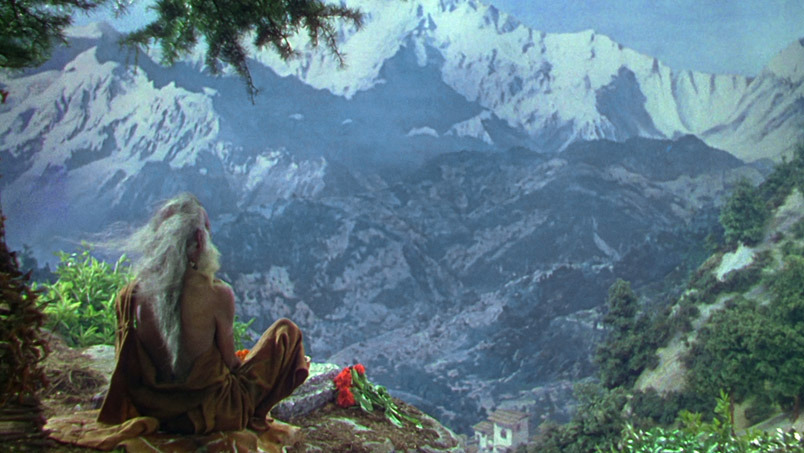
Just watched Herzog's Heart of Glass. Definitely the strangest of his films I have seen so far, but I thought it was really interesting and I enjoyed it. I remember reading a while ago that most of the actors where hypnotized, and I guess that explains why most of them just seemed kind of 'off' and distant. The plot is also somewhat strange, you have the the master glassmaker's death, the fact that he took his secret to the grave and then the rest of the villages attempts to recreate it. Which drives most of them, including the factory owner mad. But then you have the prophet/shepherd Hias who is one of the key characters, if not the main character, and yet is completely separate from the everyday life of the village (though he does predict that the factory will burn down and is involved with the villagers) and spends most of the film uttering prophecies almost to the viewer themselves. Not that I know what all of it was about, but it's certainly enough to make you think and it struck me as very apocalyptic. For me it seemed like some of the predictions were about the industrial revolution, and the 20th century, specifically a few struck me as being about the World Wars and the rise of dictatorships. Perhaps other things that will happen in the future that I just didn't pick up on. As I always do I will do a bit of reading after.

Also, the start of the film, with the sweeping mountain landscapes and Hias' first predictions (and interaction with the villagers about a supposed giant) and the end, with the final vision of men on a remote island (which I recognized instantly as Skellig Michael) sailing off what they believe to be the end of the world seemed to have little to do with the bulk of the film. And there isn't really any kind of ending which ties the film together either. But none of that really bothered me as the film sort of carries you along in it's strangeness. For the final scene itself I also wasn't sure how to take it, I thought maybe it was a kind of allegory for the future of humanity (combined with the predictions of Hias). Anyway, as I said I enjoyed this film, or was intrigued by it at least, thought it was definitely very strange. Think the next Herzog film I watch will be The Enigma of Kaspar Hauser or Cobra Verde.

5141_heart_of_glass_1920_15000_FILM_v15_005_seconds_49-copy.jpg
 
Last edited:
In production, I take it?

no. in colombia professional degrees are different compared to the U.S.A we don't have separate majors inside the career (film degree with a major in production/editing/cinematography etc..) we are prepared to face whatever process a film has and according to our personal tastes. in my case i chose multimedia and graphic design (flash, photoshop, illustrator) and after i graduated i did a 3 months seminar in audio production for music because the "teacher" if i had to refer her like that didn't taught NOTHING about audio editing or the proceses involved in that part (for example i didn't know between a compressor or a gate and THOSE ARE CRUCIAL).

But regarding if i know production, yes in fact my production teacher was ciro guerra's wife (cristina gallegos) who produce every film ciro had up to this date (including embrace of the serpent) and i had extra help from my teacher of investigation project because she is a local producer.
 
Last edited:
Just watched Dersu Uzala by Kurosawa. I thought it was a little bit longer than it needed to be, but on the whole I really loved it.

You've been watching to many movies I haven't seen lately. So I thought I might as well sit down and watch Dersu Uzala since you have already done so.:cool:

I liked it very much -- but it's nowhere near the upper echelon of Kurosawa for me. It does feel very diffrent from the rest of his oeuvre though. You do not really see the typical Kurosawa filmmaking ticks in this one. And yeah I agree that there is a very naturalistic beauty to it (generally much more beautiful than The Revenant). I thought the sprinkles of poetry worked very well in tandem with this (like when they are on the ice, and the howling wind starts blowing).

The ending was definitively the pinnacle for me though. One of the things that truly terrifies me is how mundane death can be. We expect a catacylsm. Some cermonious finality. Yet often times it's just mundane. It ends. Dersu Uzala really captures that. Somehow, Uzala became almost like a mythical figure in that film. An embodiment of a certain way of life. Yet he was simultaniously so human. The writting is on the wall through the second half of the film that he is on his way out. Yet we want to see some graceful, fulfilling ending to his story. There is a sense of magic to him and his way of life and we want that to remain even after he's gone. But he just dies one day, irreverently, over something profoundly petty. There is no magic in seeing his corpse just sprayed out there. The passing of Uzala -- and on a symbolic level, the way of life he represents -- passes without fanfare. There is something profoundly saddening yet also very real in all of that.
 
You've been watching to many movies I haven't seen lately. So I thought I might as well sit down and watch Dersu Uzala since you have already done so.:cool:

I liked it very much -- but it's nowhere near the upper echelon of Kurosawa for me. It does feel very diffrent from the rest of his oeuvre though. You do not really see the typical Kurosawa filmmaking ticks in this one. And yeah I agree that there is a very naturalistic beauty to it (generally much more beautiful than The Revenant). I thought the sprinkles of poetry worked very well in tandem with this (like when they are on the ice, and the howling wind starts blowing).

The ending was definitively the pinnacle for me though. One of the things that truly terrifies me is how mundane death can be. We expect a catacylsm. Some cermonious finality. Yet often times it's just mundane. It ends. Dersu Uzala really captures that. Somehow, Uzala became almost like a mythical figure in that film. An embodiment of a certain way of life. Yet he was simultaniously so human. The writting is on the wall through the second half of the film that he is on his way out. Yet we want to see some graceful, fulfilling ending to his story. There is a sense of magic to him and his way of life and we want that to remain even after he's gone. But he just dies one day, irreverently, over something profoundly petty. There is no magic in seeing his corpse just sprayed out there. The passing of Uzala -- and on a symbolic level, the way of life he represents -- passes without fanfare. There is something profoundly saddening yet also very real in all of that.

Great post, I really agree. You've expressed the ending really well I think, that he's an embodiment of that lost way of life and yet also just a human being like any other. To the captain (and the viewer too of course) he is that 'mythic' figure, representing a vanishing people and a vanishing form of existence, but in the end he's just killed by a common thief, and to the man who's job it is to bury him and take a record of his name he's just like any other body he has had to bury that day. He can't wait to get it over with and get on to the next job. As you say, it is a very profoundly sad ending.
 
Just watched The River by Jean Renoir. I did enjoy it, but at times I was a bit bored by it too. I loved the Indian setting, specifically the scenes surrounding the river itself and the elements of Hinduism in the film (both explicitly shown ceremonies, rites, beliefs and so on as well as a general philosophical undercurrent in the film, particularly towards the end). But then other parts I just found extremely dull, watching a bunch of rich English people and their daughters falling in love just didn't really interest me at all. But by the end of the film when, spoiler obviously, the only son is killed by a snake the rest of it is kind of tied together so on the whole I did really like it. It was the portrayal of Indian life itself and of Hinduism that I liked most of all though as I said. Of all the white characters in the film the one I liked most was Mr John, an Irishman. Not sure if that's a coincidence haha.

river.jpg
 
Watched Black Narcissus by Michael Powell and Emeric Pressburger which I thought was excellent. I didn't like the way in which the Indian villagers are presented as a bunch of illiterate morons, but given the age of the film you have to allow for that kind of thing I suppose. I had read beforehand that the film was very "erotic", although in a subtle kind of way and I can see what is meant by that, with the nuns and their interactions with Mr Dean. But what interested me more than that was the contrast between the western world and the eastern, particularly in terms of their religion. The nuns look extremely alien in their surroundings despite their attempts to turn the old palace into a convent. Nuns and monks are the closest thing to asceticism that there is in Christianity (modern christianity) and yet the nuns in the film spend a lot of time fighting, arguing and so on. They certainly don't seem one with the holy spirit or connected to God in any way. I don't know how to put my finger on it, perhaps it's just me, but they seemed like they were trying to be something that they weren't...trying to run away from something (definitely in the case of Sister Clodagh). Like they are repressing things, which is where the eroticism comes from I suppose. Plus their clearly wealthy backgrounds comes through quite a bit, they seem very entitled. Not that they weren't trying to live spiritually, but it was an excellent contrast with the Indian 'holy man' who sits on the mountain top, meditating day in and day out while there is all this conflict in the convent below him. I think that's why Clodagh was so desperate to get rid of him, as she reminded her of what they lacked. I liked the interaction between Clodagh and another of the nuns who says that "there are only two ways of living in this place. Either you must live like Mr. Dean, or- or like the holy man...". Interestingly enough both this film and the last film I watched, The River, were both adapted from novels written by the same person which I did not know at the time.

current_110_fg_large.jpg
 
Last edited:
Watched Black Narcissus

You're watching to many movies I haven't seen lately. Please limit yourself only to movies I've already seen so that I may respond to them. Thanks in advance.:cool:

Just watched Dersu Uzala by Kurosawa. I thought it was a little bit longer than it needed to be, but on the whole I really loved it.

Btw. I also managed to get my filthy paws on the 1961 Soviet version of Dersu Uzala. It's sort of what you'd expect. A lightweight version of the Kurisawa one. There is a bit more Soviet propeganda sprinkled through it (anti-christian, great expansion eastwards and such things). Dersu is a bit more socially adept, a bit more spry and gregarious. And here the Russian explorer basically understands Dersu's worldview from the get-go, having him nailed down after just one encounter. The 1961 movie also only chronicles their first meeting, and while both versions are basically a bunch of guys trekking through the wilderness, the individual encounters they come across are actually quite diffrent, Dersu saving the Russian explorer is depicted differently, for instance (makes me wonder which one's events are closer to the book). But overall, it's a pretty good film.


Also, I finally sat down and watched Fear and Desire! Fuck waiting for the next mega-post when it comes to writting about unwatched Kubrick. My very first, unfiltered reaction was... that this was like a really pretentious Monte Hellman film. Yeah Kubrick basically kicked-off his carrer by making one of those artsy films where everyone speaks in unspecific abstractions and flowery prose. Like, for example, that soldiers initial speech about wanting to assassinate the General because he is a everyman nobody that would never achieve anything in life otherwise, is not bad on it's own. But Kubrick just keeps going on and on about that in onerous internal monologues until it becomes pretentious and overblown. Actually, when the movie started, the wording of those internal monologues felt like some sort of Twilight Zone impression (but Fear and Desire came out 5 years before Twilight Zone premiered!) The young soldiers that goes insane though was straight-out bad (I'm assuming Kubrick was going for some dualistic theme considering both the Nazi General and the young soldier was talking about Prospero from the Tempest, as well as both groups overall fatalistic outlook on their situation).

All-in-all, I wouldn't go so far as to call it a bad movie, but I would probably put it in that fat, pudgy category where all the average films end up in.
 
Last edited:
You're watching to many movies I haven't seen lately. Please limit yourself only to movies I've already seen so that I may respond to them. Thanks in advance.:cool:

Haha duly noted, haven't got much discussion about the last few films I have watched since Ordet so maybe I should!

Btw. I also managed to get my filthy paws on the 1961 Soviet version of Dersu Uzala. It's sort of what you'd expect. A lightweight version of the Kurisawa one. There is a bit more Soviet propeganda sprinkled through it (anti-christian, great expansion eastwards and such things). Dersu is a bit more socially adept, a bit more spry and gregarious. And here the Russian explorer basically understands Dersu's worldview from the get-go, having him nailed down after just one encounter. The 1961 movie also only chronicles their first meeting, and while both versions are basically a bunch of guys trekking through the wilderness, the individual encounters they come across are actually quite diffrent (makes me wonder which one's events are closer to the book). But overall, it's a pretty good film.

Sounds interesting, might give that a watch sometime just to compare. Think I might read the book and see what it's like as well.

Also, I finally sat down and watched Fear and Desire! Fuck waiting for the next mega-post when it comes to unwatched Kubrick. My very first, unfiltered reaction was... that this was like a really pretentious Monte Hellman film. Yeah Kubrick basically kicked-off his carrer by making one of those artsy films where everyone speaks in unspecific abstractions and flowery prose. Like, for example, that soldiers initial speech about wanting to assassinate the General because he is a everyman nobody that would never achieve anything in life otherwise, is not bad on it's own. But Kubrick just keeps going on and on about that in onerous internal monologues until it becomes pretentious and overblown. Actually, when the movie started, the wording of those internal monologues felt like some sort of Twilight Zone impression (but Fear and Desire came out 5 years before Twilight Zone premiered!) The young soldiers that goes insane though was straight-out bad (I'm assuming Kubrick was going for some dualistic theme considering both the Nazi General and the young soldier was talking about Prospero from the Tempest, as well as both groups overall fatalistic outlook on their situation).

All-in-all, I wouldn't go so far as to call it a bad movie, but I would probably put it in that fat, pudgy category where all the average films end up in.

Haven't seen this one, so you definitely shouldn't have watched it :p
 
so maybe I should!

Great! So you'll start watching Mad Max right now and then we can begin our scholarly discussion right around the time the clock strikes the hour of the wolf?:p

Think I might read the book and see what it's like as well.

Apperently it's not that well-known.

From IMDB.

Kurosawa, since childhood, had been a devoted fan of Russian literature - a fact, of course, already well-known to Mosfilm when that studio asked him to suggest a literary source for the director to adapt into a film to be shot in the Soviet Union. Nevertheless, the studio was taken aback when he suggested that he be allowed to film Arseniev's book about Dersu Uzala: they were astonished that he had even heard of it, because the book at that time was so little known outside the USSR.


Haven't seen this one, so you definitely shouldn't have watched it :p

Hey that wasn't a two-way arrangement!:D
 
Watched The Enigma of Kaspar Hauser, though I prefer the German title "Every Man for Himself and God Against All". I did read the wikipedia page about the actual Kaspar Hauser afterwards and it seems quite possible, or even likely, that he was just a pathological liar and the film leaves out some details of his life. Not that it really matters, as it seemed to me that Herzog is more interested in a character like Hauser rather than a literal biography of his life. As someone who is strange and innocent, raised completely separate from the rest of the world and then confronted with modern society. The first thing happens to him is that they lock him up him, then he gets put on show in a carnival in order to make money for the town authorities. Not that everyone is unkind to him, there are some characters who help him, but generally people from all walks of life (priests, psychologists, philosophers, scientists, an English dandy and even the clerk) are all trying to get something out of him. I think the actor (Bruno Schleinstein) had been put in mental institutions for a long period and had never acted before, so he definitely conveys a certain strangeness. He's quite odd in Stroszek too.

kaspar_hauser_4.jpg
 
Last edited:
You're watching to many movies I haven't seen lately. Please limit yourself only to movies I've already seen so that I may respond to them. Thanks in advance.:cool:

Watched The Enigma of Kaspar Hauser

Glad to see that you got the picture.:cool:

though I prefer the German title "Every Man for Himself and God Against All".

Well you did say...:p

I find 'faith on film' a very interesting subject, as well as religion in general.


As someone who is strange and innocent, raised completely separate from the rest of the world and then confronted with modern society

Time to go into academic, hair-splitting bullshit-mode! Lenghty post ahoy!


I saw The Enigma of Kaspar Hauser chiefly as a movie about what formulates our thoughts and understaning of the world. What is inherent (biological) and what is contextual (cultural) in the formation of a person's psychology? As well as our societal expectations of this phenomenon. I think the film takes the stand-point that -- man in his utmost origins -- is a tabula rasa, a blank slate, and any-and-all cognetive ability he develops during his life is due to his surroundings.

It's the sort of cultural-historical psychology propegated by Lev Vygotsky, basically.


Firstly, what do we expect is "inherent" in a man?

At several times through the film, many characters voice assumptions about Kaspar Hauser. These assumptions are based on what the person in question assumes exists among all people. One of the priests for instance asks Hauser how he thought about God during his imprisonment, and was suprised when he found out that Kaspar had no metaphysical musings at all before he was released into the world. Or when Kaspar is playing the piano during the social gather, one young woman exclaims what a "noble savage" he is, as if he took to the fine art of piano-playing naturally. That is to say, man (or at least white men) are inherently predisposed towards such things. But we know that he can only play the piano because his caretaker trained him, and then he himself finds little purpose or meaning in the activity.

And so on with the examples. The fundemental conflict of Kaspar Hauser is that he is a man that has been adapted for an isolated, enclosed, four-walled life. That is the only sort of existence he can relate to, where he finds himself at home. People try to acclimatize him to the world, yet everyone fails. As Kaspar plays the piano, he suddenly stops and then walks into a smaller, empty room and starts eating bread-slices on the floor, harking back to before he was let lose on the world.

Notice how often Kaspar exclaims how unhappy he is, how sorrowful he feels. This is always meet with strong and objective remarks from the people around him. They cannot fathom why he would be depressed. To them, it seems like he has everything needed for a content existence. This is indicitive of their failure to acclimate him. They try to tune him into our way of living and comprehending the world, but the thing is, Kaspar has spent the formative parts of his life in that one room and can therefore only feel familiarity and meaning in such an existance. The outside world depresses him because he can find no meaning in it.

For example: when Kaspar and the Priest walks by the tower. Kasper comments that the inside of the tower is bigger than the outside - becuse the tower one can look in all directions and see the end, while outside one only sees endlessness. Such an analysis seems totally incomprehensible to us. But to a person raised in a square-shaped room all his life - it makes sense. Our vantage points are so radically diffrent that we cannot understand the world in the same sense. We are products of our surroundings.


There is a very telling moment, I feel, in Kaspar Hauser that encapsulates the problem. It's when he's writting his diary. The priest comes over and asks him about it. Kasper responds that it's not finished yet, becuse there are still so many words that he does not understand. Now, Kaspar isn't saying that he wants to learn more words because he wants his diary because he wants a more flowery prose. He's saying that he cannot fundementally understand words and emotions before they have been explained to him.

Kaspar didn't understand sadness, depression, loneliness before he ventured outside and recieved cultural stimuli from other people. He had been lonely all his life yet never felt lonely because he had no "concept" of loneliness. All concept-forming is produced through socialization. One can only understand loneliness when played into relation with other people. The disconnect between Kaspar's formative-period and his existence in the real world is due to this.


Another thing I found intresting in relation to this, is how completely desexualized Kaspar is. He does not seem to have a carnal inclination through the entire film. Even the sexual part of puberty seems to have not developed within him while he was in isolation. Even supposed "natural" developments within us, that are due to biological hardwiring, fail to develop if they are not faced with appropriate social stimuli from the outside world.

As someone who is strange and innocent,

You used the word "innocent" to describe Kaspar Hauser. Let's qualify that. The conventional understanding of innocent is that it's a person who is unaware of evil. A person that has no conceptual understanding of evil so therefore they can do nothing bad. I think Kaspar Hauser goes beyond that. Initially he is amoral, he understands neither good nor bad. He just is. He operates instinctually, animal-like. Because his upbringing entrapped in that room has left him bereft of any connection with anything that can be labeled as good or evil.

There is a point where the priest comments that he finds it odd that Kaspar never once dreamt during his imprisonment. I found that odd to. I think this has to do with his "animal-likeness". In order to dream, one has to have to ability to think conceptually. Dreaming is possible due to our socialization. We absorb cultural stimuli from the outside world -- other people -- and the process of that turns us into individuals, into people. Kaspar never dreamt because Kaspar never encountered new stimuli. He was never able to formulate abstract thought once in his life.

The ending where Kaspar dreams about people marching up a mountain-top towards death, is telling then. Kaspar has started dreaming. It's a response to the conceptual things he has learnt during his stay in the outside world. Kaspar can dream about death since he can now understand that death is a concept. The rather abstract, symbolic nature of this dream may also mean that Kaspar has begun to grasp metaphysical subjects as well -- God and religion and such.


Yeah I have no idea where I'm going with all this babbling. Please watch a less complex movie next.:D


i-dunno-lol.jpg
 
Time to go into academic, hair-splitting bullshit-mode! Lenghty post ahoy!
<{jackyeah}>

I saw The Enigma of Kaspar Hauser chiefly as a movie about what formulates our thoughts and understaning of the world. What is inherent (biological) and what is contextual (cultural) in the formation of a person's psychology? As well as our societal expectations of this phenomenon. I think the film takes the stand-point that -- man in his utmost origins -- is a tabula rasa, a blank slate, and any-and-all cognetive ability he develops during his life is due to his surroundings.

It's the sort of cultural-historical psychology propegated by Lev Vygotsky, basically.

Yes I see exactly what you mean, nature vs nurture and so on, good point.

At several times through the film, many characters voice assumptions about Kaspar Hauser. These assumptions are based on what the person in question assumes exists among all people. One of the priests for instance asks Hauser how he thought about God during his imprisonment, and was suprised when he found out that Kaspar had no metaphysical musings at all before he was released into the world. Or when Kaspar is playing the piano during the social gather, one young woman exclaims what a "noble savage" he is, as if he took to the fine art of piano-playing naturally. That is to say, man (or at least white men) are inherently predisposed towards such things. But we know that he can only play the piano because his caretaker trained him, and then he himself finds little purpose or meaning in the activity.

Yeah that scene with the priests struck me as well, I noticed that also, they seem stunned that he never contemplated God when obviously he couldn't have had any notion of something like that.

And so on with the examples. The fundemental conflict of Kaspar Hauser is that he is a man that has been adapted for an isolated, enclosed, four-walled life. That is the only sort of existence he can relate to, where he finds himself at home. People try to acclimatize him to the world, yet everyone fails. As Kaspar plays the piano, he suddenly stops and then walks into a smaller, empty room and starts eating bread-slices on the floor, harking back to before he was let lose on the world.

Notice how often Kaspar exclaims how unhappy he is, how sorrowful he feels. This is always meet with strong and objective remarks from the people around him. They cannot fathom why he would be depressed. To them, it seems like he has everything needed for a content existence. This is indicitive of their failure to acclimate him. They try to tune him into our way of living and comprehending the world, but the thing is, Kaspar has spent the formative parts of his life in that one room and can therefore only feel familiarity and meaning in such an existance. The outside world depresses him because he can find no meaning in it.

Another good point, I also thought it was interesting that despite his newfound 'freedom', Kaspar kept saying that things were better in the room. They take it for granted that the sensible and correct thing to do is make Kaspar 'normal' and acclimatize him to modern society, when as you say he can find no meaning in it.


There is a very telling moment, I feel, in Kaspar Hauser that encapsulates the problem. It's when he's writting his diary. The priest comes over and asks him about it. Kasper responds that it's not finished yet, becuse there are still so many words that he does not understand. Now, Kaspar isn't saying that he wants to learn more words because he wants his diary because he wants a more flowery prose. He's saying that he cannot fundementally understand words and emotions before they have been explained to him.

Interesting, I didn't really pick up on this element of it when watching, but when you put it like this...

Kaspar didn't understand sadness, depression, loneliness before he ventured outside and recieved cultural stimuli from other people. He had been lonely all his life yet never felt lonely because he had no "concept" of loneliness. All concept-forming is produced through socialization. One can only understand loneliness when played into relation with other people. The disconnect between Kaspar's formative-period and his existence in the real world is due to this.

Then it does make sense, so you're probably quite correct.

You used the word "innocent" to describe Kaspar Hauser. Let's qualify that. The conventional understanding of innocent is that it's a person who is unaware of evil. A person that has no conceptual understanding of evil so therefore they can do nothing bad. I think Kaspar Hauser goes beyond that. Initially he is amoral, he understands neither good nor bad. He just is. He operates instinctually, animal-like. Because his upbringing entrapped in that room has left him bereft of any connection with anything that can be labeled as good or evil.

Yes amoral rather innocent, absolutely :). Children are generally considered innocent because, as you say, they aren't aware of evil whereas Kaspar isn't aware of anything when it comes to morality.

There is a point where the priest comments that he finds it odd that Kaspar never once dreamt during his imprisonment. I found that odd to. I think this has to do with his "animal-likeness". In order to dream, one has to have to ability to think conceptually. Dreaming is possible due to our socialization. We absorb cultural stimuli from the outside world -- other people -- and the process of that turns us into individuals, into people. Kaspar never dreamt because Kaspar never encountered new stimuli. He was never able to formulate abstract thought once in his life.

The ending where Kaspar dreams about people marching up a mountain-top towards death, is telling then. Kaspar has started dreaming. It's a response to the conceptual things he has learnt during his stay in the outside world. Kaspar can dream about death since he can now understand that death is a concept. The rather abstract, symbolic nature of this dream may also mean that Kaspar has begun to grasp metaphysical subjects as well -- God and religion and such.

You're on fire today europe, really interesting point. I must say I did think the fact that he never dreamt during his imprisonment, but then had the dream of the mountain, quite odd too but I never made that connection.
 
Also watched Before the Rain. God what a film, really powerful stuff. It tells the story of the Balkan Conflict in a very personal way, through the separate, but interconnected stories of three people (a Macedonian Christian Monk, a Macedonian photographer and an English photo agent). At the time this film was released Macedonia was the only part of the Balkans that had not broken into violence, so the film is essentially about the early stages of war and how local ethnic tensions can spiral out of control. Not that the director literally predicted the future, but it's the same no matter where you go, which is what the film was getting at. The use of multiple connected narratives and a cyclical structure (the conclusion of the film brings it back to the beginning, it's also somewhat paradoxical) also suggests the cyclical nature of violence/war and how easy it is to get trapped in the cycle. Living where I do I can definitely relate to this idea, The Troubles started in much the same way, and the film mentions Belfast and Ulster among other places where the same kind of things have happened.

Film_436w_BeforeRain_original.jpg
 
Last edited:
You're on fire today europe

Haha. Thanks. My very first course at University level was in pedagogy. My tutor was a zealous Lev Vygotsky-fanboy. Right off the bat he was throwing the guys academic repertoire at us (poor me didn't even understand what the word abstract meant). It was a really tough course to grasp but because of that the teaching has been imprinted in my brain ever since then. So these Vygotsky-inspired examinations came to me rather naturally as I was watching the film.:D

Before the Rain

Back to movies I haven't seen, eh?:p You're on a movie roll man. Any special occasions or are you just in the zone?
 
Haha. Thanks. My very first course at University level was in pedagogy. My tutor was a zealous Lev Vygotsky-fanboy. Right off the bat he was throwing the guys academic repertoire at us (poor me didn't even understand what the word abstract meant). It was a really tough course to grasp but because of that the teaching has been imprinted in my brain ever since then. So these Vygotsky-inspired examinations came to me rather naturally as I was watching the film.:D

Ah I see, sounds tough but interesting!

Back to movies I haven't seen, eh?:p You're on a movie roll man. Any special occasions or are you just in the zone?

Just been in the movie zone these past few days, but I am starting uni again in a few weeks so trying to cram as much in before my time is consumed by lengthy reading lists haha.
 
Are Rimbaud and FinalCountdown the only ones watching movies? Does someone need to bring up Fury Road to kick-start this place again? @Bullitt68, where's our megapost mang?

I know I've been shit this year apart from new releases. TV seems to be the easiest right now. Hoping to watch Bojack soon.

I didn't dislike Hell or High Water like my man Cav. I feel I was too absent during to really tie it together in my head, and there might me more to it than meets the eye. I appreciate the Southern aspect being a hindrance though. Sausage Party works, but what can I say man: it's more Neighbors than Role Models in terms of the lulz.

The tail end of the year, though, has some nice looking releases coming up.
 
@Bullitt68, where's our megapost mang?

I've been waiting for @Rimbaud82 or @europe1 to watch something cool. They're taking their sweet ass time about it, though, so I guess I'll stop waiting for a write-up from Rimbaud on Out for Justice or from europe on Whirlpool and just go ahead with my mega post ;)

I've been trying to be disciplined with my writing, so lately I've only been watching shit during meals and then just focusing on PhD shit. I haven't watched a movie in weeks, but I've been watching millions of videos of moviemakers talking about the movies they've made. Back in the day, when I thought I was going to be a screenwriter, this behind-the-scenes shit where artists talk about their processes was my jam. In recent years, it's kind of fallen away, and even though I always think and write about movies from a (for lack of a better term) production perspective, something had definitely been lost that I feel is starting to come back from watching all of these.

And I've been watching so many that I'm coming across people talking about movies that a lot of you would probably find interesting for various reasons, so I apologize for abusing the @ feature but I'd hate for you guys to miss out on shit. I'm not saying that only the people I @ will appreciate the video for which I @ them, but here's the shit I've been watching and the people I think might find it interesting.

First off, I recently rewatched The Newsroom (seriously, if Sorkin never bothered with the third season, that fucking thing would be the TV GOAT without so much as a fight) and then ended up watching a billion Sorkin interviews over the course of which I came across a bunch of cool interviews and panels and shit on his films.

The Social Network (@theskza and @ufcfan4, I imagine you'd like these):


Steve Jobs (skza, this is all you, buddy):


I was also watching so much more actor shit. After the Hollywood Reporter Roundtables I'd been watching, I found the Screen Actors Guild channel. The shit from the latter channel is closer to Inside the Actors' Studio, but it's so much looser and less formal, so it's a different environment and allows for different and often times funnier and cooler interviews.

One that I thought was really great was the one with Leo. @HUNTERMANIA , you and I were talking about Gangs of New York recently. Leo's story about Scorsese sending him to convince DDL to come out of retirement and then, after succeeding, realizing what it was going to be like acting against (notice I didn't say acting with) DDL is awesome. The whole interview is great, but the DDL shit starts at 41:36.

And then Ricky and @Flemmy Stardust, he's also got great shit to say about Inception. He's not "answering" shit on Nolan's behalf, but it's really cool to hear his take on what that movie was about and what was going on with Cobb. The Inception shit starts at 49:45.

Lastly, Ricky, there's some cool shit on The Wolf of Wall Street, which I know you dig. I honestly had no idea Leo was such a producer. Obviously he's a big name with a lot of clout these days, but I had no idea he was so involved in finding ideas and developing them in addition to the actual on-set collaborating while making the film. He's often times the moviemaking engine rather than just a crucial part added later, and that was especially true for The Wolf of Wall Street. Leo's shit on that movie starts at 57:55.


And then, for more on The Wolf of Wall Street, I also watched these, which you'd also probably enjoy, especially the solo Scorsese one:


The best of all of the actor interviews I saw, though, was the one with Matthew McConaughey. You guys remember when Rampage was jokingly interviewing Quadros before one of his fights and he said Quadros was a good talker (I miss PRIDE)? Well, McC is a damn good talker. Ricky and especially @Dragonlordxxxxx will also be happy to hear that I gained so much more respect for him from listening to how intensely he thinks about and puts himself into the characters he plays. Dragon, you'll definitely get a kick out of the Magic Mike shit, which starts at 57:32. And Flemmy, you'd also appreciate the stuff he says about Mud, which starts at 53:53.


And then, through following the Sorkin trail through Youtube, I found the DP/30 Youtube channel, which is another goldmine and the source of a few of the videos I've already linked. Flemmy, they've got Rian Johnson and JGL talking about Looper:


They've also got Jeff Nichols talking about Mud:


@Joseph Budden and @Caveat, they've got Refn talking about Drive and The Neon Demon in case there are any cans of worms you feel like opening:


And then, for the Tarantino archives, they've got Samuel L. Jackson talking about Django Unchained and The Hateful Eight:


And then they've got Tarantino talking about The Hateful Eight:


Lastly, one of the coolest Hollywood Reporter Roundtables is one with, among others, Jackson and Will Smith. First of all, I know a lot of people find Smith annoying, pompous, phony, etc., but here he's extremely honest, genuine, and forthcoming, and even though he tries to avoid talking about Django, Jackson doesn't let him and I'm glad he didn't because it's really cool to get his take on why he didn't want to do Django.


The Django shit starts at 14:21. But literally the whole thing is awesome. Michael Caine has so many great stories. The catalyst for the Django conversation is being uncomfortable taking on a certain role/film and Caine tells a story I'd never heard about Hitchcock liking him, wanting to work with him, offering him Frenzy, being turned down, and never speaking to him again.

This shit is just so fucking fun, I just love listening to people who make movies talk about making movies and talking about the movies they've made.

Now, if you'll excuse me, I have to start watching the ones I haven't seen yet :D
 
Ermagherd I got an @!!!

I was actually waiting for @Rimbaud82 to post about The Neon Demon and get @Joseph Budden off my scent, but I suppose I can return to it once I'm done peeling apart Closer for the movie club.
 
Status
Not open for further replies.
Back
Top