Moscow has massively ramped up its industry, giving it advantages in Ukraine and leading to a redistribution of wealth
by Andrew Roth
Thu 15 Feb 2024 17.16 GMT
As Ukraine has scrambled to source ammunition, arms and equipment for its defence, Russia has presided over a massive ramping up of industrial production over the last two years that has outstripped what many western defence planners expected when Vladimir Putin launched his invasion.
Total defence spending has risen to an estimated 7.5% of Russia’s GDP, supply chains have been redesigned to secure many key inputs and evade sanctions, and factories producing ammunition, vehicles and equipment are running around the clock, often on mandatory 12-hour shifts with double overtime, in order to sustain the Russian war machine for the foreseeable future.
The transformation has put defence at the centre of Russia’s economy. Putin claimed this month that 520,000 new jobs had been created in the military-industrial complex, which now employs an estimated 3.5 million Russians, or 2.5% of the population. Machinists and welders in Russian factories producing war equipment are now making more money than many white-collar managers and lawyers, according to a Moscow Times analysis of Russian labour data in November.
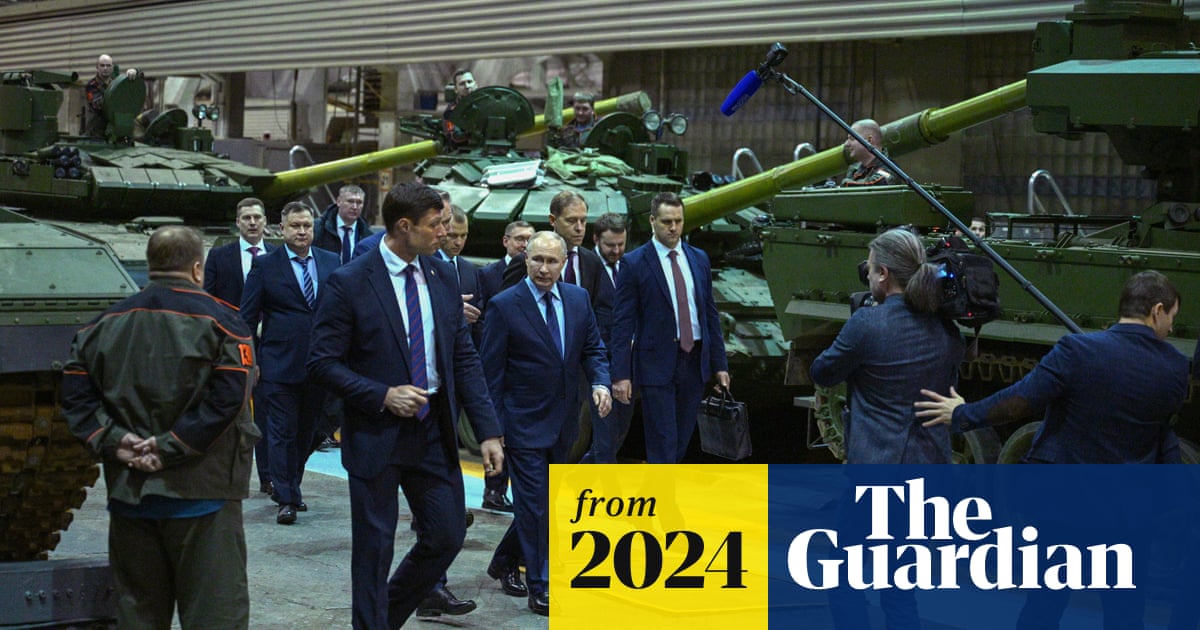
Putin on Thursday visited Uralvagonzavod, the country’s largest producer of main battle tanks, where workers boasted that it had been among the first to establish round the clock production. The Russian leader promised funding to help train an additional 1,500 qualified employees for the plant.
As Russia’s war in Ukraine drags into its third year, the massive Russian investment in the military, projected this year to be the largest as a share of GDP since the Soviet Union, has worried European war planners, who have said Nato underestimated Russia’s ability to sustain a long-term war.
“We still haven’t seen where is Russia’s breaking point,” said Mark Riisik, a deputy director in the policy planning department of Estonia’s defence ministry. “Basically one-third of their national budget is going on military production and on the war in Ukraine … But we don’t know when it will actually impact on society. So it’s a little bit challenging to say when will this stop.”