- Joined
- Jul 16, 2008
- Messages
- 27,913
- Reaction score
- 20,173
The gerrymandering connect four had me laughing







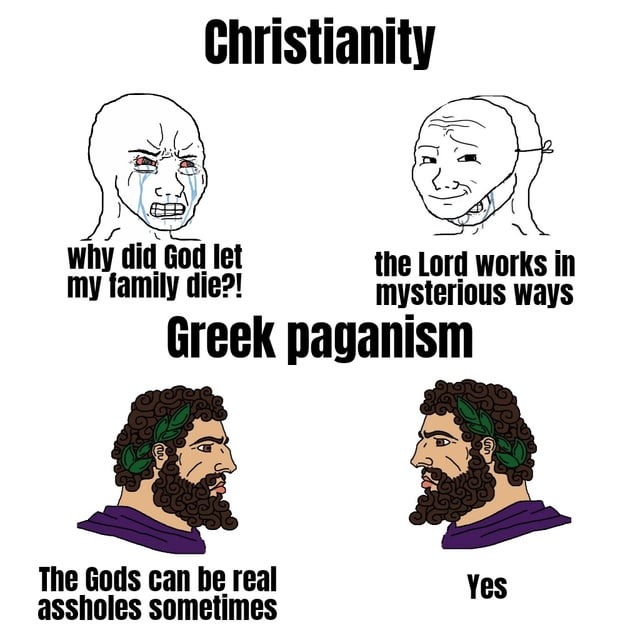
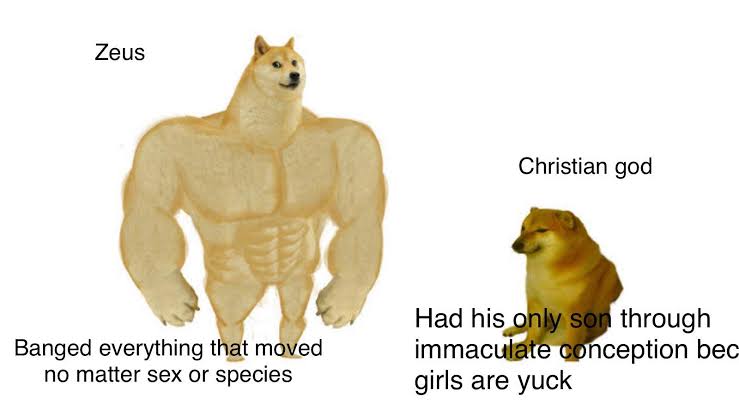
I'm not religious but have always found the Greek religion more interesting, a bunch of flawed and often asshole gods makes more sense in this world


@KnightTemplar
Yeah, I mean much respect to @EL CORINTHIAN, the Greeks and their illustrious cultural history. Alexander is probably the greatest man to ever walk the planet.
I don't know much about Hellenism or its modern incarnation(s) but if it's anything like Norse paganism then it certainly doesn't revolve around concepts of salvation, sin or submission. It's an ethnic religion with no interest in proselytizing that inspired a transactional warrior culture of the rawest sort of individualism, there is and was no expectation of unconditional obedience -- neither to the chieftrains nor the gods.
I only know of a couple other heathens on here (@Snubnoze707, @Based and White Pilled) who practice a more generalized form of Germanic paganism and I don't speak for them. For me, it's more spiritual than necessarily rigidly religious and as much geared towards personal development and fulfillment, the only acceptable path for who I am and where I come from. I venerate ancestors in equal measure to a self selected number of the deities. There is no soul but rather four primary components of self: hamr (physical form), hugr (cognitive thought), fylgja (attendant spirit) and hamingja (inherent luck tied to lineage).
Also to the point made: the gods themselves tend to have a number of human characteristics and flaws. Odin in particular can be quite capricious, cold, and devious. He also has qualities that would undeniably be considered and charged as argr or ergi (unmanly) in Old Norse culture. He doesn't care, the ends always justify the means for him. Nevertheless, he is hailed as the God of Wisdom, the Chief of the Æsir, the All-Father.
Hávamál (Old Norse: Hávamál, ‘Words of Hávi [The High One]’) is presented as a single poem of verses in the Codex Regius, a collection of Old Norse poems attributed to Odin. The poem, itself a combination of numerous shorter poems, is largely gnomic, presenting advice for living, proper conduct and wisdom. It is considered an important source of Old Norse philosophy. For the most part composed in the metre ljóðaháttr, Hávamál is both practical and philosophical in content. Following the gnomic Hávamál proper comes the Rúnatal, an account of how Odin discovered the runes, and the Ljóðatal, a list of shamanistic chants and spells.
The words of the high one never go out of style.

Kinda ironic.
I was just listening to this Rogan clip today and was thinking '15 years ago I wouldn't have entertained the possibility the CIA orchestrated 9/11 to cause a chain reaction resulting in our invasion of a dozen middle-eastern countries & gain control over 80+% of the world's oil supply.
Today, its hard to deny the probability that's exactly what happened."

@KnightTemplar
Yeah, I mean much respect to @EL CORINTHIAN, the Greeks and their illustrious cultural history. Alexander is probably the greatest man to ever walk the planet.
I don't know much about Hellenism or its modern incarnation(s) but if it's anything like Norse paganism then it certainly doesn't revolve around concepts of salvation, sin or submission. It's an ethnic religion with no interest in proselytizing that inspired a transactional warrior culture of the rawest sort of individualism, there is and was no expectation of unconditional obedience -- neither to the chieftrains nor the gods.
I only know of a couple other heathens on here (@Snubnoze707, @Based and White Pilled) who practice a more generalized form of Germanic paganism and I don't speak for them. For me, it's more spiritual than necessarily rigidly religious and as much geared towards personal development and fulfillment, the only acceptable path for who I am and where I come from. I venerate ancestors in equal measure to a self selected number of the deities. There is no soul but rather four primary components of self: hamr (physical form), hugr (cognitive thought), fylgja (attendant spirit) and hamingja (inherent luck tied to lineage).
Also to the point made: the gods themselves tend to have a number of human characteristics and flaws. Odin in particular can be quite capricious, cold, and devious. He also has qualities that would undeniably be considered and charged as argr or ergi (unmanly) in Old Norse culture. He doesn't care, the ends always justify the means for him. Nevertheless, he is hailed as the God of Wisdom, the Chief of the Æsir, the All-Father.
Hávamál (Old Norse: Hávamál, ‘Words of Hávi [The High One]’) is presented as a single poem of verses in the Codex Regius, a collection of Old Norse poems attributed to Odin. The poem, itself a combination of numerous shorter poems, is largely gnomic, presenting advice for living, proper conduct and wisdom. It is considered an important source of Old Norse philosophy. For the most part composed in the metre ljóðaháttr, Hávamál is both practical and philosophical in content. Following the gnomic Hávamál proper comes the Rúnatal, an account of how Odin discovered the runes, and the Ljóðatal, a list of shamanistic chants and spells.
The words of the high one never go out of style.
The Norse, Celtic and Greek/Roman pantheons were similar in that most of their Gods were basically humans with the dials turned up to 11. They had the same emotions and drives, but obviously on a much grander scale. They did what a lot of humans would do if they had immortality, near-limitless power and freedom from consequences. As discussed by Plato himself in The Republic.
Yeah, my practice is generally Germanic, but I'd be a liar if I said that my metaphysical conception of the universe wasn't almost entirely in line with Platonism. +1 to the Greeks for Plato.
Edit: I forgot this thread existed. There goes 3 hours of my life.
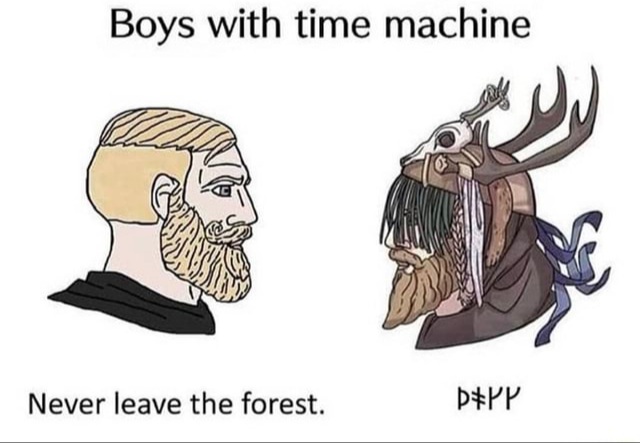
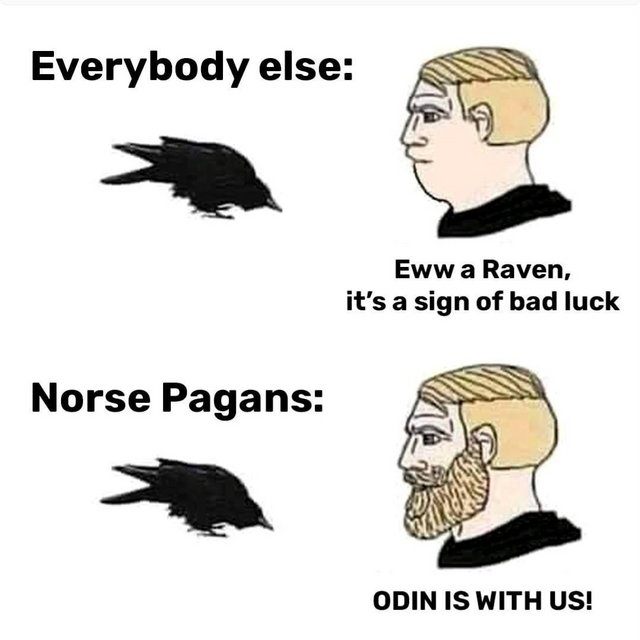

On another note: Fuck Cancer, bro. I didn't line up to make an appearance in your thread about it but you're one of my favorite posters and have been in my thoughts. That's the type of scare that would make me start pondering my fated demise, but it surely isn't meant to be for you (at least not yet) and I'm assured in the knowledge that you will fight with all the fury of the gods regardless. It's one of the greatest lessons to be taken, and provides all the motivation in the world to fight against any kind of inevitable detriment.
Yeah, I haven't started one since last year and kind of bounced for like 3+ months. I've got plenty of leisure time, I'm just using a lot less of it on the internet and a whole lot more on my spirituality, spending time with my kids and being out in nature. I just can't imagine a camping trip somewhere out in the wilderness and still browsing threads and shitposting on Sherdog, you know that ain't right. <45>
Shit that has been SOP for a long time.
Gulf of Tonkin anyone?
Yes, but it's also worth noting that like Socrates, Plato didn't believe in the myths literally. That's why he had no problem making up his own. He believed in the Good, the realm of forms, and the gods who exist in it, but not literally in the myths.The Norse, Celtic and Greek/Roman pantheons were similar in that most of their Gods were basically humans with the dials turned up to 11. They had the same emotions and drives, but obviously on a much grander scale. They did what a lot of humans would do if they had immortality, near-limitless power and freedom from consequences. As discussed by Plato himself in The Republic.