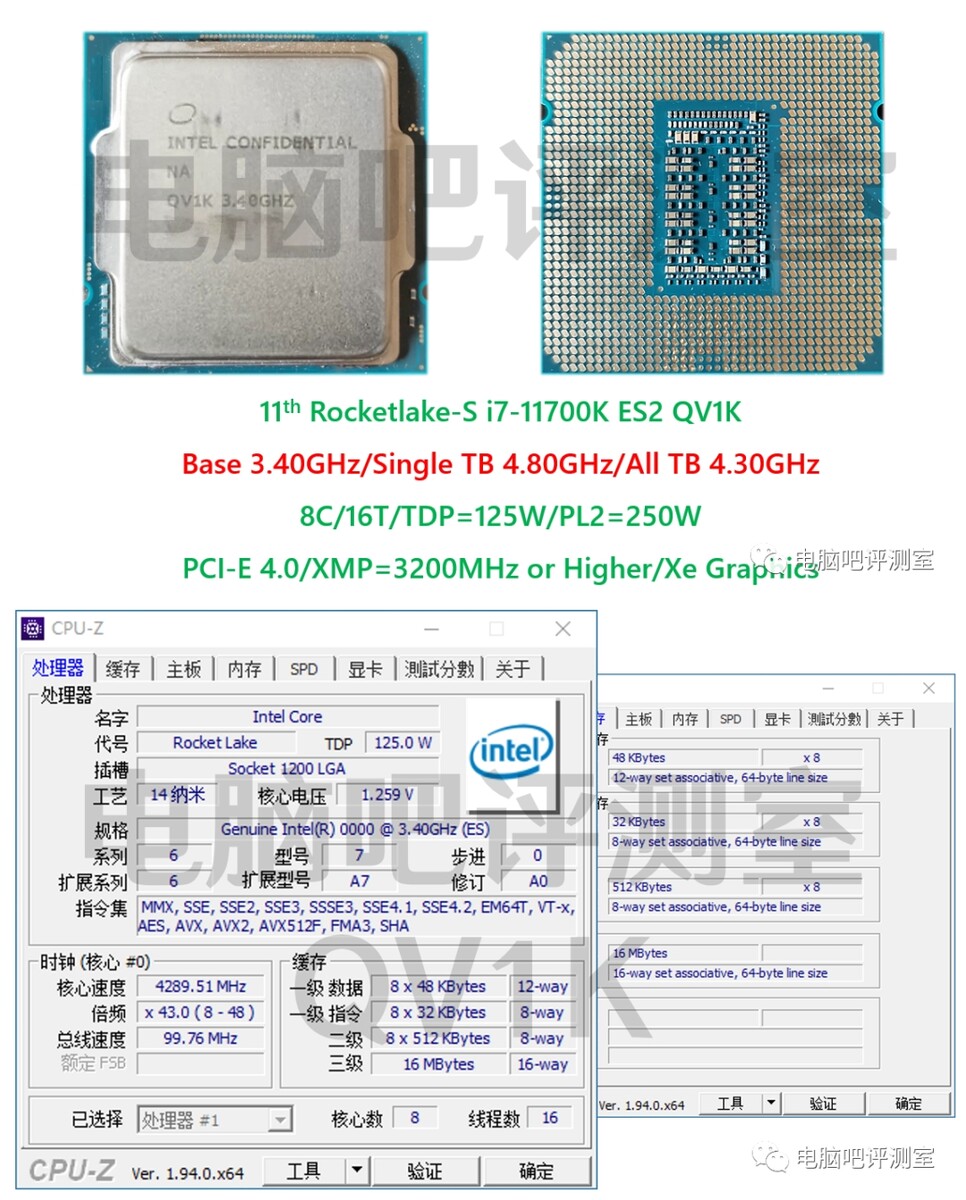
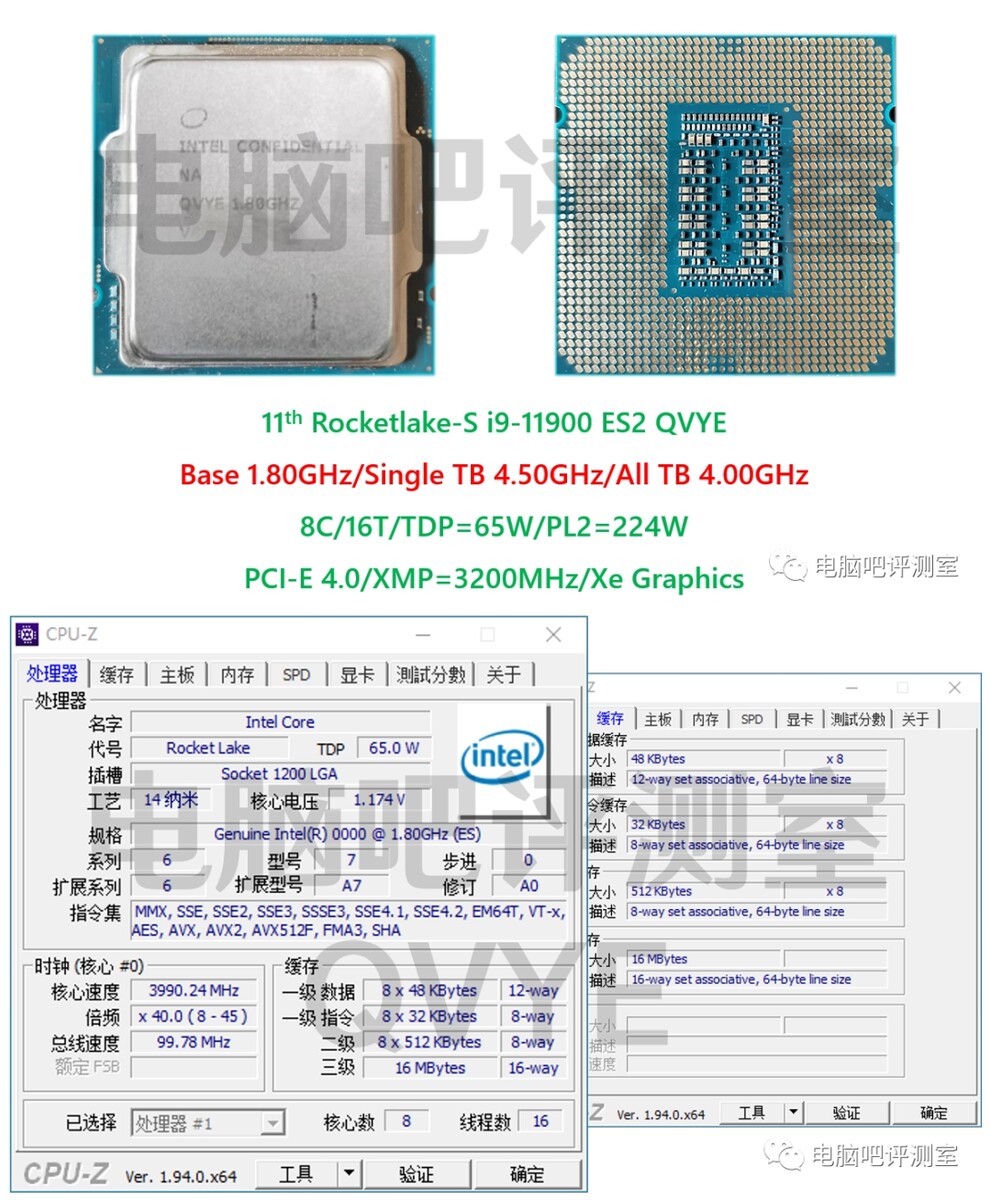
Initial single-core performance numbers from an Intel Rocket Lake-S Core i9-11900K QS indicate up to 33% higher scores than a Core i9-10900K and up to 7% more performance than an AMD Ryzen 7 5800X despite sub-optimal cooling. Also being leaked are clocks and power info of several ES variants including the Core i7-11700 ES1, Core i7-11700K ES2, and the Core i9-11900 ES2.
Single-core performance has traditionally been Intel's stronghold even till the recent Comet Lake generation. AMD's Zen 3 Vermeer changed all that with even the entry-level
Ryzen 5 5600X beating the
Core i9-10900K in most single-core tests and games. AMD's new-found hegemony, however, may be short-lived.
Core i9-11900K QS vs. Core i9-10900K and Ryzen 7 5800X
A few benchmark results of an alleged Core i9-11900K qualifying sample (QS) seem to have made their way online. According to numbers leaked by ChipHell forum member
popboy139, the Core i9-11900K QS's single-core scores apparently give a tough run to its 8-core AMD competitor the
AMD Ryzen 7 5800X.
We
previously reported on the possibility of a Core i9-11900K attaining a 5 GHz boost and 700+ points in CPU-Z single. It looks like this Core i9-11900K QS could be that chip after all. According to
popboy139's post, the Core i9-11900K QS scores 710 points in CPU-Z single, 1700 points in Cinebench R23 single, and 660 points in Cinebench R20 single.
In comparison, a Core i9-10900K scores 534 in CPU-Z single, 1,324 in Cinebench R23, and 532 points in Cinebench R20 single (numbers from
@3DCenter_org). This makes the Core i9-11900K QS663 24-33% faster than the Comet Lake Core i9-10900K in single-core workloads.
Taking the Ryzen 7 5800X's scores (663 - CPU-Z single, 1,596-Cinebench R23 single, and 625 - Cinebench R20 single) into account, we find that this Rocket Lake-S QS part is about 5-7% faster depending on the test.
As opposed to engineering samples, qualifying samples come very close to the retail specifications. Therefore, we can expect similar or possibly slightly better scores in the retail units. The OP also notes that (from translation provided by
@hrb0755) this sample was being run at a very high voltage and that the BIOS of the board was not perfect.
- i9-11900 and i7-11700K will support PCIe Gen 4
- B560 motherboards will support memory overclocking.
- The Core i7-11700 ES1 consumes about 120-130 W, which goes up to 150-160 W in AVX512.
- The Core i7-11700K ES2 consumes 160 W and there's a sample that can attain 5 GHz boost.
- The Core i9-11900 ES2 comes with XMP support and performs similar to a Core i9-9900K or a Core i7-10700K.