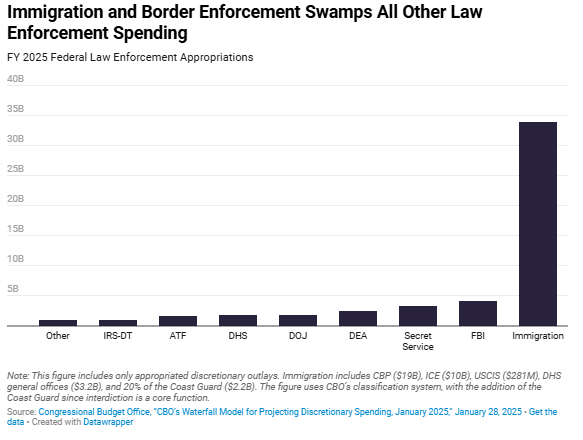
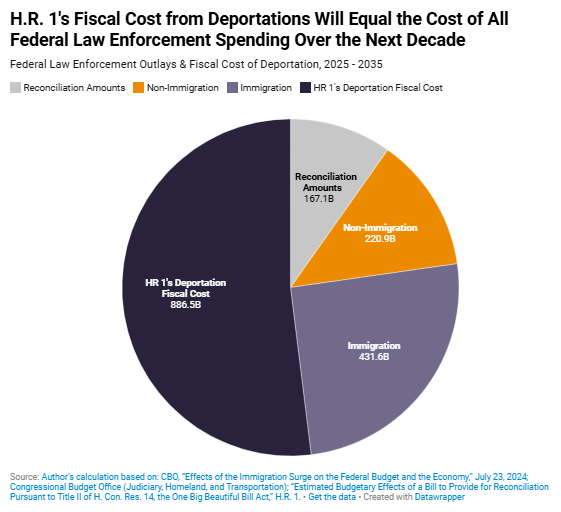
"The US government is not likely saving money in the long run by deporting immigrants. While there are short-term costs associated with deportation, such as the expense of detention and removal, the long-term economic impact of mass deportations is generally considered negative, with potential losses in GDP, tax revenue, and contributions to Social Security and Medicare."
- Economic Impact:
Immigrants, including those undocumented, contribute significantly to the US economy through labor, tax payments, and consumption. Mass deportations would lead to a decrease in the labor force, potentially causing labor shortages and negatively impacting industries that rely on immigrant workers.
- Tax Revenue:
Undocumented immigrants pay billions of dollars in taxes annually at the federal, state, and local levels. Deporting them would result in a significant loss of tax revenue for the government.
- Social Security and Medicare:
Immigrants also contribute billions of dollars to Social Security and Medicare. Removing them would reduce the funds available for these programs.
- GDP Loss:
Studies by organizations like the American Immigration Council suggest that mass deportations could lead to a substantial decrease in the US GDP, potentially by trillions of dollars.
- Cost of Deportation:
The cost of detaining and deporting individuals is substantial. Organizations like the American Immigration Council estimate the cost of deporting all undocumented immigrants to be in the hundreds of billions of dollars.
- Long-Term Effects:
While some might argue that removing undocumented immigrants could free up jobs for native-born citizens, studies suggest that the overall economic impact of mass deportations would be detrimental to the US economy in the long run.
Mass Deportation
Devastating Costs to America, Its Budget and Economy
https://www.americanimmigrationcouncil.org/research/mass-deportation