International Nepal: Anti-Corruption Crusader Named Nepal’s Leader After Gen Z Protests

Nepal's hugely popular army restored order after deadly violence. Its real challenge begins now

Nepal's military faces its biggest challenge yet after it stepped in to restore order following days of deadly violence in Kathmandu


KATHMANDU, Nepal -- Two days of deadly violence left the streets of Kathmandu resembling a war zone. Nepal’s major symbols of power like Parliament, the Supreme Court, and the president’s house were burned by angry protesters. The prime minister was forced to quit, and no one seemed to be in control.

Until Nepal’s military chief, Gen. Ashok Raj Sigdel, appeared in a prerecorded video on Tuesday evening and appealed for calm.

Within hours, the Nepal army was patrolling the streets. Its officers began holding talks with the young protesters who had toppled the prime minister in a major public revolt. And a rapidly escalating spiral of violence began to come under control.

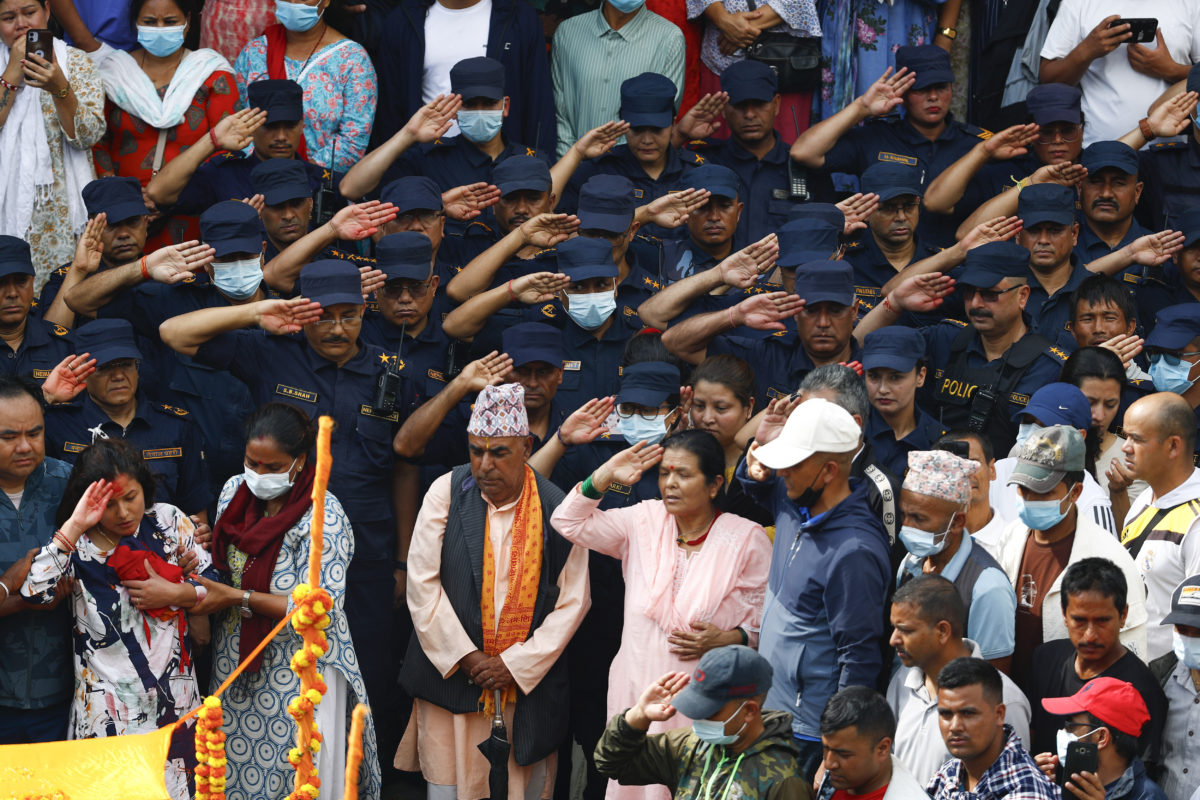
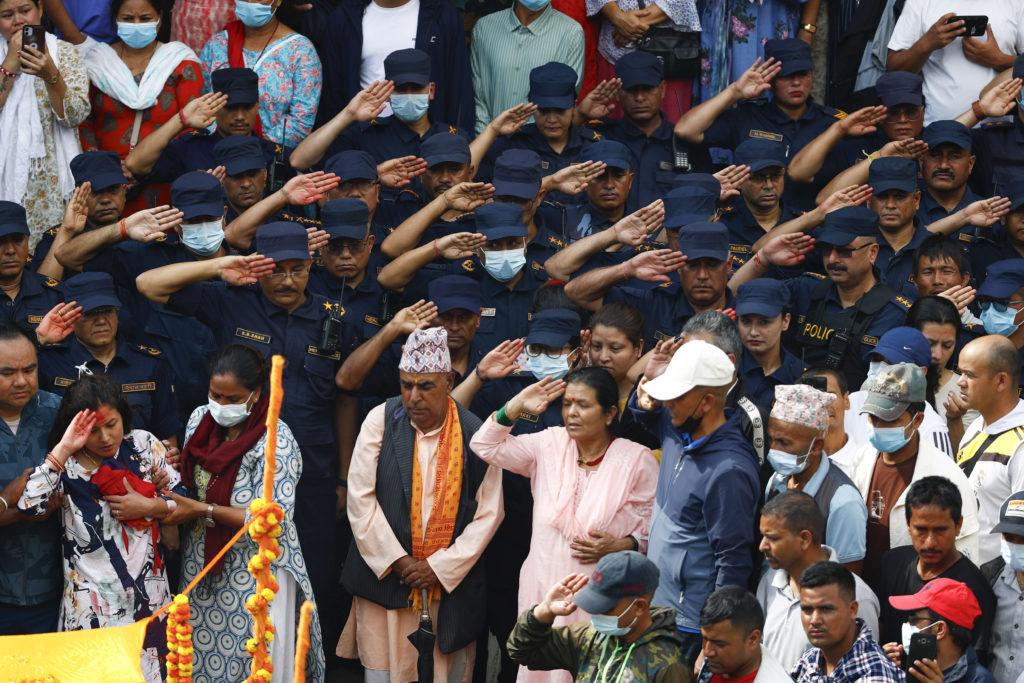
Five days after the violence began, Nepalis are still wondering who is in charge of the country where 34 people were killed in protests sparked by a short-lived social media ban and fueled by broader discontent against the government. But with the army stepping up, many people are breathing a sigh of relief, in contrast to some other countries where citizens are usually fearful of the military taking over the civilian government in moments of crisis.

“It was a very abnormal situation in Nepal which the army was successful in bringing back to control to further prevent loss of lives and property. They were able to take control in an emergency situation and turn the abnormal situation to normal,” said Geja Sharma Wagle, a Kathmandu-based security and strategic affairs analyst.

The military in Nepal, which has also fought a bloody Maoist rebellion, is rarely mobilized in the Himalayan nation wedged between China and India. It is also not known for battling enemy troops at the border and has mostly been confined to barracks. It is normally sought out only when there are floods, landslides or rescues during earthquakes.

Yet it is hugely popular. In the past, it has restored order in difficult times, particularly during the massive pro-democracy protests in the 1990 and the antimonarchy 2006 demonstrations that ended with the abolition of the monarchy.

Nepal’s troops have also been part of United Nations peacekeeping forces for the past six decades, serving in conflict areas in Africa, Middle East and Asia. Nepal currently is the biggest contributor of troops to the U. N . peacekeeping missions.

Since 2008, when Nepal became a republic, the army has tried to stay away from politics. Occasionally it gets dragged in when political leaders decide who will lead the armed forces.

This week’s deadly protests, however, could very well be the greatest challenge it has faced so far.

So far, the military has been successful in bringing calm, quelling a jailbreak in the heart of the capital, Kathmandu, and initiating talks with the protesters on naming a transitional leader. On Friday, Nepal’s president, army officials and representatives from various protesting groups held meetings to decide on a name.

No consensus has been reached yet, and there is no constitutional provision for an interim leader in the Nepalese constitution adopted in 2015.

But this arrangement appears strikingly similar to the one in Bangladesh where last year a student-led protest movement led to the ouster of Prime Minister Sheikh Hasina. Afterward, protest leaders and the army chose an interim government led by the Nobel Peace Prize winner Muhammad Yunus.

After the protests began in Nepal, President Ram Chandra Poudel, whose role is largely ceremonial, had asked Prime Minister Khadga Prasad Oli to lead a caretaker government. But Oli fled from his official residence on Tuesday, and his whereabouts were not clear.

Wagle said the transition may not be easy and warned the military should stay away from interfering in politics.

“The army should not be involved in politics themselves but rather assist the president in getting the issues resolved with the protesting groups. Their role is to facilitate, support and assist wherever it needs to be. It is not suitable for the army to be involved in politics, which could draw them into much unwanted controversies,” he said.

Confusion persists over who will take control of the government. Nonetheless, many Nepalis say the military has in many ways saved the country from more violence and destruction.

“When the police failed to control chaos in the country, the army stepped in right on time and saved the country from plunging into a state of lawlessness,” said Ramesh Shrestha, a car mechanic.

Some others — angered by police violence during the protests — hailed the military for bringing peace.

"Nepal’s army is known for its peacekeeping roles internationally and it has brought peace inside the country too," said Kabita Yadav, a student.


Nepal’s president appoints former chief justice as interim premier and first woman leader


GettyImages-2234337141-1200x800.jpg


KATHMANDU, Nepal (AP) — Nepal’s president on Friday appointed former Supreme Court Chief Justice Sushila Karki as interim prime minister and the first woman to head the Himalayan nation’s government, following fiery protests that collapsed the previous administration.

Karki, a popular figure when serving as the court’s only female chief justice in 2016 and 2017, was to be sworn in later Friday. The appointment was announced by President Ram Chandra Poudel’s spokesman Kiran Pokhrel.

Street demonstrations starting Monday in Kathmandu over a social media ban turned violent, with protesters attacking government buildings and police opening fire. Tens of thousands of protesters attacked and burned the parliament, the presidential residence and private businesses, and assaulted top politicians, prompting the resignation of the previous prime minister.

Nepal’s army took control of the capital Tuesday night, and initiated negotiations over an interim government with representatives of the protesters, the army and the president.

Violence over the past week left at least 51 people dead.


Anti-Corruption Crusader Named Nepal’s Leader After Gen Z Protests

Sushila Karki, a former chief justice, was the choice of the student protesters whose mass rallies led to violent clashes and toppled the government.

12-int-nepal-leader-mjtl-superJumbo.jpg


Sushila Karki, a former chief justice and staunch anti-corruption crusader, was named on Friday as the caretaker prime minister of Nepal, the Himalayan nation whose government collapsed in flames this week.

Ms. Karki, who is Nepal’s first female leader, was the choice of the student protesters whose mass rallies on Monday galvanized an extraordinary sequence of events. Demonstrations against government graft and a ban on social media platforms turned deadly when security forces opened fire on the students, who call themselves Gen Z.

Prime Minister K.P. Sharma Oli resigned to take responsibility for the deaths, and the ban was rescinded. But mobs rampaged across the nation on Tuesday, burning and looting thousands of buildings. Nearly every major state institution was damaged. More than 50 people died in the mayhem, according to the Nepali police on Friday.

Sunil Bahadur Thapa, a presidential adviser who announced Ms. Karki’s appointment before she officially took her oath, said that Parliament had also been dissolved. The Parliament building, like so many others in Kathmandu, the Nepali capital, now lies in ruins.

Ms. Karki will form a cabinet in the coming days and will eventually call for elections, Mr. Thapa said, “most likely after six, seven, eight months.”

The swearing-in ceremony for Ms. Karki took place at the president’s office, which was also damaged in the arson attacks. A heavy military presence was nearby, with multiple barricades set up, soldiers and armored vehicles at the ready.

For days, Nepal effectively has been under the control of the army, which set nationwide curfews and sent thousands of soldiers onto the streets. Gen. Ashok Raj Sigdel, the army chief, met repeatedly with both the student protesters and members of the fallen government.

Though Mr. Oli resigned as prime minister on Tuesday, President Ramchandra Paudel did not. He had not been seen in public since Monday, but on Friday fulfilled his constitutional duty to confirm the new leader of the government. Mr. Thapa, the presidential adviser, said that Mr. Poudel had approved Ms. Karki’s appointment based on the recommendation of the country’s major political parties.

The oath-taking was attended by grandees of Nepali politics, as well as the American, Chinese and Indian ambassadors. The three countries have jockeyed for influence in this strategic, mountainous territory. Also present were representatives of the student protests and Ms. Karki’s husband, himself a former activist who in 1973 was tied to the hijacking of a cash-filled airplane to fund a revolt against the monarchy.

As speculation about her potential role mounted, Ms. Karki told an Indian news channel that she would accept the position because “those young boys and girls, they asked me, they requested me.”

Ms. Karki, 73, has a reputation for standing up to corrupt elements in a graft-ridden society. Less than a year into her tenure as chief justice, two of Nepal’s ruling parties pushed to impeach her after the court revoked the government’s appointment of a new Inspector General of police. Their effort to remove her, which the U.N. called “politically motivated,” was dropped after public pressure.

As Nepal’s first female chief justice, Ms. Karki also campaigned for women’s rights and has been an inspiration for a growing cohort of young female lawyers and judges.

Many Nepalis, especially those active in the Gen Z movement, are angry about corruption, complaining that a small number of elite Nepalis are able to accumulate vast estates for their children.

With limited career prospects at home, educated young Nepalis have fled the country, a brain drain that has further damaged the nation’s economy. Every day, a couple of thousand Nepali laborers depart their homeland for jobs overseas.

In a sign of the continuing chaos in Nepal, where many official documents and records have gone up in smoke, Ms. Karki’s online biography was unavailable. In fact, the entire Supreme Court’s website was not operational.

Ms. Karki’s appointment is unlikely to end political tensions. As protests escalated this week, government ministers were forcibly sequestered in army barracks, one of the ministers said. Raghuji Panta, the education minister, said on Friday evening, just after Ms. Karki’s swearing in, that he had been deprived of his phone since Tuesday.

“This is a regression,” Mr. Panta said, explaining that he was not happy with the events that led to Ms. Karki’s appointment.

Mr. Panta’s home was burned in the arson attacks, and he said everything there had been destroyed.

Balaram K.C., a former Supreme Court justice, said that Ms. Karki boldly opposed corruption during her judicial tenure. But he said he could not comment on her suitability as Nepal’s interim leader.

“Being a justice and being a prime minister are two different things,” he said.

 
We flew in monday straight into this, it seems to have settled down, tuesday was the worst, we were about 500m from the Prime Ministers houses that were burnt down and there was a lot of gunfire all tuesday in the area with looters fighting police and army with stolen guns, military helicopter circling etc. Hotel staff were fantastic, felt sorry for them trying to hide being visibly nervous during the gunfire. Hotel tripled security and we had riot police here all tuesday afternoon, invited by the hotel owner for food and drink from what I gathered. Curfew in place in the city, although in the outer areas many seem to be ignoring it. Went for a walk today and the PMs houses are being swarmed by locals as if its a new tourist attraction.


bunch of liber... sociali...communis ....
Im confused
 
Hope it works out, glad to see technology favor the activists at a time when it increasingly favors authoritarian governments.

I know. EUROPE, particularly the UK is outta control.
 
I know. EUROPE, particularly the UK is outta control.
Lol not what I'm talking about at all and not even close to how totalitarian governments use technology to crack down on dissidence.
 
Is it (D)ifferent?
By orders to what goes on in actual totalitarian or unfree societies.

One can criticize limits on speech in democraies like the UK while not conflating them with a China or Saudi Arabia.
 
Nice to see succesful protest once in a while

Serbians have been protesting for a while now in europe and so far they have just been getting beaten up by police
 
Back
Top