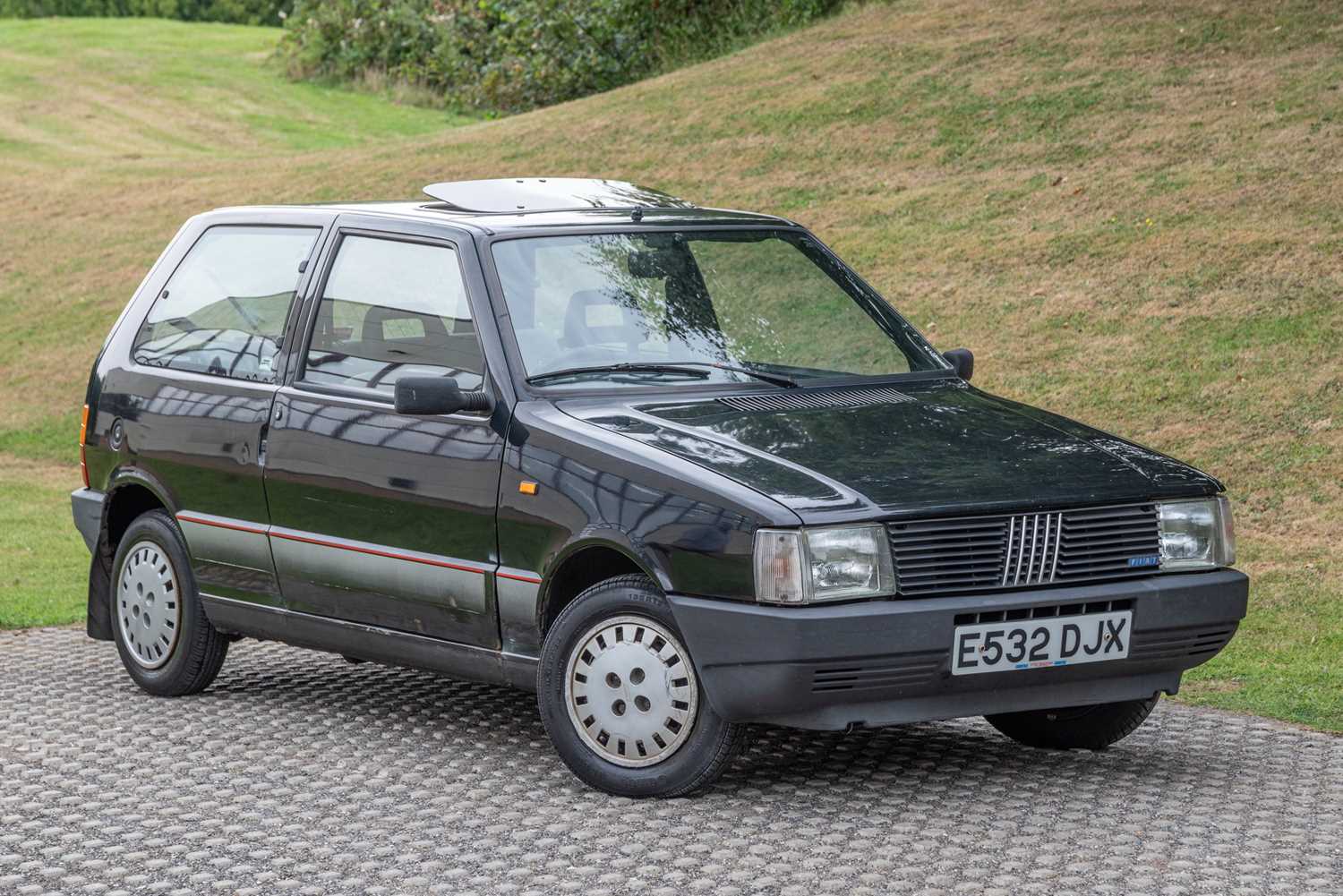
I am unnerved by modern vehicles.

That is why @Slobodan still drives his Yugo.


yugo_wide-7289fec50ee4526d3b0f01b86b0610921815492a.jpg


and yes that IS Slobodan.... sad thing is he is only 21 and looks like that.
Them balkan genes.
#1 Communist automobile

Very handsome young man, wood ride
Thanks Zer, you're one of the good ones
 
If you haven't read The Machine Stops (1909) by E. M. Forster, please go and do so (it's short) before continuing.

As I was coming up cars, and any vehicle I controlled for that matter (dumper, tractor, boat, plane) had no computers/electrics. Before someone jumps in with an acshully, yes obviously they had starter motors, spark plugs if petrol, radios and lights etc. but that was it. Small cars didn't even have power steering. And yes there were probably some cars with electric windows in the 30s and so on. I'm referring to the everyman's experience.

renault-captur-2025-facelift-blog-image-01.jpg


Actually the dumper had no electrics at all and was crank started, and the tractor would run with the ignition key removed. For a while I drove it with no battery and a broken alternator, you just had to jump start it.

I don't have a car just now, but my most recent one was built in 2014. Now I have had some unpleasant surprises when renting vehicles.

Things I already knew about:

Windows are raised or lowered by electric motor.
Vehicles have ABS, and while on older vehicles you could switch if off, on newer ones you can't.
Ditto for traction control.
Vehicles have power steering, and in fact it is now electric. Fair enough you need power steering on larger vehicles.

Surprises

They have computers on board, and touch screen computer systems, and they can not be switched off by normal methods.
This includes GPS trackers, which show you where you are on a map. The map shows speed limits, which are sometimes wrong.
There is no key, only a fob. Doors are locked or unlocked through the Machine. When I get a vehicle, it locks or unlocks its doors as the fob goes further from or comes closer to it. This can still be disabled.
The vehicle is started or stopped either automatically, or by pressing a button and requesting the Machine to do so. Unless you deliberately stall it I suppose, which you can't do with an automatic. But that wouldn't switch off the electrics. I've heard of vehicles having 'stall assist', but thank goodness haven't driven one yet.

Windscreen wipers are automatic, although you can still disable this in vehicles I have driven.
Side/headlights are automatic and you seem to be unable to disable this.
The handbrake is also automatic. There is a button you can push to ask the Machine to engage or disengage it, but it seems to be irrelevant.
All the rental place's small cars are hybrid or electric. Possibly not across the whole country, but where I've looked.
Not that you would notice, but the engines are all electronic fuel injection now.

maxresdefault.jpg


The wing mirrors are adjusted automatically, although you can still disable this. However the 'manual' controls are still buttons and electric motors.
Vehicles monitor your tyre pressure, although you can still disable this. Presumably, as in other contexts, 'disable' simply means it continues to monitor them, but doesn't tell you about it.
A camera on the back of the car switches on when you engage reverse gear, and the display shows what it sees, even if you have switched the display off, which you may not be able to do. I suppose who knows if the camera isn't switched on the whole time.
There are various beeps or verbal warnings, but you can disable them. For now. You can not however disable the 'leaving lane' visual warning.
All the gauges are digital.

Even where you don't notice the difference, no doubt things like switching on the windscreen wipers now send a request to the computer to do so, rather than completing a circuit.
The brakes are about the only manual/analogue thing in a modern vehicle. In case anyone didn't know, the accelerator and clutch are also now simply buttons sending electronic requests to the computer.
Some vehicles now play fake engine noise through the speakers, although not those I've driven. Maybe they had that option and the mechanics disabled it.

No doubt I've missed some things.

Many people in many contexts have discussed how technology is rising above us. I find these technological developments quite unsettling.

Having a car is one thing. I think we'd be better going back to a lower level of technology. However a car in itself is the least of it. You can have a 1987 car which is analogue/manual.

835-2-medium.jpg


It's the insertion of the Machine between the human and every aspect of his environment which is the disturbing part. The Man is no longer in control. The Machine is in control, and the Man asks its permission to see or do anything.

In Dune they had a Butlerian Jihad and banned 'thinking machines'.

Yes I hate this. Fuck modern cars. All that digitrash is forced upon us. For as long as I can I will buy second hand vehicled with a real handbreak and manual transmission.
 
(1) I suppose the door and glovebox handles, and seatbelt buckles are still manual. So that's three things.

(2) I was able to hire a car with cash in 2010 last time? Although you had to have a card scanned in case you damaged it. When the last time was you could just hire a car with cash in the UK idk. Again to do that now you'd probably have to find a private person.

(3) On heavier vehicles needing power steering, this is true past a certain point, but I suppose you could have 44 ton lorries without power steering, if they were designed for it, with big steering wheels and a high turning ratio. Maybe a burly driver too. Most lorries had power steering by the 60s, but they've got heavier since then. By the way modern electric power steering also gives you fake feedback, like the fake engine noise from the speakers.

(4) There's something I've wondered about for a while but it's never really come up so I might as well mention it here. I did mention the urban legend? of the Strategic Steam Reserve not long ago. After an EMP steam trains would work, and a modern diesel train wouldn't, but I wonder what about a diesel train from the 70s or something? Idk much about trains.

I was wondering, if you could get it started, would it run with no electrics? I was thinking if you could raise a heavy weight up high on a crane (using it as an inert pulley), for instance by raising 50lbs of bricks at a time until you had enough, and attach it to a cable, and connect the cable to spin the engine up via another pulley, when you drop the weight, would that get the engine working? The same principle as turning a crank or bump starting a car. Or this, but obviously with an engine so heavy people wouldn't be strong enough to do it.


You would have to find a way of disengaging the pulley brake manually, and of having the cable detach from the flywheel once it started turning. You could weld or cut with oxyacetylene or similar if necessary. Fit a cog to the flywheel, and a chain to the end of the cable maybe.

This bridge, which was made in 1934, can be raised and lowered manually. Its primary system is electric motors, the backup is a petrol motor, and the emergency backup is manually-turned winches. But we don't make things like that any more. Actually British people don't make much at all these days.

variant.jpg


I think most rail switches (where the train can go left or right) still have handles to operate them manually, in case the electrics fail. @Wrath of Foamy are you the train driver? Can you answer this?

This weight and cable method could potentially work on any old enough diesel engine, although it might be onerous cutting through ship decks to get at the engine. Then I suppose once you'd got one engine started you could potentially use that to start others.

If it was a car you could bump start it, and if it was a bus or something too big to bump start by pushing, you might be able to roll it down a hill to bump start, although this could obviously go wrong. But you couldn't do that with a train or boat, or a vehicle too large to push that wasn't conveniently stopped up a slope. Another possibility I suppose would be to start a steam engine, then use that to start the diesel.

If it came to it you could use horses to pull (light) railway carriages. It would be more effective than them pulling loads along the road. Maybe you could get horse-pullable carriages from museums, or just make some. Only the wheels and axles would need to be metal.

I doubt horses would be able to move a locomotive if it was stopped in your way though. I think they could pull an empty, normal carriage, but if you couldn't start a locomotive you would probably need to bring another locomotive to move it (steam or otherwise), or dismantle it into pieces small enough to move. Maybe topple it onto its side or blow it up, but those options seem more far-fetched.

Thinking about this more, I estimate very roughly that a motor powerful enough to start a train engine would weigh about 500lb. It's called a pony engine when you use a smaller one to start a larger one. Of course there are different sizes of train engines so your pony engine's weight would vary with that. It could be <500.

A 500lb engine could be lifted with a small, portable, hand-operated crane and pulled on a cart by a horse if necessary, to the train. Maybe you could drive it on another diesel vehicle you've already got running. I suppose it could drive itself potentially, although that would be getting more complicated.

Anyway you would have the problem of starting it, and the worse problem of anchoring it strongly enough that it didn't simply drag itself towards the train when connected.I don't know the numbers you would want of torque and rpm etc. but they should be achievable through gears/an intermediate flywheel etc. if necessary.

I also wonder now how easy it would be to find the relevant technical data on paper nowadays.

So the weight and crane method of starting a large diesel engine after nuclear war does seem quite strong to me; not that I'm an expert.

It did occur to me that you could set up an elaborate system of treadwheel, gears and flywheel(s), by which humans could very slowly build up enough rotational energy, in a massive flywheel, to start a large engine. But I don't think this would be practical.

I suppose the easiest thing to do would be to just painstakingly move anything in your way on the railway, locomotive or not, onto the sidings with steam engines, and then just use them for the foreseeable future. If you had them and could get them running and maintain them. They need(ed) apparently 30-60lbs of coal per mile, depending on how hard they were working, and 4½ times as much water, supplying which would slow things down a lot. If you had to burn wood things would get much slower.

If you were going to use a steam engine to spin up a diesel train engine though presumably the weight of a steam train, with carriages attached if/as necessary and brakes applied, would be sufficient that the steam engine turn the diesel engine, rather than drag itself towards it.
 
Last edited:
(1) I suppose the door and glovebox handles, and seatbelt buckles are still manual. So that's three things.

(2) I was able to hire a car with cash in 2010 last time? Although you had to have a card scanned in case you damaged it. When the last time was you could just hire a car with cash in the UK idk. Again to do that now you'd probably have to find a private person.

(3) On heavier vehicles needing power steering, this is true past a certain point, but I suppose you could have 44 ton lorries without power steering, if they were designed for it, with big steering wheels and a high turning ratio. Maybe a burly driver too. Most lorries had power steering by the 60s, but they've got heavier since then. By the way modern electric power steering also gives you fake feedback, like the fake engine noise from the speakers.

(4) There's something I've wondered about for a while but it's never really come up so I might as well mention it here. I did mention the urban legend? of the Strategic Steam Reserve not long ago. After an EMP steam trains would work, and a modern diesel train wouldn't, but I wonder what about a diesel train from the 70s or something? Idk much about trains.

I was wondering, if you could get it started, would it run with no electrics? I was thinking if you could raise a heavy weight up high on a crane (using it as an inert pulley), for instance by raising 50lbs of bricks at a time until you had enough, and attach it to a cable, and connect the cable to spin the engine up via another pulley, when you drop the weight, would that get the engine working? The same principle as turning a crank or bump starting a car. Or this, but obviously with an engine so heavy people wouldn't be strong enough to do it.


You would have to find a way of disengaging the pulley brake manually, and of having the cable detach from the flywheel once it started turning. You could weld or cut with oxyacetylene or similar if necessary. Fit a cog to the flywheel, and a chain to the end of the cable maybe.

This bridge, which was made in 1934, can be raised and lowered manually. Its primary system is electric motors, the backup is a petrol motor, and the emergency backup is manually-turned winches. But we don't make things like that any more. Actually British people don't make much at all these days.

variant.jpg


I think most rail switches (where the train can go left or right) still have handles to operate them manually, in case the electrics fail. @Wrath of Foamy are you the train driver? Can you answer this? Edit: Actually I think the train driver might be @Tone C.

This weight and cable method could potentially work on any old enough diesel engine, although it might be onerous cutting through ship decks to get at the engine. Then I suppose once you'd got one engine started you could potentially use that to start others.

If it was a car you could bump start it, and if it was a bus or something too big to bump start by pushing, you might be able to roll it down a hill to bump start, although this could obviously go wrong. But you couldn't do that with a train or boat, or a vehicle too large to push that wasn't conveniently stopped up a slope. Another possibility I suppose would be to start a steam engine, then use that to start the diesel.

If it came to it you could use horses to pull (light) railway carriages. It would be more effective than them pulling loads along the road. Maybe you could get horse-pullable carriages from museums, or just make some. Only the wheels and axles would need to be metal.

I doubt horses would be able to move a locomotive if it was stopped in your way though. I think they could pull an empty, normal carriage, but if you couldn't start a locomotive you would probably need to bring another locomotive to move it (steam or otherwise), or dismantle it into pieces small enough to move. Maybe topple it onto its side or blow it up, but those options seem more far-fetched.


I'm not the train driver mate. I drive small HGVs under aircraft for a living and look up blankly.
 
Good luck, finding a bog standard rental unless your renting from a friend.....
I've always rented Fiestas from Hertz at Heathrow. It just ended up costing me 3 grand last time because I tried going with some swish car from a dodgy company and it was during half term so when I quit that loss and went with who I knew they had me over a barrel.
 
I'm no luddite but newer vehicles can suck it. My 80s Volvo had like 500 thousand miles on it and still kicking when I sold it. Ever read Marshall McLuhan? He focuses on some of the ideas you touched on.
 
I'm no luddite but newer vehicles can suck it. My 80s Volvo had like 500 thousand miles on it and still kicking when I sold it. Ever read Marshall McLuhan? He focuses on some of the ideas you touched on.
I have heard of him, although I've never spent a lot of time on his stuff. Good call.

'Humans are the reproductive organs of Technology'.💀

Taking the bigger picture we've basically got the emergence of superhuman AI, Transhumanism, and the absorption of Man into/subordination of Man to Machine.
Thinking about this more, I estimate very roughly that a motor powerful enough to start a train engine would weigh about 500lb. It's called a pony engine when you use a smaller one to start a larger one. Of course there are different sizes of train engines so your pony engine's weight would vary with that. It could be <500.

A 500lb engine could be lifted with a small, portable, hand-operated crane and pulled on a cart by a horse if necessary, to the train. Maybe you could drive it on another diesel vehicle you've already got running. I suppose it could drive itself potentially, although that would be getting more complicated.

Anyway you would have the problem of starting it, and the worse problem of anchoring it strongly enough that it didn't simply drag itself towards the train when connected.I don't know the numbers you would want of torque and rpm etc. but they should be achievable through gears/an intermediate flywheel etc. if necessary.

I also wonder now how easy it would be to find the relevant technical data on paper nowadays.

So the weight and crane method of starting a large diesel engine after nuclear war does seem quite strong to me; not that I'm an expert.

It did occur to me that you could set up an elaborate system of treadwheel, gears and flywheel(s), by which humans could very slowly build up enough rotational energy, in a massive flywheel, to start a large engine. But I don't think this would be practical.

I suppose the easiest thing to do would be to just painstakingly move anything in your way on the railway, locomotive or not, onto the sidings with steam engines, and then just use them for the foreseeable future. If you had them and could get them running and maintain them. They need(ed) apparently 30-60lbs of coal per mile, depending on how hard they were working, and 4½ times as much water, supplying which would slow things down a lot. If you had to burn wood things would get much slower.

If you were going to use a steam engine to spin up a diesel train engine though presumably the weight of a steam train, with carriages attached if/as necessary and brakes applied, would be sufficient that the steam engine turn the diesel engine, rather than drag itself towards it.
You would also have to do all your sums with pen and paper lol. Been a long time since I've done that for anything not very simple. It's shocking how much skill has been lost in so short a time.

Anyway a rough consumption figure for a diesel train is 4 gallons per mile (40lbs). Diesel doesn't go off too much, left exposed to air, unless maybe we're thinking about scenarios many decades or more after the breakdown of civilisation. It can be cleaned up and the pipes it's been sitting in cleaned if necessary. There should be plenty left around for a while, although once that ran out that would be it for the foreseeable future.

I'm not really into Post-Apocalyptic fiction so maybe it's passed me by, but I don't remember seeing people portrayed struggling to get obsolete technology going after a nuclear war very often. It was in Z for Zechariah IIRC, they had an old abandoned tractor and made a water mill or something. But that's the only example I remember.

Anyway when you think it through, there are probably quite a lot of older diesel engines about which would run after EMPs. Moving them where you wanted, connecting them to what you wanted to power, and starting them would take effort and ingenuity, but seems plausible if you had enough people, and at least one who could figure out how to do so.

You can power most things with a (previous generation) diesel engine. Air tools from a compressor for instance. You could also forge metal on a small scale, burning compressed gas. Until it ran out. Then back to coal and the bellows. If you had no coal or gas I can't see how you would get steel hot enough. Mining coal old school-style in such a scenario could get grim.

So we've got potentially

old diesel engines
steam engines
oxyacetylene etc. cutting and welding
air tools
basic forging
maybe some kind of wind or water mills

That's actually pretty good. However I think in this scenario survivors would tend to 'revert' technologies through the decades. People wouldn't be able to keep things running forever. In a 'best case' scenario they might end up at early 18th century technology.

Along waterways you cound transport goods like this

maxresdefault.jpg


You would want gas or coal to do their shoes though. If a horse like that eats 10lbs of oats a day (vague figure), and you get two tons of oats an acre (vague figure, taking into account conditions, and warmer climes will give a better yield), one acre of oats gives you 448 horse-days of work a year, gross. With the decreased population there would happily be no shortage of grass and hay. So horsepower would seem practical.
 
Last edited:
I think self driving cars will eventually be mandatory. They might not even having steering wheels.
 
Late 60s early 70s muscle - best cars ever
They’re certainly cooler but they had 5 digit odometers for a reason. Modern advancements actually made vehicles more reliable up to a certain point.

EPA and cafe standards have severely impacted the price and reliability of your vehicle. Blame enshittification on the rest. Vehicles peaked around 2005 IMO. Modern enough to be reliable, reasonably powerful, user friendly and comfortable but could still be easily fixed. Canbus is not scary on its own and actually makes repairs easier in many ways.
 
I've been driving ancient vehicles my whole life. Now that I'm rich and travel abundantly, I'm always driving these new rentals and yeah, that whole grab the wheel jesus I'm too close to the center line thing is annoying. It's actually dangerous, because I don't need to be fighting my fucking car for the wheel. Next time that happens I'm going to show the machine who's boss and yank it down a ravine. Who's in control now johnny 5???

I just saw a car down a cliff in Saguaro a few weeks ago. Maybe they had the same idea.
 
If you haven't read The Machine Stops (1909) by E. M. Forster, please go and do so (it's short) before continuing.

As I was coming up cars, and any vehicle I controlled for that matter (dumper, tractor, boat, plane) had no computers/electrics. Before someone jumps in with an acshully, yes obviously they had starter motors, spark plugs if petrol, radios and lights etc. but that was it. Small cars didn't even have power steering. And yes there were probably some cars with electric windows in the 30s and so on. I'm referring to the everyman's experience.

renault-captur-2025-facelift-blog-image-01.jpg


Actually the dumper had no electrics at all and was crank started, and the tractor would run with the ignition key removed. For a while I drove it with no battery and a broken alternator, you just had to jump start it.

I don't have a car just now, but my most recent one was built in 2014. Now I have had some unpleasant surprises when renting vehicles.

Things I already knew about:

Windows are raised or lowered by electric motor.
Vehicles have ABS, and while on older vehicles you could switch if off, on newer ones you can't.
Ditto for traction control.
Vehicles have power steering, and in fact it is now electric. Fair enough you need power steering on larger vehicles.

Surprises

They have computers on board, and touch screen computer systems, and they can not be switched off by normal methods.
This includes GPS trackers, which show you where you are on a map. The map shows speed limits, which are sometimes wrong.
There is no key, only a fob. Doors are locked or unlocked through the Machine. When I get a vehicle, it locks or unlocks its doors as the fob goes further from or comes closer to it. This can still be disabled.
The vehicle is started or stopped either automatically, or by pressing a button and requesting the Machine to do so. Unless you deliberately stall it I suppose, which you can't do with an automatic. But that wouldn't switch off the electrics. I've heard of vehicles having 'stall assist', but thank goodness haven't driven one yet.

Windscreen wipers are automatic, although you can still disable this in vehicles I have driven.
Side/headlights are automatic and you seem to be unable to disable this.
The handbrake is also automatic. There is a button you can push to ask the Machine to engage or disengage it, but it seems to be irrelevant.
All the rental place's small cars are hybrid or electric. Possibly not across the whole country, but where I've looked.
Not that you would notice, but the engines are all electronic fuel injection now.

maxresdefault.jpg


The wing mirrors are adjusted automatically, although you can still disable this. However the 'manual' controls are still buttons and electric motors.
Vehicles monitor your tyre pressure, although you can still disable this. Presumably, as in other contexts, 'disable' simply means it continues to monitor them, but doesn't tell you about it.
A camera on the back of the car switches on when you engage reverse gear, and the display shows what it sees, even if you have switched the display off, which you may not be able to do. I suppose who knows if the camera isn't switched on the whole time.
There are various beeps or verbal warnings, but you can disable them. For now. You can not however disable the 'leaving lane' visual warning.
All the gauges are digital.

Even where you don't notice the difference, no doubt things like switching on the windscreen wipers now send a request to the computer to do so, rather than completing a circuit.
The brakes are about the only manual/analogue thing in a modern vehicle. In case anyone didn't know, the accelerator and clutch are also now simply buttons sending electronic requests to the computer.
Some vehicles now play fake engine noise through the speakers, although not those I've driven. Maybe they had that option and the mechanics disabled it.

No doubt I've missed some things.

Many people in many contexts have discussed how technology is rising above us. I find these technological developments quite unsettling.

Having a car is one thing. I think we'd be better going back to a lower level of technology. However a car in itself is the least of it. You can have a 1987 car which is analogue/manual.

835-2-medium.jpg


It's the insertion of the Machine between the human and every aspect of his environment which is the disturbing part. The Man is no longer in control. The Machine is in control, and the Man asks its permission to see or do anything.

In Dune they had a Butlerian Jihad and banned 'thinking machines'.
I do not share many of your sentiments, but I would definitely prefer that key functions of the car were not operated through a touchscreen. Some manufacturers make you tap the screen to change the AC unit settings. It is unsafe!
 
Yes I hate this. Fuck modern cars. All that digitrash is forced upon us. For as long as I can I will buy second hand vehicled with a real handbreak and manual transmission.
I don’t know man, the same can be said about smart phones

I have the latest tesla and it’s basically a cell phone on wheels. It gets regular updates, updates bring new features to the car, updates can actually break your car, and you can use your phone to defrost, view surveillance cameras, open trunks, etc.

it’s pretty sweet to send destination to your car, walk into your car, and press go and it gets there for you without even touching the steering wheel. There’s no stress about looking for blind spots, if you’re intoxicated, or simply too tired, the car can handle it. It can do all of this right now.

Consider that the Chinese have figured this out as well, and their main EV maker will include the self driving as standard in all cars, it’s like power windows, people will simply accept this is the way it will be.

Would you go back to manual windows?

UI’s will improve over time, most are terrible, but it’ll get there, there’s no going back.
 
I just bought a Toyota Camry (full petrol), boring car but I'm no petrol head, I'm not unnerved by this vehicle.
 
I don’t know man, the same can be said about smart phones

I have the latest tesla and it’s basically a cell phone on wheels. It gets regular updates, updates bring new features to the car, updates can actually break your car, and you can use your phone to defrost, view surveillance cameras, open trunks, etc.

it’s pretty sweet to send destination to your car, walk into your car, and press go and it gets there for you without even touching the steering wheel. There’s no stress about looking for blind spots, if you’re intoxicated, or simply too tired, the car can handle it. It can do all of this right now.

Consider that the Chinese have figured this out as well, and their main EV maker will include the self driving as standard in all cars, it’s like power windows, people will simply accept this is the way it will be.

Would you go back to manual windows?

UI’s will improve over time, most are terrible, but it’ll get there, there’s no going back.
Well, many people like that shit, like you, so just because I hate it it doesn‘t mean that I can‘t see the demand for it.

No manual windows are a pain. Generally I would be fine with going back to analog technology in car i.e. circuits and manual switches.
 
They’re certainly cooler but they had 5 digit odometers for a reason. Modern advancements actually made vehicles more reliable up to a certain point.

EPA and cafe standards have severely impacted the price and reliability of your vehicle. Blame enshittification on the rest. Vehicles peaked around 2005 IMO. Modern enough to be reliable, reasonably powerful, user friendly and comfortable but could still be easily fixed. Canbus is not scary on its own and actually makes repairs easier in many ways.
Not buying for reliability.

Give me

A. The Judge ......... Pontiac GTO 1969
B. 1967 GTO
C. 1970 Chevelle SS
 
Back
Top