Tech Gaming Hardware discussion (& Hardware Sales) thread

Reckon I should go for the 7700 or stay with my 5800X?

For gaming stay with the 5800X. These 7K non-X variants are being released for AMD fanboys who never upgraded from the entry level AM4's at release.
 
Reckon I should go for the 7700 or stay with my 5800X?
I concur with Kane there isn't a large enough performance jump to justify an upgrade. I'd wait to see what the 3D cache brings.
 
I'd wait to see what the 3D cache brings.

3D's pricing will be interesting. Would be smart to release the 3D versions at X variants MSRP and drop the X variants price between the non-X to 3D range.
 
3D's pricing will be interesting. Would be smart to release the 3D versions at X variants MSRP and drop the X variants price between the non-X to 3D range.
That's what they should do. We'll see. The pricing of the X variants is very incovenient, optically. Fingers crossed, at worst, they'll release them with a modest $20-$30 premium over the X variants-- assuming they provide a similar boost as the previous generation's 3D cache chips did. It surprised everyone how effective it was.
 
That's what they should do. We'll see. The pricing of the X variants is very incovenient, optically. Fingers crossed, at worst, they'll release them with a modest $20-$30 premium over the X variants-- assuming they provide a similar boost as the previous generation's 3D cache chips did. It surprised everyone how effective it was.
Interestingly enough, the 7700 just launched here, $150 less than what I paid for my 5800x back in 2020<mma4>
 
Interestingly enough, the 7700 just launched here, $150 less than what I paid for my 5800x back in 2020<mma4>
Looks like the best buy on the AMD side. The R5-7600 has to grapple with the trimmed down i5-13500, and the considerably cheaper i5-13400F. Meanwhile, the R7-7700 is priced cheaper than the i7-13700F and i7-13700.

It's a favorable time to be a CPU buyer. Best it's ever been. Wish we could say the same for GPUs.


MIS Afterburner development may be in trouble.
 
image_2023_01_12T11_46_45_993Z_678x452.png

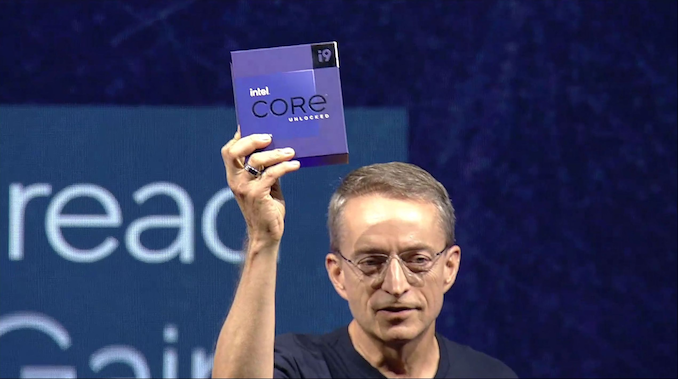
Intel Demos Core i9-13900KS CPU With Blazing-Fast 6 GHz Clock Out Of Box
WCCFTech said:
Yesterday, Intel published a video demonstrating the out-of-box performance of the new Core i9-13900KS CPU. Jason Xie, Gaming Technical Marketing Lead for Intel, conducts the demonstration.

Jason Xie uses the ASUS Z790 motherboard, currently available for sale, with a reference CPU. Xie keeps the Core i9-13900KS temperatures at a comfortable level with an off-the-shelf Corsair AIO liquid cooler. To ensure transparency from Intel, the Intel Gaming Technical Marketing Lead has HWiNFO open & Intel's proprietary Extreme Tuning Utility (XTU) while running the 7zip benchmark for the demonstration to showcase how the chip clocks up to 6 GHz.

During the benchmark, it shows the Core i9-13900KS tops at 6.0 GHz with two cores activated.
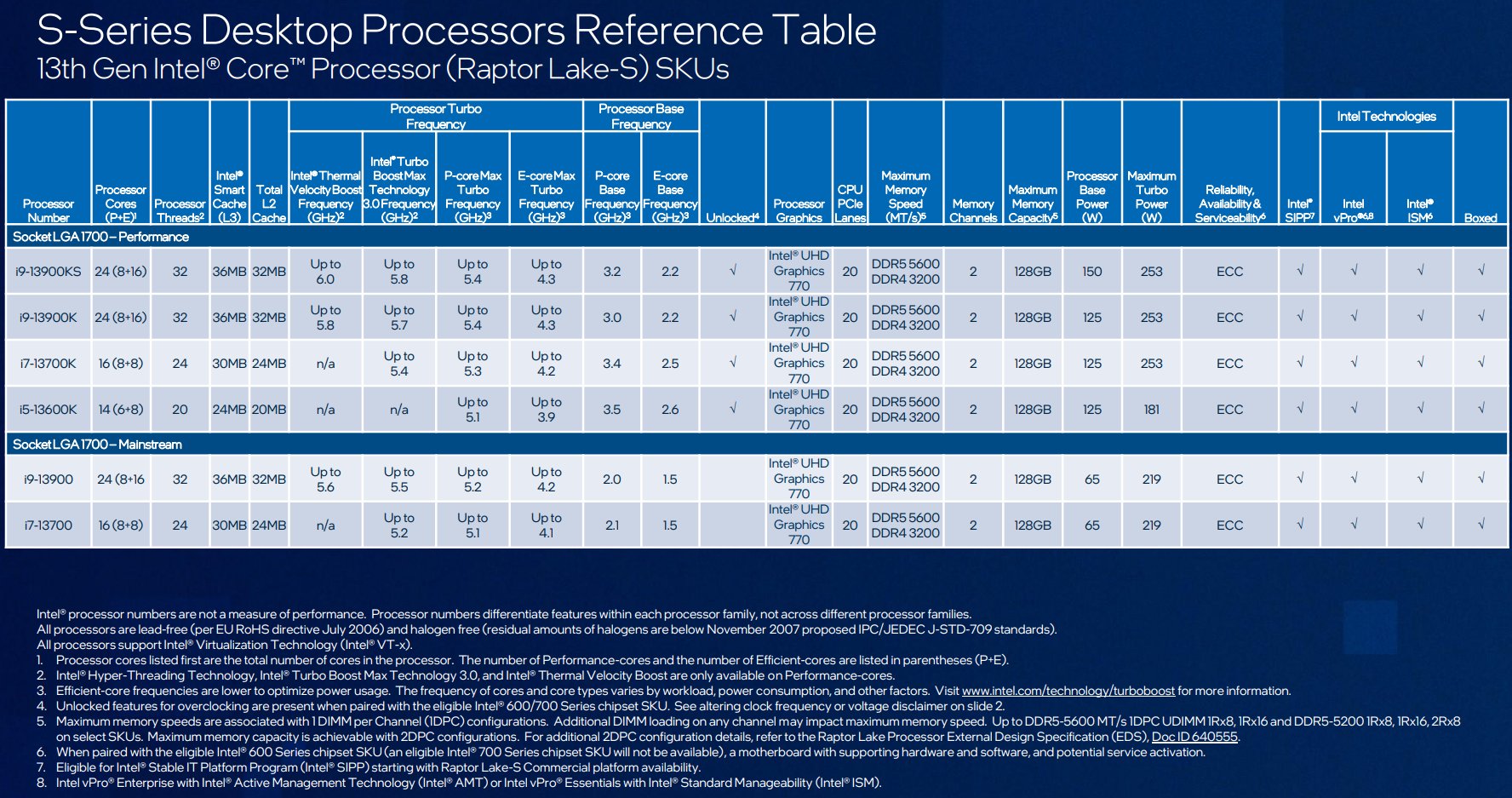
Intel Unveils Core i9-13900KS: Raptor Lake Spreads Its Wings to 6.0 GHz
Anandtech said:
One of the adjustments Intel needed to make to power limitations to achieve these frequencies is somewhat hazy...While we know the Core i9-13900KS has a base TDP of 150 W, up 25 W from the Core i9-13900K (125 W base TDP). Interestingly, from their promotional video, Intel's Technical Marketing Engineer Jason Xie stated that everything was at stock settings in Intel's Extreme Tuning Utility (XTU). While watching the video, we observed a breeze through the XTU screen itself, highlighting that the PL1 and PL2 limits were set to 300 W. Intel hasn't clarified the specifics regarding the PL1 or PL2 limits on the Core i9-13900KS. Still, the video states everything is at default settings.

The $699 MSRP is +$110 above the 13900K, and +$175 above the most frugally priced i9 Raptor Lake 13900F option. It is peculiar Anandtech notes the power limits were set to 300W for the demo, but the official Intel promotional jpeg released shows the same 253W maximum power ceiling as the regular 13900K. Whatever the reality, it's irrelevant to almost everyone since this CPU doesn't make sense as a purchase to anyone but the richest, so it is most meaningful as a landmark threshold in CPU history, and another feather in Intel's cap.
intel-s-series-desktop-processors-reference-table-with-core-19-13900ks.jpg
 
Microsoft's DirectStorage, debuted on the Xbox Series X, but brought to PCs, is turning out to be the truth. Not only does it spare CPU resources, but nothing will load games more quickly if developers utilize the technology with strong compression.
https://www.tomshardware.com/news/directstorage-performance-amd-intel-nvidia

Decompression, and therefore load time potential, is 3x as fast when offloaded to the GPU. Surprisingly, Intel's Arc GPUs were bettering both AMD and NVIDIA, not that the difference between the three was substantial.
 
Microsoft's DirectStorage, debuted on the Xbox Series X, but brought to PCs, is turning out to be the truth. Not only does it spare CPU resources, but nothing will load games more quickly if developers utilize the technology with strong compression.
https://www.tomshardware.com/news/directstorage-performance-amd-intel-nvidia

Decompression, and therefore load time potential, is 3x as fast when offloaded to the GPU. Surprisingly, Intel's Arc GPUs were bettering both AMD and NVIDIA, not that the difference between the three was substantial.
Do you know when games will start getting this on PC?
 
Do you know when games will start getting this on PC?
Ironically, the Playstation console exclusive Forspoken was the first game demo'd last year in March that will make use of it. So it arrives next week on January 24 with that game. Otherwise, expect it to become a standard on future cross-platform games, at least first party Xbox-PC releases.

That's a sensible timetable. As you can see from the table in the page I linked, NVMe PCIe 4.0x4's maximum possible bandwidth is 7.9 GB/s, so the current 5.2 GB/s decompression output on the 12900K isn't failing by much to meet that ceiling potential, and for gamers who still have just 3.0x4 drives, it's exceeding the 3.9 GB/s that drive is capable of pipelining off the CPU.

So, for now, DirectStorage is ahead of the curve. It's when PCIe 5.0x4 drives (on motherboards that have the PCIe 5.0 slot) arrive that this technology will become necessary so that CPUs don't really choke load times. There will also be PCIe 4.0x8 drives, but the x8 drives haven't been practical purchases for any generation up to this point. Cost-benefit of fabrication probably favors x4.
 
Ironically, the Playstation console exclusive Forspoken was the first game demo'd last year in March that will make use of it. So it arrives next week on January 24 with that game. Otherwise, expect it to become a standard on future cross-platform games, at least first party Xbox-PC releases.

That's a sensible timetable. As you can see from the table in the page I linked, NVMe PCIe 4.0x4's maximum possible bandwidth is 7.9 GB/s, so the current 5.2 GB/s decompression output on the 12900K isn't failing by much to meet that ceiling potential, and for gamers who still have just 3.0x4 drives, it's exceeding the 3.9 GB/s that drive is capable of pipelining off the CPU.

So, for now, DirectStorage is ahead of the curve. It's when PCIe 5.0x4 drives (on motherboards that have the PCIe 5.0 slot) arrive that this technology will become necessary so that CPUs don't really choke load times. There will also be PCIe 4.0x8 drives, but the x8 drives haven't been practical purchases for any generation up to this point. Cost-benefit of fabrication probably favors x4.
Does this also mean they will add DirectStorage to PC that already have it on Series X/S?

And just so I'm understanding it correctly, so with my 7900XTX I can get speeds of up to 12.6GB/S on one of my PCIE 3.0 drives with GPU decompression?
 
Does this also mean they will add DirectStorage to PC that already have it on Series X/S?

And just so I'm understanding it correctly, so with my 7900XTX I can get speeds of up to 12.6GB/S on one of my PCIE 3.0 drives with GPU decompression?
Yes, shit, sorry, I just realized how confusing my last post could be.

The point of DirectStorage is that you can transfer data in compressed form, then the CPU or GPU will decompress it. This means you can effectively exceed the bandwidth ceiling of the protocol if it was shuttling the data in uncompressed form. These are those limits:
  • NVMe PCIe 4.0x4 (SSD) ---> 7.9 GB/s ceiling bandwidth
  • NVMe PCIe 3.0x4 (SSD) ---> 3.9 GB/s ceiling bandwidth
  • SATA III (HDD/SSD)----------> 0.6 GB/s ceiling bandwidth

If a game uses DirectStorage, yes, your 7900 XTX can effectively achieve a 12.6 GB/s exchange rate on your PCIe 3.0x4 SSD. As you can see, that's over three times the peak possible on that protocol (this is assuming your SSD actually achieves read/write times close to that, and most are under by quite a ways, only the best 3.0x4 SSDs come close).

And yes, I don't see any reason why a game that was built from the ground up to support DirectStorage on the Xbox wouldn't be capable on PC. This will become a standard.

 
Yes, shit, sorry, I just realized how confusing my last post could be.

The point of DirectStorage is that you can transfer data in compressed form, then the CPU or GPU will decompress it. This means you can effectively exceed the bandwidth ceiling of the protocol if it was shuttling the data in uncompressed form. These are those limits:
  • NVMe PCIe 4.0x4 (SSD) ---> 7.9 GB/s ceiling bandwidth
  • NVMe PCIe 3.0x4 (SSD) ---> 3.9 GB/s ceiling bandwidth
  • SATA III (HDD/SSD)----------> 0.6 GB/s ceiling bandwidth

If a game uses DirectStorage, yes, your 7900 XTX can effectively achieve a 12.6 GB/s exchange rate on your PCIe 3.0x4 SSD. As you can see, that's over three times the peak possible on that protocol (this is assuming your SSD actually achieves read/write times close to that, and most are under by quite a ways, only the best 3.0x4 SSDs come close).

And yes, I don't see any reason why a game that was built from the ground up to support DirectStorage on the Xbox wouldn't be capable on PC. This will become a standard.
Makes me wonder if thsoe PCIE 4 drives, the mid-range ones ( I guess the WD Black 770, with weaker read writes than more high end 4.0 drives would be the best deal
 
Makes me wonder if thsoe PCIE 4 drives, the mid-range ones ( I guess the WD Black 770, with weaker read writes than more high end 4.0 drives would be the best deal
I think so, but they already are. If one is after supreme value the PCIe 3.0x4 DRAM-less drives are ideal. That's why Microsoft put that in the Xbox. But I wouldn't want that for an OS drive, and it looks like there is at least some scaling with the drive's throughput, so one might as well get whatever he was going to get, anyway.
 
I think so, but they already are. If one is after supreme value the PCIe 3.0x4 DRAM-less drives are ideal. That's why Microsoft put that in the Xbox. But I wouldn't want that for an OS drive, and it looks like there is at least some scaling with the drive's throughput, so one might as well get whatever he was going to get, anyway.
Oh I thought the Xbox had a PCIE 4.0 drive
 
The RTX 4090 was down to $1855.00 last week but now it's up to $1920.00 again. Lame
 
Back
Top