Fedor's GnP was insane

Khabib definitely comes to mind. The only difference is Khabib did this to guys like Conor and Barboza who used to fight at 145. I'm not sure if he would have been able to GnP this effectively against guys more his size who could fight at 155-170. Not a knock on Khabib because even if he couldn't GnP them he would still easily control position and submit them.

You do realize that Conor fought at 170 as well don't you? And he was Khabib's size at the weigh-ins.
 
You didn’t address what I actually said……

And yeah, add werdum too.
I didn’t address what you actually said? Dude you are changing scope over and over. The original question was simply: name a good young fighter JDs ever beat that was not out of their prime. The answer is simply none. Last young fighter he fought that could have been considered near prime (JDS) beat him, the guy before(struve) that with same criteria knocked him out.
 
I remember when I barely started watching mma seeing this and thinking it was pretty gnarly gnp. Seeing this now and I feel the same. Seems rare to see HWs throw leather from a gnp position with that kind of speed and intensity.

Yes
HW were smaller and leaner back then, and moved like LHW.
Even into the era of JDS and Cain.
 
Pride rhythm of 4-5 fights per year is a lot harder than UFC rhythm of 1-2 fights per year with a fat rest and preparations between fights.

I could agree with this, except that Fedor was not cutting weight. But he was fighting a 4-2
Egidijus ValavičIusacell, 0-1 Yūji Nagata, the last time Coleman was any good was in 2001–the sport passed him by by 2004, I’m sorry, but Randleman beating CroCop was as flukey as Serra beating GSP—Randleman’s record around that period shows he was no longer any good at the top level, Mark Hunt was a kickboxer when he fought Fedor, etc etc. More could be added to that list. It’s not hard to train for Yūji Nagata when you’re a fighter of Fedor’s caliber. Was he training the way he likely trained for CroCop to fight the lesser opponents? Probably not. I’d go as far as saying DC and Cain probably put more mileage on their bodies in a year, as a result of training with each other, than Fedor did on any single year period.
 
Last edited:
Fedors ground & pound was insane to watch, also gotta give it to Shogun with his superman G&P as well.
 
I didn’t address what you actually said? Dude you are changing scope over and over. The original question was simply: name a good young fighter JDs ever beat that was not out of their prime. The answer is simply none. Last young fighter he fought that could have been considered near prime (JDS) beat him, the guy before(struve) that with same criteria knocked him out.
You are trying to downplay the quality of his wins. I’m saying those wins would be among the top wins of any fighters career. Including fedor.
 
You are trying to downplay the quality of his wins. I’m saying those wins would be among the top wins of any fighters career. Including fedor.
Yes big names no doubt. But has he ever beat a good young fighter? Nope. He’s basically a geriatric killer. A very good one but geriatrics only.
 
Yes big names no doubt. But has he ever beat a good young fighter? Nope. He’s basically a geriatric killer. A very good one but geriatrics only.
Not just big names. Top fighters. Again, they’d be top wins for anyone. Among the best wins of any hw’s career.
 
One of the best to do it all around. Fedor, Anderson Silva, & GSP are the three best to ever do it & it's an impossible debate on who is number 1.
 
To me prime means when were they at their best as a fighter, not when were they in the best physical shape. So Werdum imo had his fighting prime during his title run.

DC was probably in his physical prime when he debuted but you wouldn't call that prime DC I wouldn't have thought, or called early days Randy Couture prime Randy.
It’s your metric, so you can define it however you like I guess. But I can’t say this makes much sense to me if I’m being honest. When you say that prime is when they were at their best as a fighter, how is that judged? Their record? The eye test? Like, Andrei Arlovski would have like 5 different primes if we’re basing it that way.

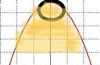
This will be a really crude illustration (I had to draw with my finger lol) but you’ll get my drift. Imagine an upside-down parabola, sort of like this:
6207E529-8750-4912-B2B1-FC75C252E38C.jpeg
This is a fighter’s career. At the beginning there is usually a short period of time where the fighter is very green, but basically that yellow shaded area is a fighter’s prime. It lasts 7-10 years or so usually, although it can be cut short by accidents, injuries and so forth. Usually within that time, a fighter improves and grows, until they plateau—that’s their peak, which is that black circled area in the pic, and it is much shorter—2-3 years or so. How meaningful it is to beat a certain fighter is weighted based on where it falls in that yellow-shaded area.
So would I say that Valentijn Overeem beat Couture in his prime? Yes, I would. Did he beat the best version of Randy, or what I’d call Randy at his peak? No. But this is what separates those few GOAT-level (or near GOAT-level) guys like Aldo, GSP, Khabib, Fedor— even Usman. They have almost no losses, even in that timeframe on my little graph.

This is basically how I view it anyhow.

 
It’s your metric, so you can define it however you like I guess. But I can’t say this makes much sense to me if I’m being honest. When you say that prime is when they were at their best as a fighter, how is that judged? Their record? The eye test? Like, Andrei Arlovski would have like 5 different primes if we’re basing it that way.

This will be a really crude illustration (I had to draw with my finger lol) but you’ll get my drift. Imagine an upside-down parabola, sort of like this:
View attachment 906620
This is a fighter’s career. At the beginning there is usually a short period of time where the fighter is very green, but basically that yellow shaded area is a fighter’s prime. It lasts 7-10 years or so usually, although it can be cut short by accidents, injuries and so forth. Usually within that time, a fighter improves and grows, until they plateau—that’s their peak, which is that black circled area in the pic, and it is much shorter—2-3 years or so. How meaningful it is to beat a certain fighter is weighted based on where it falls in that yellow-shaded area.
So would I say that Valentijn Overeem beat Couture in his prime? Yes, I would. Did he beat the best version of Randy, or what I’d call Randy at his peak? No. But this is what separates those few GOAT-level (or near GOAT-level) guys like Aldo, GSP, Khabib, Fedor— even Usman. They have almost no losses, even in that timeframe on my little graph.

This is basically how I view it anyhow.

I don't really get that at all tbh. If that was the case everyone would have their prime at roughly the same point in their career and it clearly isn't the case. Look at Rory MacDonald and Robbie Lawler for example, you can't say they peaked at the same age or the same point in their careers, surely?
 
Not just big names. Top fighters. Again, they’d be top wins for anyone. Among the best wins of any hw’s career.
Name value wise yes.

But overall they were all geriatric or not in their primes. It’s not Stipes fault but he fought in the weakest era. His championship pedigree still surpasses that of Timmeh as UFC HW GOAT in stats. But how much is he a product of being a good fighter in horrible Division?

It’s the same as Glover smashing todays weaker division vs Jones smashing the previous more talented era of the same division. Glover in the Jones era was losing to the top guys in blowouts be it Jones, Gus or rumble. While today at fifty whatever he is, he is the undisputed champ.

if only thing that matters is name fighters we should forget Stipe and Fedor and have an honest discussion about: if Cerrone or guida is P4p GOAT? they both have massive names on their resume, names that would be a top quality win for anyone ever.
 
Name value wise yes.

But overall they were all geriatric or not in their primes. It’s not Stipes fault but he fought in the weakest era. His championship pedigree still surpasses that of Timmeh as UFC HW GOAT in stats. But how much is he a product of being a good fighter in horrible Division?

It’s the same as Glover smashing todays weaker division vs Jones smashing the previous more talented era of the same division. Glover in the Jones era was losing to the top guys in blowouts be it Jones, Gus or rumble. While today at fifty whatever he is, he is the undisputed champ.

if only thing that matters is name fighters we should forget Stipe and Fedor and have an honest discussion about: if Cerrone or guida is P4p GOAT? they both have massive names on their resume, names that would be a top quality win for anyone ever.
In their prior 6 fights before fighting stipe
Werdum - 6-0
Arlovski - 6-0
Overeem - 5-1
Jds - 3-3 (only losses to Cain and Overeem)

They were all ranked top 5.

It’s not just that they had names…….again, they would be top wins for any hw ever. Among the best wins of fedor’s career.


The right cross Fedor lands in the opening sequence was insanely fast and Fedor swiftly secures an underhook and steers Nog down and as Nog was falling Fedor sneaks in a left hook which was equally as fast and both shots landed flush and the sound of these shots is so loud. The transitional speed here is unreal. Nog was badly rocked from these punches and I believe these shots set the tone for the fight and Nog never fully recovered from them.

On the ground Nogueira is hurt but is still using an offensive open guard with double wrist control. This approach worked for him in other fights and allowed him to set up armlocks and triangles but in this particular situation it was a big mistake because he was still hurt and Fedors atheltic posture was so strong that he just sat up and powered out of Nogs double wrist control and bounced Nog's head off the mat with GnP like it was a basketball.

The sound of Fedors punches on the ground sounds like gunshots are going off and it was so brutal to watch that one of the guest female commentators in the Japanese commentary booth was literally crying. The speed and power of Fedors GnP was something to behold. No one has ever done it like this before him and no one has done it like this after him even 19 years later.

Don't get me wrong there have been impressive GnPers. Jon Jones from 2011-2013 comes to mind but most of the damage he did was done by elbows and of course the LW GOAT Khabib comes to mind. When it comes to GnP with the hands no one has surpassed Fedors GnP in 19 and its overlooked how impressive that is. Fedor was an absolute machine and I don't see anyone fighting like this today and I don't see any HWs today who could take these shots and keep coming. Ngannou had top control on Gane and couldn't land one meaningful shot minus that knee against the cage and Gane isn't half the grappler Nog was.

As for Nogueira, you can't say enough about the toughness of this gladiator. Those shots were brutal and someone like Derrick Lewis would roll over and die if he was pounded on like this. Minotauro is hands down one of the toughest men to ever live for not only surviving but still mounting some offense from his back and even reversing Fedor after taking all of that damage. Much respect to Minotauro.

The second time they fought Big Nog made the necessary adjustments and when Fedor was in his guard Big Nog used a defensive approach and kept his guard closed and instead if trying to control Fedors wrists he hugged him tight and controlled him much better and it was clear that these adjustments made it difficult for Fedor to GnP.

Fedor collected the data from these adjustments Nog made and made his own adjustments for the third fight and used his Judo to throw Nog around used his stand up and clinch prowess to sprawl and brawl and keep Nogueira out of rhythm and guesing. I'll be covering that fight and the techniques used in it in my next post.

Let's take this time to appreciate another classic performance during the era of the best HWs we have ever seen.

Emelianenko and Minotauro bless.

2 questions.


1. What year is it?

2. When does chapter 2 come out? I like your book report.
 
I don't really get that at all tbh. If that was the case everyone would have their prime at roughly the same point in their career and it clearly isn't the case. Look at Rory MacDonald and Robbie Lawler for example, you can't say they peaked at the same age or the same point in their careers, surely?
Certainly peaks don’t happen at the same age, and you can certainly have ppl that peak late. This sort of thing comes up a lot: “Fedor wasn’t declining at 33. Look what a badass Stipe is at 37!”—but Stipe’s career follows the same basic path and timeline, he just happened to be 4-5 years older when he started fighting than Fedor was. So we see the effects of damage, training camps, injuries and whatever catching up to him at the same basic point in his career arc, but a different age. Cormier likewise was clearly declined and diminished 9-10 years into his career, just like GSP or Fedor, but he was going on 40 because the man was 30 when he debuted. He peaked late because he started late.
But none of these things are meant to be absolutes, and there are all kinds various things that can skew that—Werdum’s or Anderson Silva’s career arcs look somewhat different, but both have PED test failures that probably explain that. Cain’s was probably cut short because of billion injuries and bad training habits. You can have favorable stylistic matchups that allow for win streaks to be put together by fighters who are actually out of prime or leaving prime or whatever. And every “rule” has exceptions and statistical outliers. A guy like Robbie Lawler may just be an exception.

But you didn’t answer my question as to how you determine when a fighter was fighting the best. When is Andrei Arlovski’s prime?
 
Certainly peaks don’t happen at the same age, and you can certainly have ppl that peak late. This sort of thing comes up a lot: “Fedor wasn’t declining at 33. Look what a badass Stipe is at 37!”—but Stipe’s career follows the same basic path and timeline, he just happened to be 4-5 years older when he started fighting than Fedor was. So we see the effects of damage, training camps, injuries and whatever catching up to him at the same basic point in his career arc, but a different age. Cormier likewise was clearly declined and diminished 9-10 years into his career, just like GSP or Fedor, but he was going on 40 because the man was 30 when he debuted. He peaked late because he started late.
But none of these things are meant to be absolutes, and there are all kinds various things that can skew that—Werdum’s or Anderson Silva’s career arcs look somewhat different, but both have PED test failures that probably explain that. Cain’s was probably cut short because of billion injuries and bad training habits. You can have favorable stylistic matchups that allow for win streaks to be put together by fighters who are actually out of prime or leaving prime or whatever. And every “rule” has exceptions and statistical outliers. A guy like Robbie Lawler may just be an exception.

But you didn’t answer my question as to how you determine when a fighter was fighting the best. When is Andrei Arlovski’s prime?

I don't see prime as an absolute thing. I would say in the case of Arlovksi you could argue that he had two primes. You had the young wild Arlovski and then the less athletic but more intelligent later version. It's not a simple thing to define because a fighter can perform well, start performing badly, maybe change a few things about their style and start performing well again.
 
I don't see prime as an absolute thing. I would say in the case of Arlovksi you could argue that he had two primes. You had the young wild Arlovski and then the less athletic but more intelligent later version. It's not a simple thing to define because a fighter can perform well, start performing badly, maybe change a few things about their style and start performing well again.
People forget there are so many psychological, physician and behavioral elements that go into performance. Especially in fighting where you don’t perform often. It’s easy to just proclaim someone was automatically better when they were younger. But so much goes into fighter performances. And there are so many aspects and skills to apply in mma.
 
Fedor could never get away with GnP against D1/BJJ champ Francis- Francis would catch him with an armbar from the bottom.
 
I don't see prime as an absolute thing. I would say in the case of Arlovksi you could argue that he had two primes. You had the young wild Arlovski and then the less athletic but more intelligent later version. It's not a simple thing to define because a fighter can perform well, start performing badly, maybe change a few things about their style and start performing well again.
Yeah, I def agree it’s not easy to define. The way I’d look at it is, Arlovski moved to a new camp and made some specific changes to his game to counteract the problems he was having by aging and being out of prime. He then had some favorable matches (like Browne, who was way past it in the middle of a 1-5 run before retiring, or Schaub who was in the middle of a 2-4 run and one fight away from retiring), and Arlovski put together a nice late-career resurgence. Overeem likewise made a lot of changes to his game, Aldo did as well plus dropped a weight class.

But none of that changes when their prime was, in my view. Aldo is fighting well and may keep fighting well, but we are not witnessing prime Jose Aldo right now. Arlovski’s prime to me was maybe 2001-2012 or something, with his peak being like 2005-2009 or so. Like you said, it’s not easy to nail down exactly, but I think we can generally get close.
That’s how I think about primes anyway.
 
Back
Top