

- Joined
- Jan 17, 2010
- Messages
- 12,567
- Reaction score
- 15,506
Sudan, South Sudan, Mali, Palestine and Haiti rated at level of highest concern in latest six-monthly analysis
Carlos Mureithi East Africa correspondent

A United Nations refugee transit centre at Renk, on the border between Sudan and South Sudan. Photograph: Jok Solomun/Reuters
Acute food insecurity is expected to worsen in war-stricken Sudan and nearly two dozen other countries and territories in the next six months, largely as a result of conflict and violence, an analysis by the UN’s Food and Agriculture Organization and World Food Programme has found.
The latest edition of the twice-yearly Hunger Hotspots report, published on Thursday, provides early warnings on food crises and situations around the world where food insecurity is likely to worsen, with a focus on the most severe and deteriorating situations of acute hunger.
An 18-month conflict has driven hunger in Sudan by disrupting food systems, causing displacement, and blocking access for humanitarian support. Weather extremes, such as floods, have also played a role in worsening food insecurity.
To identify hunger hotspots around the world, food security experts and analysts from the FAO and WFP conducted risk analysis of conflict, political violence, economic shocks and natural hazards, and assessed the current or probable disruptions to agricultural activities caused by those risks.

They found 22 hunger hotspots where acute food insecurity is projected to worsen between November 2024 and May 2025.
Sudan, South Sudan, Mali, Palestine and Haiti were rated at the level of highest concern, meaning they face famine or the risk of famine, or have populations in catastrophe. “People are experiencing an extreme lack of food and face unprecedented enduring starvation,” said Qu Dongyu, the director general of the FAO.
Sudan is in the midst of a deadly war between the Sudanese army and the paramilitary Rapid Support Forces that has lasted 18 months and created one of the world’s worst humanitarian crises. In one town, children are reported to have been dying of hunger every day. The challenges have intensified in recent months: famine was declared at one displacement camp and heavy rains caused floods that led to deaths and displacement.
The report says intensification of the war would cause further mass displacement and worsen the regional humanitarian crisis, leading to increased cross-border movements to Chad, South Sudan, Egypt, Libya, Ethiopia and Central African Republic.
“Without immediate humanitarian efforts and concerted international action to address severe access constraints and advocate for the de-escalation of conflict and insecurity, further starvation and loss of life are likely in Palestine, the Sudan, South Sudan, Haiti and Mali,” said Aurélien Mellin, emergency and rehabilitation officer at the FAO.
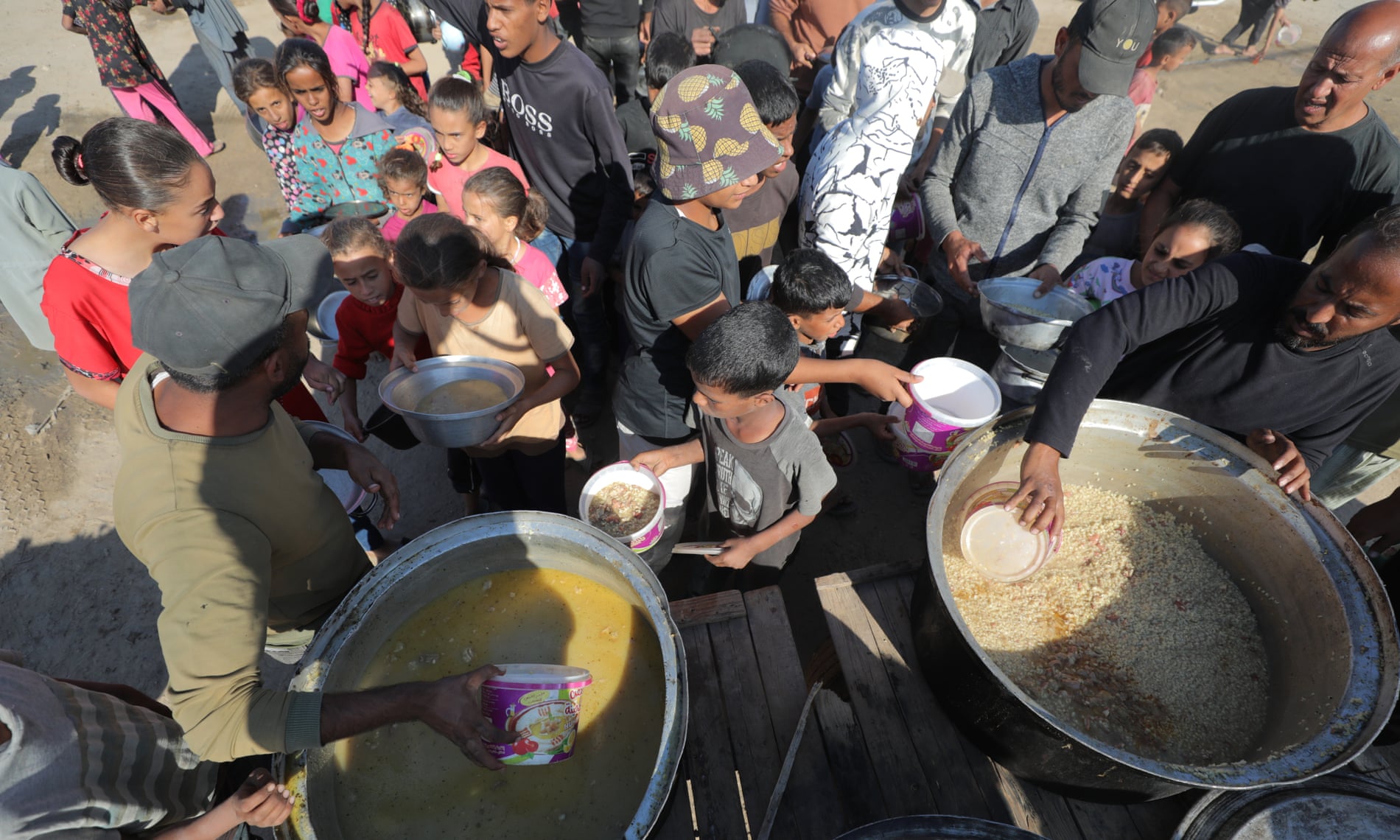
The analysis classified Chad, Nigeria, Mozambique, Lebanon, Myanmar, Syria and Yemen as hotspots of very high concern, meaning large populations there are facing or are forecast to face critical levels of acute food insecurity.
Two countries – Namibia and Lesotho – appear in the hunger hotspots list for the first time due to the negative impact of weather events and a significant decrease in agricultural production this year. The other countries in the third highest category of concern are Kenya, Niger, Burkina Faso, Ethiopia, Malawi, Somalia, Zambia and Zimbabwe.
The report says that a La Niña event – the naturally occurring climate phenomenon that affects rainfall patterns and temperatures – is expected from November 2024 to March 2025. This is likely to increase flood risks in Nigeria, Malawi, Mozambique, South Sudan, Zambia and Zimbabwe, while causing drought in Ethiopia, Kenya, and Somalia, it says.
“La Niña-induced climate extremes can have severe consequences on food security,” said Mellin. “Many countries experiencing humanitarian crises risk being further affected by La Niña, which could exacerbate food insecurity, increase human suffering and result in further economic losses.”
Kevin Mugenya, the programme director at the charity Mercy Corps Ethiopia, said the report highlighted “a troubling rise” in food insecurity across Africa, adding: “Unfortunately, it’s not surprising.”
“We’re seeing hunger deepen due to a complex mix of conflict, economic challenges, and climate change – creating the worst hunger crisis in a generation, particularly in countries like Sudan, Nigeria and Mali,” said Mugenya.
“This has been expected as a result of the compounding years of conflict and instability in the region that has disrupted food supply chains and planting seasons for farmers, leaving less and less land under cultivation.”
The report calls for “immediate” and “scaled-up” assistance in hunger hotspots in order to protect livelihoods and improve access to food.
https://www.theguardian.com/world/2...t-high-risk-of-acute-hunger-un-report-reveals
Carlos Mureithi East Africa correspondent
A United Nations refugee transit centre at Renk, on the border between Sudan and South Sudan. Photograph: Jok Solomun/Reuters
Acute food insecurity is expected to worsen in war-stricken Sudan and nearly two dozen other countries and territories in the next six months, largely as a result of conflict and violence, an analysis by the UN’s Food and Agriculture Organization and World Food Programme has found.
The latest edition of the twice-yearly Hunger Hotspots report, published on Thursday, provides early warnings on food crises and situations around the world where food insecurity is likely to worsen, with a focus on the most severe and deteriorating situations of acute hunger.
An 18-month conflict has driven hunger in Sudan by disrupting food systems, causing displacement, and blocking access for humanitarian support. Weather extremes, such as floods, have also played a role in worsening food insecurity.
To identify hunger hotspots around the world, food security experts and analysts from the FAO and WFP conducted risk analysis of conflict, political violence, economic shocks and natural hazards, and assessed the current or probable disruptions to agricultural activities caused by those risks.
They found 22 hunger hotspots where acute food insecurity is projected to worsen between November 2024 and May 2025.
Sudan, South Sudan, Mali, Palestine and Haiti were rated at the level of highest concern, meaning they face famine or the risk of famine, or have populations in catastrophe. “People are experiencing an extreme lack of food and face unprecedented enduring starvation,” said Qu Dongyu, the director general of the FAO.
Sudan is in the midst of a deadly war between the Sudanese army and the paramilitary Rapid Support Forces that has lasted 18 months and created one of the world’s worst humanitarian crises. In one town, children are reported to have been dying of hunger every day. The challenges have intensified in recent months: famine was declared at one displacement camp and heavy rains caused floods that led to deaths and displacement.
The report says intensification of the war would cause further mass displacement and worsen the regional humanitarian crisis, leading to increased cross-border movements to Chad, South Sudan, Egypt, Libya, Ethiopia and Central African Republic.
“Without immediate humanitarian efforts and concerted international action to address severe access constraints and advocate for the de-escalation of conflict and insecurity, further starvation and loss of life are likely in Palestine, the Sudan, South Sudan, Haiti and Mali,” said Aurélien Mellin, emergency and rehabilitation officer at the FAO.
The analysis classified Chad, Nigeria, Mozambique, Lebanon, Myanmar, Syria and Yemen as hotspots of very high concern, meaning large populations there are facing or are forecast to face critical levels of acute food insecurity.
Two countries – Namibia and Lesotho – appear in the hunger hotspots list for the first time due to the negative impact of weather events and a significant decrease in agricultural production this year. The other countries in the third highest category of concern are Kenya, Niger, Burkina Faso, Ethiopia, Malawi, Somalia, Zambia and Zimbabwe.
The report says that a La Niña event – the naturally occurring climate phenomenon that affects rainfall patterns and temperatures – is expected from November 2024 to March 2025. This is likely to increase flood risks in Nigeria, Malawi, Mozambique, South Sudan, Zambia and Zimbabwe, while causing drought in Ethiopia, Kenya, and Somalia, it says.
“La Niña-induced climate extremes can have severe consequences on food security,” said Mellin. “Many countries experiencing humanitarian crises risk being further affected by La Niña, which could exacerbate food insecurity, increase human suffering and result in further economic losses.”
Kevin Mugenya, the programme director at the charity Mercy Corps Ethiopia, said the report highlighted “a troubling rise” in food insecurity across Africa, adding: “Unfortunately, it’s not surprising.”
“We’re seeing hunger deepen due to a complex mix of conflict, economic challenges, and climate change – creating the worst hunger crisis in a generation, particularly in countries like Sudan, Nigeria and Mali,” said Mugenya.
“This has been expected as a result of the compounding years of conflict and instability in the region that has disrupted food supply chains and planting seasons for farmers, leaving less and less land under cultivation.”
The report calls for “immediate” and “scaled-up” assistance in hunger hotspots in order to protect livelihoods and improve access to food.
https://www.theguardian.com/world/2...t-high-risk-of-acute-hunger-un-report-reveals


