International West Bank thread

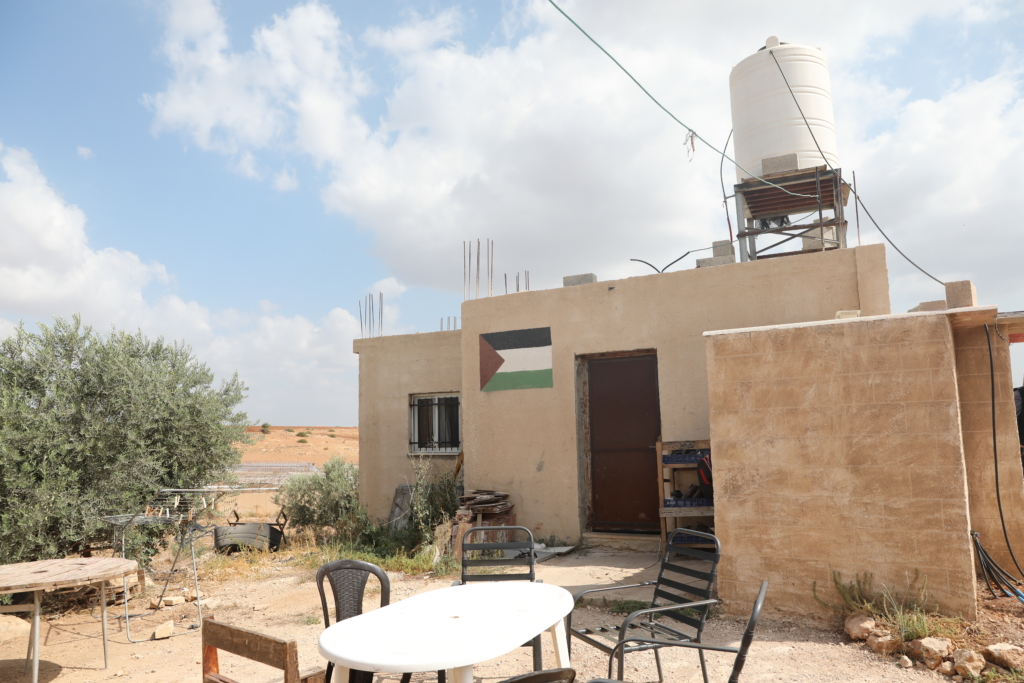
If you're a palestinian on the west bank, and your family has been living in your house for a hundred years generations after generations, then you can wake up a day and have your house seized. I never realized that west bank Palestinians had their life hanging on a thread to that point. The israeli government has a plan since the Oslo accord to isolate and conquer every palestinian village and community there. In whole indifference of international community.

 
I can't keep up with the settlers agressions. There are too many daily. I truly can't keep up

 
Search the video about the two Palestinians that were executed in Jenin today. Unarmed, defenseless, raising their hands empty, shot at point blank, and battered by an excavator just after.

I can't post it here for obvious reasons.
 

What an absolute fucking disgrace.

Israeli terrorists murdering in cold blood for no reason.

Defended by a terrorist government demanding more murder.

----


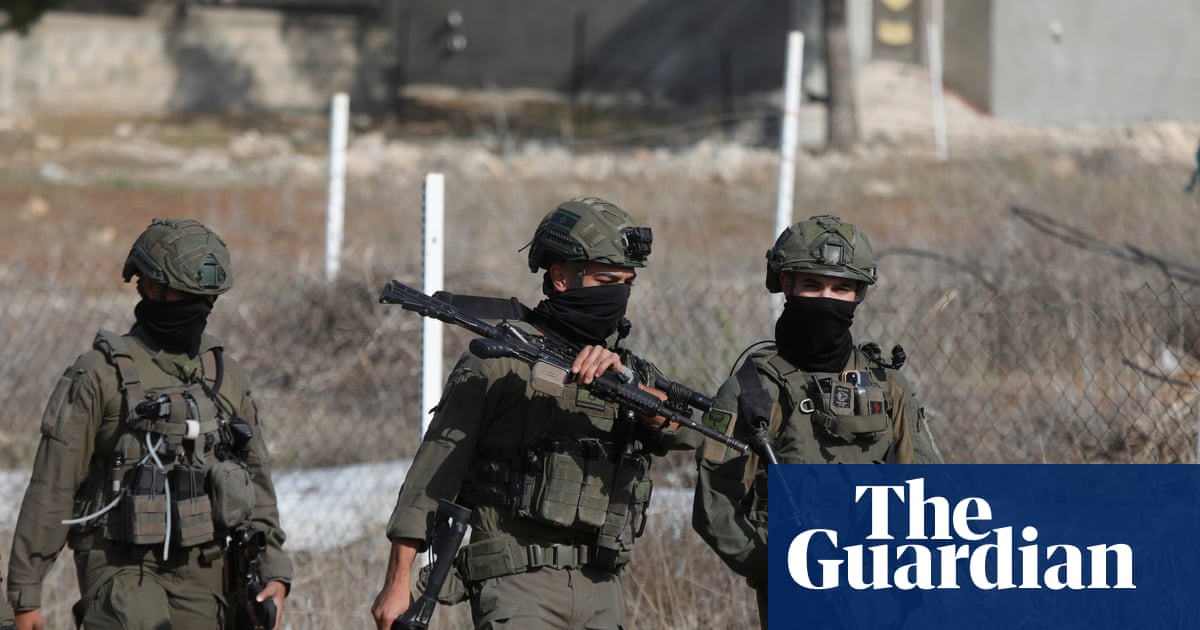
Israel’s far-right National Security Minister Itamar Ben-Gvir welcomed the killings, writing on social media that Israeli forces “acted exactly as expected of them – terrorists must die!”

---

May Ben-Gvir and his supporters burn in Hell.
 

Israel has ‘de facto state policy’ of organised torture, says UN report​

Committee highlights allegations including dog attacks and sexual violence, raising concern about impunity for war crimes

Israel has “a de facto state policy of organised and widespread torture”, according to a UN report covering the past two years, which also raised concerns about the impunity of Israeli security forces for war crimes.

The UN committee on torture expressed “deep concern over allegations of repeated severe beatings, dog attacks, electrocution, waterboarding, use of prolonged stress positions [and] sexual violence”.


The report, published on Friday as part of the committee’s regular monitoring of countries that have signed the UN convention against torture, also said Palestinian detainees were humiliated by “being made to act like animals or being urinated on”, were systematically denied medical care and subject to excessive use of restraints, “in some cases resulting in amputation”.

The UN committee of 10 independent experts raised concern about the wholesale use of Israel’s unlawful combatants law to justify the prolonged detention without trial of thousands of Palestinian men, women and children. The latest figures published by the Israeli human rights group B’Tselem said that as of the end of September the Israel Prison Service was holding 3,474 Palestinians in “administrative detention”, meaning without trial.

The new UN report, covering a two-year period since the beginning of the Gaza war on 7 October 2023, draws attention to the “high proportion of children who are currently detained without charge or on remand”, noting the age of criminal responsibility imposed by Israel is 12, and that children younger than 12 have also been detained.

Children categorised as security prisoners, the report says, “have severe restrictions on family contact, may be held in solitary confinement, and do not have access to education, in violation of international standards”. It appeals to Israel to amend its legislation so that solitary confinement is not used against children.

The UN committee, which was established to monitor implementation of the 1984 UN convention against torture, goes further, arguing that the daily imposition of Israeli policies in occupied Palestine, taken as a whole, “may amount to torture”.

The report said 75 Palestinians had died in custody over the course of the Gaza war, during which detention conditions for Palestinians had undergone a “marked deterioration”. It found the death toll to be “abnormally high and appears to have exclusively affected the Palestinian detainee population”. It notes that “to date, no state officials have been held responsible or accountable for such deaths”.

Israel’s government has repeatedly denied the use of torture. The UN committee heard evidence from representatives of the country’s foreign ministry, justice ministry and prison service who argued that prison conditions were adequate and subject to supervision.

However, the committee pointed out that the inspector charged with investigating complaints on interrogations had brought “no criminal prosecutions for acts of torture and ill-treatment” over the past two years, despite widespread allegations of such practices.

It said that Israel had pointed to just one conviction for torture or ill-treatment in that two-year period, an apparent reference to an Israeli soldier sentenced in February this year for repeatedly attacking bound and blindfolded detainees from Gaza with his fists, a baton and his assault rifle. In that case, the committee found that the seven-month sentence “appears not to reflect the severity of the offence”.

The report was published on a day when three Israeli border police officers were released after questioning over the fatal shooting of two Palestinians who had been detained in Jenin.

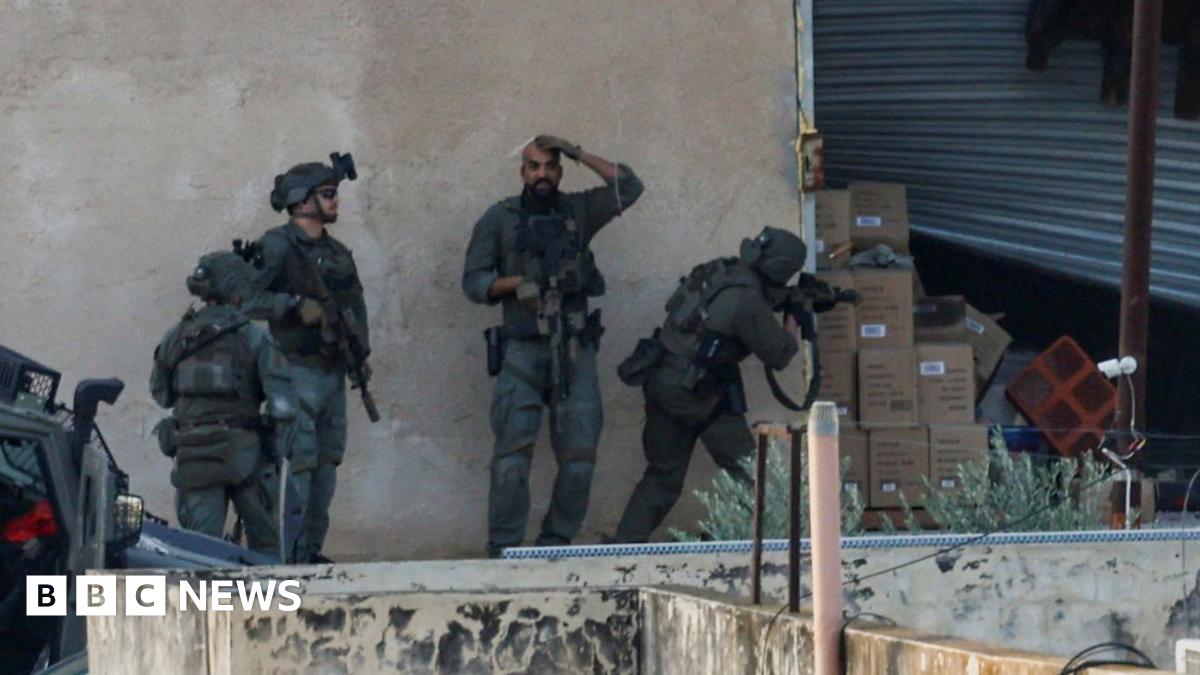
Video of the incident on Thursday evening showed the two men, Youssef Asasa and Mahmoud Abdallah, crawling out of a building. Asasa and Abdallah can be seen holding their hands up and lifting their shirts to show they are unarmed.

The men, both claimed by Palestinian Islamic Jihad as fighters in its al-Quds Brigades, were detained for a few seconds by border police officers, including a bald-headed officer with a beard who appears in the video to take charge and kick both detainees before making a gesture, seemingly ushering them back inside the building. Seconds later Asasa and Abdallah were shot by the officers at a range of about 2 metres.

According to Israeli media, the three border officers questioned on Friday about the incident claimed they “felt an immediate and tangible threat” to their lives. In their reported account of what happened the two detainees had refused to strip naked and had “put their hands in their pockets”, and then one of the men tried to “escape back into the building”.

The video from the scene, the authenticity of which has not been disputed by the Israeli authorities, does not show any obvious resistance from the two men, nor does it show them with their hands in their pockets. They appear to be reluctant to re-enter the building under the apparent orders from the border police officer.

The three border police officers were released after questioning on condition they did not discuss the case with others.

https://www.theguardian.com/world/2...te-policy-of-organised-torture-says-un-report

 
It's a well oiled machine. Slowly by slowly settlers are conquering village after village with the blessings and protection of th israeli army and government. I seriously can't keep up because the page is rapidly increasing as if they feel they have a limited time window to grab as many of the West Bank that's left so it's too late for a two state solution. Which I think it already is at this point, the West Bank is almost entirely swallowed.

 
just Israeli 'settlers' doing Israeli 'settler' things, is normal:

Italy and Canada have raised concerns about the treatment of their citizens who were beaten and robbed by Israeli settlers in the occupied West Bank.

Three Italians and a Canadian were attacked early on Sunday morning in the village of Ein al-Duyuk, near Jericho, where they had volunteered to help protect the Palestinian population from intensifying settler violence.

more

All four were hospitalised and one, an Italian man, was still receiving care in Ramallah on Monday for more substantial injuries.

In a written account, the Canadian said: “At 4.30am on 30 November, 10 masked settlers, two carrying army-issued rifles, burst into the home where we were sleeping after night-watch.

“They beat us for about 15 minutes. I was repeatedly kicked in the head, ribs, hips and thighs. They shouted insults at us in Arabic and told us we had no right to be there. They smashed the interior of the house and destroyed the solar batteries before leaving.”

The pace and intensity of attacks in Ein al-Duyuk have increased substantially over the past two months since the establishment of a settler outpost nearby and the arrival of young and aggressive settlers.

more

Activists say that violent incidents have become an almost daily occurrence. Attacks have included settler mobs breaking into homes and beating villagers, stealing 200 sheep, two cars and destroying solar panels.

While all settlements on occupied territory are illegal under international law, irregular outposts are illegal under Israeli law. Ein al-Duyuk is in Area A of the West Bank, which means it is meant to be administered by the Palestinian Authority and illegal for Israelis to enter.
 
I can't keep up with the settlers agressions. There are too many daily. I truly can't keep up

yep its escalating, its like they think they have a timeline to keep to, that plus 'october 7' gives them carte blanche for just about anything (which, seemingly, it does)

i've got to the point I am numbed by it/ to it
 

Rasheed Khudeiri: “They steal the land, the water, by force” West Bank activist on Palestinians’ struggle to remain on their land ​

Since the current Israeli government took office in December 2022, the authorities have intensified their policies aimed at displacing Palestinians in parts of the occupied West Bank known as Area C which is under Israeli control. These efforts have surged following the Hamas-led attacks of 7 October 2023 and Israel’s genocide against Palestinians in the Gaza Strip.

In the Northern Jordan Valley, these policies—coupled with escalating settler violence—have displaced dozens of Palestinian communities and threaten hundreds more. Here Palestinian farmer Rasheed Khudeiri, an activist with the Jordan Valley Solidarity Campaign, describes residents’ daily struggle to remain on their land, the impact on their family and livelihood, and their unwavering resilience in the face of systemic efforts to uproot them. 


I have lived in Bardala since 1982. Bardala, like other nearby Palestinian communities, has always been a village with a strong community spirit. In 1965, after the Israeli water company Mekorot drilled several wells nearby across the line separating Israel from the Occupied Palestinian Territory. They drained the natural water springs we depended on, so local residents met and decided to dig an artesian well. The village could not afford to pay for workers, so everyone chipped in – some did the digging, others fed the workers or offered them a place to stay, and so on. It was a beautiful example of collective effort and the well revived our agriculture. However, in 1973, six years after the Israel occupied the territory, Mekorot took over the village’s well and made an agreement to sell water to the village residents while discounting the expenses of pumping the water.

Things changed further in 1993, when the water company dug three new wells inside Bardala but did not provide water to cover the village residents’ needs. As a farmers’ village, we find it hard to sustain our agriculture without access to water. Israel controls the water, supplying it to settlements abundantly, and preventing it from being supplied to Palestinian communities. Only last month, I lost 10,000 kilos of muloukhiyya (jute) crops. The water supply was cut off, and I couldn’t water my plants. Not only are our plants thirsty, so are we. It is a clear policy of discrimination.  

Displacement of Palestinians in Area C

The Jordan Valley comprises almost 30% of the West Bank. About 90% of its lands were categorized as Area C of the West Bank under the Oslo Agreement. There are 37 Israeli settlements and dozens of settler outposts in this area. The outposts are not established by the state, but by settlers who take over the land and natural resources with impunity. Around 39% of the Jordan Valley lands are categorized by the Israeli authorities as natural reserves and military firing zones and are off limits for Palestinians. This further facilitates the seizure of natural resources, as well as the displacement of the indigenous Palestinian population. Palestinians who hold ownership deeds to lands in one of these categories are barred from accessing these areas while settlers move in and use the lands for cattle grazing.

The Israeli authorities have also granted sweeping powers to the settlement councils in the West Bank to take over land and water resources, empowering Israeli herding settler outposts. The phenomenon of herding settler outposts became prevalent in 20212, but things escalated dramatically in 2018–2019, when Israeli settler farming outposts started spreading across hilltops and mountain peaks.

After Prime Minister Benjamin Netanyahu and Finance Minister Bezalel Smotrich came to power in late December 2022early 2023, the Israeli government applied a series of policies with the goal of destroying Palestinians’ means to live on their land. It also dramatically increased its support to these settlements. These outposts have been a disaster for us. The settlers, including violent young groups of settlers called the “Hilltop Youth”, have created a climate of fear to intimidate Palestinians into leaving.

Encroachment of settler outposts

In the northern Jordan Valley area alone, settlers have taken over seven water springs that Palestinians depend on for livelihoods. Herding settlers don’t only steal our natural resources, they also appropriate our culture, heritage and lifestyle. Settlers in outposts herd cattle and sheep, build mud houses and make Palestinian dairy products.

There is a farming outpost just one mile to the north out of Bardala , in the area of Qa’oun, Tabayeq and Marah A-Tajat. The Israeli army set up a checkpoint near it. There is a whole chain of outposts surrounding the area, designed to work together to close off roads and prevent access to land and other resources which Palestinian communities depend on.

Israeli herding outposts might sit on small pieces of land of a few dunums each, but they take over huge areas of land for grazing. And on top of this, there is the violence. Not long ago, there was a settler attack on Hammamat al-Maleh. They stole a flock of 50 sheep in the middle of the night and tried to escape with them. But the sheep were afraid to enter unfamiliar areas, and the settlers slaughtered them—some with knives, some were shot dead. What can be said when even animals are targeted?

Amnesty International

They’re taking control of our lifeline

And now Israel wants to apply its laws to Palestinian lands. By what right? By what right do they confiscate my tractor? Or prevent me from accessing my water spring? Five natural springs have recently been taken over by settlers. They’re taking control of our lifeline. 

I have fond memories of swimming at the Al-Malih hot water springs as a child with my family and visiting on school trips. The last time I swam there was in 1998 while on a picnic with my grandfather. I remember how my cousins and I put on our swimming shorts and jumped in the water. When it was time to go home, I didn’t want to come out of the water. They steal the land, the water, by force, and even our will to survive they try to kill it. But do you think they can ever truly understand this land and what it holds? Know it and own it the way we do? I say no. 

A deep connection to the land

One day, while heading home, I was stopped at Hamra checkpoint. The soldiers asked for my ID and searched the car. I had five “dom” fruits with me—also known as “sidr” (Christ’s thorn jujube), a native tree found all over this area.

It has deep cultural roots for our communities: people sing about it, use its leaves for healing, and honey made from its flowers is considered the finest. The soldier asked what the fruits were, and I jokingly said: “apples from Europe”. He asked for one, and I refused. So, he detained me until I agreed to give him one. The irony? Just a few metres behind him stood a sidr tree full of fruit—and he didn’t even recognize it.  

Despite all these hardships, we either die or live in one place—on our land. We don’t want to live away from it, and we don’t want to die away from it. That’s why the least we can do is protect ourselves and our neighbours.

Take Amnesty International’s course to learn more about apartheid:

What is apartheid?

For more information on the role of states and companies in halting the political economy enabling Israel’s genocide, apartheid and unlawful occupation see:

Pull the plug on the political economy enabling Israel’s crimes


Israeli settlers attack and rob Italian and Canadian volunteers in West Bank

Group beaten in early hours of morning in village where they volunteered to help protect Palestinians from settler violence

Julian Borger in Jerusalem
Mon 1 Dec 2025 17.40 CET

Italy and Canada have raised concerns about the treatment of their citizens who were beaten and robbed by Israeli settlers in the occupied West Bank.

Three Italians and a Canadian were attacked early on Sunday morning in the village of Ein al-Duyuk, near Jericho, where they had volunteered to help protect the Palestinian population from intensifying settler violence.

All four were hospitalised and one, an Italian man, was still receiving care in Ramallah on Monday for more substantial injuries.

In a written account, the Canadian said: “At 4.30am on 30 November, 10 masked settlers, two carrying army-issued rifles, burst into the home where we were sleeping after night-watch.

“They beat us for about 15 minutes. I was repeatedly kicked in the head, ribs, hips and thighs. They shouted insults at us in Arabic and told us we had no right to be there. They smashed the interior of the house and destroyed the solar batteries before leaving.”

The woman, who did not want her name published for safety reasons, added: “This is not about us. We were beaten for 15 minutes. Palestinians here endure this violence every day, every hour, a thousand-fold.”

The pace and intensity of attacks in Ein al-Duyuk have increased substantially over the past two months since the establishment of a settler outpost nearby and the arrival of young and aggressive settlers.

Activists say that violent incidents have become an almost daily occurrence. Attacks have included settler mobs breaking into homes and beating villagers, stealing 200 sheep, two cars and destroying solar panels.

While all settlements on occupied territory are illegal under international law, irregular outposts are illegal under Israeli law. Ein al-Duyuk is in Area A of the West Bank, which means it is meant to be administered by the Palestinian Authority and illegal for Israelis to enter.


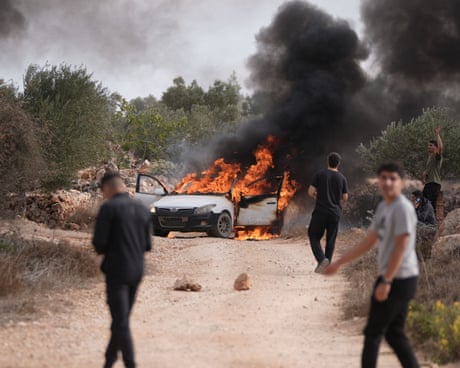
A car on fire in the middle of a dirt track with people stood around.
‘They have total impunity’: West Bank settler violence surges after Gaza ceasefire
Read more

The Canadian foreign ministry said it “strongly condemns the violent acts committed by extremist settlers and opposes any actions or talk about annexation of the Palestinian territories”.

The Italian foreign minister, Antonio Tajani, told reporters: “We have had enough of this aggression. This is not the way [for the settlers] to assert their rights.”

The Israeli authorities in the West Bank have been approached for comment. Villagers and activists say there has been no meaningful police intervention to stop the attacks or dismantle the outpost. Leading members of Benjamin Netanyahu’s governing coalition actively support West Bank settlers.

According to UN figures, Israeli settlers and security forces have killed more than 1,000 Palestinians, including 233 children, in the West Bank over the past two years, in what many Israeli and Palestinian observers believe is a concerted campaign of violence aimed at seizing territory.

Manal Tamimi, a Palestinian activist in the organisation Faz3a, which recruits foreign volunteers to help protect Palestinian villages in the West Bank, said: “In the two months since they built a new outpost near the village, they have brought in far-right wing settlers, who are very violent and seem to belong to an organised group, because they attacked the volunteers in a really organised way.

“The people there are very resilient and they refuse to leave the area. That’s why it’s very important to put international volunteers with them.”

The Canadian volunteer said that, despite the attack and her injury, she felt the presence of volunteers in Ein al-Duyuk had been valuable.

“The villagers stood taller while we were present,” she said. “The children played freely. People slept through the night. That alone made our presence worthwhile.”

 
So when I said before that I couldn't keep up with the number of daily settler attacks I understand now why. In October alone there were 260 recorded settler attacks on Palestinian families. An unprecedented number, never reached before, which indicates the biggest surge in israeli settler violence ever. They clearly have a timeline that they are trying to follow through to erase the West Bank.

 
Of course this doesn't count as terror attacks. It's not mediatized. No coverage. More civilians killed than Oct 7th btw. But who cares.

 
The testimony of this young man savagely attacked by a mob of settlers while he was praying will show you what kind of barbaric threats they are

 
Outside of just the emotionnal impact of such a clip, I think there is something deeper to analyze here. It tells us the future. That generation of israelis has seen an exponential rise in three things : the number of settlers, their agressivity and lack of morals, and the increased acceptance of them in the israeli society and army. That clip is the future of israel


I used to report from the West Bank. Twenty years after my last visit, I was shocked by how much worse it is today

Among the many people I met, there was a pervasive feeling of hopelessness and a sense that resistance is slowly becoming a memory
By Ewen MacAskill

Thu 11 Dec 2025 06.00 CET


In November, Israeli flags suddenly appeared beside a highway in the Palestinian West Bank. More than 1,000, placed about 30 yards apart on both sides of the road, stretching for roughly 10 miles. They were planted south of Nablus, close to Palestinian villages regularly targeted by extremist Israeli settlers. I saw the flags on my way to visit those villages, the morning after they were put up. Their message echoed the ubiquitous graffiti painted by settlers across the West Bank: “You have no future in Palestine.”

Compared with the 70,000 Palestinians killed in Gaza and more than 1,000 in the West Bank since October 2023, the flags amount to no more than a minor provocation. But they reflect how dominant Israel has become in the West Bank, land recognised under international law as belonging to the Palestinians. During the second intifada, the Palestinian uprising from 2000 to 2005, Israeli settlers would not have risked planting such flags, for fear of coming under fire from Palestinians. Not now.


I returned to the West Bank last month for the first time in 20 years. In the early 2000s, I had visited regularly as a correspondent for the Guardian, in support of Jerusalem-based colleagues covering the second intifada. The uprising was much more violent than the first, which ran from 1987 to 1993. The enduring image of the first is of Palestinian youths throwing rocks at Israeli soldiers. The second was a full-scale confrontation, with Israel attacking Palestinian cities and towns with artillery, tanks, helicopters and jets while Palestinians fought back with rifles and explosives. Palestinians ambushed soldiers and settlers in the West Bank, making roads a risky venture, especially at night, and terrorised Israel by sending suicide bombers across its border to attack bus stops, cafes, hotels and anywhere else that was crowded. More than 3,000 Palestinians and more than 1,000 Israelis were killed.

I had not planned to write anything about my trip to the West Bank last month. But I changed my mind when I witnessed how much daily life for Palestinians had deteriorated, how dispirited they have become and how much control Israel and its settlers now exercise over the Palestinian population. I had expected conditions for Palestinians would be worse, but not this much worse.

I had been invited to attend a conference at Birzeit University, on the outskirts of Ramallah, organised by Progressive International, a loose coalition of leftwing organisations and individuals worldwide founded in 2020 by, among others, the former Greek finance minister Yanis Varoufakis and the US senator Bernie Sanders. The conference on the decolonisation of Palestine was organised jointly by Progressive International, the Palestinian thinktank Al-Shabaka and the Ibrahim Abu-Lughod Institute of International Studies at Birzeit. The university’s academics and students have had a long history of protest and clashes with Israeli forces, and the campus has been repeatedly raided by Israeli forces over the last two years.

After the conference, a few attenders set off around the West Bank. I was curious as to why there had been no Palestinian uprising in the West Bank comparable to the second intifada, in support of their compatriots in Gaza. Curious, too, about how much support there was for Hamas in the West Bank, and whether anyone believed that an independent Palestinian state was something we might see in the next few decades. Their responses were varied and complex but consistent themes emerged. One was how demoralised they have become. The other was how far away the prospect of a sovereign independent Palestine now seemed.


Ramallah, the political, cultural and economic centre of the West Bank, looked cleaner, less chaotic and in places, more prosperous than the last time I was there, not that different from many European cities, with billboards advertising restaurants, speciality chocolate shops and the opening of new gyms. Young, fashion-conscious Palestinians sat chatting in cafes and bars; according to some of the older generation, they are generally less concerned about politics.

But this air of normality and prosperity is doubly deceptive. First, Ramallah is not typical of the rest of the West Bank. And second, one of the reasons Ramallah appears so different and less chaotic is the absence of so many of the villagers from surrounding areas who used to line the sides of the city’s streets with their piles of fruit and vegetables. Faced with an expanding maze of Israeli checkpoints and gates that make a journey uncertain, many farmers no longer make the trip to Ramallah. The obstacles are a deterrent not only to farmers but to trade and business generally throughout the West Bank.

At the end of the second intifada, there were, according to the UN, 376 checkpoints and barriers in the West Bank. Today there are an estimated 849, many of them erected in the last two years. Checkpoints and barriers are a topic of conversation among Palestinians in much the same way weather is in the UK. While an app that provides information supplied by bus drivers and other road users helps, it is no guarantee, as I found, that roads will be open. The occupation is colour-coded: red metal barriers are closed much of the time, and yellow ones are open more frequently. Yellow Israeli number plates grant access to roads denied to those driving with green Palestinian plates.

Israeli army incursions into the centre of Ramallah have become more common over the past two years. Israeli soldiers arrive in force, make arrests and leave. In a raid in August, they targeted currency exchanges, made five arrests and, according to Palestinians, left more than a dozen injured by live fire, rubber bullets or teargas.

During a major incursion in 2002, Israel took over much of the city. Its tanks and bulldozers battered into the presidential compound, reducing much of it to ruins and besieging Yasser Arafat, then the Palestinian leader. The darkly lit, cramped rooms in which he was confined until close to his death in 2004 have been left intact, forming part of an Arafat mausoleum and museum. The remains of the compound are a symbol of defiance, from a time when Palestinians were united and there was a sense of hope.

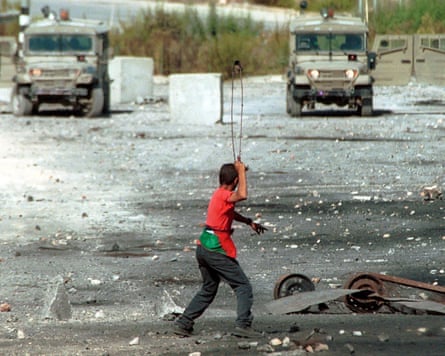
A Palestinian demonstrator uses a slingshot to throw stones at IDF vehicles on the outskirts of Ramallah, West Bank, September 2001.


Read more :
 

Israel Blocks Cancer Treatment for Five-year-old Palestinian Boy in West Bank Over Gaza-registered Address​

Court filings say officials insist the boy, who lives in the West Bank, 'can go to Jordan instead,' even though local specialists stand ready to treat him. His mother warns he can no longer walk and is 'deteriorating every day,' after his father died of the same illness

A child near the European Hospital in Khan Yunis in May.
[/COLOR]

Israeli authorities are refusing to permit a five-year-old boy living in the West Bank, who has a virulent form of cancer, to enter Israel for potentially life-saving treatment.
According to a petition filed in Jerusalem District Court by the boy's family, the request to enter Israel is being denied because the boy's registered address is in Gaza and not the West Bank.
A response from the Israeli Coordinator for Government Activities in the Territories that was filed in court on Wednesday states that the boy can enter Jordan from the West Bank via the Allenby Bridge for treatment in a third country.

The response also suggests that the family should contact an international aid organization or another country in accordance with procedures in place for the medical evacuation of residents of Gaza.

The state of Israel​


In a separate case filed last month, five human rights organizations petitioned the Israeli High Court of Justice for an order requiring Israeli authorities to resume the practice in place before the outbreak of the Gaza war on October 7, which permitted patients from Gaza to be evacuated to hospitals in the West Bank and East Jerusalem.
The case of the boy is different, however, because he now lives in Ramallah in the West Bank and not in Gaza.
According to the Jerusalem District Court petition filed on the boy's behalf by Israel's Gisha Legal Center for Freedom of Movement, the family moved to Ramallah in 2022 to secure medical treatment for him, but it is no longer effective, and the boy therefore urgently needs a bone marrow transplant. Such an operation is not available in the West Bank or Gaza.
"The decision of the Israeli authorities to prevent a five-year-old boy from receiving life-saving medical treatment as a result of his residential address is entirely contrary to their obligations under humanitarian international law, human rights laws and Israeli legal procedures," Gisha's lawyers said.


A checkpoint at one of the entrances to Ramallah in the West Bank, in February.

Central Israel's Sheba Medical Center has a special department specializing in treating the boy's type of cancer and is ready to admit him.
In a conversation with Haaretz, his mother said she hopes he can receive a bone marrow transplant as soon as possible. "His condition is constantly deteriorating and his life is in danger," she said. "His father died of the same illness two years ago." She added that her son can no longer walk and has a severely weakened immune system, and that he is now taking medication for seizures and to control his blood pressure.


ISRAEL-PALESTINIANS/GAZA-DOCTOR


Doctor Khaled al-Saedni, whose leg was amputated after being wounded in an IDF strike, checks on a child at Al-Aqsa Martyrs Hospital in Deir al-Balah, in Gaza in January. Credit: Ramadan Abed/Reuters
The mother said that her husband had filed a request more than three years ago to change their official address from Gaza to Ramallah in the West Bank, but the change has not yet been made.
According to the petitioners in the High Court case, Israel's policy requiring patients leaving Gaza to seek treatment in third countries and not in Israel doesn't absolve Israel of its obligation to Gaza's civilian population, as a party to the war and an occupying power.
The lives of about 16,500 Gazans, including many children and the elderly, are in danger because the medical treatment that they require is no longer available in Gaza, the petition states.
Human rights organizations claim that Israel is in breach of its obligations under international law to save their lives and to protect the Gaza population, which, as a practical matter, they say, is under Israel's control.


Last edited:

Israel Blocks Cancer Treatment for Five-year-old Palestinian Boy in West Bank Over Gaza-registered Address​

Court filings say officials insist the boy, who lives in the West Bank, 'can go to Jordan instead,' even though local specialists stand ready to treat him. His mother warns he can no longer walk and is 'deteriorating every day,' after his father died of the same illness

[COLOR=rgba(0, 0, 0, 0)]
A child near the European Hospital in Khan Yunis in May.

A child near the European Hospital in Khan Yunis in May.
[/COLOR]

A child near the European Hospital in Khan Yunis in May. Credit: Hatem Khaled/Reuters
[COLOR=rgba(0, 0, 0, 0)]
Chen Maanit
Follow
04:41 PM • December 11 2025 IST

[/COLOR]

Israeli authorities are refusing to permit a five-year-old boy living in the West Bank, who has a virulent form of cancer, to enter Israel for potentially life-saving treatment.
According to a petition filed in Jerusalem District Court by the boy's family, the request to enter Israel is being denied because the boy's registered address is in Gaza and not the West Bank.
A response from the Israeli Coordinator for Government Activities in the Territories that was filed in court on Wednesday states that the boy can enter Jordan from the West Bank via the Allenby Bridge for treatment in a third country.

Haaretz Weekly​

Freed hostage Elizabeth Tsurkov: 'I survived months of torture in Iraq - I won't be silenced in Israel'​

play


The response also suggests that the family should contact an international aid organization or another country in accordance with procedures in place for the medical evacuation of residents of Gaza.

The state of Israel​

Haaretz daily briefing: News & analysis


Email

Send
Please enter your email

By signing up, I agree to the terms of use of the site, as well as to receive newsletters and subscription offers from Haaretz.
In a separate case filed last month, five human rights organizations petitioned the Israeli High Court of Justice for an order requiring Israeli authorities to resume the practice in place before the outbreak of the Gaza war on October 7, which permitted patients from Gaza to be evacuated to hospitals in the West Bank and East Jerusalem.
The case of the boy is different, however, because he now lives in Ramallah in the West Bank and not in Gaza.
According to the Jerusalem District Court petition filed on the boy's behalf by Israel's Gisha Legal Center for Freedom of Movement, the family moved to Ramallah in 2022 to secure medical treatment for him, but it is no longer effective, and the boy therefore urgently needs a bone marrow transplant. Such an operation is not available in the West Bank or Gaza.
"The decision of the Israeli authorities to prevent a five-year-old boy from receiving life-saving medical treatment as a result of his residential address is entirely contrary to their obligations under humanitarian international law, human rights laws and Israeli legal procedures," Gisha's lawyers said.

[COLOR=rgba(0, 0, 0, 0)]
A checkpoint at one of the entrances to Ramallah in the West Bank, in February.

A checkpoint at one of the entrances to Ramallah in the West Bank, in February.
[/COLOR]

A checkpoint at one of the entrances to Ramallah in the West Bank, in February. Credit: Moti Milrod

Related Articles​

Central Israel's Sheba Medical Center has a special department specializing in treating the boy's type of cancer and is ready to admit him.
In a conversation with Haaretz, his mother said she hopes he can receive a bone marrow transplant as soon as possible. "His condition is constantly deteriorating and his life is in danger," she said. "His father died of the same illness two years ago." She added that her son can no longer walk and has a severely weakened immune system, and that he is now taking medication for seizures and to control his blood pressure.

[COLOR=rgba(0, 0, 0, 0)]
ISRAEL-PALESTINIANS/GAZA-DOCTOR

ISRAEL-PALESTINIANS/GAZA-DOCTOR
[/COLOR]

Doctor Khaled al-Saedni, whose leg was amputated after being wounded in an IDF strike, checks on a child at Al-Aqsa Martyrs Hospital in Deir al-Balah, in Gaza in January. Credit: Ramadan Abed/Reuters
The mother said that her husband had filed a request more than three years ago to change their official address from Gaza to Ramallah in the West Bank, but the change has not yet been made.
According to the petitioners in the High Court case, Israel's policy requiring patients leaving Gaza to seek treatment in third countries and not in Israel doesn't absolve Israel of its obligation to Gaza's civilian population, as a party to the war and an occupying power.
The lives of about 16,500 Gazans, including many children and the elderly, are in danger because the medical treatment that they require is no longer available in Gaza, the petition states.
Human rights organizations claim that Israel is in breach of its obligations under international law to save their lives and to protect the Gaza population, which, as a practical matter, they say, is under Israel's control.


You never had the makings of a varsity athlete
 

Inside Israel’s starvation economy: How Gaza famine was engineered for profit​


A shocking new investigation by Mada Masr, an independent Egyptian media outlet known for its in-depth reporting and anti-corruption work, has revealed that a network of Egyptian and Palestinian businessmen exploited the genocide in Gaza, profiting from famine, siege, and aid restrictions while ordinary Palestinians starved.

The report titled “Kings of Famine” exposes a highly organised system of profiteering — driven by companies with close ties to both the Israeli military and the Egyptian state — that controlled the import of commercial goods and humanitarian aid into the besieged Gaza Strip while Israel committed genocide.

Key individuals named by the report include Ibrahim al‑Argany, a powerful Egyptian businessman and tribal leader from the Sinai Peninsula. Argany reportedly heads the Sons of Sinai Group, a conglomerate with deep ties to Egypt’s military and intelligence services. His company managed the storage, transportation, and coordination of goods entering Gaza through the Rafah crossing, Egypt’s primary land route into the Strip.

Partnering with Argany were five Palestinian trading companies, all approved by Israel to coordinate commercial imports. These companies, including Saqqa and Khoudary, Emad Eddin Nijm, Ezzo Akl, Gaza Oil Company (Three Brothers), and Ibrahim al‑Taweel, collected massive fees from local sellers, despite being largely unqualified to manage essential food or medical imports.

Another key figure mentioned is Amr Hadhoud, an Egyptian logistics operator who runs Aqsa for Transport, Security and Guarding Services, a company that provides armed escorts for goods inside Gaza. Hadhoud is closely associated with Argany and his business empire, and his company evolved into a central player in distributing aid and goods, often under the guise of humanitarian work.

Under this scheme, known locally as “goods coordination,” Palestinian sellers in Gaza were required to use Israeli-approved middlemen to bring in commercial goods, often paying $10,000 to $25,000 in coordination fees per truck. These middlemen, in turn, worked with Sons of Sinai, which charged additional fees of $7,000 to $13,000 per truck, plus storage. Delays, and “priority access” costs raised the price tag to $60,000 or more.

Meanwhile, Hadhoud’s Aqsa company took over the job of providing security inside Gaza, charging up to $30,000 per truck to ensure delivery to traders.

When Israel restricted commercial goods but allowed “aid,” the network adapted. Sellers coordinated with employees in international aid organisations, who allegedly forged documents to disguise private shipments as humanitarian relief. This allowed commercial goods like chocolate, chewing gum, and apples to enter Gaza as “aid”, while actual life-saving food and medicine remained scarce.

The inflated costs were passed down to ordinary Palestinians in Gaza. The World Food Programme reported that prices of basic goods rose over 1,000%, turning basic necessities into luxury items and forcing families into starvation.

According to data from the Gaza Governorate Chamber of Commerce, profits from coordinating goods during the genocide reached staggering levels. Between late 2024 and early 2025:

Sons of Sinai is said to have earned approximately $177 million. Palestinian and Israeli-side coordination companies earned about $155 million.

Sons of Sinai also secured nearly $50 million in contracts from UN agencies, according to official procurement data, to manage logistics, despite complaints from aid organisations about the company’s inflated pricing and poor accountability.

Ordinary Palestinians bore the brunt of this corrupt system. In one case, coordinating a single truck of frozen chicken cost up to $200,000, and the meat sold at local markets for $40 per kilo, generating up to $1 million per shipment. None of the profits reaced the starving population.

Even humanitarian efforts were hijacked. Camps for displaced people, built with Egyptian state support, were eventually handed over to Aqsa Group, which used them as platforms to distribute goods and consolidate its reputation, even as aid was being repackaged and sold for profit.

The Mada Masr investigation concludes that Gaza’s starvation was not merely a consequence of war, that it was also a business model, enabled by Israeli siege, Egyptian complicity, and the greed of connected elites on both sides of the border.

https://www.middleeastmonitor.com/2...my-how-gaza-famine-was-engineered-for-profit/
 
Israeli settlers force Bedouins to leave West Bank community


Illegal settler outposts are rapidly spreading across the West Bank, linked to growing settler violence. This intimidation, which Palestinians and activists say is rarely prosecuted, is forcing Palestinian families that have been on the land for generations to flee. Story by Gabrielle Nadler.
 
Expropriation and destruction of family homes. As usual

 
Back
Top