- Joined
- Jun 17, 2013
- Messages
- 4,921
- Reaction score
- 15,875
Alright so I have a few things I'd like to discuss. I'd appreciate if people could answer in good faith and not the typical whatabout team play horse shit that leads nowhere. This is about discussing ideas, not specific individuals or groups.
Freedom of Speech vs Dangerous Rhetoric
Is the current implementation of Freedom of Speech adequate for our society in the year 2025? As it stands, calling someone a Fascist, Nazi, Communist, Marxist, et cetera is covered under the First Amendment in virtually every instance. In the wake of recent events, many people argue that this particular kind of rhetoric incites violence. Does that matter?
Who determines what's dangerous and what's not? This is where the argument starts to break down. What if you have a Government or SCOTUS that determines that calling one side a certain thing constitutes dangerous speech, but doing the same to the other side is totally fine? Beyond that, is so-called dangerous speech dangerous if it's true? That gets to the real heart of the issue, and why the First Amendment is as important as it is. Because if you do have a Fascist candidate or Government, you can't have a society where calling a spade a spade is illegal.
In my opinion The First Amendment does not need to be changed, and in fact I think doing so to exclude the aforementioned would be far more dangerous than leaving it alone. In my opinion, free speech is not the problem.
Individual vs Collective and the dangers therein with regards to sowing division in the country.
This is a more complex topic, but I've come to the conclusion that it's at the epicenter of the division in this country that has been accelerating for the last decade or more. If you want to see it first hand, you need only go to the Charlie Kirk thread.
When a bad actor on one "side" does something bad in this country, it becomes nothing more than a cudgel with which to cast aspersions upon all of your perceived political enemies, while further cementing the justifications for your own hatred and political viewpoints. You could throw that thread straight into the Heavies, because it's functionally no different than a PBP thread where people are hoping their guy wins and the other guy loses. It's a disturbing result of how tribal and hateful we've become as a society.
As most of you (I'm assuming the majority of us are 30+ at this point) know, this is not how things used to be. When Eric Harris and Dylan Klebold massacred 14 people nobody was waiting with baited breath hoping they turned out to be trannies, migrants, or hillbillies so that "their side" would pick up a win. It was a loss for us all, as it should be.
So why is this such a popular thing now? Well it's far easier to generalize. It's far easier to hate a collective. It's far easier to place blame on an ideology if you can cherry pick bad actors and apply the label to the entire group. And most importantly, picking sides and blaming the collective invariably leads to perpetual hatred. Why? Because there will always be bad actors on both sides. If that's enough to start a war, then we will forever be at war, and there will never be a solution to this problem. In this scenario we all lose, but somebody out there wins. Who is it?
And when did it change? And what were the key factors? Partisan news, social media, and a general decline in political decorum?
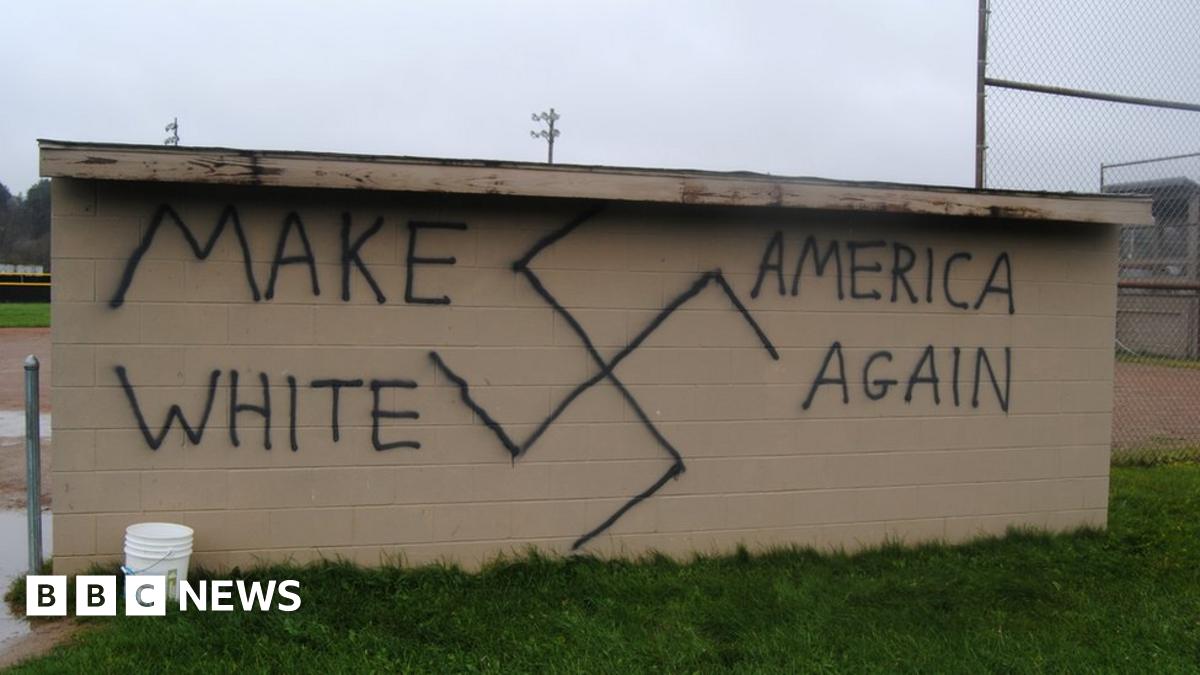
Is it because society has completely gone to shit? Fun fact: most crime—violent or otherwise—is down substantially from where it was in the 90s. But peoples' perception of that rate of crime is far higher than it was in the 90s. Except hate crimes. Those are up significantly.
So what conclusion do you draw from that? Sensationalist 24 hour news media skewing peoples' perception immediately comes to my mind. When you have to fill 24 hours of news content, and outrage brings the most engagement, outrage becomes the headline, every day.
And how about our politicians? Compare them now to what they were 30 years ago. Compare the time they spend governing to the time they spend sowing division and engaging in culture war rhetoric.
Another avenue that absolutely must be explored is foreign actors. Asymmetric warfare utilizing social media, streaming, influencers, and online news entities in order to destabilize a nation. We know it happens. How much of a factor does it play?
There's a lot more I'd like to say, and several other topics that I'd like to add, but that's enough to get started.
Speak.
Freedom of Speech vs Dangerous Rhetoric
Is the current implementation of Freedom of Speech adequate for our society in the year 2025? As it stands, calling someone a Fascist, Nazi, Communist, Marxist, et cetera is covered under the First Amendment in virtually every instance. In the wake of recent events, many people argue that this particular kind of rhetoric incites violence. Does that matter?
Who determines what's dangerous and what's not? This is where the argument starts to break down. What if you have a Government or SCOTUS that determines that calling one side a certain thing constitutes dangerous speech, but doing the same to the other side is totally fine? Beyond that, is so-called dangerous speech dangerous if it's true? That gets to the real heart of the issue, and why the First Amendment is as important as it is. Because if you do have a Fascist candidate or Government, you can't have a society where calling a spade a spade is illegal.
In my opinion The First Amendment does not need to be changed, and in fact I think doing so to exclude the aforementioned would be far more dangerous than leaving it alone. In my opinion, free speech is not the problem.
Individual vs Collective and the dangers therein with regards to sowing division in the country.
This is a more complex topic, but I've come to the conclusion that it's at the epicenter of the division in this country that has been accelerating for the last decade or more. If you want to see it first hand, you need only go to the Charlie Kirk thread.
When a bad actor on one "side" does something bad in this country, it becomes nothing more than a cudgel with which to cast aspersions upon all of your perceived political enemies, while further cementing the justifications for your own hatred and political viewpoints. You could throw that thread straight into the Heavies, because it's functionally no different than a PBP thread where people are hoping their guy wins and the other guy loses. It's a disturbing result of how tribal and hateful we've become as a society.
As most of you (I'm assuming the majority of us are 30+ at this point) know, this is not how things used to be. When Eric Harris and Dylan Klebold massacred 14 people nobody was waiting with baited breath hoping they turned out to be trannies, migrants, or hillbillies so that "their side" would pick up a win. It was a loss for us all, as it should be.
So why is this such a popular thing now? Well it's far easier to generalize. It's far easier to hate a collective. It's far easier to place blame on an ideology if you can cherry pick bad actors and apply the label to the entire group. And most importantly, picking sides and blaming the collective invariably leads to perpetual hatred. Why? Because there will always be bad actors on both sides. If that's enough to start a war, then we will forever be at war, and there will never be a solution to this problem. In this scenario we all lose, but somebody out there wins. Who is it?
And when did it change? And what were the key factors? Partisan news, social media, and a general decline in political decorum?
Is it because society has completely gone to shit? Fun fact: most crime—violent or otherwise—is down substantially from where it was in the 90s. But peoples' perception of that rate of crime is far higher than it was in the 90s. Except hate crimes. Those are up significantly.
So what conclusion do you draw from that? Sensationalist 24 hour news media skewing peoples' perception immediately comes to my mind. When you have to fill 24 hours of news content, and outrage brings the most engagement, outrage becomes the headline, every day.
And how about our politicians? Compare them now to what they were 30 years ago. Compare the time they spend governing to the time they spend sowing division and engaging in culture war rhetoric.
Another avenue that absolutely must be explored is foreign actors. Asymmetric warfare utilizing social media, streaming, influencers, and online news entities in order to destabilize a nation. We know it happens. How much of a factor does it play?
There's a lot more I'd like to say, and several other topics that I'd like to add, but that's enough to get started.
Speak.