Movies Serious Movie Discussion

My mate was literally just telling me not to bother watching that Three Colours: Red he was watching it earlier.

I think its definitely worth watching but equally I suspect the reason its the most recommended of the trilogy is that its arguably more easily digestible for a wide audience. Its basically Kieślowski in more down to earth oddball moral tale mode rather than grand atmospheric drama as with Blue.
 
Last edited by a moderator:
Could someone please recommend movies featuring breathtaking natural scenic beauty from the US?

You know, like Legends of the Fall, Brokeback Mountain.
 
For me, my biggest problem was that, for as often as Sorkin has written flawed lead characters (Zuckerberg in The Social Network, Will McAvoy in The Newsroom, and Steve Jobs at the top of the list), this was the first time that I didn't actually respect or identify with the lead character and find dignity, intelligence, and courage in their troubled nature. Molly dealt with her tough break poorly, made years worth of idiotic decisions, put herself in terrible situations, and then propped herself up with the most offensive definition of success I've ever heard uttered. So, morally speaking, this was the first time I wasn't right there with Sorkin and his lead.
I thought in the end Molly did really admirably to minimize harm her actions had caused. After she stopped running the game and doing drugs she had realized how much of her business was about taking advantage of people and how many of her regulars had gotten into trouble because of it. She refused to release any information that could further hurt her ex-customers and rather stood behind her actions in court risking a long jail sentence. I found that courageous and inspirational.

That distance was increased even more by Sorkin's perversion of The Crucible as the means by which to achieve Molly's "salvation."
Yeah, this was the weakest link of the movie.

Molly's Game was not quite there with Social Network and Steven Jobs, but I still liked it a lot. Btw, Sorkin had completely flown under my radar as someone I should pay attention to before running into your rants.
 
Last edited:
Finally got round to watching the second half of The Emigrants, ie.

The New Land (1972)

1WueW5a.jpg

Really should have watched them back to back like I intended to, or at least a day apart, because in a sense they are clearly meant to comprise a single 6+ hours film. As it stands they are pretty long at over 3 hours each anyway. In this film Jan Troell picks up exactly where The Emigrants left of, as if he had just cut to the next scene; initially the story is told in much the same style and we follow the journey of the Nilsson family (Karl-Oskar, his young wife Kristina and their children) and their attempts to settle in America with the same kind of poetic realism as the first film. The first hour or so continues like this. However, as the film goes on and the emigrants (the other Swedish families, as well as Karl-Oskar's younger brother) begin to spread themselves across the vastness of this new world, the narrative structure itself begins to fracture. In general the story becomes more up-tempo and time passes more quickly than in the first film. The Larsson family and their farm is always the focus, but when the younger brother and his friend travel to California in search of gold the narrative scope becomes more expansive in order to include this wild west frontier. Having just arrived in America the brother still thinks that if he keeps pushing West he will find riches. For these sections the cinematography and editing-style becomes more experimental, almost jagged and disorientating in order to reflect those different experiences. Especially because it's supposed to be flashbacks.

As I say, the narrative is largely focused on the internal dynamics of this particular family. But in a broader sense it is the story of all emigrants to America, in terms of the hopes and aspirations that led them to leave their homelands behind, the difficulties they faced once they arrived, the nostalgic yearning longing for home vs. pioneering spirit and so on. This plays out within the family itself and the different characters of Karl-Oskar and Kristina, but it is extends beyond them. There is also an attempt in this "half" of the film to situate all of this within the wider historical situation of the Native Americans. Mostly there isn't much explicit (at first), but they appear very early on as a force lurking in the background. Kristina has some sort of paranoid fever dream about being attacked, though there is also a scene in which he provides some native women with food. This is very much the tension which is at play here and later in the film this comes more into focus with the events of the Sioux Outbreak of 1862 which occurred in that region at the time the film is set. There is one scene - involving a foetus - which is, shall we say, a bit excessive and distasteful.....but despite that I think there is actually a lot of sympathy shown towards the native.

All in all, another fantastic film. I don't think it's quite as good as the first, or if we consider them as one 7 hour film then the final quarter is a tad more uneven than the first 3. But really a fantastic pair of films/historical epic. In many ways reminds me of another lengthy epic from the 70s The Tree of Wooden Clogs.
 
Last edited:
Just back from seeing

At Eternity's Gate (2018)
At-Eternitys-Gate-Trailer-752x440.jpg


It was pretty uneven, when it worked I thought it was brilliant but there were also moments which were extremely clunky and failed to deliver the kind of emotional resonance it was aiming for. There were particularly some scenes like this with some really really bad dialogue which I felt tried to over-explain, over-literalise things for the benefit of the audience, ie. attempting to render some kind of internal mood or thought in a way which is audible to the audience. For me it just comes across as being extremely facile, the viewer should be trusted more to understand this from other elements of the film rather than having it spelled out through dialogue.

That said, that is only a few scenes here and there. Overall I thought the film was quite good, and in certain moments actually pretty spectacular. At it's best it really captures the the kind of ekstasis behind Van Gogh's life and art, both from a kind of humanistic perspective and what you could only say is an essentially mystical approach to the Divine (in his early life Van Gogh had been intensely religious, and I suppose through his painting he still was, only in a different way). Those moments of sudden transcendence are captured very well, along with - or rather even more because of - the contrary moments hardship and rejection in his life (personally, as well as financially and artistically). The style of the film is clearly meant to convey a sense of that expressionist approach to art. The narrative is fractured and moves freely between time, and along with the general camera work which tends to be almost handheld, extremely un-precise, there are other aspects like shifts in colour, saturation, sound, and so on which also add to this feeling.

On the whole, a good film worth seeing if you like that kind of thing (or if you are a big Van Gogh fan), but certainly not one that most average cinema-goers will enjoy in my view.
 
Last edited:
Just watched the silence on Netflix it’s absolutely awful from the storyline acting special effects Netflix make some shitty movies but this is one of the worst 1/10
 
Just finished

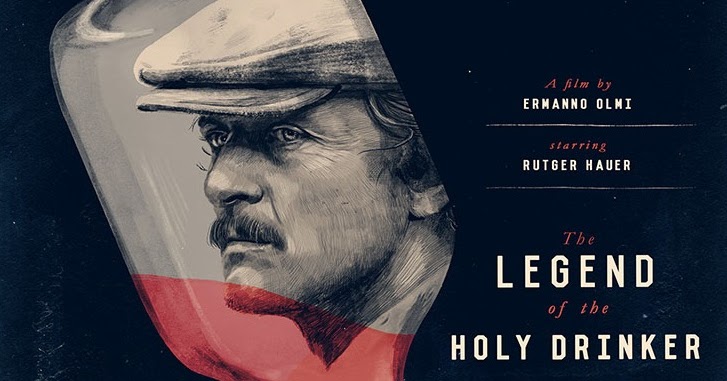
The Legend of the Holy Drinker (1988)

Poster.jpg


The second Olmi film I have watched after his earlier masterpiece The Tree of Wooden Clogs, which I love. This one is an adaption of an Austrian novella from 1939 (never heard of it) and stars Rutger Hauer as Andreas, an alcoholic tramp living in Paris who is given 200 francs by an elderly man on the only condition that once he is able to pay him back, he donate it to the local church. The film follows Andreas after this apparent miracle as he initially gets his life back on track; he is seemingly still a nice man, and a "man of honour" as he says himself, despite his poverty. This event prompts a number of other small miracles - he suddenly gets a job and finds even more money in a second-hand wallet which he purchases, for instance. However, every time he goes to the church to attempt to pay the debt he is waylaid either by certain events - figures from his past suddenly reappear (old friends and love interests both) as if by magic, or else by his deep desire for a drink... He's clearly a well-intentioned man, but weak-willed. Not in the same league as a Wooden Clogs for me, but still a pretty interesting film.

It's got a pretty "strange" feel to it, hard to pinpoint, stylistically it's like a strange mixture of realism (strong emphasis on naturalistic sound and natural light for example) and more 'unrealistic' elements (strange dialogue, as well as just the general course of events and the transitions between events). I suppose the effect is something along the same lines as Paul Schrader's Transcendental Style in so far as there is a kind of religiosity hinted within the more realistic elements (of course it's also pretty obviously religious in the sense that it's about returning a debt to a church....). But it's not the same as watching a Bresson film either, the general effect for more is a kind of 'uneasiness'. It's hard to tell what's real, what is recollection or what is the imagination of a drunken tramp. I don't think that's quite the right word, it's not like the film is tense or unsettling in any way, it's difficult to explain what I mean lol. In any case, my reading of the film as a whole was very much an allegorical one (never read the book of course). The title itself makes it sound like a fairy tale or fable, and for me the story is basically a Sisyphean tale of one man's (or all men's) desire for grace/transcendence/the thing that religion provides for some in the face of the things of everyday life, and more especially the way that life gets in the way of this.... and of course this particularly from the perspective of an alcoholic, alcohol being something which provides some level of equal relief...at least in the short term.
 
Last edited:
None of yis watching any other films except the movie club these days :mad:
 
None of yis watching any other films except the movie club these days :mad:

I can't communicate in any way except megaposts or replies:cool:

Just back from Phantom Thread. I liked it a lot, very strange but you couldn't help but be drawn into the world of the film, stylistically it was very lavish, you do hear that word all the time in film reviews, but it certainly applies here, it looked fantastic. All in an interesting, but often puzzling character study - though obviously with strong elements of romantic drama - looking into the pysche of an egocentric artist and his muse; things get weirder at the end but I'll not spoil it, and it's not really a shattering twist or anything either. Probably need to reflect on it a bit more.

Anyways, yesterday I watched Phantom Thread.

It reminded me of that phrase from Anna Karina "All happy families are happy in the exact same way. But all unhappy families are unhappy in an entirely unique way". But the Shamalanian twist at the end is that its actually the other way around:eek:

Honestly, by lofty PTA standards, I was a bit underwhelmed. It just felt like a character study and a dive into a very feminine world. But I guess that's what you get when great auture decide to film smaller subjects without such grand conjutations. This is the dude who made The Master, after all. The movie definitively was upheld by its performances and controlled filmmaking though.

I guess the end message was that such anally retentive people can only be happy when their controllative artistic safezone is forcefully taken away from them. They may produce masterworks within their bubbles, but the rush of living is something that can only overcome them due to drastic and involuntary actions. And because how frigid and controlled their lives are, such rushes can be very intoxicating and addictive.
 
Last edited:
I can't communicate in any way except megaposts and replies:cool:


Anyways, yesterday I watched Phantom Thread.

It reminded me of that phrase from Anna Karina "All happy families are happy in the excact same way. But all unhappy families are unhappy in an entirely unique way". But the Shamalanian twist at the end is that its actually the other way around:eek:

Honestly, by lofty PTA standards, I was a bit underwhelmed. It just felt like a character study and a dive into a very feminine world. But I guess that's what you get when great auture decide to film smaller subjects without such grand conjutations. This is the dude who made The Master, after all. The movie definitively was upheld by its performances and controlled filmmaking though.

I guess the end message was that such anally retentive people can only be happy when their controllative artistic safezone is forcefully taken away from them. They may produce masterworks within their bubbles, but the rush of living is something that can only overcome them due to drastic and involuntary actions. And because how frigid and controlled their lives are, such rushes can be very intoxicating and addictive.

Yes I agree with you re: the ending, been a while since I saw it though so I can't give much more detailed comment than that haha.

It was very much a narrow-focused character study of course, nothing on the scale of The Master or There Will Be Blood, which have impressive characters in them but are grander in scope. Or at least the world those characters inhabit is grander, but I suppose you could say the focus is on the world of fashion as well as Reynolds Woodcock the same way that There Will Be Blood is as much about the oil rush of that period as much as it is about Plainview in particular...that world is more feminine yes, but I don't know if that's inherently a criticism. Of course it does lend itself to little rooms and small subjects as you say, rather than immense oil fields or massive scientology parties.
 
Loving Vincent (2017)

coWmSR7.jpg


A young man comes to Vincent van Gogh’s last hometown to deliver his final letter and ends up investigating his final days there... Story-wise it's somewhat bland, and seems to operate mostly as an excuse for Armand Roulin (the main character) to interact with characters from Van Gogh's life. Some of the conversations and characters are interesting enough, and in this respect it serves as a decent way of leading the viewer through Van Gogh's story (partly through flashback). However, ultimately, and probably unsurprisingly, it is the utterly unique and brilliant visual style that brings the film from being merely decent to being a fantastic viewing experience. It really is incredible to see Van Gogh's painting style brought to life through animation (65,000 real oil paintings went into making it).

On a bit of Van Gogh kick since watching At Eternity's Gate last week, so will watch some more Van Gogh films soon.
 
Belfast Film Festival '19 is on atm, there's a few films that look interesting that I'll try and see...

November
November.jpg

"A gorgeously shot, deeply strange, hugely atmospheric black-and-white trip though a tale of magic and malice in folkloric rural Estonia."

I Do Not Care if We Go Down in History as Barbarians
Barbarians-807x454.jpg

"Tragic history repeats itself as farce in this darkly comic, politically timely meta-drama from Romanian director Radu Jude."

Few showings of older films too.
 
Belfast Film Festival '19 is on atm, there's a few films that look interesting that I'll try and see...

November
November.jpg

"A gorgeously shot, deeply strange, hugely atmospheric black-and-white trip though a tale of magic and malice in folkloric rural Estonia."
This screenshot... is... beautifully creepy. Plus that description, oh my.

I feel like my interest in film has become highly focused on pure visuals, as well as mood and tone. The "style is substance" school of criticism perhaps.

Also the title of that second movie is amazing.
 
Just finished

Lust For Life (1956)

listas40biografiasdepintores.jpg


Not bad, certainly had it's moments, but ultimately I didn't think it was anything particularly captivating. Kirk Douglas puts in a typically excellent (not to mention emotive) performance as Van Gogh...but it's a particularly theatrical version. Of course it's a 50s Hollywood picture, so you kind of have to accept it....but I found the tone to be a bit too melodramatic. It was very much a standard biopic, starting with Van Gogh's time as a missionary in the coal-mining town of Petit Wasmes. It's obviously not a bad idea to show these "false starts" of Van Gogh's career (particularly because it's religious feeling, as well as his humanism obviously inspired his later art) but I found it be a bit dated, a bit over-the-top...as if Van Gogh was James Dean fighting against the established church lol. Overall I just thought that it's hard to fit so much of his life into a two-hour film, I think the approach of focusing on particular periods of his life (like at At Eternity's Gate did) makes more sense as it allows for more depth. In fact watching this - and don't get me wrong, it is a good film with a good lead performance - actually made me appreciate At Eternity's Gate a lot more. I think Vincent & Theo with Tim Roth as Van Gogh will be my next Van Gogh watch.
 
Last edited:
This screenshot... is... beautifully creepy. Plus that description, oh my.

I feel like my interest in film has become highly focused on pure visuals, as well as mood and tone. The "style is substance" school of criticism perhaps.

Also the title of that second movie is amazing.

That's the one I am most interested to see for sure lol
 
What inspired you to have a Van Gough-athon?

I saw Vincent & Theo years ago when I got into Robert Altman's work. I don't remember it that well, but I clearly recall the performances from the leading actors is really intense, especially Tim Roth.
 
What inspired you to have a Van Gough-athon?

I saw Vincent & Theo years ago when I got into Robert Altman's work. I don't remember it that well, but I clearly recall the performances from the leading actors is really intense, especially Tim Roth.

Well I've always been a Van Gogh fan, got a poster of one of his paintings and a wee framed print as well, plus a big coffee table book lol, but basically just after watching the new one last week put me in the notion. Hadn't even realised there were so many Van Gogh films, not that it is surprising.
 
Just finished Robert Altman's...

Vincent & Theo (1990)

56vTVJA.png


This one starring Tim Roth as Van Gogh and Paul Rhys as Theo. I have to say it's actually very interesting, as well as illuminating, to watch several films in a row dealing with exactly the same subject matter (Van Gogh). Firstly because of how each actor handles playing the person of Vincent Van Gogh, as well as the way in which the director chooses to tell the story. Because of course the picture (pardon the pun) we have of Van Gogh is not the real human being - like any historical figure - but is an image filtered through the sources and then interpreted. It's really interesting to see how different directors/actors in different time periods have interpreted him. The Kirk Douglas '50s Van Gogh is very much a "rebel with a cause", at odds with the world and angry about it. The Vincent we get in this picture is much more late 80's coke comedown manic-depressive. This Van Gogh is more punk, more disillusioned. I have to say that Tim Roth is quite excellent in the role though, his Van Gogh is a twitchy, hopped up obsessive. I'd say it's perhaps missing some of the "lust for life" (hehe) and ekstasis that Van Gogh must have had, but a good performance on it's own terms.

What is interesting about this film is that, as the title suggests, it also deals a great deal with Theo Van Gogh. It explores the bond, as well as the friction between the two; particularly the psychological make-up of Theo, what motivated him to wholly financially support his brother (and Gaugin for a time). The film suggests - pretty explicitly - that this was not simply out of brotherly love and a belief in Vincent's work (though it may also have been that), but also due to a pathological feeling of inadequacy and a need to feel like he was contributing something. At least Vincent has his painting as a respite from whatever kind of existential crisis or deep dissatisfaction he is feeling, Theo on the other hand has nothing in this film...so he channels this into Vincent the only way he can, by financing his work. Once Vincent kills himself Theo has nothing much to live for either, despite his wife and child.... I thought it was a bleak and perhaps overly cynical view of Theo, but it does add a fair degree of psychological depth. I would agree that there is surely a grain of truth there at least.

All in all I very good film with some interesting ideas. There were a few slightly ponderous sections, but on the whole I found it better paced than Lust for Life which tried to cram too much into it's run time in my opinion. Though this does cover a fair period of Van Gogh's life as well.

Again, this film was mostly excellent but I am starting to appreciate At Eternity's Gate and Willem Defoe's performance as Van Gogh even more after watching more takes on Van gogh. It is differences in interpretation, so perhaps it simply agrees more with my own temperament, but I think that it really gets at the intense feeling and the almost (or maybe completely) mystical experiences behind it...while also remaining sympathetic to his mental illness, as well as the negative aspects of his character.

 
Back
Top