Movies Serious Movie Discussion

Ok, today is going to be Marcel Carné day. I'm going to watch Daybreak (think I saw this once but remember nothing), The Devil's Envoys (never saw it), Children of Paradise (never saw it), and Gates of the Night (never saw it).

I'm entering that horrific age when I cannot remember enough details about movies I saw 15 years ago except saying: Yeah it's awesome.:D

giphy.webp


I'm in the same boat. This is why, while I'm of course looking forward to using the Criterion Channel to check out films that I've never seen before, I'm also just as keen to go back over previously charted territory that I only vaguely remember charting. I'd say that most of the heavy lifting of my movie watching was done between the ages of 14 and 22. I'm about to turn 31. That's a lot of years in between, and a lot of other shit watched in those years. There are tons of movies about which all that I can say is that I've seen them, but because I remember nothing I probably shouldn't even bothering saying that I've seen them. Like Daybreak. I think that I watched it when I was doing my Master's because a friend in my program was doing his MA thesis on the French progenitors of film noir. But even if I did see it, since I don't remember it, this viewing will probably be more like a first-time viewing than a rewatch. The Bresson stuff that I plan on rewatching, like A Man Escaped, will be more familiar because I remember seeing it for the first time in film school, but I couldn't tell you any plot points, while Pickpocket is even fuzzier in my memory.

So welcome to the club. Now instead of just a forward march to new film conquests, you're going to have to spend time circling back around and rewatching shit that you'd already conquered ;)

Everyone in that movie is so soft-worded and mellow-sounding that when I first saw it and the movie calls out their egotistical obstinance I went: "Huh!? Waaaa? Oh shit wait a minute, these people really are egotistical!" It's kind of brilliant how they juxstapose the mellowness of what is being presented with the raw humanistic injustice of it all. It mirrors how the characters can't see their own flaws of pride with how us ordinary oftentimes suffer the same issue.

Or maybe that was just me being inattentive and stooped in my ear-straining comprehension of the Danish language. <45>

It's true, it's very slow and restrained. And a large part of the drama is definitely the fact that the characters can't take that step back to see their own faults, their own hypocrisies, etc. That's why my favorite scene is probably when Johannes returns and calls them out, specifically with the line about how among the believers there were no true believers. They all talk a good game, yet it's ironically the doctor, the man of science, the man who finds religion suitable only for jokes, who ensures that Johannes be given the floor to prove his Jesus-ness :D

Similar to how Catholic filmmakers are often steeped in an age-old Catholic tradition when constructing their movies, I just love the "Luteranism" of Ordet. It feels so deliberately anti-iconic. Everything feels material. The miracle isn't presented as some grand supernatural event but an flesh-and-blood occurence, a space in time, an actual thing that happens without any fanfare or parting of the heavens or any of that pazzazz. It's a religious movie that completely eschews the metaphysical. That's pretty damn revolutionary and cool.

I mean shit, even Pasolini's The Gospel According to St Matthew -- which is often lauded for doing similar things -- at least starts blasting the triumpant soundtrack whenever a miracle occurs. Dryer has the cools to avoid even that.

That was one of the best parts about Ordet: No music. In Gertrud, there are a few bits of music to punctuate certain moments, and I wish there weren't. I wish that he'd done what he did in Ordet and basically eliminate a major aesthetic element. It was quite the realization while I was watching and realized that there wasn't even a little bit of music underneath to carry us from scene to scene, let alone to drive home any big moments. Nothing. And it worked tremendously. Very sparse, very minimalist, yet so well-organized that the lack of one major aesthetic element just allows the other aesthetic elements utilized to come together all the more powerfully.

tag away @Bullitt68

i’ve always liked reading your thoughts on film/films since your posts are always well written & usually well argued, even if i disagree w/ you or your post makes me grit my teeth & want to yank my hair out. god you can be so fucking frustrating sometimes & it’s even more annoying because you are always frustrating in an eloquent way.

Hehe, I like the thought of being "eloquently frustrating."

giphy.webp


i will have to ask you to abstain from tagging me if you plan on talking shit about my manlet hero though. or else we’ll have to scrap.

Maybe I'm confused because I'd been talking about French film(maker)s but who are we talking about here? Someone French or someone else? I just want to make sure that if I do end up talking about them that I can adjust the ratio of eloquence and frustration for you ;)

i did catch that you plan on watching some Ophüls though, down at the end of your post, & i support that decision wholeheartedly

I've always wanted to see more from him. I'm not all that high on Letter from an Unknown Woman (mainly because I hate the title character and so have no connection to her journey), I don't really remember Caught or The Reckless Moment (both of which I watched a long time ago and specifically for James Mason, not for Ophüls, who I probably wasn't even really aware of at the time anyway), and I thought that Lola Montès sucked (this one I saw most recently in a class at the University of Chicago but even this one is very fuzzy in my memory). So I'm looking forward to rewatching these as well as finally seeing his major French films La Ronde, Le Plaisir, and most of all The Earrings of Madame De....

I would say Bresson would likely be very much up your street Bullit, especially A Man Escaped.

I've seen his major stuff. A Man Escaped was the first film of his that I saw, it was actually one of the screenings in the very first film class that I took. But I haven't seen it since then. I also watched Pickpocket around the same time, but I remember that one even less, which is to say not at all really. Diary of a Country Priest is the only one that's still pretty clear in my head, both because it's the only one that I've seen more than once - and I've only seen it twice - and because it's the one that I considered Bresson's best. In addition to rewatching those, I'm also looking forward to checking out the early Les Dames du Bois de Boulogne; The Trial of Joan of Arc, which I consciously avoided back in the day (just as I've avoided Victor Fleming's Joan of Arc with Ingrid Bergman) because of how much I loved Dreyer's film; Au Hasard Balthazar, which I've heard about for years but which I've never bothered with because it sounded stupid; and then I might also rewatch Mouchette, which now that I'm thinking about it may have also been a film screened in a class while I was at the University of Chicago but which I obviously don't remember.
 
I've seen his major stuff. A Man Escaped was the first film of his that I saw, it was actually one of the screenings in the very first film class that I took. But I haven't seen it since then. I also watched Pickpocket around the same time, but I remember that one even less, which is to say not at all really. Diary of a Country Priest is the only one that's still pretty clear in my head, both because it's the only one that I've seen more than once - and I've only seen it twice - and because it's the one that I considered Bresson's best. In addition to rewatching those, I'm also looking forward to checking out the early Les Dames du Bois de Boulogne; The Trial of Joan of Arc, which I consciously avoided back in the day (just as I've avoided Victor Fleming's Joan of Arc with Ingrid Bergman) because of how much I loved Dreyer's film; Au Hasard Balthazar, which I've heard about for years but which I've never bothered with because it sounded stupid; and then I might also rewatch Mouchette, which now that I'm thinking about it may have also been a film screened in a class while I was at the University of Chicago but which I obviously don't remember.

Besides him abusing Dyers film I'm guessing you wouldn't mind Trail of Joan of Arc at all, arguably his most straight forward film. Balthazar isn't actually focused on the donkey nearly as much as a lot of comment makes it sound, he's more an observer for most of it.

Gradually getting though my big Arrow/Second Run sale order, Czech sci fi Ikarie XB1 from 1963 does clearly come off as both a Trek and 2001 influence.
 
Last edited by a moderator:
@Rimbaud82 @moreorless87 @HenryFlower @europe1

Fuck it, I'm just going to tag all of you remaining SMD regulars for each of these wrap-up posts. Years ago, I housesat for an old professor who owned a film collection that exceeded a thousand, and one day I set my personal record for most movies watched in a day: 9. Today, I came close to that old PR with 7. In addition to fulfilling my Carné quota, I also started in on Ophüls with his three major Hollywood films. But first the Carné films.

It turns out I did see Daybreak back in the day. Not only that, I realized almost immediately that this was the movie that was remade as the Anatole Litvak-directed Hollywood film noir The Long Night with Henry Fonda in the Jean Gabin role and Vincent Price in the Jules Berry role. These two films make for quite the study in contrast. Gabin, of course, was France's Bogart before Bogart became America's Bogart. In Daybreak he does a fantastic job playing a sensitive brute ("brute" is the way that he's characterized by another character in the film), a rough guy working a tough job but who loves a sweet girl. In The Long Night, by contrast, Henry Fonda plays a very different character, much more of a soft victim who you feel sorry for as the world crushes him under its indifferent weight. Daybreak is an exercise in suffering, whereas The Long Night is a document of salvation. Ironically, the titles should've really been switched. Daybreak, with its much harsher tone and MUCH bleaker ending, would've been more accurately titled The Long Night, while The Long Night, with its redemptive arc and its transformed happy ending, would've been more accurately titled Daybreak. It goes without saying that I preferred Vincent Price to Jules Berry as the slimy other man, and in terms of the storytelling and style I think that I'd actually give Litvak the nod over Carné, but I preferred Gabin's characterization to Fonda's and I preferred the harsher and bleaker arc of Daybreak. But they're both interesting takes on the same story and they each have their strong points which make them each worth watching.

The Devil's Envoys, meanwhile, was a bit uneven. Even though it comes in just under two hours, it still felt overcooked. It probably could've/should've been closer to the 90-minute mark. Right away, based on the premise and the romantic styling, I got massive Wings of Desire vibes. I'd be shocked if this wasn't a major influence on Wim Wenders. I also got a strong sense of Bergman's criminally underrated The Devil's Eye. Both Wings of Desire and The Devil's Eye outclass The Devil's Envoys, but this film is still quite a leap beyond Daybreak for Carné, particularly on the visual level. The production design was beautiful and the cinematography was exquisite, absolutely nothing like the rather pedestrian Daybreak. And Jules Berry, for as good as he was as the slimy cockroach in Daybreak, is ten times better here as the Devil. During the early portion with his envoys doing his bidding and mucking up the wedding proceedings, it's good but not great, but literally the second Satan shows up and Berry takes himself off of the bench and enters the game the movie jumps up several notches. Alain Cuny, the male envoy, was the conspicuous weak link, and since he's such a major part of the film he was a major source of its problems. But Marie Déa was great and she helped offset Cuny's weakness. And Déa's confrontations with Berry were the clear high points of the film, all the way up to the inspired ending. Not a masterpiece but still a strong outing and a much better indication of Carné's talents.

Next was Children of Paradise. Though I often find myself playing the contrarian, this is not one of those times. Everyone says that Children of Paradise is Carné's best work and they're right. Again, I wouldn't call it a masterpiece, but it's by far his best film, an intimate romantic epic in which he builds a beautifully tragic world of longing, loss, and nostalgia. The screenplay is excellent, the ensemble cast is great top to bottom, and Carné is at his most aesthetically inspired from the cinematography to the editing. I will confess to fast-forwarding through the stage performances within the film, which were even longer and more unnecessarily drawn out than the Leo acting segments in Once Upon a Time in Hollywood, but that's a minor complaint. Pierre Brasseur as the ambitious Frédérick Lemaître was undoubtedly the highlight, both in terms of his character as written and of his performance. I loved the way that he "Othello'd" Arletty, calling her Desdemona and using his experience with her to tap into the psychological and emotional territory that he needed to gain access to in order to play his dream part of Othello. But even for as great as he and his character were, he was just about upstaged at film's end by Marcel Herrand as the cynical criminal. His battle of egos with Louis Salou was a fantastic subplot and the end of Herrand's arc was absolutely perfect. I wasn't crazy about Arletty in either this or The Devil's Envoys, but she was for sure better here and even if another actress could've done better she still turned in a very strong performance, particularly in the end once she was reunited with Jean-Louis Barrault. I can't deny that after three hours that ending was lame as fuck, but it didn't totally sour me on the experience. Definitely a classic for a reason and one of the best films from France's first half century of cinema.

And last and most certainly least was Gates of the Night, an entirely unremarkable and forgettable film. I only watched it because Criterion had it, not because it was on my list or because I'd seen it talked about in complimentary terms. It wasn't terrible by any means, but it's also not worth going out of your way to see.

Moving on to Ophüls, I capped off my night with Letter from an Unknown Woman, Caught, and The Reckless Moment. I'm still not crazy about Letter from an Unknown Woman, but I've found that I like it a little bit more each time. I still hate Joan Fontaine's character, she's a straight up fucking stalker psycho who has only herself to blame for being such a lunatic, but I like the way that Ophüls weaved this story and the few characteristic camera flourishes, most notably the rhyming camera movements at the top of the stairs in Stefan's apartment, first when Fontaine sees him come home with another woman when she was a lovestruck kid and then when Fontaine herself as an adult comes home with Stefan, although what really would've sealed the deal on the second camera movement would've been Fontaine looking up to the spot where she'd stood years earlier and taking in the fact that she was now living the experience she'd dreamed of so often all those years ago. This would never in a million years crack my top 10 GOAT classical Hollywood melodramas - hell, it wouldn't even crack a top 20 if even a top 50 - but it's not without its merits.

Caught, by contrast, was a damn good melodrama. It's often described as a film noir but that's stupid. Just because there are shadows doesn't mean you're looking at a film noir. This is just a dark melodrama, what Andrew Britton called the "persecuted wife melodrama." Robert Ryan is clearly the standout here, he's fucking great as the boiling-rage-under-the-surface tyrannical husband. But Ophüls's visuals take the starring role. Not only is Ryan's mansion gorgeous, the interiors are shot and lit beautifully. The ending is fucking crazy, though. They basically celebrate Barbara Bel Geddes's character losing her baby. It makes sense - her baby is the leverage that Ryan is using to keep her from being with James Mason - but it's so tactless and upbeat that it's comically jaw-dropping the way that Mason and his doctor buddy are high-fiving about her having just given birth to a dead baby. There's a reason that Bel Geddes never really became a star, and she's not particularly compelling here, but the script is very strong and that combined with Ophüls's visual storytelling help to make this a solid effort.

And then The Reckless Moment does drift into film noir territory but it's a terribly weak attempt. There's some nice camerawork and Joan Bennett is good as the mother trying to keep the family together while the husband is away, but it's just a lame story handled very poorly. There's no real suspense, Shepperd Strudwick is a pathetically poor man's Dan Duryea, Mason was bad casting, and the ending was silly and soapy rather than dark or intense. It was almost as if Ophüls didn't know what he wanted to make, a dark crime film or an emotional drama, so that the end result was a messy combination that doesn't work either as a dark crime film or as an emotional drama.

So that was my day today. Tomorrow I'll finally check off Ophüls's major French films and also give Lola Montès a second chance while I'm at it, after which I'll most likely move on to Bresson.
 
Fuck it, I'm just going to tag all of you remaining SMD regulars for each of these wrap-up posts.

Honestly I'm pretty blind on the Frenchies outside Melville (love) Renoir (mostly love). But then when I was going through Renoir's catelogue I stumbled across Boudu Saved From Drowning and elected to completely eschew French Cinema in hopes of newer encountering a movie like that again.

even if i disagree w/ you or your post makes me grit my teeth & want to yank my hair out. god you can be so fucking frustrating sometimes & it’s even more annoying because you are always frustrating in an eloquent way.

I know, right?

64f70ce4611f2878e7787b23115f7604.gif


Arguing with Bullitt68 is like reading one of those sci-fi books from the 50's where they're arguing with aliens whom make a three-pronged argument and the two first sound totally sensible but then the concluding stanza is: "Which is why we eat the brains of our children, see!?"

It was trying so hard to be a serious art film that when I typed "The Lighthouse art film" into Google the first result was an article (https://qctimes.com/entertainment/c...cle_db20edac-86a7-54e2-96da-71673302b42c.html) in which the author constantly repeats in all caps "THIS IS AN ART FILM," which is exactly what it feels like the film itself is doing every thirty seconds, just screaming that out of the screen at anyone who happens to be on the other side of it.

As much as it pains me to concur with the Martian who may or may not just be running this thread to turn us into pod-people... the reason I've had 0% interest in Lighthouse is excactly this reason.:confused:
 
even if i disagree w/ you or your post makes me grit my teeth & want to yank my hair out. god you can be so fucking frustrating sometimes & it’s even more annoying because you are always frustrating in an eloquent way.
I have to say it's ballsy to start lecturing on a movie even having given up on it after watching only 30 minutes. Lecturing people who have actually finished the movie and given it a lot of thought. Ballsy but pretty damn frustrating. :D Sorry for loosing my temper with you earlier about Lighthouse @Bullitt68
 
Honestly I'm pretty blind on the Frenchies outside Melville (love) Renoir (mostly love).

Renoir is still pretty fresh in my memory, so I skipped going back over his stuff - I've never been that crazy about The Rules of the Game, which is considered not just his best and not just one of France's best but one of the overall GOAT, or even The Grand Illusion; I much prefer The Human Beast and the unfinished A Day in the Country - but Melville is another one whose films are just foggy memories. There's honestly so much French stuff on the Criterion Channel that I'm probably going to check out a few more people beyond just Carné, Ophüls, and Bresson. I haven't watched Melville's or Truffaut's stuff in ages, I could stand to (re)watch some Clouzot and Tati, and I never really bothered with the Cahiers crowd's film work beyond Truffaut and Godard so I could even check out what they've got from Rohmer, Chabrol, and Rivette.

I was planning on just using this weekend to take my Criterion subscription out for a test drive and then start prepping my fall classes in earnest come Monday, but now I'm thinking of extending this Criterion extravaganza through the week and using more days to watch movies from when I wake up to when I go to sleep :D

But then when I was going through Renoir's catelogue I stumbled across Boudu Saved From Drowning and elected to completely eschew French Cinema in hopes of newer encountering a movie like that again.

Ha, yeah, that movie's terrible. Other than La Chienne, Renoir really doesn't have anything to offer before The Crime of Monsieur Lange.

Martian who may or may not just be running this thread to turn us into pod-people

smile.gif


16bc73e4b87ed49d02d711c6275151c8.gif

Sorry for loosing my temper with you earlier about Lighthouse @Bullitt68

ParchedFastAfricanaugurbuzzard-size_restricted.gif


No problem. It's a risk that I always run shooting from the hip and never pulling my punches as I do. Besides, this one was really my fault for misreading your original post. I thought that you also thought it was shitty but just got more enjoyment out of it than I did, not that you initially thought it was shitty but came to appreciate and respect it. But that's always been the fun of this thread. One day we can be bonding over something that we both love, the next day we can be at each other's throats over a movie we're split on, but so long as we're doing it in a spirit of fun knowing that it's nothing personal we can rip each other to shreds and then high-five afterwards.

source.gif
 
As much as it pains me to concur with the Martian who may or may not just be running this thread to turn us into pod-people... the reason I've had 0% interest in Lighthouse is excactly this reason.:confused:

Yes I have to admit I'm in agreement there, I mean I guess I'll probably see it at some point but I can't say I'm in a rush to as like Bullit says it does seem such an obvious case of a film trying to sell its "artistic" credentials.

I admit part of it is I don't have a great deal of confidence in the modern horror scene, compared to the glory days in the 70's and 80's I don't think its attracting the same kind of talent, its been stuck playing to a niche market happy with jump scares for too long IMHO. Most of the recent horror I'v enjoyed is burning from the other end, that is arthouse adding horror elements like Under the SKin, Killing of a Sacared Deer or Berberian Sound Studio rather than horror looking to sell itself as art. I do have The Endless on BR ready to watch I spose and Anderson/Moorehead to generally seem to be well though of so I'v hopes for that.

Gradually working though that Nuri Bilge Ceylan box only having seen Uzak and Once Upon A Time In Anatolia previously, went to the other end of his career with The Wild Pear Tree. Feels very much like a return to the style of Uzak, young author wandering around the countryside in artistic ennui albeit with rather more conversation to it and over 3 hours long. Maybe the landscape photographer in me but I do find him very easy to view although perhaps less easy to write anything at length on so perhaps best Uzak didn't win that vote.
 
Just saw The Jesus Rolls. Very interesting spinnoff. I didn’t realize it was a remake of the wonderful Gerard Depardieu -movie Going Places until the scene in which Audrey Tautou is thrown into the lake. I used to have an old Finnish poster of Going Places on my bathroom wall and it had just a big, smutty still of that very scene in it. I had bought the poster from flea market without knowing anything about the movie and often when going to toiled used to wonder wtf is this movie until I saw a 35mm screening about 15 years a go and loved it! Now Turturro gave me another great sense of discovery by his remake.
<Kpop775>
 
Vampyr is still awesome. That was another movie that I thought of while watching The Lighthouse. Dreyer was so many decades ahead of his time with the disorienting surreal-ish horror thing that it's just crazy to watch that almost 100-year-old experiment today. It's definitely clunky, what with the low budget and the early sound technology, but the visuals alone are worth it. Still a classic.
Vampyr is one that stuck in the back of my mind each time i've watched The Lighthouse (except i actually watch the entire movie start-to-finish, because it's fantastic), but the one of the movies that my brain goes to more than almost any other every time i've watched it is Bergman's Hour of the Wolf (also: Haxan & Possession.) iirc you're not a fan of Bergman's psychosexual horror, no? anyways, it's been a hot minute since i watch it last, so i should borrow my friend's bluray copy & see if that tingling in my brain is founded or not, or if my brain is just trying to tell me it wants to watch it again.

is his sound masterpiece. Nothing beats The Passion of Joan of Arc IMO, that's Dreyer's crowning achievement, but Ordet is right there in the #2 spot IMO. Excellent script, great ensemble acting from everyone involved, and masterful staging and cinematography. In The Passion of Joan of Arc, Dreyer really went to town with close-ups, but more often than not he was a filmmaker who liked to utilize space. Well, Day of Wrath only hinted at the mastery of space that Dreyer would boast come Ordet. Dreyer is seldom referenced when discussing filmmakers who use long takes, and it's because they're seamlessly integrated in a very precise and intricate overall design, one where neither the visual storytelling nor the verbal storytelling takes precedence. This is also IMO Dreyer's best use of religious material. I love the Christ allegory, but even more I love that Dreyer doesn't stop there. Yes, Ordet is basically a retelling of the Christ saga, particularly the Gospel of John, but the Christ figure isn't the main character. He's the Looney Tune brother kept off to the side for the majority of the action. Instead, Dreyer fully immerses us in the family life, in the loving marriage that will be threatened by a difficult pregnancy, in the young love that is threatened by parental interference, and in familial and social lives threatened by egotistical stubbornness. There's really no shortage of compliments to be paid to this film. I really love this one and am glad I got to rewatch it.
Ordet is Dreyer's masterpiece. full stop.

is the one I remembered the least but I loved this one, too. Not quite as good as Ordet but very close. It's clearly a member, though interestingly a non-Hollywood member, of what Stanley Cavell called "the melodrama of the unknown woman" (his exemplary films were Stella Dallas, Now, Voyager, Gaslight, and Letter from an Unknown Woman), and the female protagonist is most certainly a fascinating character, but I was most impressed with the aesthetics. I think that Ordet is Dreyer's most fully realized sound film with reference to the harmony between visual and verbal storytelling, but Gertrud is his most aesthetically impressive film IMO. Not only is it a long take masterclass, it's just generally a masterclass in mise en scène. I have no idea why this movie hasn't been referenced or analyzed more in my scholarly neck of the woods, the brilliance of the compositions, the camera movements, the lighting, the production design, the blocking, it was utterly staggering. This is definitely Dreyer's most French film, very much in line with the French films of the era (Last Year at Marienbad and Cléo from 5 to 7 were the two that jumped out at me immediately) while also pointing the way towards later arthouse films like Rainer Werner Fassbinder's Veronika Voss, yet it's also the closest that he ever came to a classical Hollywood genre piece, with the conventions of melodrama working in full force but worked out according to a characteristically intricate visual design.
haven't actually seen Gertrud, but if it aligns itself w/ the likes of Marienbad, & paves the way towards Veronika Voss, then it just shot right to the top of my Criterion Channel watchlist pecking order.

Hehe, I like the thought of being "eloquently frustrating."

giphy.webp
that makes one of us.

Maybe I'm confused because I'd been talking about French film(maker)s but who are we talking about here? Someone French or someone else? I just want to make sure that if I do end up talking about them that I can adjust the ratio of eloquence and frustration for you ;)
i was referring to Tarkovsky, not anyone in the post i was quoting <BlackPinkStab>


I've always wanted to see more from him. I'm not all that high on Letter from an Unknown Woman (mainly because I hate the title character and so have no connection to her journey), I don't really remember Caught or The Reckless Moment (both of which I watched a long time ago and specifically for James Mason, not for Ophüls, who I probably wasn't even really aware of at the time anyway), and I thought that Lola Montès sucked (this one I saw most recently in a class at the University of Chicago but even this one is very fuzzy in my memory). So I'm looking forward to rewatching these as well as finally seeing his major French films La Ronde, Le Plaisir, and most of all The Earrings of Madame De....
The Earrings of Madame de... is my favorite Ophül's, but i'm a little worried about how you will receive that, La Ronde & Le Plaisir if you thought Lola Montes sucked. it has been awhile since i first watched Lola Montes, & it's definitely not my favorite Ophüls, but i seem to remember there being a congruity between the four films. could easily be wrong though.

@Rimbaud82 @moreorless87 @HenryFlower @europe1

Fuck it, I'm just going to tag all of you remaining SMD regulars for each of these wrap-up posts.
giphy.gif


So that was my day today. Tomorrow I'll finally check off Ophüls's major French films and also give Lola Montès a second chance while I'm at it, after which I'll most likely move on to Bresson.
giphy.gif


I was planning on just using this weekend to take my Criterion subscription out for a test drive and then start prepping my fall classes in earnest come Monday, but now I'm thinking of extending this Criterion extravaganza through the week and using more days to watch movies from when I wake up to when I go to sleep :D
what courses are you teaching in the fall?
 
I was too tired for a wrap-up post last night and then I was distracted today by the arrival of my Bruce Lee Criterion boxset, which if y'all haven't picked yours up yet you absolutely should as the quality is astonishingly amazing and the special features, particularly the film-by-film discussions by Matt Polly, are the cherries on top.

So, yesterday was my Ophüls day and then the start of my Bresson day. As I mentioned, beyond Ophüls's later Hollywood stuff, I'd only ever seen Lola Montès, and I wasn't even crazy about that one, so I really had no idea what I was in for with him.

La Ronde and Le Plaisir were both pretty lame. Part of my reaction to them is a personal distaste for breaking-the-fourth-wall narrators "conducting" the action. It draws so much attention to the artifice that I can't then fully invest myself once the narrator leaves. Add to that my general distaste for anthologies/vignettes and both of these movies were fighting very steep uphill battles. La Ronde was certainly interesting considering that my main man Stanley Kubrick not only loved Ophüls but he and Ophüls both ended up adapting the work of Arthur Schnitzler. Needless to say, I spent the entire running time of La Ronde suffering massive Eyes Wide Shut blue balls. And even though I wasn't crazy about either one of them La Ronde was much better than Le Plaisir, which is entirely forgettable outside of Jean Gabin's appearance - not his character or his acting, as the character as well as the whole story sucked and he was terribly miscast - and Simone Simon who I will watch in anything whether it's a Val Lewton movie or not. In particular, the two stories in La Ronde first with The Wife and The Husband and then with The Husband and The Shopgirl, and especially the brilliantly written, shot, lit, edited, and acted first story with The Wife and The Husband, were standouts.

The Earrings of Madame De..., by contrast, was legit great. I wouldn't use the word masterpiece, I reserve that for select few films and this honestly isn't even close to being one of them. But all the same, this is the one and only Ophüls film that I will happily call great. It's a great film with a great script and excellent acting from the three leads. Ironically, this is the best Ophüls film yet the one that struck me as the most visually unremarkable. That's not to say that it's poorly shot or anything so ludicrous, it's just nowhere near as ostentatious as Caught or as elegant as Letter from an Unknown Woman or as intricate as Lola Montès. Perhaps Ophüls knew the strength of the material and how good the players were and he didn't want to fuck it up. In any case, this was a great film and one that I'm glad can finally be filed away in the "Seen" file. The one thing that I will say is that, even though this film is great, the reason that it's not that great is because it demonstrates a distinct lack of originality and essentially the limit of Ophüls' inspiration/talent. The best bits of this film are just the best bits of Letter from an Unknown Woman with ever-so-slight twists, even down to exact scene duplications like the dancing until the band just packs it up in disgust. Unlike Hitchcock, who had a rotating series of character types, scene structures, and themes that he worked through, Ophüls only seemed to have one note in his head and he only knew how to play it one way. But at the end of the day it's a beautiful note and he did play it well.

Finally, I rewatched Lola Montès. I'm going to chalk my first viewing hatred up to a shitty day commuting and going to school in the city and having to stay late for the screening, because I genuinely enjoyed this one on the rewatch. Not great, and certainly not a masterpiece, but a fascinating character study and IMO the crown jewel in Ophüls' career aesthetically speaking. Not only is the color cinematography gorgeous, the intricacy of the camera movements and the beauty of the compositions throughout is truly something to behold. Very glad to have rewatched this one and to now be able to update my files and elevate this one from the "sucked" category to the "very good" category.

Then I was more tired yesterday than I'd anticipated being so my shift to Bresson only went two films deep. First, I watched Les Dames du Bois de Boulogne. This was a very strange viewing experience, quite as if Bergman had made a Western in the John Ford style or if Antonioni had made a screwball comedy in the Howard Hawks style. This is Robert Bresson doing a straight-up genre piece, a melodrama that I wouldn't have been surprised in the least to have seen come out of Hollywood at the time with Bette Davis in front of the camera and Edmund Goulding behind the camera. And Bresson did it very well. Just as Tarkovsky's student film effort with The Killers points to what he could've done had he chosen to go the Hitchcock/Kubrick route and infuse standard genre fare with his own unique aesthetics and themes, Les Dames du Bois de Boulogne shows that Bresson could've been an excellent straight dramatist. Visually, this is a very striking film, showcasing Bresson's eye and his immediate mastery of lighting and angles. María Casares was also excellent as the scorned femme fatale. She had a Vampira aura about her, very dark and menacing as she spun her web to entrap her former lover. The ending was super lame and I'm shocked that Bresson could even bring himself to do something so hokey, but it's still an interesting movie to watch knowing where he'd go from here.

And then I rewatched Diary of a Country Priest, which is still improving with each rewatch. I'll be shocked if anything else that I (re)watch from him bumps this one out of the #1 slot. It's just extraordinary. But while I was watching it I found that I was getting angry at all the knuckleheads, including Paul Schrader, who have promulgated this "myth of minimalism" as if Bresson effaced all style. That's bullshit. Diary of a Country Priest is a thoroughly AND REMARKABLY stylized film. Schrader screwed himself over by wanting so desperately to shove Bresson into a box that could also accommodate Yasujirō Ozu and in so doing he ended up screwing over Bresson, too, because between Bresson and Ozu it's the former whose craft was distorted by Schrader's interpretive optic. Ozu's aesthetic may be sparse, but Bresson's wasn't, at least not at the point of Diary of a Country Priest. The cinematography and the editing were both fantastic, the cinematography especially. This is one of my new go-to films for camera movement. It's also rather melodramatic in the same vein as Les Dames du Bois de Boulogne. My favorite scene, in fact, is the most melodramatic, most "classical," scene in the film, the priest's visit to the grieving mother. Just a very inspired, original, well-crafted, and moving film. Like I said, I'll be surprised if after this run-through this doesn't remain my pick for the crowning achievement of Bresson's career.

Now I'm going to pick back up where I left off with Bresson and watch A Man Escaped and then we'll see how many films after that from Pickpocket through The Trial of Joan of Arc, Au hasard Balthazar, Mouchette, and L'argent I'm able to get through tonight. I'll probably hold off my next wrap-up post until tomorrow night once I've made it all the way through Bresson's films.

(I'm also going to have to schedule some time between today and Wednesday to finally watch Nine Queens, too, as I'm sure I'm pissing off SMC Leader @europe1 with how many non-SMC films I've been watching :oops:)

one of the movies that my brain goes to more than almost any other every time i've watched it is Bergman's Hour of the Wolf (also: Haxan & Possession.) iirc you're not a fan of Bergman's psychosexual horror, no? anyways, it's been a hot minute since i watch it last, so i should borrow my friend's bluray copy & see if that tingling in my brain is founded or not, or if my brain is just trying to tell me it wants to watch it again.

Odd that I'm such a massive Bergman fan and I didn't think of Hour of the Wolf. You're right, though, that and Persona are both very much in keeping with the basic premise and the general look of The Lighthouse. On the subject of Hour of the Wolf, you're right, originally I hated that movie. Maybe it was because of how high Bergman had raised the bar with Persona and I watched Hour of the Wolf shortly thereafter, but I just thought that it was stupid and basically wrote it out of my personal Bergman canon. But I've come around on it in a big way. It's not a masterpiece by any stretch - Persona is several notches above it and overall I'd rank a number of Bergman's films both before and after Hour of the Wolf above it - but it's one of his most fascinating films and it boasts some of Sven Nykvist's best work. The climactic psycho trip through the castle alone is worth the price of admission; that extended sequence alone puts Orson Welles' explicitly surrealist work in The Trial to shame and that's coming from a big fan of The Trial.

Ordet is Dreyer's masterpiece. full stop.

Maybe in time and after more viewings I'll think this, but I'd be surprised. The Passion of Joan of Arc has always blown me away, it's such an overwhelmingly visceral experience yet at the same time it's such a beautiful and masterfully orchestrated work of art.

haven't actually seen Gertrud, but if it aligns itself w/ the likes of Marienbad, & paves the way towards Veronika Voss, then it just shot right to the top of my Criterion Channel watchlist pecking order.

To be specific, because I know that you're a big fan of Last Year at Marienbad in particular, it's an extremely straightforward narrative. The similarities are on the aesthetic level in both cases, for Last Year at Marienbad and Veronika Voss, specifically the way that Dreyer bathes Nina Pens Rode in light and the way that he absolutely drowns the imagery in bright and misty white lighting for the flashback scenes. Even so, I do think that you'd enjoy Gertrud. On the narrative level, I can funny enough now refer to it as Dreyer's most Ophülsian film, very much in keeping with Letter from an Unknown Woman, The Earrings of Madame De..., and Lola Montès. Gertrud follows a single female protagonist as she rolls with love's punches and specifically as she refuses to accept anything less than the kind of love and hence the kind of relationship that she imagines. But for as strong as the characterizations are, for as tight as the script is, for as moving as the themes at play are, Gertrud is very much a film that has to be seen. Similar to what Danny Boyle was able to do with Steve Jobs, in Gertrud, Dreyer had a film that would've been just fine, it would've worked perfectly, without any aesthetic sophistication. It would've been a solid dramatic film. But just as Boyle didn't hang back and let Aaron Sorkin's script do all of the work, Dreyer went the extra mile and took a great script and turned it into a great film. And similar to my experience with Last Year at Marienbad, where upon every change of scenery I found myself doing my best to take in everything in the frame, the geometry of the space, the blocking of the actors, the use of light and shadow, the movements of the camera, everything, Gertrud is the type of film where the extraordinary aesthetic design is almost pulling you into each frame.

Remembering that you were the one that got me to finally watch Last Year at Marienbad, I'd love it if I could be the one to get you to finally watch Gertrud and if your experience could be comparable to my experience with Last Year at Marienbad :cool:

i was referring to Tarkovsky, not anyone in the post i was quoting

Ah, gotcha. Well, at the very least, you can console yourself with the knowledge that I never just have shit to talk about him. He's frustrating to me because for every compliment that I could give him there's a corresponding complaint that I could make, but, for your sake, at least for every complaint you'd have to endure from me you could also enjoy the compliments that I'd have to give him.

The Earrings of Madame de... is my favorite Ophül's, but i'm a little worried about how you will receive that, La Ronde & Le Plaisir if you thought Lola Montes sucked. it has been awhile since i first watched Lola Montes, & it's definitely not my favorite Ophüls, but i seem to remember there being a congruity between the four films. could easily be wrong though.

You're right, those final French films are very much of a piece. You could even stretch it back to include Letter from an Unknown Woman, which I feel essentially underwrites his final films and which provides the foundation for The Earrings of Madame De....
 
what courses are you teaching in the fall?

Living the chaotic adjunct life, I'm teaching five classes for three different institutions. For one, I'm teaching three classes. The first is a class that I taught last fall, History of Cinema II: 1945-1975. I might change up a screening or two for variety for my own sake, but I won't be doing anything crazy with that one. I'll still be doing a week on each Hollywood decade and then I'll hit Italian Neorealism, postwar Japanese cinema, the French and British New Waves, and Hong Kong martial arts cinema.

The second is a class that I just taught for the first time this past spring, Storytelling and Style in Cinema. This is pretty much an Introduction to Film course, only it's entirely focused on the art not the industry and only tangentially on the history. The first half of the class is dedicated to storytelling, which includes discussions of classical Hollywood structure, Arthouse/avant-garde practices, documentary (this is a requirement and since this is a core class I can't not devote a week to documentary - so to amuse myself I build to a focus on sports documentaries and have them watch the Strongman documentary Born Strong and YouTube videos of Thor, Eddie Hall, and Martins Licis at Strongman events :D), and the importance of character and theme. The second half then moves on to style, which includes weeks devoted to aspects of cinematography, editing, and sound. This was a super fun class. I had them watch Rear Window for classical Hollywood; Persona for the Arthouse; Steve Jobs for the week on character and theme dedicated to protagonists, specifically to unsympathetic protagonists; Collateral for the week on character and theme dedicated to antagonists, specifically to sympathetic antagonists; A Clockwork Orange and The Conformist for the weeks on aspects of cinematography; Police Story for the week on editing; and Eraserhead for the week on sound. I also got to spend time in the lectures breaking down structure in stuff like Angels with Dirty Faces and Hour of the Wolf, I analyzed Tom Laughlin in Billy Jack and Steven Seagal in Out for Justice among others in the course of explaining the finer points of character and theme, and my examples for various aesthetic techniques and strategies ran from Whirlpool, Stalker, and Full Metal Jacket to The Naked Gun, The Wedding Singer, and American Pie :cool:

And then lastly I was allowed to create a class of my own, so the third class is Authorship in Hollywood Cinema. I pitched it as a "Great Directors" class, just a whole class spent exploring the careers of major filmmakers each week. And there's a sense of progression as the students who I'll be teaching will be students who I've not only taught myself before but who've gone through History of Cinema II (with me) and Storytelling and Style in Cinema (with someone else), so there's a solid foundation on which to build. Since these aren't film students, though, they're just general Media and Communication BA students, and since they already spent a term learning a bit about classical Hollywood cinema, I'm going to make their lives easier and not only bypass the silent era but almost entirely bypass even the studio era and let them spend almost the whole term focusing on films and filmmakers from the last half century. Additionally, instead of having them just watch one of each director's films each week, I'm going to pair two films for them to watch a week so that they can compare-and-contrast and get a more comprehensive sense of what these filmmakers do and how they do it. The films and filmmakers that I've selected for them are, in order, Alfred Hitchcock (Rear Window and Vertigo), Stanley Kubrick (A Clockwork Orange and Eyes Wide Shut), Martin Scorsese (Taxi Driver and Gangs of New York), David Lynch (Blue Velvet and Mulholland Drive), Spike Lee (Malcolm X and BlacKkKlansman), Michael Mann (Heat and Collateral), The Coen Brothers (Fargo and Burn After Reading), Quentin Tarantino (Kill Bill), and Christopher Nolan (Inception/Dunkirk). I was hoping that for the Nolan week I could do a pairing of Inception and Tenet but COVID may have fucked that plan to hell.

Then at two other institutions I'm doing two more film history classes. One of them is called Film and Society and it's a combination American cinema/American culture history class. I start from the sound era with gangster movies and take them through a century of movies and events up to today and superhero movies. The other one is World Cinema II which is international in scope and runs from 1945 to today. It'll be similar to my other international history class except that since it runs beyond 1975 I'll push the Hong Kong week a bit later and talk about Hong Kong action more broadly and screen John Woo action instead of Shaw Brothers/Golden Harvest martial arts and I'll add weeks on the Arthouse scene past and present as well as on Latin American cinema.

I'm also supposed to write a short book on Inception and philosophy, but as the summer very quickly disappears and my five-class fall workload very quickly approaches, I'm probably going to have to ask if instead of being a summer project my Inception book can be more of a fall/winter thing :confused::oops:
 
@Rimbaud82 @moreorless87 @HenryFlower @europe1

So Bresson kind of sucks. Color me surprised. Last night I rewatched A Man Escaped and Pickpocket. I'd only seen each one more than a decade ago, and I remembered very little beyond generally positive responses. But watching them again, they're kind of terrible. Not total garbage, they definitely have some redeeming qualities, but by and large those are not movies that I ever want to watch again. And the thought of having to endure more Bresson movies during this fun little movie vacation that I've awarded myself was way too much of a bummer, so I've decided to say au revoir to Monsieur Bresson and move on to Monsieur Melville.

europe, since you're the Melville man, how much have you seen from him? For me, it's been a lot of years since I've seen any of them, but I've seen Bob le Flambeur, Le Doulos, Le Samouraï, and Army of Shadows for sure, and then I think that I might've also seen The Red Circle but I'm not 100% on that one. I'm going to (re)watch all of those for sure, but I've also got on tap La Silence de la Mer, Les Enfants Terribles, Two Men in Manhattan, Léon Morin, Priest, Magnet of Doom, Le Deuxième Souffle, and A Cop. The only film of his that I couldn't find was When You Read This Letter, but I'm not too broken up about it. If you have the time, what's the deal with this guy, what stands out about him to you, what are your favorites from him and why? I'm just looking for food for thought as I make my way into his world.

And then the last movie that I watched last night, upon seeing that Melville had collaborated with Jean Cocteau, was Cocteau's Orpheus. Much like the mid-century Italian filmmakers, a lot of the French filmmakers of the era often worked together on each other's projects, so it wasn't a surprise to see that Melville and Cocteau collaborated on Les Enfants Terribles. For me, Cocteau has never been anything more than The Blood of a Poet (because Beauty and the Beast is hilariously awful). But when I saw that Criterion also had Orpheus, I decided to prime myself for the Melville-Cocteau collaboration by watching Cocteau in his element, and man, that was a hell of a movie. Light years beyond the terrible Beauty and the Beast, of course, but also infinitely superior to The Blood of a Poet. This is now what Cocteau is for me. Fantastic combination of strong narrative and themes with wonderfully inventive aesthetics and effects. I prefer Carné to Cocteau on the whole, as The Devil's Envoys and Children of Paradise give him the stronger resume, and I really do like the light touch of Carné's romantic fantasy style as opposed to the more serious and overtly intellectual surrealism of Cocteau, but I think that Orpheus outstrips anything that Carné did, and even though it's a tragedy there's an upbeat beauty to it that captures a part of humanity that I don't think Carné ever reached.

Anyway, that's where I'm at currently. Now it's time to fire up the Melville marathon.
 
@Bullitt68 I have been keeping an eye on your posts and this wonderful new found artsy fartsy binge of yours, been busy in work lately and havent had as much chance to post in here which is why I haven't responded yet. But someday soon a mega response is coming....

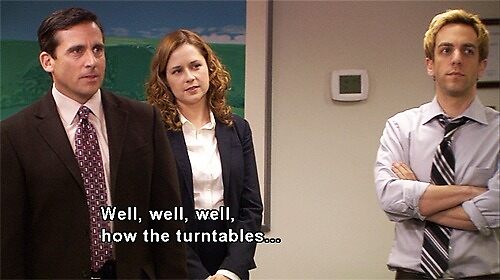
ps. my my my how the turntables, you posting lengthy reviews in the SMD and me promising mega-posts ;)

flat,1000x1000,075,f.u1.jpg
 
europe, since you're the Melville man, how much have you seen from him? For me, it's been a lot of years since I've seen any of them, but I've seen Bob le Flambeur, Le Doulos, Le Samouraï, and Army of Shadows for sure, and then I think that I might've also seen The Red Circle but I'm not 100% on that one. I'm going to (re)watch all of those for sure, but I've also got on tap La Silence de la Mer, Les Enfants Terribles, Two Men in Manhattan, Léon Morin, Priest, Magnet of Doom, Le Deuxième Souffle, and A Cop. The only film of his that I couldn't find was When You Read This Letter, but I'm not too broken up about it. If you have the time, what's the deal with this guy, what stands out about him to you, what are your favorites from him and why? I'm just looking for food for thought as I make my way into his world.

I've seen, Bob, Le Doulos, Samuraij, Army of Shadows, Red Circle, Manhattan, Leon Morin: Priest and A Cop.

Favorite from him: Army of Shadows

When I first started writting this, I listed pretty self-evident stuff like "impeccable style" or "great use of set-pieces and silence". But when I think back at Melville films, my brain usually wanders to a few moments that I felt carried an extreme level of poignancy. He's just superb at crafting those big (and little) moments of immense pathos, oftentimes through minimalist means. Even his failure, A Cop, does this half-well.

In my personal headcannon, I consider Melville an iconographer. You know the way Sergio Leone had watched about a gazillion Westerns before making Westerns of his own? Sergio used this basis of knowlage to heighten the genre to new aesthetic levels. He was an iconographer, elevating something he loved (even while breaking a few conventions along the way) to another extreme. I consider Melville to be somewhat in this mould. A great sense of revatory style and more terser dialogue.

EDIT: And I know it sounds weird to call someone as revolutionary as Leone an iconographer but just roll with it okay?:D
 
Last edited:
Living the chaotic adjunct life, I'm teaching five classes for three different institutions. For one, I'm teaching three classes. The first is a class that I taught last fall, History of Cinema II: 1945-1975. I might change up a screening or two for variety for my own sake, but I won't be doing anything crazy with that one. I'll still be doing a week on each Hollywood decade and then I'll hit Italian Neorealism, postwar Japanese cinema, the French and British New Waves, and Hong Kong martial arts cinema.

The second is a class that I just taught for the first time this past spring, Storytelling and Style in Cinema. This is pretty much an Introduction to Film course, only it's entirely focused on the art not the industry and only tangentially on the history. The first half of the class is dedicated to storytelling, which includes discussions of classical Hollywood structure, Arthouse/avant-garde practices, documentary (this is a requirement and since this is a core class I can't not devote a week to documentary - so to amuse myself I build to a focus on sports documentaries and have them watch the Strongman documentary Born Strong and YouTube videos of Thor, Eddie Hall, and Martins Licis at Strongman events :D), and the importance of character and theme. The second half then moves on to style, which includes weeks devoted to aspects of cinematography, editing, and sound. This was a super fun class. I had them watch Rear Window for classical Hollywood; Persona for the Arthouse; Steve Jobs for the week on character and theme dedicated to protagonists, specifically to unsympathetic protagonists; Collateral for the week on character and theme dedicated to antagonists, specifically to sympathetic antagonists; A Clockwork Orange and The Conformist for the weeks on aspects of cinematography; Police Story for the week on editing; and Eraserhead for the week on sound. I also got to spend time in the lectures breaking down structure in stuff like Angels with Dirty Faces and Hour of the Wolf, I analyzed Tom Laughlin in Billy Jack and Steven Seagal in Out for Justice among others in the course of explaining the finer points of character and theme, and my examples for various aesthetic techniques and strategies ran from Whirlpool, Stalker, and Full Metal Jacket to The Naked Gun, The Wedding Singer, and American Pie :cool:

And then lastly I was allowed to create a class of my own, so the third class is Authorship in Hollywood Cinema. I pitched it as a "Great Directors" class, just a whole class spent exploring the careers of major filmmakers each week. And there's a sense of progression as the students who I'll be teaching will be students who I've not only taught myself before but who've gone through History of Cinema II (with me) and Storytelling and Style in Cinema (with someone else), so there's a solid foundation on which to build. Since these aren't film students, though, they're just general Media and Communication BA students, and since they already spent a term learning a bit about classical Hollywood cinema, I'm going to make their lives easier and not only bypass the silent era but almost entirely bypass even the studio era and let them spend almost the whole term focusing on films and filmmakers from the last half century. Additionally, instead of having them just watch one of each director's films each week, I'm going to pair two films for them to watch a week so that they can compare-and-contrast and get a more comprehensive sense of what these filmmakers do and how they do it. The films and filmmakers that I've selected for them are, in order, Alfred Hitchcock (Rear Window and Vertigo), Stanley Kubrick (A Clockwork Orange and Eyes Wide Shut), Martin Scorsese (Taxi Driver and Gangs of New York), David Lynch (Blue Velvet and Mulholland Drive), Spike Lee (Malcolm X and BlacKkKlansman), Michael Mann (Heat and Collateral), The Coen Brothers (Fargo and Burn After Reading), Quentin Tarantino (Kill Bill), and Christopher Nolan (Inception/Dunkirk). I was hoping that for the Nolan week I could do a pairing of Inception and Tenet but COVID may have fucked that plan to hell.

Then at two other institutions I'm doing two more film history classes. One of them is called Film and Society and it's a combination American cinema/American culture history class. I start from the sound era with gangster movies and take them through a century of movies and events up to today and superhero movies. The other one is World Cinema II which is international in scope and runs from 1945 to today. It'll be similar to my other international history class except that since it runs beyond 1975 I'll push the Hong Kong week a bit later and talk about Hong Kong action more broadly and screen John Woo action instead of Shaw Brothers/Golden Harvest martial arts and I'll add weeks on the Arthouse scene past and present as well as on Latin American cinema.

I'm also supposed to write a short book on Inception and philosophy, but as the summer very quickly disappears and my five-class fall workload very quickly approaches, I'm probably going to have to ask if instead of being a summer project my Inception book can be more of a fall/winter thing :confused::oops:

Wow man, keeping busy! Sounds like great work. Any chance we can remotely audit these courses lol?
 
I'm currently watching a ton of Robert Aldrich.

Attack!

Nobody does cynical better than Aldrich.
This might be my fave Jack Palance performance along with The Big Knife and Ten Seconds to Hell (all Aldrich.........huh ?!).He's intense as hell.
When he gives Eddie Albert a death Threat you know it's serious.
attack1.jpg


Great supporting cast too with Lee Marvin,William Smithers,Robert Strauss.
Eddie Albert has a thankless role as the irredeemable coward who got his position thanks to Politicking.He turns the evil up a little too much at the End, should've stayed at the incompetent drunk.
These Depictions of WW2 weren't that common until the 60s, especially not this nasty.

The Production Budget was small and the Battle scenes had to be limited, but it's shot in a way that hides it pretty well.In fact, the Battle scenes are as intense as it gets.


This comes closer to Paths of Glory than it should have any right to be.


bb097b959fc6c4a61df938f20ba92984.png
 
@Rimbaud82 @moreorless87 @HenryFlower @europe1

So this is going to be my Jean-Pierre Melville wrap-up post, but I'm also going to say at the top that after these last few days, I'm Frenched out. Instead of taking a dive into the Cahiers crowd's films, I'm taking a hard turn to Japan and watching the additional Kon Ichikawa films that Criterion has to offer beyond The Burmese Harp and Fires on the Plain. Then after I'm done with Ichikawa I'm going to have to start zeroing in on filmmakers whose work I need to watch for teaching purposes, specifically the films of Satyajit Ray (I'm going to spend some time in one of my lectures talking about him but I haven't seen his stuff since I myself was in film school, so I need a brush-up) and Michelangelo Antonioni (our conversation sparked this decision, moreorless) and then the films of all the filmmakers I'll be discussing in my authorship class from Hitchcock to Nolan. In other words, after I'm done with Ichikawa, Ray, and Antonioni, I won't be going on these massive Criterion binges followed by these types of wrap-up posts for at least a month as I turn to prep my lectures for the fall. But this has been fun as shit and I definitely want to at least keep a decent pace of watching random Criterion shit all through the fall while also trying not to fall behind in the SMC.

Anyway, on to Melville. I swear, europe, I don't set out to make you think that I'm a Martian. I must genuinely be a Martian. But I have to say, I'm not that big a fan of Melville. I do understand what you were saying in your post, and the comparison to Leone is apt. I just think that he's much worse at it than Leone. That is, if Leone could be said to have absorbed the "spirit" of the Hollywood Western to the point where he was able to out-Hollywood Hollywood with his Spaghetti Westerns, I would not say that Melville, having absorbed the "spirit" of the Hollywood crime film, ever reached the point where he was able to out-Hollywood Hollywood. And I think that the key spot where we diverge, where you experience his style as a strength and I experience it as a flaw, is the idea that he was able to craft "moments of immense pathos" via "minimalist means." I actually found that his minimalism was so dull and dour that, much like my experience rewatching Bresson, I was bored more often than I was moved. But he had enough flashes of brilliance and awesomeness to where the overall experience was still rewarding.

For individual write-ups:

Le Silence de la Mer was superb. This now goes on my list along with Welles' Citizen Kane, Huston's The Maltese Falcon, Tarkovsky's Ivan's Childhood, etc., as one of the GOAT directorial debuts. To come out of the gate with such an ambitious, original, and well-crafted film deserves considerable praise. This might just be Melville's best film. It's such a simple premise, but, aside from the fantastic performance from Howard Vernon, what elevates it to such enormous heights is the inspired and sure-handed craftsmanship of Melville. Aesthetically, this film is incredibly impressive, particularly in terms of the cinematography. I also loved the way that Melville was able to turn something that is manifestly not a suspense film into a supremely suspenseful film, and he did this by virtue of our investment in the three principal characters. Speaking for myself, I was so tense when Vernon met the uncle in the office in town and then at the end when he heard the knock on his door and was hoping that it was either the uncle or the niece. And then the ending was very beautiful. Great film and definitely one of the best debuts of any major director out there.

Les Enfants Terribles, on the other hand, was fucking atrocious. I don't really fault Melville for this, though. Cocteau really should've just made this himself. For Melville's part, he shouldn't have tried to take this on, as his visual sensibilities don't match Cocteau's world and when Melville tried to enter Cocteau's world it failed miserably. This was just a bad match of director and material. But at least I got to see the story seed that sprouted Bertolucci's The Dreamers.

Next up is probably Melville's most famous and most beloved film, Bob le Flambeur. I've got to be honest, this was also a terrible movie. I will never understand why anyone would possibly want to elevate this to some kind of crime pedestal. It's unbelievably boring and stupid, taking FOREVER to finally get fucking going, and all the while I felt no desire to want it to get going because the characters all sucked both as written and as performed. Then, once it did get going, I found Melville to suffer from the same thing that Kubrick's The Killing, another monumentally overrated crime film, suffers from, which is that the attention to detail in the planning was handled so matter-of-factly, as if it were intrinsically fascinating, that it was instead terribly boring. And then, unlike The Killing, which is redeemed to a significant degree by its brilliant ending, the ending of Bob le Flambeur could've been so great but instead was like a goofy comedy movie. Just a mess of a movie in terms of plot, character, theme, and tone. Now that I'm able to add this to my list of the most overrated movies ever made, I don't ever plan on watching it again.

I then moved to Two Men in Manhattan. Now this was a damn good crime flick. A love letter to New York and hard-boiled crime films like The Naked City, what struck me about this film - for which exteriors were shot in NYC but most of which was shot in Paris - was the stunning nighttime cinematography. No other film from this era and genre set in NYC looks or feels like this except, again going to Kubrick, Killer's Kiss. It's a strange combination of documentary realism and lurid surrealism, no doubt in large part attributable to 1950s NYC itself but also captured brilliantly in the aesthetic design. The story itself is nothing to write home about, and it's not helped much by the acting, but it's a very good crime film worthy of comparison to the films noir that were coming out in the 1940s and 1950s. If shown in a theater on a bill with stuff like Deadline at Dawn, The Narrow Margin, and Kansas City Confidential, it would not be out of place or out of its depth at all. In fact, I actually chuckled at the fact that, since it wasn't actually an American film, the female characters could get naked and the male characters could say things like "Oh, shit!" which is a phrase that absolutely belongs in the noir world but which because of the Hollywood censors of the era stars like Bogart and Mitchum could never actually say o_O:)

Next up was Léon Morin, Priest. If Le Silence de la Mer isn't Melville's best film, it's only because it's second to Léon Morin, Priest. This was an exceptionally well-written and well-acted drama with an absolutely phenomenal performance from Jean-Paul Belmondo. Off the top of my head, I think that Belmondo's performance in this film might be the best performance that I've ever seen in a French film. Isabelle Huppert in The Piano Teacher would probably be his major competition, but I think that me and Cecil Peoples might have to give Belmondo the decision. But for as great as the script is and for as great as Belmondo is in the title role, Melville's aesthetic skill is also on full display, particularly in terms of the lighting throughout and the sound design, the latter being most notable in the scene where Emmanuelle Riva - who I don't want to shortchange here, as she was also great and, I might add, quite the knockout, my having only seen her as an old woman playing Jean-Louis Trintignant's dying wife in Haneke's Amour - is ignoring Belmondo's lecture and is just imagining jumping his bones. This and The Abdication are both awesome for the way that theological crises combine with profound emotional longing for tremendously powerful and moving films, while, in Melville's career, it's another great examination of the French psyche in relation to WWII, the occupying Nazis, and the imperative to resist.

After this, it was back to the world of crime for Le Doulos. This is no masterpiece, but if compared to Bob le Flambeur it certainly looks like one. I totally see why Tarantino loves this movie so much, as I got massive Reservoir Dogs vibes. I also got some John Woo vibes, as he's another Melville admirer. Personally, I think that the film suffered from a slightly incoherent, or at least unfocused, script. On the one hand, it's called Le Doulos and Belmondo plays "the finger man," so you'd think that it'd be about him; on the other hand, it opens with Serge Reggiani's character and it's his exploits that we follow and that provide the actual plot; and then on yet another hand, a ton of film time is spent with Belmondo and it even ends with him. Much like the introduction of the much more charismatic Christoph Waltz character in Django Unchained hurt the overall flow of the film for me, Belmondo being so awesome but then having to spend so much time with the far less awesome Reggiani made for a slightly underwhelming viewing experience. I also think that Melville went one twist too many at the end, or else, at the very least, could've handled it better. But Belmondo was fantastic and I did enjoy the switch from thinking he's a piece of shit to coming around to thinking that he's the best of the bunch. Despite any complaints, this was a very cool and enjoyable movie and it's interesting to see if for no other reason to see from where the Woos, the Tarantinos, the Manns, etc., got a lot of their inspiration.

I have very little to say about Magnet of Doom because it sucked. It started out with a ton of promise. I not only loved Charles Vanel, who struck me as France's answer to Edward G. Robinson, I thought that his and Belmondo's dynamic was great. But all of the turns in plot and character that followed the initial set-up were retarded, the momentum came to a complete halt once they got to New Orleans, and by the end I just didn't give a shit about anybody or anything in this movie. Melville could've had something really cool here, but he dropped the ball IMO. Nevertheless, it was fun to see him finally make a genuine "American movie." Unlike Two Men in Manhattan, this was actually shot in the States, and it was fun to take the American tour with the Frenchies :D

I have a lot more to say about Le Deuxième Souffle. You should definitely track this one down, europe. I would nominate this as Melville's crime masterpiece. It's pretty much Heat. Not only because of its length, but because of the cops and robbers dynamic. There are elements and even a couple of scenes that fucking scream Heat. For one thing, the script is a thousand times better than that of either Bob le Flambeur or Le Doulos. It's not very complicated, certainly not twisty like the latter film, but it's extremely rich in its characterizations and themes and it spins a compelling and engaging series of jobs and double-crosses that never loses itself on the level of plot or trips itself up on the level of theme. I also have to pay a compliment to Lino Ventura, who was excellent as Gu. He struck me as France's Robert De Niro, as if the Heat connections weren't plenty plentiful. Pierre Zimmer, meanwhile, as the consummate pro named Orloff, seemed like Melville's practice run before getting to Alain Delon's master assassin in Le Samouraï. If there's a weak link in this film, it's Paul Meurisse as the cop. In Heat terms, he's for damn sure no Al Pacino. But that's a minor weakness in a film that is very strong on virtually every front. And unlike all of Melville's other films, this is the one film where the planning and execution of the jobs are actually compelling and exciting, more in league with stuff like The Getaway and Heat as opposed to being painfully dull like The Killing. I'd definitely be interested in your take on this one, europe, especially as a legit Melville fan.

Speaking of Le Samouraï, I did rewatch this one. It's crazy how Jim Jarmusch's Ghost Dog: The Way of the Samurai isn't even really a ripoff, it's just a straight fucking remake. They're practically the same movie. It's actually kind of gross and makes me like Jarmusch less. That aside, this is still a cool and enjoyable movie, though I've never really loved it and watching it again I'm no super fan. Delon is, of course, awesome, but the plot is dumb to the point where it was almost like Melville himself found coming up with a plot to be a chore, as if he just wanted to film Delon walking around and looking at people, and the ending was lame. It's better than Bob le Flambeur, but that really isn't saying much. It's also better than Two Men in Manhattan. But I'd put Le Doulos above it and Le Deuxième Souffle above them both.
 
Now, to continue with what will be your least favorite part of this wrap-up, europe, I found Army of Shadows to be another dull stinker. Le Samouraï is something of a turning point for Melville in that it's the film where he truly became a visual master. Pretty much all of his films have excellent camerawork, but mastering color and really establishing a distinct eye allowed Melville to create a unique aesthetic that is present in every film from Le Samouraï through to the end of his career. Army of Shadows is one of his most aesthetically impressive films, and Lino Ventura turns in another very strong lead performance, but the movie just felt bloated and dull. This film suffers from the same thing that a lot of his crime films do, which is that, call it minimalism or call it something else, he's kind of a Bressonian stylist in that everything is very muted, very subdued, very quiet, very slow, which creates for me at least a sense that the stakes aren't as high as they should be, the intensity level isn't where it should be. This should be an insanely intense film, but the characters walk around like Bresson's zombies, not emoting, lacking any verbal dynamism. It's just scene after scene of intense shit handled in the dullest way possible.

Le Cercle Rouge wasn't quite as boring, thanks in large part to Alain Delon, playing a lesser and lamer version of his hitman in Le Samouraï but still with a cool air about him, and most of all Gian Maria Volontè. But this one is the worst offender in the category of lame cops to follow. And the crime plotting and heisting is also rather dull. Where this film excels, what keeps it from being an unremarkable stinker, is on the level of character. It's essentially a lesser Le Doulos but I get even more Reservoir Dogs vibes from Le Cercle Rouge, what with the criminals hooking up from all corners of the crime world, planning a heist, and then bonding through the experience. All three of the principal criminals were interestingly conceived and Delon and Volontè in particular turned in compelling performances. It just wasn't quite at the same level as Melville's earlier crime films.

And then, finally, I watched Un Flic, which was very weak and not even a little compelling. Richard Crenna made for a pathetic master criminal and Delon's icy cool shtick didn't work well on the cop side. He was kind of a lame Frank Bullitt to me. Just a dud.

Overall, when it comes to Jean-Pierre Melville, I get the influence, I get the respect, but I don't get the reverence. Clearly, I'm much fonder of the films of his that nobody ever bothers with than the beloved classics. But I'm glad that I finally got to see his output. In one of my upcoming film history classes I'm even thinking about changing the French week screening to Le Doulos.

@Bullitt68 I have been keeping an eye on your posts and this wonderful new found artsy fartsy binge of yours, been busy in work lately and havent had as much chance to post in here which is why I haven't responded yet. But someday soon a mega response is coming....

ps. my my my how the turntables, you posting lengthy reviews in the SMD and me promising mega-posts ;)

flat,1000x1000,075,f.u1.jpg

Ha, the same thought occurred to me. The shoe is definitely on the other foot.

PI0D.gif


But no worries. Any thoughts that you might have, I'll of course be only too happy to hear them, but you don't have to rush anything on my account. I've still got plenty of movies to go through anyway ;)

Wow man, keeping busy! Sounds like great work. Any chance we can remotely audit these courses lol?

Funny enough, a family friend was asking me if the new online education environment was going to change things and he asked if it was feasible for me to offer my online classes to people beyond just the specific institution(s) for which I develop (a) specific class(es). I really don't know what the future will hold for online teaching, and I'm no entrepreneur, but it certainly would be cool if I could let people at least follow along with my classes if not actually participate, short of taking everything to Patreon or something like that and seeking out business from shit like posting a Mayberry sticky asking movie nerds to sign up for "Bullitt's Online Film School" :D

I'm currently watching a ton of Robert Aldrich.

Attack!

Nobody does cynical better than Aldrich.
This might be my fave Jack Palance performance along with The Big Knife and Ten Seconds to Hell (all Aldrich.........huh ?!).He's intense as hell.
When he gives Eddie Albert a death Threat you know it's serious.
attack1.jpg


Great supporting cast too with Lee Marvin,William Smithers,Robert Strauss.
Eddie Albert has a thankless role as the irredeemable coward who got his position thanks to Politicking.He turns the evil up a little too much at the End, should've stayed at the incompetent drunk.
These Depictions of WW2 weren't that common until the 60s, especially not this nasty.

The Production Budget was small and the Battle scenes had to be limited, but it's shot in a way that hides it pretty well.In fact, the Battle scenes are as intense as it gets.


This comes closer to Paths of Glory than it should have any right to be.


bb097b959fc6c4a61df938f20ba92984.png

I'm going through James Naremore's BFI book On Kubrick and I just read the Paths of Glory section this morning and he says that the only war movie of the era comparable to Paths of Glory is Attack!, and then here you are comparing the two of them in here. There are a few of these "dark" war movies from this era that I've been meaning to rewatch, specifically this, The Steel Helmet, and Hell is for Heroes. I've seen Hell is for Heroes three or four times and remember it pretty well, but I've only seen The Steel Helmet twice and I don't really remember it while I've only seen Attack! once and I don't remember it at all.

I'm not the biggest fan of Aldrich's career-wise, but he definitely made some damn good movies in his day. The Big Knife is a seriously underrated noir but I've always loved What Ever Happened to Baby Jane? most of all.
 
Back
Top