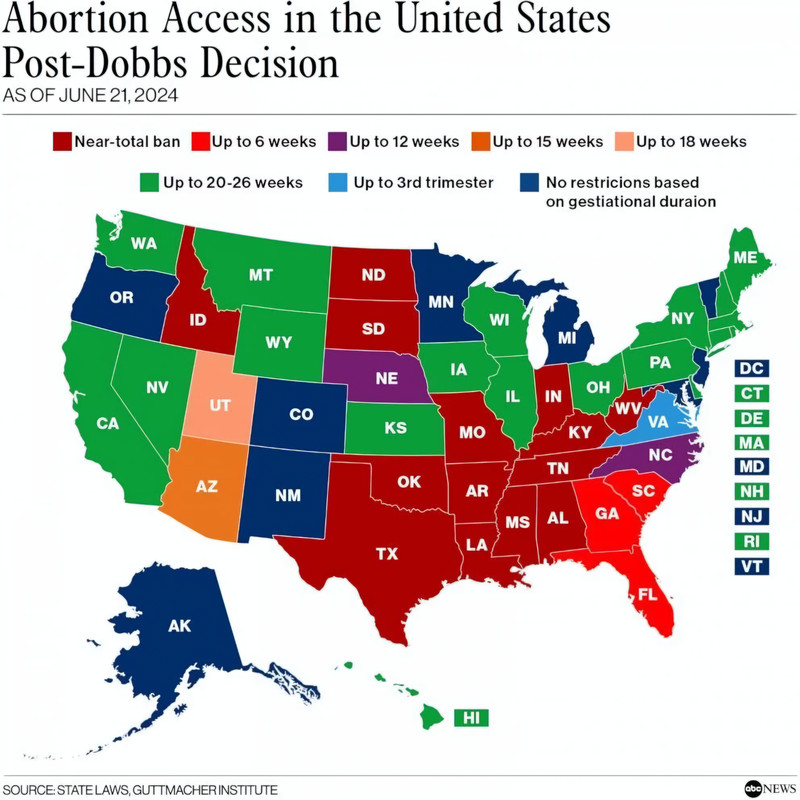
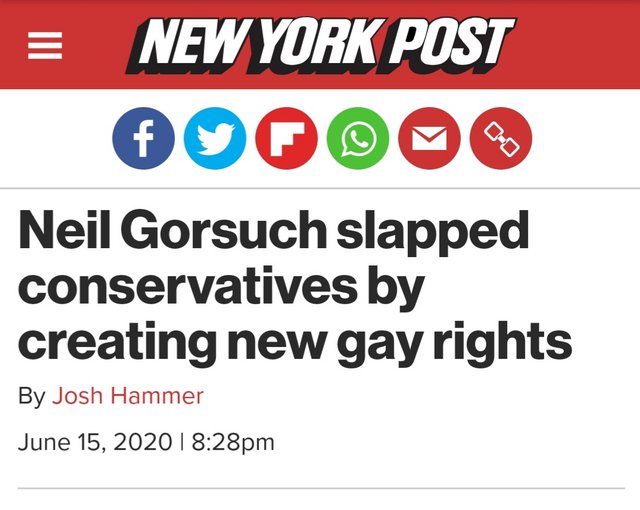
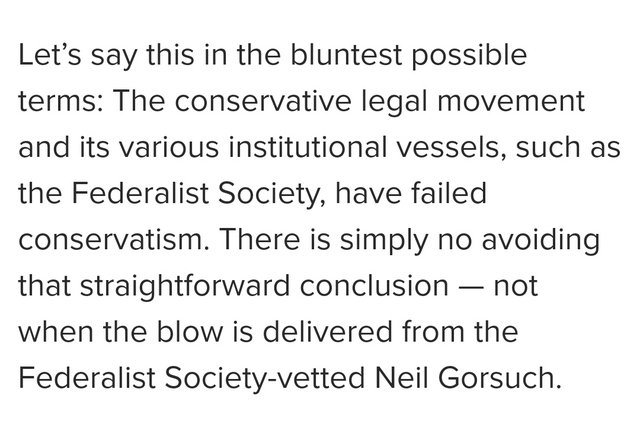
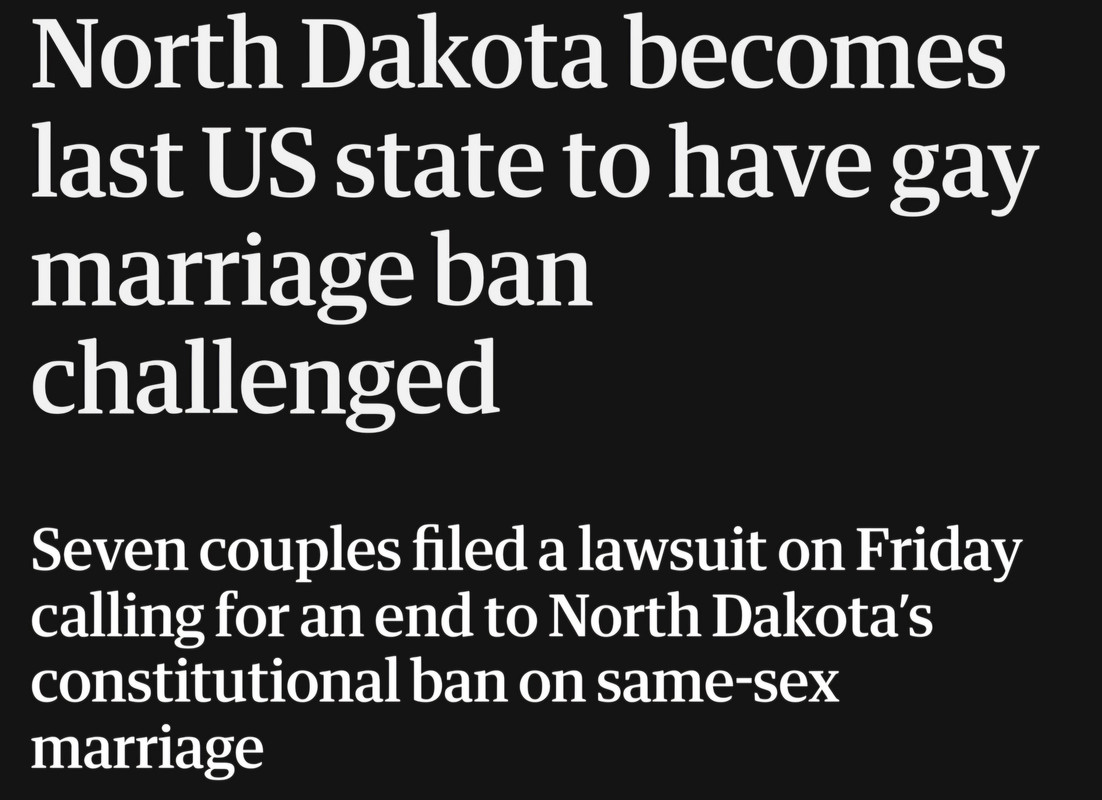
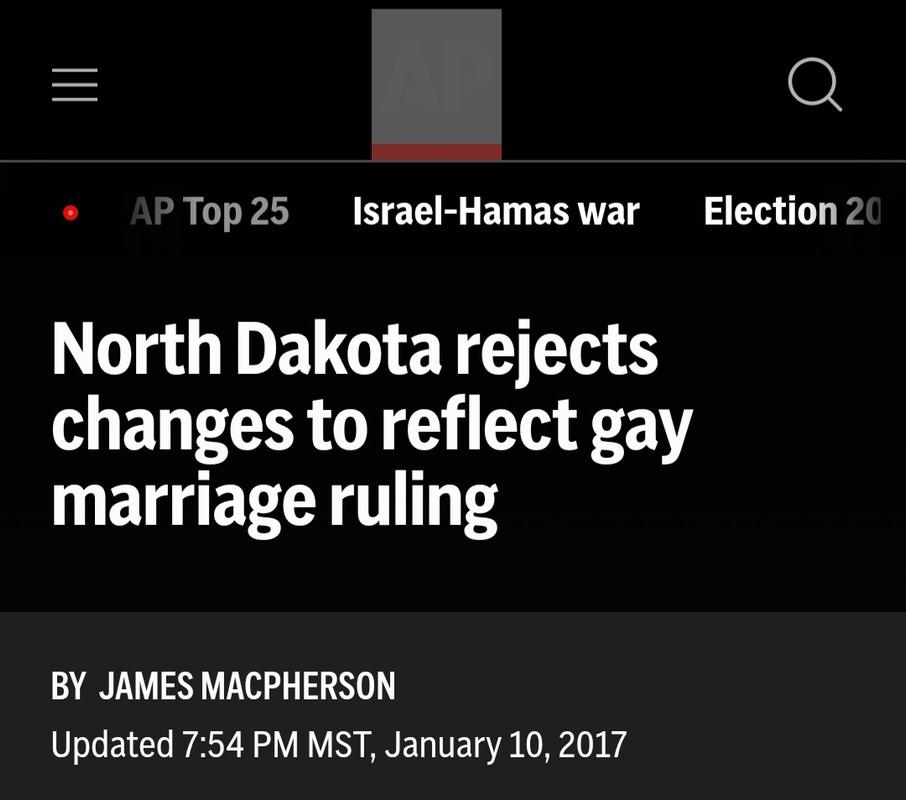
You said the entire purpose of overturning Roe was to return the position on abortion to the States. It's not, though, it was about the Supreme Court determining that there is no constitutional right to abortion. As was Stated earlier, the original case of Roe was about State Government overreach, into people's bedrooms and Doctor's offices. The "State's Rights" argument here is that the State has the right to do so. And it's not dissimilar to those who sighest the States have the right to segregate people by race, not recognize same-sex or interracial marriage, etc. The denial of rights, of federal protections, usually comes from this perspective.
"In essence, federalism won out in
Dobbs over continued recognition of constitutionally-recognized rights. On the day
Dobbs was released, June 24, 2022, Senator Rick Scott (R-FL) celebrated the decision for “defend[ing] … the foundational principle of federalism.”
24 Senator Kevin Cramer (R-ND) declared
Dobbs a win for “states’ rights.”
25 One commentator analyzed how
Dobbs weaponized states’ rights,
26 rekindling “harsh images of federalism”
27 from prior decades buttressing state resistance to desegregation and other civil rights that are now firmly recognized at every level of government.
28
Supreme Court deference to state sovereignty in reversing a firmly-held constitutional right to abortion in
Dobbs misconstrues underlying foundations of federalism. Ultimately, federalism is not about denying inherent liberty interests under substantive due process;
it is about promoting them. The Constitutional framers clearly intended federalism to protect the “liberty of individualized citizens,”
29 by offering “double security” for “the rights of the people.”
30 In the Federalist papers, Alexander Hamilton explained how “federalism is a safeguard … against the overextension of government’s power.”
31 As one modern commentator espouses, federalism provides a “two-tiered protection of individual rights” through the Fourteenth Amendment affording a “guaranteed minimum of protection,” with states able to proffer greater assurances.
32
Multiple constitutional law commentators conclude how adjudicating federalism invariably entails promotion of individual rights. Professor Jonathan Adler equates federalism directly with the protection of individual rights.
33 Dean Erwin Chemerinsky argues how it enhances liberties in furthering societal objectives.
34 In the context of civil rights, Professor James Blumstein illustrates how federalism “decentralizes decision-making to promote autonomy, democracy, and freedom.”
35 Another commentator surmises, “federalism is not merely a means to diffuse power; it is a principle to … [protect] the rights and privileges of all citizens.”
36
That federalism is about protecting, promoting, and even advancing liberty interests intimates how the
Dobbs Court erred in concluding that states’ interests warrant a return of regulatory authority over abortion. To the contrary, Americans’ fundamental freedoms adjudicated by Justices nearly a half-century ago merit continued respect for bestowed rights against their summary withdrawal. Under
Dobbs’ majority reasoning, manifold other liberty interests previously framed by the Court (e.g., contraception, sexual intimacy, marital equality) may be at risk of reversal with epic potential impacts on population health and well-being.
51 Doing so under the guise of federalism not only disrespects Americans’ freedoms, but also resounds historically-rejected premises of states’ rights as constitutionally-viable reasons to deny individual liberties. Positing constitutional structural principles like federalism in support of reversals of settled, rights-based reasoning is a dangerous path for the Court to follow. Ultimately, it may find the trail ends where federalism begins:
at the doorstep of liberty."