
- Joined
- Jan 25, 2014
- Messages
- 17,988
- Reaction score
- 10,241
if you don’t get at least misty-eyed you might be a serial killerFirst time I’m hearing of it. Joan Chen is a very good actress. I’ll have to give it a watch.

if you don’t get at least misty-eyed you might be a serial killerFirst time I’m hearing of it. Joan Chen is a very good actress. I’ll have to give it a watch.


River of Grass was among the top 5 movies I watched last year. I really liked Showing Up as well. I'd place The Mastermind behind both. I think eddy has it rated a bit high.oh please, my 3.5/5 is basically right on target in the same exact 7.0-7.5/10 range you wormy lil street urchin.
fwiw though, it is the first Kelly movie i’ve rated lower than a 4/5


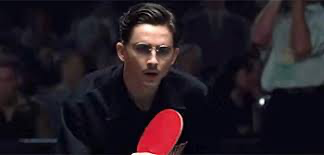

Marty Supreme (USA, 2025)
Rating: 8.5/10
Josh Safdie certainly has a vibe. Some call it propulsive filmmaking. I think of it as a man obsessively trying to answer one question: can a movie camera physically ingest cocaine? (Film specific runner up – can a skinny guy with the world’s worst mustache consistently have sex with attractive women?).
Marty Supreme is a sweaty, chaotic fever set in the 1950s, shot like the 1970s and blasted with 1980s needle drops. If that sounds disorienting, it’s supposed to be.
Timothee Chalamet plays Marty as a walking motivational poster for unchecked self-belief. He’s a New York hustler with a gift for ping pong and an even greater talent for self-promotion, armed with the absolute certainty that greatness is owed to him. It doesn’t matter that he’s a shoe salesman living with his mother, that his girlfriend is pregnant and married to someone else, or that most of his schemes actively move him backward. Marty is too busy auditioning for his own biopic.
Chalamet makes him charming, annoying, magnetic, and exhausting, often in the same scene. Marty is a self-serving narcissist (is there any other kind?) and nearly a caricature of the Ugly American, convinced that confidence and momentum alone will bend the world to his will. His great strength—and fatal flaw—is an inability to think past the next obstacle. Consequences are someone else’s problem.
An enormous amount of stuff happens. Relentlessly. But plot is almost incidental. The real pleasure is watching Marty lie, scheme, and charm his way forward while leaving wreckage behind him. The film understands charisma as a kind of scam, and collateral damage as an essential part of the experience.
Marty Supreme isn’t interested in growth, humility, or wisdom—only escalation. Safdie gestures toward human feeling at the end, as if to reassure himself, but the film’s real conviction lies elsewhere. It’s a movie about ambition that never learns a lesson and doesn’t really seem to care.
View attachment 1127851


So it's like...ping-pong Nightcrawler? I really liked good time and uncut gems. So looking forward to seeing this from Safdie.



Only thing that kept me watching is to find out what happened to the cat.Caught Stealing (2025)
I had reasonably high hopes for this, for some reason. Austin Butler is a slacker who gets caught up in the crossfire with several wrong 'uns chasing him down. I must have zoned out with boredom and missed a major plot happening here because I genuinely had no clue why they were after him or what exactly he had that they wanted. It just seemed to be various shots of Butler running around being followed. No idea why this got decent reviews, it was boring and shit.
4/10
Jay Kelly (USA, 2025)
Rating: 6.5/10
Jay Kelly is a film about the quiet humiliations of adulthood: the moment when people realize, far too late, that they have become slightly worse versions of themselves.
That realization hits Jay Kelly, a sixty-year-old movie star played by George Clooney, in the form of a slow, nagging mismatch between story and reality. Jay has spent decades curating a personal mythology about talent, success, and sacrifice. Now the mythology is fraying. He’s estranged from one daughter, drifting toward the same outcome with the other, haunted by what he traded away to remain famous, and left with what appears to be exactly one real friend. Maybe. Depending on what he needs at the moment. Even that relationship comes with a fee: his long-suffering manager, played with weary precision by Adam Sandler, still takes fifteen percent. This is what friendship looks like when it’s been professionalized for decades.
Jay’s response is avoidance disguised as motion. He flies his entourage to Italy on short notice, half to pursue a possible reconciliation with his daughter, half to accept a lifetime achievement award that should mean nothing but increasingly feels like it means everything.
Clooney anchors the film with an easy, self-aware charm: articulate, thoughtful in theory, emotionally evasive in practice. Jay isn’t cruel or monstrous. He’s simply a narcissist committed to self-justification. The film understands that this is often more corrosive.
The clearest expression of that divide comes in a small but telling gesture. At a funeral, Jay accepts a neckerchief from the son of an old friend—gracious, composed, fully present. The moment reads as sincere. It also barely lingers. Almost immediately, Jay hands the neckerchief off to his manager, as if meaning were something that could be redistributed once acknowledged. Sandler wears it in every subsequent scene, quietly illustrating the difference between performance and feeling.
For a brief moment, watching the lifetime achievement montage together, the two men occupy the same emotional plane. It’s real. It’s shared. And it doesn’t last. By the end, something irreversible has happened. Jay will miss a loyal companion. The manager will miss his best friend.
At its best, Jay Kelly lets rich, self-absorbed Hollywood types roast rich, self-absorbed Hollywood types. It’s dryly funny and smart enough to resist forced catharsis or tidy moral reckonings. Growth here is modest: partial insight, mild regret, and the vague hope of doing slightly better next time.
Where the film falls short is in its lack of bite. It never quite finds the meanness needed to fully skewer its protagonist, and Italy is rendered like a stereotype filtered through prestige cinema and lifestyle tourism.
Still, there’s value in that restraint. Jay Kelly is tuned to people who have made peace with disappointment without fully admitting it. By the end, Jay hasn’t changed much. He’s just learned which parts of the truth can be safely outsourced.
View attachment 1128175


