• Xenforo Cloud is upgrading us to version 2.3.8 on Monday February 16th, 2026 at 12:00 AM PST. Expect a temporary downtime during this process. More info here

My mailbox

chill doggie

Black Belt
@Black
Joined
Jul 9, 2014
Messages
6,353
Reaction score
8,669
My previous mailbox post was quite slanted and weathered after a couple of years and some crazy storms, so I set out to replace it with a new one meant to last much longer.

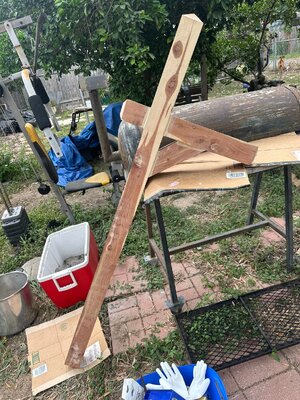
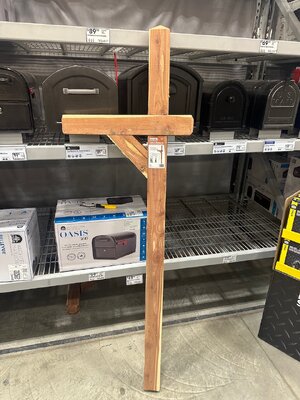
Found a $50 aromatic red cedar wood post.
IMG_0030.jpeg


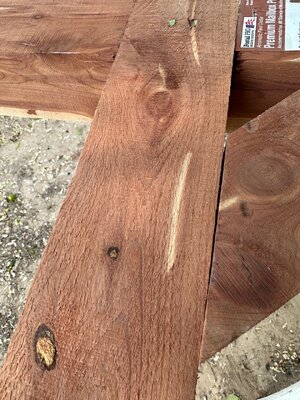
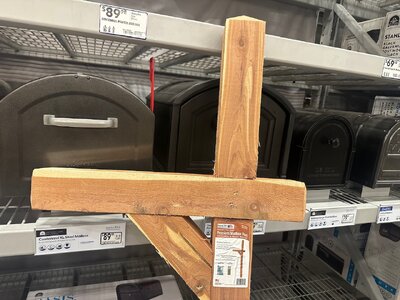
Great durable wood, but the finish was somewhat rough. A mass production item not meant to be of artisanal craftsmanship quality.
IMG_0031.jpeg

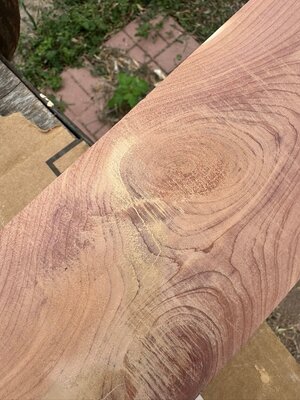
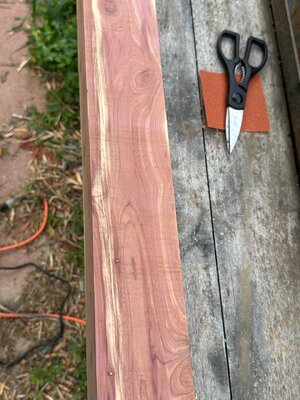
Took an electric sander to it and got all the faces smooth.
IMG_9723.jpeg

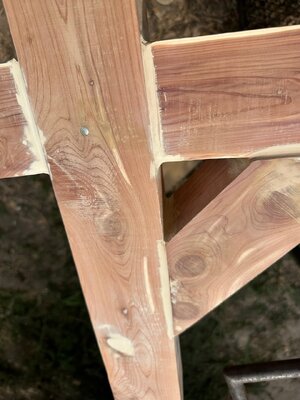
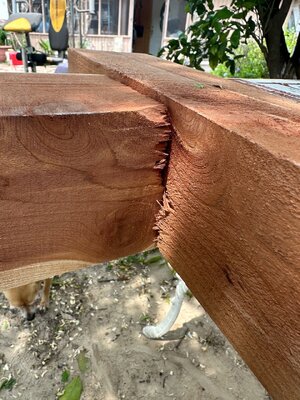
There were splinters on the cuts where the joints meet, since the sander couldn’t reach those tight corner areas I got some files and removed them by hand and smoothed them as much as possible.

Tried using a Dremel rotary tool first but it was too powerful and I didn’t have an suitable attachment for that work.

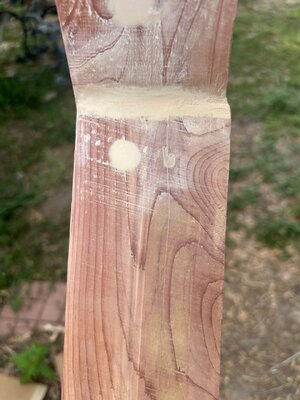
Then I filled the narrow crevices with wood filler (DAP), about 2 or 3 thin layers that I allowed to dry fully and lightly sanded before reapplying until it was flush.
IMG_9708.jpeg
IMG_9810.jpeg


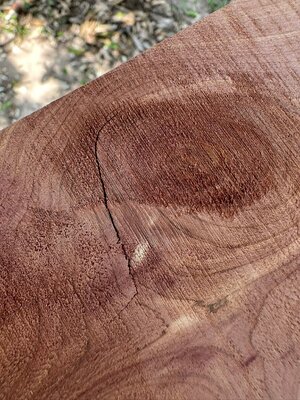
On the wood there were also hairline cracks that I also sealed with DAP (lightly watered down) and some knots that I hollowed out with the Dremel and filled out as well.
IMG_9710.jpeg
IMG_9809.jpeg
IMG_9707.jpeg
IMG_9823.jpeg
 
My previous mailbox post was quite slanted and weathered after a couple of years and some crazy storms, so I set out to replace it with a new one meant to last much longer.

Found a $50 aromatic red cedar wood post.
View attachment 1120456


Great durable wood, but the finish was somewhat rough. A mass production item not meant to be of artisanal craftsmanship quality.
View attachment 1120457

Took an electric sander to it and got all the faces smooth.

View attachment 1120461

There were splinters on the cuts where the joints meet, since the sander couldn’t reach those tight corner areas I got some files and removed them by hand and smoothed them as much as possible.

Tried using a Dremel rotary tool first but it was too powerful and I didn’t have an suitable attachment for that work.

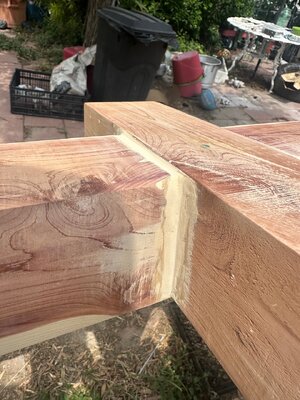
Then I filled the narrow crevices with wood filler (DAP), about 2 or 3 thin layers that I allowed to dry fully and lightly sanded before reapplying until it was flush.
View attachment 1120462
View attachment 1120464


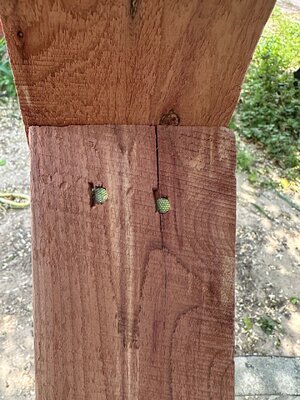
On the wood there were also hairline cracks that I also sealed with DAP (lightly watered down) and some knots that I hollowed out with the Dremel and filled out as well.
View attachment 1120468
View attachment 1120463
View attachment 1120469
View attachment 1120471
Looks like you fixed a someone's "C" in high school shop class.
 
IMG_9709.JPEG
IMG_9814.JPEG
IMG_9822.JPEG
Built a makeshift painting station by anchoring some tarps to my orange trees and started spraying the post with white primer, allowing 2-4 hours in between the 3 applications I gave it (the high humidity in the climate I live requires longer drying times for complete curing.)

IMG_9927.JPEG
By the next day I started the painting stage, using gloss white latex paint.

IMG_9975.JPEG
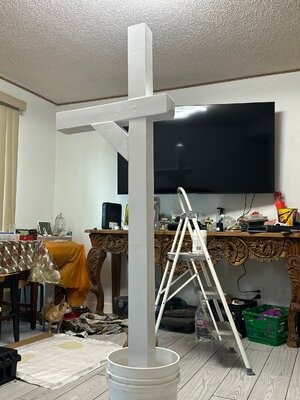
After I applied one or two coats with plenty of dry time in between I moved the project indoors to paint inside my living room in order to prevent any airborne particles from sticking to the paint.

Used a bucket filled with sand to hold it up.
IMG_0076.JPEG

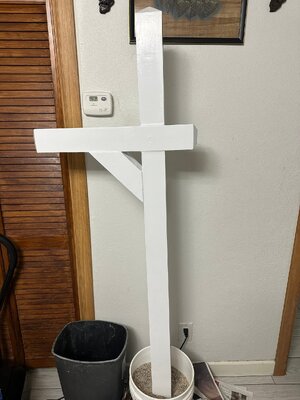
This stage took a couple weeks because I gave it about 7+ coats on all sides (I couldn’t reach them all at the same time), it required some spot repair due to errors at times, and I let the final coat cure for 3 days before moving onto the urethane finish.


The urethane application similarly took a long time, I think I gave it like 5 coats. I also had to do spot repair, I chipped the coatings whilst handling to reposition in order to get good lighting. Also had to sand off spots that I applied too thick, if you don’t apply it very thin it can pool or look yellow.


Attempted to buff the final urethane coat to give it maximum gloss with polishing high grit pads and a polishing compound but it just dulled it, so I had to reapply a final delicate topcoat to get that mirror like shine.
IMG_0085.JPEG

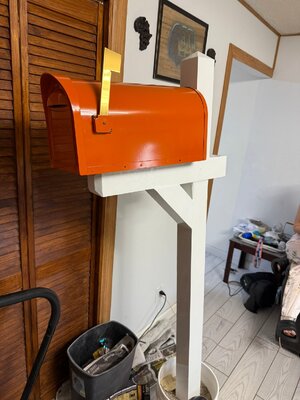
Found a mailbox design I liked: powder-coated rustproof cast aluminum with a magnetic door latch and a stainless steel spring hing. Vacillated between colors until I decided to go with orange since it is a unique color, as well as the most vibrant for easy visual location.
IMG_0089.JPEG

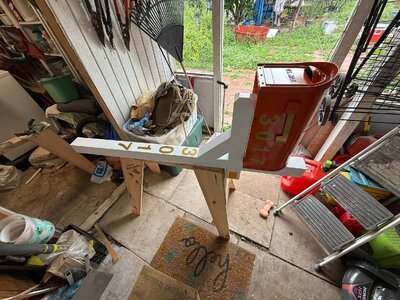
Similarly to the post: I primed, painted, and finished the mailbox mounting board with urethane, although only a couple of coats of each this time.

The I pre-drilled the screw holes through the board and into the mailbox, used my Dremel to give the holes on the board a countersink (cone-shaped recess that allows a flathead screw to sit flush with the surface), finally fastening the board with stainless steel screws.

Next step was designing the letters and I choose a Helvetica font that I sent to my friend in Mexico who sometimes works at her brothers’ print shop, and I gave her a roll of flag-matching gold ORACAL® 651™ (specialty outdoor vinyl that is UV and weather resistant) with the specs to print at for proper size fitment.

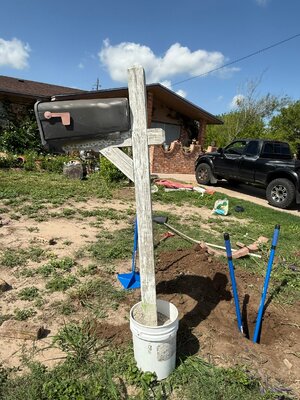
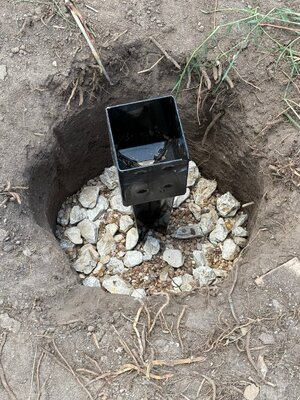
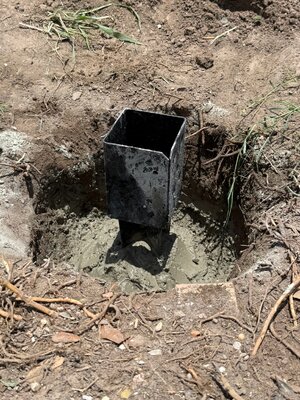
Dug a big hole, think it was like 20” (?) and inserted a fence post spike that I leveled and hammered onto the soil that I had compressed (the brace had some scratching so I painted it).
IMG_0258.JPEG

Poured layered pea pebbles and jagged rocks around the post to create a drainage system that was structurally cohesive.
IMG_0264.JPEG
 
Last edited:
Poured cement on top of the rocks, then I put more pebbles on top of the cement base.
IMG_0268.JPEG
Before I inserted the post I wrapped the base with 3 layers of Frogtape pro-grade flashing tape to protect from moisture and to add some padding, these cedar posts are deceptively machined thinner than a standard pine 4x4 so there was a bit of play that I had to counteract. Therefore I also broke off a piece of a wooden paint stir-stick and sanded it into a wedge that I hammered into the space between the back of the post and the brace to stiffen the fitment.

After that I fastened the post to the brace with stainless steel machine screws.
IMG_0287.JPEG

Applied the front numbers and some 3M diamond grade reflective tape for school buses on the back lateral spot of the vertical beam.
IMG_0288.JPEG

But then I noticed the post was meant to be buried, not set on a post, and it was standing too tall at 6’2”, way beyond municipal regulations.
IMG_0282.JPEG
It also felt a bit wiggly in part because of so much leverage and figured I should have used 2 bags of cement.

So I had to unscrew it, saw off about 7 inches, re-prime, re-paint, and re-seal the bare wood on the freshly cut bottom (as well as feather it all in.)
On top of that re-seal with flashing tape.
IMG_0300.JPEG
IMG_0337.JPEG

I took out the top pebble layer and poured another bag of cement to reinforce the base, added the final top layer of drainage rocks.


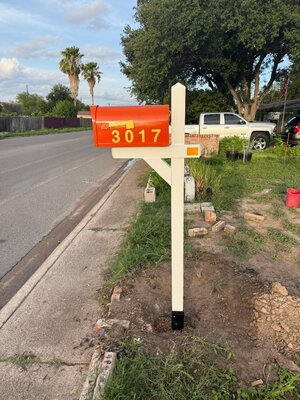
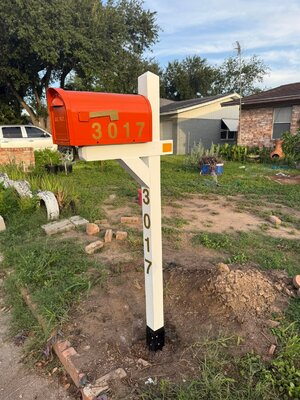
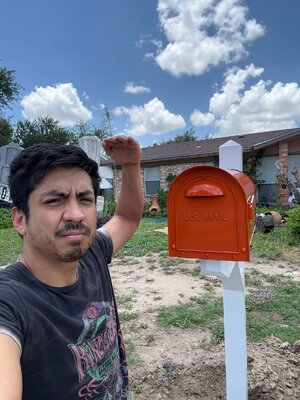
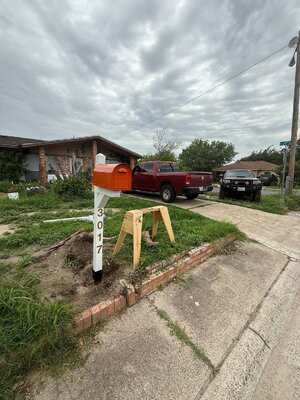
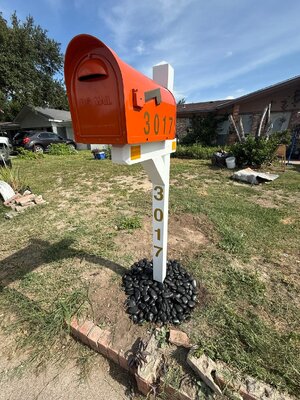
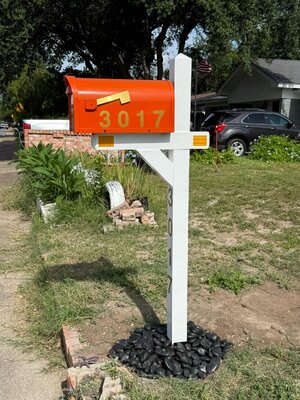
Finally I applied the vinyl numbers on the front, another set of reflective tape on the front side of the arm, and sprayed a ceramic wax coating on the post and mailbox that I polished them with to add a sacrificial layer that prevents staining and adds further protection from the elements. Set some black rocks around the base as the final detail.
IMG_0394.JPEG
IMG_0393.JPEG
 
Last edited:
matthew-mc-conaughey.gif
 
My previous mailbox post was quite slanted and weathered after a couple of years and some crazy storms, so I set out to replace it with a new one meant to last much longer.

Found a $50 aromatic red cedar wood post.
View attachment 1120456


Great durable wood, but the finish was somewhat rough. A mass production item not meant to be of artisanal craftsmanship quality.
View attachment 1120457

Took an electric sander to it and got all the faces smooth.

View attachment 1120461

There were splinters on the cuts where the joints meet, since the sander couldn’t reach those tight corner areas I got some files and removed them by hand and smoothed them as much as possible.

Tried using a Dremel rotary tool first but it was too powerful and I didn’t have an suitable attachment for that work.

Then I filled the narrow crevices with wood filler (DAP), about 2 or 3 thin layers that I allowed to dry fully and lightly sanded before reapplying until it was flush.
View attachment 1120462
View attachment 1120464


On the wood there were also hairline cracks that I also sealed with DAP (lightly watered down) and some knots that I hollowed out with the Dremel and filled out as well.
View attachment 1120468
View attachment 1120463
View attachment 1120469
View attachment 1120471
I just busted a nut to this post.
 
Poured cement on top of the rocks, then I put more pebbles on top of the cement base.
View attachment 1120503
Before I inserted the post I wrapped the base with 3 layers of Frogtape pro-grade flashing tape to protect from moisture and to add some padding, these cedar posts are deceptively machined thinner than a standard pine 4x4 so there was a bit of play that I had to counteract. Therefore I also broke off a piece of a wooden paint stir-stick and sanded it into a wedge that I hammered into the space between the back of the post and the brace to stiffen the fitment.

After that I fastened the post to the brace with stainless steel machine screws.
View attachment 1120501

Applied the front numbers and some 3M diamond grade reflective tape for school buses on the back lateral spot of the vertical beam.
View attachment 1120500

But then I noticed the post was meant to be buried, not set on a post, and it was standing too tall at 6’2”, way beyond municipal regulations.
View attachment 1120502
It also felt a bit wiggly in part because of so much leverage and figured I should have used 2 bags of cement.

So I had to unscrew it, saw off about 7 inches, re-prime, re-paint, and re-seal the bare wood on the freshly cut bottom (as well as feather it all in.)
On top of that re-seal with flashing tape.
View attachment 1120499
View attachment 1120498

I took out the top pebble layer and poured another bag of cement to reinforce the base, added the final top layer of drainage rocks.


Finally I applied the vinyl numbers on the front, another set of reflective tape on the front side of the arm, and sprayed a ceramic wax coating on the post and mailbox that I polished them with to add a sacrificial layer that prevents staining and adds further protection from the elements. Set some black rocks around the base as the final detail.
View attachment 1120493
View attachment 1120494
Respect for your hands on skills, bro.

In 10 years most men won't even know how to use a drill or tape measure
 
This post was very interesting and I hope you make more. Great work! Still it seems the box is so close to the door the postman could easily just go and post the mail through the door.
 
Poured cement on top of the rocks, then I put more pebbles on top of the cement base.
View attachment 1120503
Before I inserted the post I wrapped the base with 3 layers of Frogtape pro-grade flashing tape to protect from moisture and to add some padding, these cedar posts are deceptively machined thinner than a standard pine 4x4 so there was a bit of play that I had to counteract. Therefore I also broke off a piece of a wooden paint stir-stick and sanded it into a wedge that I hammered into the space between the back of the post and the brace to stiffen the fitment.

After that I fastened the post to the brace with stainless steel machine screws.
View attachment 1120501

Applied the front numbers and some 3M diamond grade reflective tape for school buses on the back lateral spot of the vertical beam.
View attachment 1120500

But then I noticed the post was meant to be buried, not set on a post, and it was standing too tall at 6’2”, way beyond municipal regulations.
View attachment 1120502
It also felt a bit wiggly in part because of so much leverage and figured I should have used 2 bags of cement.

So I had to unscrew it, saw off about 7 inches, re-prime, re-paint, and re-seal the bare wood on the freshly cut bottom (as well as feather it all in.)
On top of that re-seal with flashing tape.
View attachment 1120499
View attachment 1120498

I took out the top pebble layer and poured another bag of cement to reinforce the base, added the final top layer of drainage rocks.


Finally I applied the vinyl numbers on the front, another set of reflective tape on the front side of the arm, and sprayed a ceramic wax coating on the post and mailbox that I polished them with to add a sacrificial layer that prevents staining and adds further protection from the elements. Set some black rocks around the base as the final detail.
View attachment 1120493
View attachment 1120494
Haha my man
 
This was a fucking journey and I'm glad I went on it. My 16-17 year old self who took wood shop two years in a row, and still has a mirror and end table and carved squirrel in my house geeked the hell out reading and looking at your pictures.

It looks great and every time you go get those bills and junk mail you should feel proud.
 
Like an inedible steak - Well Done Chill.
Total thumbs up on the entire job AANND your kickass technical write up.

Not surprised at your overall attention to detail, you definitely got it going on homie !

I just busted a nut to this post.
You ain't alone BB, This Thread & The Entire Job F'n Delivers.

Wouldn’t it be easier to make ur own de nevo

Wouldn't be surprised if that raw cedar lumber was way more than what he paid.
 
Nice. I see you took pride in that. I’m sure a Louisville slugger wielding teen will cherish the moment they ride down your street in anticipation.
 
Nice. I see you took pride in that. I’m sure a Louisville slugger wielding teen will cherish the moment they ride down your street in anticipation.
Fun fact, red mailboxes are more likely to be hit, then any other colored mailboxes.
 
Looks like an absolute ton of work. Are termites or other bugs gonna eat it? Are you a pro or making it up as you go? Why not a big locked mailbox?
 
The dedication to this is admirable but where I live it would get taken out by some idiot driver during the winter.
 
Back
Top