
-
Xenforo Cloud is upgrading us to version 2.3.8 on Monday February 16th, 2026 at 12:00 AM PST. Expect a temporary downtime during this process. More info here
You are using an out of date browser. It may not display this or other websites correctly.
You should upgrade or use an alternative browser.
You should upgrade or use an alternative browser.
Locked Meme Thread v113: A Wave So Red it's Almost...Orange
- Thread starter Cherry Brigand
- Start date
D
Deleted member 592570
Guest

- Joined
- Mar 4, 2009
- Messages
- 54,635
- Reaction score
- 66,071
The one guy is like "not this shit again".

- Joined
- Sep 16, 2011
- Messages
- 8,646
- Reaction score
- 6,924
We humans decide what is good or evil. Don't you think that if religion was never invented, that humans wouldn't have come up with these concepts?
Morality isn't the sort of thing you'd come up with on your own, because it doesn't make sense. Somehow, we all agree that these are the things we should do, yet none of us actually want to do them. And this spans independent cultures across the world.
Just for one example, if you do something wrong and aren't caught, not only is there something inside you telling you it was wrong, but there's also a sense that you should confess and make it right. And the only way you can get past that or suppress it isn't a logical argument that you can make for not having to confess and apologize, but rather rationalization that it wasn't wrong in the first place (not "it's okay that I hurt him" but rather "after all, who really got hurt by this?" or even "he deserved it").
Or how about courage? Courage means doing something you really don't want to do, often something that flies in the face of your own sense of self-preservation (which should be the strongest instinct humans have), yet you understand it's the "right" thing to do anyway. And there's not a single society that praises cowardice, though there really should be if all morality is merely human invention.
But at the end of the day, if a natural disaster happens for example, and kills loads of innocent people, shouldn't this all knowing and all powerful god have stopped that from happening? And as far as the statement "religion aka God defined what is good and what is evil" goes, who gives a fuck? A natural disaster just killed a 1/4 million people! What the fuck does that statement have to do with all the misery, suffering and death as a result of that disaster? If God is knowing and all loving, God should have stopped it.
First of all, someone else (perhaps even someone here) had a pretty good response to that - We'd think it pretty illogical if someone stood on a coastline and said, "How can you believe in land? Look at all the water out there!"
But to be a bit more analytical, the best explanation I've heard of it is that God lets evil exist to give everyone a chance to see how bad it is for everyone. As a parent, your goal isn't to just tell your kids "Don't do that," right? You want them to understand WHY they shouldn't do it...and sometimes that means they suffer the consequences. And would anyone think all that much of a God who smacked down anyone the instant they did something contrary to his will, just because "God shouldn't allow that"? We'd all think that was pretty unfair, even tyrannical, wouldn't we?
The Christian answer to the problem of evil is that God gave all his creation free will, because free will means the potential to do great things, since you've also got the potential to do some pretty miserable things. C.S. Lewis (and probably many others) pointed out that an ant can't really be good or evil, a dog can do some good and some bad, and a human can do a great deal of good because they also have the potential for so much evil. God doesn't want automatons that obey him because there's no other choice; he wants fellow beings that worship him because they desire to. And when there's that refusal, whether it was Satan originally, or Adam near the start of Creation, or even individual people making choices in their own lives, the lesson comes not from quelling that desire to sin whenever it arises, but to teach better behavior through the consequences of worse behavior.


- Joined
- Nov 24, 2018
- Messages
- 28,817
- Reaction score
- 104,460
Pour one out for @Siver! bros.
Did he go crazy about that Authentification thing that got cancelled again already? That would be some irony... Anyway. Rest In
D
Deleted member 592570
Guest
Did he go crazy about that Authentification thing that got cancelled again already? That would be some irony... Anyway. Rest InPowerPieces
No he was a total cuck he would have loved that.





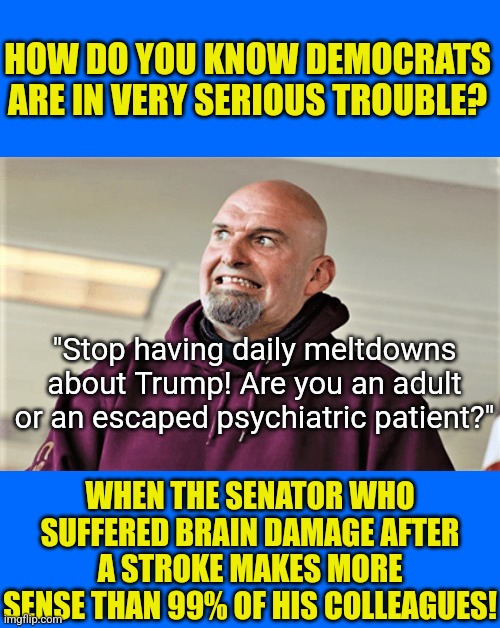



- Joined
- Jan 13, 2010
- Messages
- 14,643
- Reaction score
- 20,891
I wonder how much that little phag gets paid to pretend to like Democrats. I hope it’s a lot, because that shit is fuckin embarrassing.
D
Deleted member 592570
Guest
Last edited by a moderator:
D
Deleted member 592570
Guest
D
Deleted member 592570
Guest
D
Deleted member 592570
Guest
D
Deleted member 592570
Guest
D
Deleted member 592570
Guest

- Joined
- Dec 3, 2010
- Messages
- 34,840
- Reaction score
- 72,931

- Joined
- Dec 3, 2010
- Messages
- 34,840
- Reaction score
- 72,931


- Joined
- Mar 29, 2021
- Messages
- 950
- Reaction score
- 1,095
I believe that a person's understanding of good and evil is innate and instinctual. You can make your thought experiment about how, if there was no evil, only good, how could we know evil? In this case, yes, I would agree, but obviously there will always be good and evil.Morality isn't the sort of thing you'd come up with on your own, because it doesn't make sense. Somehow, we all agree that these are the things we should do, yet none of us actually want to do them. And this spans independent cultures across the world.
Just for one example, if you do something wrong and aren't caught, not only is there something inside you telling you it was wrong, but there's also a sense that you should confess and make it right. And the only way you can get past that or suppress it isn't a logical argument that you can make for not having to confess and apologize, but rather rationalization that it wasn't wrong in the first place (not "it's okay that I hurt him" but rather "after all, who really got hurt by this?" or even "he deserved it").
Or how about courage? Courage means doing something you really don't want to do, often something that flies in the face of your own sense of self-preservation (which should be the strongest instinct humans have), yet you understand it's the "right" thing to do anyway. And there's not a single society that praises cowardice, though there really should be if all morality is merely human invention.
First of all, someone else (perhaps even someone here) had a pretty good response to that - We'd think it pretty illogical if someone stood on a coastline and said, "How can you believe in land? Look at all the water out there!"
But to be a bit more analytical, the best explanation I've heard of it is that God lets evil exist to give everyone a chance to see how bad it is for everyone. As a parent, your goal isn't to just tell your kids "Don't do that," right? You want them to understand WHY they shouldn't do it...and sometimes that means they suffer the consequences. And would anyone think all that much of a God who smacked down anyone the instant they did something contrary to his will, just because "God shouldn't allow that"? We'd all think that was pretty unfair, even tyrannical, wouldn't we?
The Christian answer to the problem of evil is that God gave all his creation free will, because free will means the potential to do great things, since you've also got the potential to do some pretty miserable things. C.S. Lewis (and probably many others) pointed out that an ant can't really be good or evil, a dog can do some good and some bad, and a human can do a great deal of good because they also have the potential for so much evil. God doesn't want automatons that obey him because there's no other choice; he wants fellow beings that worship him because they desire to. And when there's that refusal, whether it was Satan originally, or Adam near the start of Creation, or even individual people making choices in their own lives, the lesson comes not from quelling that desire to sin whenever it arises, but to teach better behavior through the consequences of worse behavior.
But to say, because god loves us, he gives us this evil so that we can learn from it - I disagree. With the millions that die from malaria or natural disasters around the world each year - how is this teaching us to recognize evil? And quite frankly, to say that your all knowing all loving (amongst other "all" qualities) God gives us these things plus all the other evil shit that goes on, just so we can recognize it and learn from it is a cop-out for trying to parse the "all knowing and all loving" part of your god and what messed up shit goes on in this world.
I'm going to stop fucking up the meme thread now with text. But try and step away from scripture, what you've been taught and analyze this objectively.
Similar threads

- Locked
- Replies
- 1K
- Views
- 30K


- Locked
- Replies
- 1K
- Views
- 42K
- Locked
- Replies
- 1K
- Views
- 33K


