• Xenforo Cloud is upgrading us to version 2.3.8 on Monday February 16th, 2026 at 12:00 AM PST. Expect a temporary downtime during this process. More info here

Social Meme Thread v.81: RIP Gregolian (1988-2022)

Status
Not open for further replies.


It's a simple matter of value and viability. German culture, industry, science and technology are truly illustrious and the Allies scraped their initial ideas of turning it into a pastoral nation quickfast, lol. You see things like Operation Paperclip mentioned often, but this rarely gets attention.

Operation Osoaviakhim (Операция Осоавиахим) was a Soviet operation which took place on 22 October 1946, when NKVD and Soviet Army units removed more than 2,200 German engineers, scientists and technicians from the Soviet occupation zone of post-World War II Germany for employment in the Soviet Union. Much related equipment was also moved, the aim being to literally transplant research and production such as the relocated V-2 rocket center at Mittelwerk Nordhausen, from Germany to the Soviet Union, and collect as much material as possible such as from the Luftwaffe's central military aviation test center at Erprobungstelle Rechlin, taken by the Red Army on 2 May 1945.


The USSR's main Nazi man, a genius no doubt.

Helmut Gröttrup (12 February 1916 – 4 July 1981) was a German engineer, rocket scientist and inventor of the smart card. During World War II, he worked in the German V-2 rocket program under Wernher von Braun. From 1946 to 1953, he headed a group of 170 German scientists who were forced to work for the Soviet rocketry program under Sergei Korolev. After returning to West Germany in December 1953, he developed data processing systems and contributed to early commercial applications of computer science. In 1967, Gröttrup invented the basic principles of the smart card as a forgery-proof "key" for secure identification and access control.
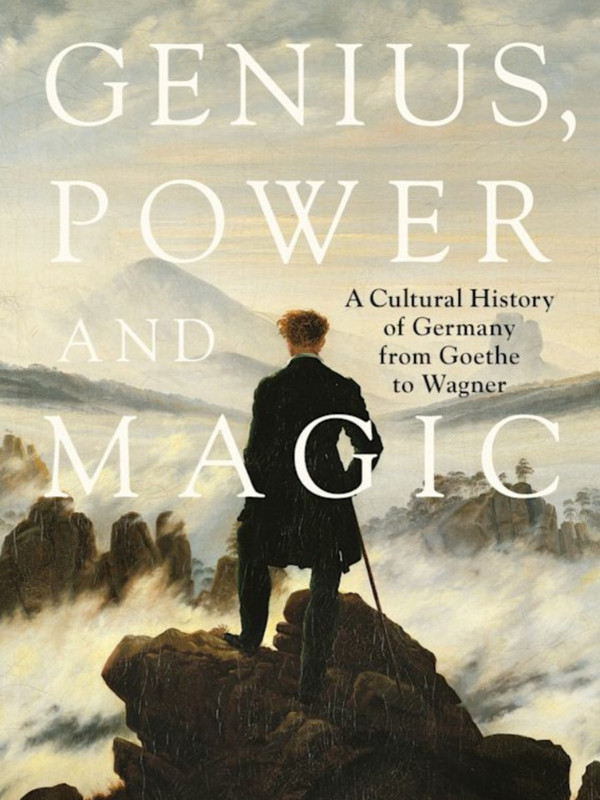
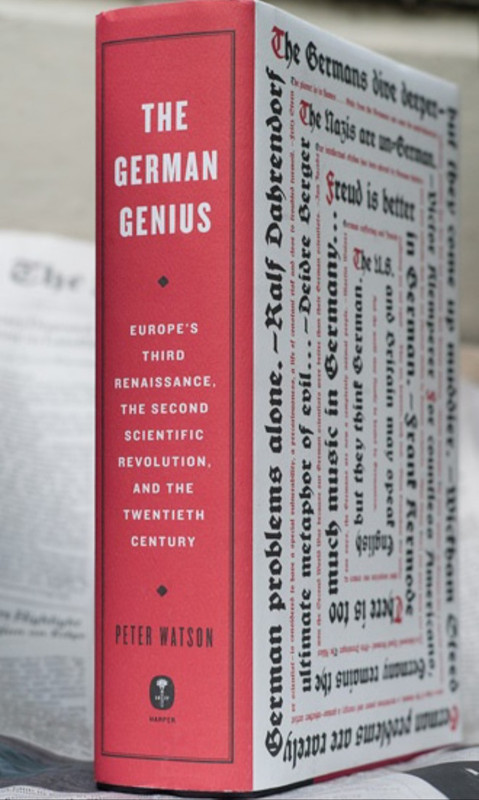
cgg.jpg


tgg.jpg

Oh yeah no doubt the German Nation even though it’s destroyed still offered much more than Eastern Europe did. Also it would be much harder for Western forces to free say Hungary, Romania and Poland that it would be to occupy Germany which they were occupying much of at the time. Also for pragmatism would you mentioned the German republic had a really excellent education system which is what the Nazis were able to exploit as we’ve talked before that the Nazi education system left a lot to be desired. Also I think it was Berlin before the war they had a GDP higher than all of Polands. Which again makes it much more of a better choice

It's the GOAT country for classical music, mathematics and the physical sciences. And yeah, it was early 19th century Prussian educator Wilhelm von Humboldt's idea that university professors ought to pursue cutting-edge research as well as teaching, and it had a profound impact on Germany's education system becoming the best in the world. This had been set into motion by Frederick The Great's enlightenment-inspired policies and reforms. But it went well beyond that with non-university research insitutions as well, namely the Kaiser Wilhelm Society (since renamed after Max Planck, the father of quantum theory in physics).

I could write full blown essays on a dozen different individual engineers and scientists during the Nazi era, their work and interactions with the state that made it such a fucking powerhouse. And this prowess isn't even necessarily yesterday's news. It still boasts the Max Planck Gesellschaft, Fraunhofer Gesellschaft zur Förderung der angewandten Forschung, Helmholtz-Gemeinschaft Deutscher Forschungszentren und Leibniz-Gemeinschaft today, all of them elite R&D organizations. The MPG alone has 83 separate institutes under its umbrella dedicated and spread through every field and sub-field of the physical and life sciences.

Industry? It's the envy of the fucking world, even if the world itself is largely unaware of it.
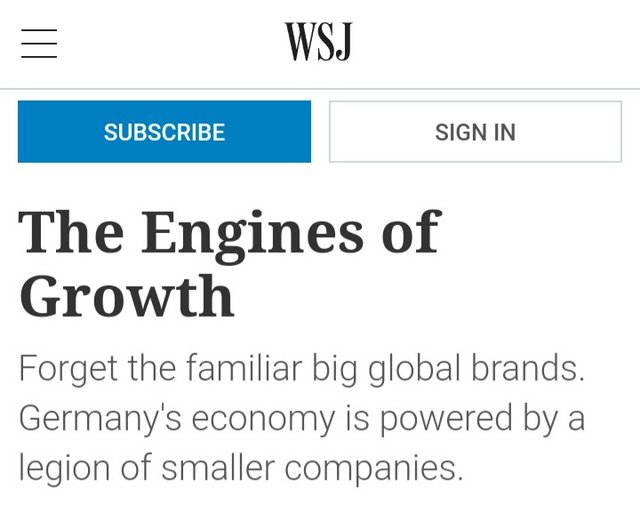


It's the GOAT country for classical music, mathematics and the physical sciences. And yeah, it was early 19th century Prussian educator Wilhelm von Humboldt's idea that university professors ought to pursue cutting-edge research as well as teaching, and it had a profound impact on Germany's education system becoming the best in the world. This had been set into motion by Frederick The Great's enlightenment-inspired policies and reforms. But it went well beyond that with non-university research insitutions as well, namely the Kaiser Wilhelm Society (since renamed after Max Planck, the father of quantum theory in physics).

I could write full blown essays on a dozen different individual engineers and scientists during the Nazi era, their work and interactions with the state that made it such a fucking powerhouse. And this prowess isn't even necessarily yesterday's news. It still boasts the Max Planck Gesellschaft, Fraunhofer Gesellschaft zur Förderung der angewandten Forschung, Helmholtz-Gemeinschaft Deutscher Forschungszentren und Leibniz-Gemeinschaft today, all of them elite R&D organizations. The MPG alone has 83 separate institutes under its umbrella dedicated and spread through every field and sub-field of the physical and life sciences.

Industry? It's the envy of the fucking world, even if the world itself is largely unaware of it.
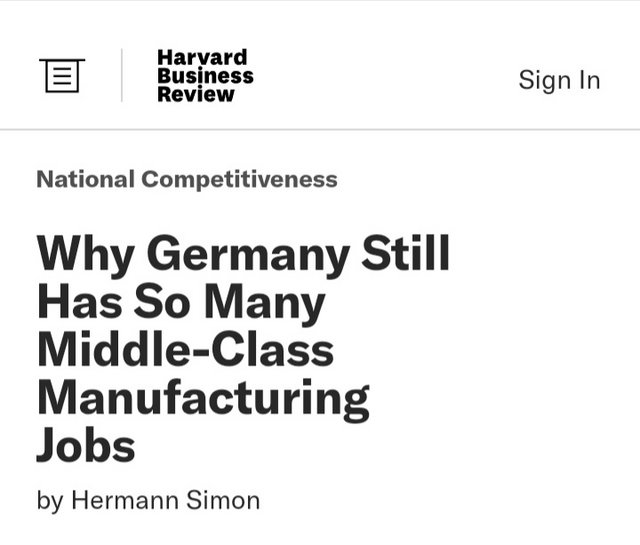

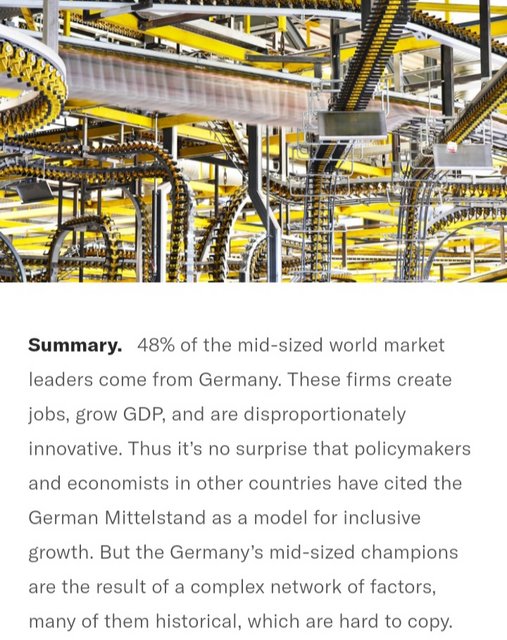


Beethoven is the GOAT musician. You won't change my mind.

 
Beethoven is the GOAT musician. You won't change my mind.


Yes, although few can emotionally stir me like Wagner. Fuck, even the mere prelude of Das Rheingold alone induces goosebumps and inspiration. He's kinda controversial tho.


Gesamtkunstwerk (German: [gəˈzamtˌkʊnstvɛɐk], literally "total artwork", frequently translated as "total work of art" and "synthesis of the arts") is a work of art that makes use of all or many art forms or strives to do so. The term is a German loanword accepted in English as a term in aesthetics.The term was developed by the German writer and philosopher K. F. E. Trahndorff in an essay in 1827. The German composer, conductor and theatre director Richard Wagner used the term in two 1849 essays, and the word has become particularly associated with his aesthetic ideals.

Wagner realised these ideas most fully in the first half of the four-opera cycle Der Ring des Nibelungen (The Ring of the Nibelung). His compositions, particularly those of his later period, are notable for their complex textures, rich harmonies and orchestration, and the elaborate use of leitmotifs—musical phrases associated with individual characters, places, ideas, or plot elements. His advances in musical language, such as extreme chromaticism and quickly shifting tonal centres, greatly influenced the development of classical music. His Tristan und Isolde is sometimes described as marking the start of modern music.

Friedrich Nietzsche was a member of Wagner's inner circle during the early 1870s, and his first published work, The Birth of Tragedy, proposed Wagner's music as the Dionysian rebirth of European culture in opposition to Apollonian rationalist decadence. Adolf Hitler was an admirer of Wagner's music and saw in it an embodiment of his own vision of the German nation; in a 1922 speech he claimed that Wagner's works "glorified the heroic Teutonic nature and the greatness that lies in the heroic."[1][2][3][4][5]


16 mpg crew checking in.

I think you were on hiatus when I posted my baby, was my dad's truck (RIP).

s1.jpg


s2.jpg
 
Yes, although few can emotionally stir me like Wagner. Fuck, even the mere prelude of Das Rheingold alone induces goosebumps and inspiration. He's kinda controversial tho.


Gesamtkunstwerk (German: [gəˈzamtˌkʊnstvɛɐk], literally "total artwork", frequently translated as "total work of art" and "synthesis of the arts") is a work of art that makes use of all or many art forms or strives to do so. The term is a German loanword accepted in English as a term in aesthetics.The term was developed by the German writer and philosopher K. F. E. Trahndorff in an essay in 1827. The German composer, conductor and theatre director Richard Wagner used the term in two 1849 essays, and the word has become particularly associated with his aesthetic ideals.

Wagner realised these ideas most fully in the first half of the four-opera cycle Der Ring des Nibelungen (The Ring of the Nibelung). His compositions, particularly those of his later period, are notable for their complex textures, rich harmonies and orchestration, and the elaborate use of leitmotifs—musical phrases associated with individual characters, places, ideas, or plot elements. His advances in musical language, such as extreme chromaticism and quickly shifting tonal centres, greatly influenced the development of classical music. His Tristan und Isolde is sometimes described as marking the start of modern music.

Friedrich Nietzsche was a member of Wagner's inner circle during the early 1870s, and his first published work, The Birth of Tragedy, proposed Wagner's music as the Dionysian rebirth of European culture in opposition to Apollonian rationalist decadence. Adolf Hitler was an admirer of Wagner's music and saw in it an embodiment of his own vision of the German nation; in a 1922 speech he claimed that Wagner's works "glorified the heroic Teutonic nature and the greatness that lies in the heroic."[1][2][3][4][5]


I think you were on hiatus when I posted my baby, was my dad's truck (RIP).

s1.jpg


s2.jpg

WAGNER?! I did Nazi that coming!

... Pls no moar racist... Pls
 
Yes, although few can emotionally stir me like Wagner. Fuck, even the mere prelude of Das Rheingold alone induces goosebumps and inspiration. He's kinda controversial tho.


Gesamtkunstwerk (German: [gəˈzamtˌkʊnstvɛɐk], literally "total artwork", frequently translated as "total work of art" and "synthesis of the arts") is a work of art that makes use of all or many art forms or strives to do so. The term is a German loanword accepted in English as a term in aesthetics.The term was developed by the German writer and philosopher K. F. E. Trahndorff in an essay in 1827. The German composer, conductor and theatre director Richard Wagner used the term in two 1849 essays, and the word has become particularly associated with his aesthetic ideals.

Wagner realised these ideas most fully in the first half of the four-opera cycle Der Ring des Nibelungen (The Ring of the Nibelung). His compositions, particularly those of his later period, are notable for their complex textures, rich harmonies and orchestration, and the elaborate use of leitmotifs—musical phrases associated with individual characters, places, ideas, or plot elements. His advances in musical language, such as extreme chromaticism and quickly shifting tonal centres, greatly influenced the development of classical music. His Tristan und Isolde is sometimes described as marking the start of modern music.

Friedrich Nietzsche was a member of Wagner's inner circle during the early 1870s, and his first published work, The Birth of Tragedy, proposed Wagner's music as the Dionysian rebirth of European culture in opposition to Apollonian rationalist decadence. Adolf Hitler was an admirer of Wagner's music and saw in it an embodiment of his own vision of the German nation; in a 1922 speech he claimed that Wagner's works "glorified the heroic Teutonic nature and the greatness that lies in the heroic."[1][2][3][4][5]


I think you were on hiatus when I posted my baby, was my dad's truck (RIP).

s1.jpg


s2.jpg

 
First to make a new meme thread with the archive of the old and tag me to get it stickied gets to name it
 
Status
Not open for further replies.
Back
Top