Economy Halfway to a recession- US GDP shrinks by .3% in Q1

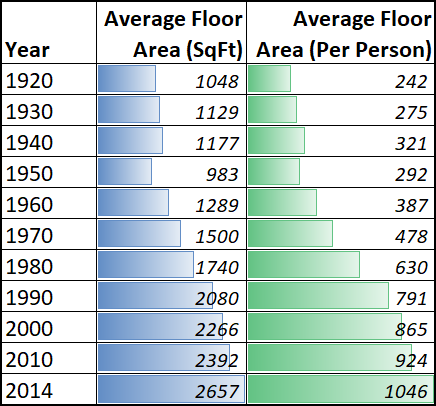
Which is interesting because homes in California haven't gotten larger at all. 1200-1300 sq foot homes are still the norm, yet a 1300 sqft house built in 1950 (my house) in San Diego is a million dollars on average.
I live on Long Island and a house a street over on the corner sold for no joke 950K and it was one story house with two bedrooms and two bathrooms with hardly any backyard. It is absurd in this day in age anyone should be paying that much for a fucking house like that
 
It's pretty much the truth. It's not an avocado toast simplification. Because it's rarely the small things like coffee and avocado toast that derail financial freedom but the large recurring costs -- like mortgages and car notes.

housing1.png

floorareaincreasesqft.png


When we've more than doubled the size of one of the most expensive purchases that a family makes, we've created a significantly larger economic burden on those families. It means waiting longer before they can afford that home (and start their family). And less money to spend on the family after buying it (which can result in fewer kids).

Maybe I read it wrong, but you seemed to blame this increased need for sq.ft.'age per person on lifestyle choices? If so, people can only buy the homes that are available to them. These families aren't building the homes.

What happened was the SFR's being built gradually increased in size as developers figured out that they could make more money building and selling a McMansion than they could a smaller, yet reasonable, single family home (especially as building costs increased, ie., permits).

So when new family goes to buy new home, the only options available are steadily increasing sq. footage sized homes. The problem is at least partially due to capitalism.
 
Maybe I read it wrong, but you seemed to blame this increased need for sq.ft.'age per person on lifestyle choices? If so, people can only buy the homes that are available to them. These families aren't building the homes.

What happened was the SFR's being built gradually increased in size as developers figured out that they could make more money building and selling a McMansion than they could a smaller, yet reasonable, single family home (especially as building costs increased, ie., permits).

So when new family goes to buy new home, the only options available are steadily increasing sq. footage sized homes. The problem is at least partially due to capitalism.
It is 100% a lifestyle choice. Supply and demand happen in tandem. If developers couldn't sell larger homes, they wouldn't build them.
 
It is 100% a lifestyle choice. Supply and demand happen in tandem. If developers couldn't sell larger homes, they wouldn't build them.

So a home is 2.5x as big but 4x more expensive and we are saying that it's lifestyle choices?

Weren't there also more single income families in 1950 (where your stats compare)?

I don't see how the argument can be anything other than the purchasing power diminishing.
 
So a home is 2.5x as big but 4x more expensive and we are saying that it's lifestyle choices?

Weren't there also more single income families in 1950 (where your stats compare)?

I don't see how the argument can be anything other than the purchasing power diminishing.
THANK YOU
 
It’s literally the money as I said — but no, let’s blame people wanting *check notes* the ability to not live like people 70 years ago.
 
It is 100% a lifestyle choice. Supply and demand happen in tandem. If developers couldn't sell larger homes, they wouldn't build them.
Yes but we have limited land (in cities where people want to live and build houses and zoned as such) which creates a new variable to the supply and demand reason. A developer would rather build a 5 bed, 3 bath home on a 1/4 acre lot, than build a 2 bed 1 bath on that same lot.

There's a family out there with the money to buy the big home. There's also a family out there wanting to buy a 2 bed 1 bath on that same lot and having the down payment to do so if it existed, but there's not enough lots to new build something like that, so the family looking for the smaller house is left renting their apartment or buying a 1950s house which doesn't increase the supply of affordable homes.
 
Yes but we have limited land (in cities where people want to live and build houses and zoned as such) which creates a new variable to the supply and demand reason. A developer would rather build a 5 bed, 3 bath home on a 1/4 acre lot, than build a 2 bed 1 bath on that same lot.

There's a family out there with the money to buy the big home. There's also a family out there wanting to buy a 2 bed 1 bath on that same lot and having the down payment to do so if it existed, but there's not enough lots to new build something like that, so the family looking for the smaller house is left renting their apartment or buying a 1950s house which doesn't increase the supply of affordable homes.
Additionally, zoning allows for bigger homes to be built on smaller lots so it’s not like the size of the home does anything to impact the size of the lot. In Texas you can practically reach out your window and touch your neighbors home the lots as so tight.
 
Yes but we have limited land (in cities where people want to live and build houses and zoned as such) which creates a new variable to the supply and demand reason. A developer would rather build a 5 bed, 3 bath home on a 1/4 acre lot, than build a 2 bed 1 bath on that same lot.

There's a family out there with the money to buy the big home. There's also a family out there wanting to buy a 2 bed 1 bath on that same lot and having the down payment to do so if it existed, but there's not enough lots to new build something like that, so the family looking for the smaller house is left renting their apartment or buying a 1950s house which doesn't increase the supply of affordable homes.
It goes to an extent. But the developer is subdividing those lots before he ever builds anything. He's submitting his zoning plan to the county, parish, etc. with a detailed breakdown of what he plans to build.

He's building bigger houses because, as you stated, there's a family out there with the money to buy the big home.

The thing is that the family with the money to buy the big home could just as easily buy a smaller home and bank the difference. They don't. They take out the biggest mortgage that they qualify for and buy that home. I'll use a personal example for contrast. My dad's a doctor, had a very successful practice, so he was financially secure. He and my mom, a nurse, never bought a house that cost more than she could afford if she had to handle a regular nursing job. We had family friends in million dollar houses whose parents made less money than my parents. But my parents lived by the principle that they wouldn't buy any more house than they needed or that the lowest earner in the family could afford.

Not judging others but Americans don't follow that principle. They buy the most house they can. And then we wake up 30+ years later and wonder why housing is so expensive.

Tangentially, people are being sold a false narrative regarding equity, imo. Equity is meaningless if it's your family home. Yes, people can access the equity to pay for things but that access comes in the form of a loan. It comes with a cost. People would be better off buying the smaller home and investing the cost difference over 30 years. At least that way, when they needed the money, they wouldn't have to pay it back with interest.

 
Culture and economy.

No issues.

The fix would almost certainly be higher wages for younger workers, and affordable housing for first time buyers.

Get these younger people set up by age 25 and I guarantee they're having children.
Idk if I think it's that simple, lots of people are set up by their 20s but prefer the DINK lifestyle. That's their right of course but I also think it presents a challenge for pronatalists.
This thread overall is shit but this conversation is good. The idea that the push to the suburbs, consequently increasing housing sqft, causes housing prices to be more expensive thereby lowering birth rates is wild.

I can get a 3,000 sqft home in the suburbs for less money than a 1,500 sqft home in the city. Doing so doesn’t make life less affordable.

Additionally, the idea that the size of a home isn’t something to aspire to or something that betters quality of living is also wild.

Instead of saying it’s people’s fault for not wanting to live in a shack, let’s look at things like student loan debt, cost of living, subscription economy, real wage growth etc. nope just blame the suburbs.
The issue with housing affordability had much more to do with lack of supply due to NIMBYism than student loans and the subscription economy.
Yes but we have limited land (in cities where people want to live and build houses and zoned as such) which creates a new variable to the supply and demand reason. A developer would rather build a 5 bed, 3 bath home on a 1/4 acre lot, than build a 2 bed 1 bath on that same lot.

There's a family out there with the money to buy the big home. There's also a family out there wanting to buy a 2 bed 1 bath on that same lot and having the down payment to do so if it existed, but there's not enough lots to new build something like that, so the family looking for the smaller house is left renting their apartment or buying a 1950s house which doesn't increase the supply of affordable homes.
Issue isn't enough lots, it's bad urban planning and onerous zoning. That same lot could become a fourplex with four 2/2 units and it'd be worth more than one 5/3 bit it's harder to build such units in most suburbs because of NIMBYs.
 
Last edited:
The issue with housing affordability had much more to do with lack of supply due to NIMBYism than student loans and the subscription economy.
This conversation started around why people aren’t having kids.

You and Pan(mostly Pan) put forward the idea that it’s because housing was too expensive because houses got bigger.

Housing affordability is one component, and why housing is unaffordable has a component of zoning.

However, houses getting bigger =\= why people aren’t having kids.
 
This conversation started around why people aren’t having kids.

You and Pan(mostly Pan) put forward the idea that it’s because housing was too expensive because houses got bigger.

Housing affordability is one component, and why housing is unaffordable has a component of zoning.

However, houses getting bigger =\= why people aren’t having kids.
The point about home size is to demonstrate that the reason behind lower fertility is not because Americans are poor as evidenced by the fact that we had a baby boom when Americans were less wealthy.
 
It is 100% a lifestyle choice. Supply and demand happen in tandem. If developers couldn't sell larger homes, they wouldn't build them.

You are presupposing that land is unlimited. It's not.

Just because there is a market for bigger homes, and developers lean that way to make more money, does NOT mean that there isn't a market for smaller homes, that people may want, who now have no choice when land and building options for developers are limited.

When demand exceeds supply, a developer is going to build larger homes. Full stop.

Which now gives someone who may want a smaller home no choice but to overextend themselves or not buy a home. It's absolutely not "100% a lifestyle choice". At least not in big cities.

You are speaking purely theoretically and in absolutes, failing to account for the fact that in some markets demand exceeds supply.
 
Last edited:
So when new family goes to buy new home, the only options available are steadily increasing sq. footage sized homes. The problem is at least partially due to capitalism.

Crony capitalism, if developers could meet demand they would meet demand, but zoning laws are made in order to create artificial scarcity.

 
Crony capitalism, if developers could meet demand they would meet demand, but zoning laws are made in order to create artificial scarcity.


Thank you. Let our friend Panamaican know, who insists that the reason behind big homes is purely lifestyle choice - maybe it's lifestyle choice for the people who can afford them, but not to the family who has no choice.
 
It goes to an extent. But the developer is subdividing those lots before he ever builds anything. He's submitting his zoning plan to the county, parish, etc. with a detailed breakdown of what he plans to build.

He's building bigger houses because, as you stated, there's a family out there with the money to buy the big home.

The thing is that the family with the money to buy the big home could just as easily buy a smaller home and bank the difference. They don't. They take out the biggest mortgage that they qualify for and buy that home. I'll use a personal example for contrast. My dad's a doctor, had a very successful practice, so he was financially secure. He and my mom, a nurse, never bought a house that cost more than she could afford if she had to handle a regular nursing job. We had family friends in million dollar houses whose parents made less money than my parents. But my parents lived by the principle that they wouldn't buy any more house than they needed or that the lowest earner in the family could afford.

Not judging others but Americans don't follow that principle. They buy the most house they can. And then we wake up 30+ years later and wonder why housing is so expensive.

Tangentially, people are being sold a false narrative regarding equity, imo. Equity is meaningless if it's your family home. Yes, people can access the equity to pay for things but that access comes in the form of a loan. It comes with a cost. People would be better off buying the smaller home and investing the cost difference over 30 years. At least that way, when they needed the money, they wouldn't have to pay it back with interest.

Builders like building houses bigger these days because they get better profit margins vs smaller homes.

Unlike in the 1950s, we now have cheap and mass produced building materials. On the flip side, the price of land is much more expensive, so it makes the most economical sense for them to build larger homes to maximize the use of that land.

Even in areas where the builders are carving out the lots themselves, a 1200 sq ft single floor ranch home would occupy about the same plot of land as a 2400 sq 2 floor foot colonial. After paying for the land, the extra building materials required for the colonial wouldn't double the cost of building the home, but it could nearly double the sale price.
 
Last edited:
expenses:

Rent(splitting rent with a roommate) $1500
Car Payment $400
Gas/insurance $300
Student loans $500
Food $300
Care(doctors etc) $150
Cell/TV $250

Total $3600/mo

$70,000 yearly salary

-taxes
-healthcare $300
-401k $500

~3500-$4000/month

Debts

~40k student loans
~15k car loans

This is no:

Clothing
Travel
Fun
Etc

The average young person can save ~$500 if they are extremely frugal.

Yet, you wonder why people can’t have kids?

If both parents work, child care can be $2k a month per kid!

But but but housing size!
 
The point about home size is to demonstrate that the reason behind lower fertility is not because Americans are poor as evidenced by the fact that we had a baby boom when Americans were less wealthy.
It’s not wealth it’s cost of living
 
Builders like building houses bigger these days because they get better profit margins vs smaller homes.

Unlike in the 1950s, we now have cheap and mass produced building materials. On the flip side, the price of land is much more expensive, so it makes the most economical sense for them to build larger homes to maximize the use of that land.

Even in areas where the builders are carving out the lots themselves, a 1200 sq ft single floor ranch home would occupy about the same plot of land as a 2400 sq 2 floor foot colonial. After paying for the land, the extra building materials required for the colonial wouldn't double the cost of building the home, but it could nearly double the sale price.
Don’t bring facts into this thread!
 
Back
Top