Economy Halfway to a recession- US GDP shrinks by .3% in Q1

Well for one that's not what you said, you made a snarky post without much substance.

Second, where is this mountain of evidence? This isn't to say that costs don't figure into the average person's decision to have kids but when the poor within and without the country have a higher fertility rate I think you have to consider that there's something else going on.

He's right though, the baby boom in the US happened when the country was far poorer.
What’s your take then?

“People don’t want kids because they aren’t willing to return to the living standard of 1950” great take!
 
Saying that people can’t afford to have kids is shitposting? wtf there is literally a mountain of evidence supporting this.

What a shit take.

My goodness. Just start telling people to lay off the avocado toast while you’re at it.
It's pretty much the truth. It's not an avocado toast simplification. Because it's rarely the small things like coffee and avocado toast that derail financial freedom but the large recurring costs -- like mortgages and car notes.

housing1.png

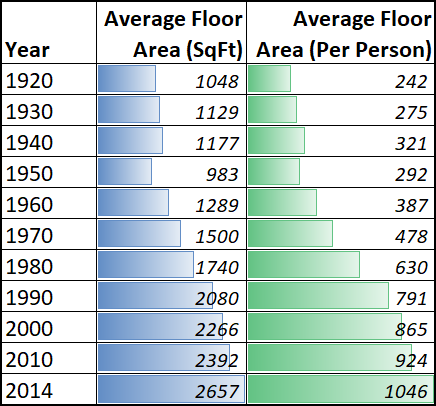
floorareaincreasesqft.png


When we've more than doubled the size of one of the most expensive purchases that a family makes, we've created a significantly larger economic burden on those families. It means waiting longer before they can afford that home (and start their family). And less money to spend on the family after buying it (which can result in fewer kids).
 
Saying that people can’t afford to have kids is shitposting? wtf there is literally a mountain of evidence supporting this.

What a shit take.

My goodness. Just start telling people to lay off the avocado toast while you’re at it.
Just to put some more data on it:

1950​

  • Median home value (unadjusted): $7,354
  • Median home value (inflation-adjusted to 2020 dollars): $79,063

2020​

  • Median home price (unadjusted): $336,900
  • Median home price (inflation-adjusted to 2020 dollars): $336,900

The cost of homes has quadrupled. Which isn't surprising when you look at my previous link and see that the size of those homes has grown larger as well.
 
This sounds good and all but for people who support Trump he is looked at as doing well in regards to immigration from what I've read. On top of that Dems numbers (aside from Bernie and AOC) are worse than Trump's. So Dems are just as unserious as Trump. Right now Dems will be using the same playbook they always use in 2026 which is "Look at how bad Trump is doing." Stop doing that and actually have an alternative that is achievable in 2 years or start doing small things in communities and kind of use Repubs arguments against him, or do things Repubs won't touch.
TBF if you take Trump out of the equation I don't think Republicans have exactly great ratings either. Probably the reason why the party is so insistent on keeping him around going so far as to try to get him a third term. 2028 is going to be real interesting. I'm not sure if either party has a post-Trump plan. I'd like to think for the Dems these low polling numbers will be motivation to reassess things while the arrogance of having Trump around will prevent Repubs from creating a strategy for when he is gone.
 
Hmm, the point is that people living in shithole conditions in America are going to wait until they achieve better before having children. The point is, they can, and they should.

It's sad that people in some countries can't do that with even less opportunity for social mobility (in some cases, none), but it also makes life so much simpler.

In a bad way for them and their family, in a good way for a statistic like fertility.
Again it's middle and upper middle class Americans who have fewer children on average, not the poorest Americans.

Expectations is the key word here, wealthy Americans have high standards for quality of life and have deprioritized children as a milestone and thus are less willing to accept certain trade offs in the pursuit of children.
What’s your take then?

“People don’t want kids because they aren’t willing to return to the living standard of 1950” great take!
Here's one take that I think has merit though this is a problem with many possible angles.
The best explanation I've heard is that cities have always had below replacement levels of fertility and thus always needed to be replenished by population infusions from their respective hinterlands.

The issue in the modern developed West is that basically our whole societies have become industrialized urban areas and so the population infusion now comes not from within our societies but from without in the form of immigration from the developing world. This is why societies that have strong immigration inflows like the US can stave off the economic downside of low fefertility.
I do think culture matters as well and there's less pressure to have kids relative to pursuing material gain. A couple who has a shabby house with one car but numerous kids is seem as less well off than a DINK couple with a large house and fancy cars.

But culture is hard to quantify and harder to consciously engineer.
 
Again it's middle and upper middle class Americans who have fewer children on average, not the poorest Americans.

Expectations is the key word here, wealthy Americans have high standards for quality of life and have deprioritized children as a milestone and thus are less willing to accept certain trade offs in the pursuit of children.

Here's one take that I think has merit though this is a problem with many possible angles.

I do think culture matters as well and there's less pressure to have kids relative to pursuing material gain. A couple who has a shabby house with one car but numerous kids is seem as less well off than a DINK couple with a large house and fancy cars.

But culture is hard to quantify and harder to consciously engineer.

Culture and economy.

No issues.

The fix would almost certainly be higher wages for younger workers, and affordable housing for first time buyers.

Get these younger people set up by age 25 and I guarantee they're having children.
 
TBF if you take Trump out of the equation I don't think Republicans have exactly great ratings either. Probably the reason why the party is so insistent on keeping him around going so far as to try to get him a third term. 2028 is going to be real interesting. I'm not sure if either party has a post-Trump plan. I'd like to think for the Dems these low polling numbers will be motivation to reassess things while the arrogance of having Trump around will prevent Repubs from creating a strategy for when he is gone.

Fair point but the thing is they do have him. That's their Draw 4 card (Uno reference) and as long as they have him they will always have a base but current Dems like Schumer, Pelosi and Jefferies will never have a plan to reassess things. This is because to reassess things would mean they would have to give some to the left of their base and they have not been willing to do that at all. They would have to consider concessions such as limit sending Israel weapons and money or considering Medicare for All and no Centrist Dem wants to do that at all. It would kill all the corporate money they receive.

As far as a strategy for Repubs post Trump they do not have one yet. When Trump is finally gone for good in politics I assume they will do what Dems are doing now. The question is will Repubs have an economy to fall back on? The economy is their "supposed" bread and butter. If the economy falls Repubs will fall because they live off of giving tax breaks. I can't think of a single Republican campaign anywhere that does not involve 2 things: tax breaks and tougher on immigration.
 
Fair point but the thing is they do have him. That's their Draw 4 card (Uno reference) and as long as they have him they will always have a base but current Dems like Schumer, Pelosi and Jefferies will never have a plan to reassess things. This is because to reassess things would mean they would have to give some to the left of their base and they have not been willing to do that at all. They would have to consider concessions such as limit sending Israel weapons and money or considering Medicare for All and no Centrist Dem wants to do that at all. It would kill all the corporate money they receive.

As far as a strategy for Repubs post Trump they do not have one yet. When Trump is finally gone for good in politics I assume they will do what Dems are doing now. The question is will Repubs have an economy to fall back on? The economy is their "supposed" bread and butter. If the economy falls Repubs will fall because they live off of giving tax breaks. I can't think of a single Republican campaign anywhere that does not involve 2 things: tax breaks and tougher on immigration.
I live in the Bay Area which is Pelosi country and the general consensus is even the people here hate her. I think that is a good sign in that Dems are looking to move forward and looks towards getting new, young, and charismatic talent out there. Hopefully this is a sign of the overall future.
 
Just to put some more data on it:

1950​

  • Median home value (unadjusted): $7,354
  • Median home value (inflation-adjusted to 2020 dollars): $79,063

2020​

  • Median home price (unadjusted): $336,900
  • Median home price (inflation-adjusted to 2020 dollars): $336,900

The cost of homes has quadrupled. Which isn't surprising when you look at my previous link and see that the size of those homes has grown larger as well.
Which is interesting because homes in California haven't gotten larger at all. 1200-1300 sq foot homes are still the norm, yet a 1300 sqft house built in 1950 (my house) in San Diego is a million dollars on average.
 
Which is interesting because homes in California haven't gotten larger at all. 1200-1300 sq foot homes are still the norm, yet a 1300 sqft house built in 1950 (my house) in San Diego is a million dollars on average.
I think in many large cities with legacy housing, the existing housing stock goes back to the days when those houses were smaller.

It's primarily in the new construction, which aligns with the increasing push into suburbs and exurbs, of the 70s and 80s, that we're seeing these increasingly larger houses and associated costs.

There's a secondary point to be made regarding the rise of suburbia but it would just derail this thread.
 
Guys, it’s not a fertility issue. That would mean people want to get pregnant but can’t.

Well, the term fertility has at least a couple of uses.

In the clinical or personal sense, yeah, it can mean actual conception, gestation, and everything related to it. But when demographics are being discussed, it can involve larger social and even political issues-

 
Well, the term fertility has at least a couple of uses.

In the clinical or personal sense, yeah, it can mean actual conception, gestation, and everything related to it. But when demographics are being discussed, it can involve larger social and even political issues-

Well shit, snark rescinded. I didn’t know that. Thanks amigo
 
There's definitely going to be some short term pain.
 
Just to put some more data on it:

1950​

  • Median home value (unadjusted): $7,354
  • Median home value (inflation-adjusted to 2020 dollars): $79,063

2020​

  • Median home price (unadjusted): $336,900
  • Median home price (inflation-adjusted to 2020 dollars): $336,900

The cost of homes has quadrupled. Which isn't surprising when you look at my previous link and see that the size of those homes has grown larger as well.
Even accounting for the size of homes doesn’t mean that the cost of home is comparable especially when considering other costs. Blaming this on the fact that homes have gotten bigger is absurd.
 
Which is interesting because homes in California haven't gotten larger at all. 1200-1300 sq foot homes are still the norm, yet a 1300 sqft house built in 1950 (my house) in San Diego is a million dollars on average.
The same across the Northeast (NY, MA, RI, CT) as well.

The average home age in NY is 67 years old and many of these old/small homes cost more than in states with newer/larger construction like AZ NV. So the desire to live in large homes is likely not the main factor driving up housing costs.

That said, I think theres other more important factors at play aside from housing which are driving the increased age people are having kids and low birth rate
 
I think in many large cities with legacy housing, the existing housing stock goes back to the days when those houses were smaller.

It's primarily in the new construction, which aligns with the increasing push into suburbs and exurbs, of the 70s and 80s, that we're seeing these increasingly larger houses and associated costs.

There's a secondary point to be made regarding the rise of suburbia but it would just derail this thread.
This thread overall is shit but this conversation is good. The idea that the push to the suburbs, consequently increasing housing sqft, causes housing prices to be more expensive thereby lowering birth rates is wild.

I can get a 3,000 sqft home in the suburbs for less money than a 1,500 sqft home in the city. Doing so doesn’t make life less affordable.

Additionally, the idea that the size of a home isn’t something to aspire to or something that betters quality of living is also wild.

Instead of saying it’s people’s fault for not wanting to live in a shack, let’s look at things like student loan debt, cost of living, subscription economy, real wage growth etc. nope just blame the suburbs.
 
Back
Top