Tech Gaming Hardware discussion (& Hardware Sales) thread

Seems a little premature to write off a product that hasn't even had a launch price confirmed lol

What cost do you think they should sell at for the current specs?

They currently can't go toe to toe with console makers. It's why they went for off the shelf parts AMD had stockpiled, rather than full custom silicon.

Maybe they will be able to one day, but that takes time and multiple generations of products. I also don't think you understand the demographics of who buys a Steam Deck or Steam Machine and how that factors into pricing.

They already said it would be the equivalent of the same level PC. So I am paying for Steam OS, size of the machine and ease of use.
It might surprise us but that's why I said it went from a day 1 purchase, to a wait and see purchase.

I think they should intentionally undercut PS and XBox by atleast $100 for their equivalent machines. I never even got this gens consoles because of the initial availability issues. I just played PC the whole time on a rig from 2017 that is still going strong. I have only started having issues this year with newer games.

Valve makes its money off games. Play into that. Take the loss on the steam machines (initially) and go hard on the main page selling more games for them.
Everyone on Steam has a huge backlog of games. I checked earlier today when I was contemplating the LCD steam deck that is on sale. I have 200+ games I have barely played that I have purchased over the years on steam alone.

Steam deck/Steam machine is aimed at gamers like me. 30+ year old who want to play games but can't justify a top of the line PC or spend 8 hours a day playing. It just needs to be good enough to run most things at decent settings withpout doing any extra work that could be spent gaming. It doesn't need to be top of line, it shouldn't be overly expensive and it just needs to be plug and play. It's what gaming used to be pre subscription, constant updates and partially completed games being released.
 
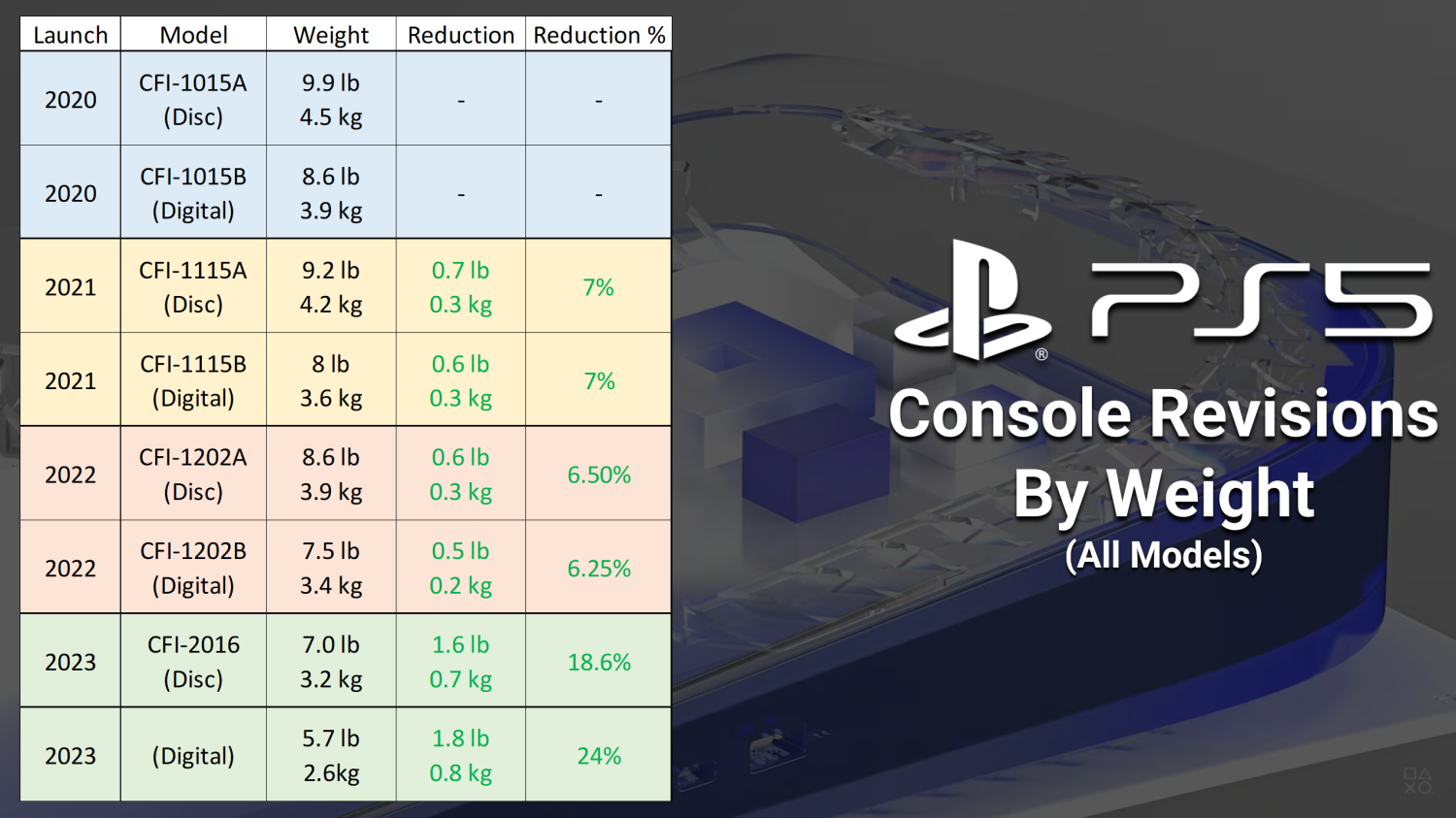
Yes, it does! This is why given the same processing power target a reduction in dimensions and weight reduces costs.

10859_52023_analysis-why-the-sony-playstation-5-pro-console-costs-700_full.png
Buddy, read your article and try to use critical thinking. The $499 PS5 became profitable per unit in August in Aug 2021 (digital still lost money), around the time of the first revision that heavily reduced heatsink costs. The PS5 slim didn't arrive until November 2023, and it launched at a higher base price ($449 digital vs $399 digital). It also featured a die shrink, which saved money for PS.

Let's make this super simple: For a TEU of PS5 launch edition consoles versus the PS5 Slim, how many cheaper is shipping per unit for the latter? I don't expect an exact number, just ballpark.
What? No they're not. That isn't at all universally true. That's only true at the higher end, not at these sub-$600 price points with the integrated SoCs.

As I've shown in this thread, the Ryzen 7 6800H Mini PCs (Beelink, Firebat, Aoostar, etc) have been selling at $275-$375 for the past year, at least. Even for an older chipset that sort of sustained pricing doesn't suggest inventory clearance, especially considering the newer R7-8745HS iteration's offering is $384. This is a Hawk Point chipset launched sometime after December 2023:
($384) Firebat Ryzen 7 8745HS Mini PC

Show me a full-sized PC with Windows with comparable gaming power to that for less money. Equal CPU power, GPU power, RAM amount & speed, SSD storage & class, ports, & WiFi capability. Can be a prebuilt or a PCPP assembly.
The reason it's so cheap is it doesn't include a Windows license or peripherals. I'll be charitable and say those only cost the end user $150, for a total of ~$550. It also only gets $15 discount here and there.

For $599, you can get an tower with a slightly more powerful processor, same iGPU and double the storage at Best Buy. And that's with Best Buy taking a much larger margin than Amazon.
 
They already said it would be the equivalent of the same level PC. So I am paying for Steam OS, size of the machine and ease of use.
It might surprise us but that's why I said it went from a day 1 purchase, to a wait and see purchase.
A prebuild with equivalent specs would retail for about $700 on sale, and Steam doesn't have to factor in a retailer's cut. So I think people estimating closer to $800 are a bit off here and aren't factoring in DTC versus retailer.

I think they should intentionally undercut PS and XBox by atleast $100 for their equivalent machines. I never even got this gens consoles because of the initial availability issues. I just played PC the whole time on a rig from 2017 that is still going strong. I have only started having issues this year with newer games.
So you want them to lose a couple hundred dollars per unit sold? There's no way they would make that up in attach rate (aka additional games bought that wouldn't have been purchased). Most Steam hardware people are enthusiasts who spend more and already have a PC they game on.
Valve makes its money off games. Play into that. Take the loss on the steam machines (initially) and go hard on the main page selling more games for them.
Everyone on Steam has a huge backlog of games. I checked earlier today when I was contemplating the LCD steam deck that is on sale. I have 200+ games I have barely played that I have purchased over the years on steam alone.
How much additional spending do you think a Steam Machine owner would generate? You're really overestimating here.
Steam deck/Steam machine is aimed at gamers like me. 30+ year old who want to play games but can't justify a top of the line PC or spend 8 hours a day playing. It just needs to be good enough to run most things at decent settings withpout doing any extra work that could be spent gaming. It doesn't need to be top of line, it shouldn't be overly expensive and it just needs to be plug and play. It's what gaming used to be pre subscription, constant updates and partially completed games being released.
And people like you are willing to spend more as early adopters, more often than not. Hence Valve doesn't want to sell at a huge loss. You're also missing the bigger picture here: the play for Valve is to entice OEMs to partner on their own Steam Machines. If you sell at a huge loss, no one is going to work with you because you will be undercutting them.
 
The reason it's so cheap is it doesn't include a Windows license or peripherals. I'll be charitable and say those only cost the end user $150, for a total of ~$550. It also only gets $15 discount here and there.

For $599, you can get an tower with a slightly more powerful processor, same iGPU and double the storage at Best Buy. And that's with Best Buy taking a much larger margin than Amazon.
$600 isn't cheaper. It's not even cheaper than $523 (the cost plus $139 retail for Windows since peripherals are irrelevant). You're free to offer a comparison without peripherals and OS.

Try again.
 
A prebuild with equivalent specs would retail for about $700 on sale, and Steam doesn't have to factor in a retailer's cut. So I think people estimating closer to $800 are a bit off here and aren't factoring in DTC versus retailer.


So you want them to lose a couple hundred dollars per unit sold? There's no way they would make that up in attach rate (aka additional games bought that wouldn't have been purchased). Most Steam hardware people are enthusiasts who spend more and already have a PC they game on.

How much additional spending do you think a Steam Machine owner would generate? You're really overestimating here.

And people like you are willing to spend more as early adopters, more often than not. Hence Valve doesn't want to sell at a huge loss. You're also missing the bigger picture here: the play for Valve is to entice OEMs to partner on their own Steam Machines. If you sell at a huge loss, no one is going to work with you because you will be undercutting them.
$700 on sale. So most likely $800 + by the time I get a controller, cords and set up to play it through my tv...

Yes I want them to undercut Xbox and PS to take that market. Drop $100 per sale that will get made up within 6 months minimum from game purchases in extra sales.

100% I think they would make the loss back in game sales with no issues. They get access to the new game market, big AAA titles that used to be played more on consoles by casual gamers. People literally just buy the Fifa's, CODs etc each year and play these on PS. Steam could steal those casual sales back easily.

I am not anymore if the price is a PC equivalent. I will wait and see like I said and ultimately just put the money into a better PC instead.

If the other consoles are seeling at a loss, but Valve doesn;t do the same, then why wouldn't you just grab one of the other more established consoles?
The whole point is I get to save money on buying a PC AND get the joys of a console. If all I get is the console, it's kinda pointless.
 
$600 isn't cheaper. It's not even cheaper than $523 (the cost plus $139 retail for Windows since peripherals are irrelevant). You're free to offer a comparison without peripherals and OS.

Try again.
Why are peripherals irrelevant? You kind of need those to set up and use a PC.

Also lol at "find a comparison without peripherals and OS" even though no reputable merchant in the US sells computers without an OS and KB & mouse in the year 2025. The fuck.

I just presented you a desktop that's a better value for $50 more. Now you're moving the goalposts and want to compare it to a desktop that literally doesn't exist in the US.

Let's put it this way: If mini-PCs aren't inherently more expensive than normal towers, then why does every major brand avoid mini-PCs like the plague and build thousands of towers for every mini-PC they make?
Buddy, read your article and try to use critical thinking. The $499 PS5 became profitable per unit in August in Aug 2021 (digital still lost money), around the time of the first revision that heavily reduced heatsink costs. The PS5 slim didn't arrive until November 2023, and it launched at a higher base price ($449 digital vs $399 digital). It also featured a die shrink, which saved money for PS.

Let's make this super simple: For a TEU of PS5 launch edition consoles versus the PS5 Slim, how many cheaper is shipping per unit for the latter? I don't expect an exact number, just ballpark.
Also what happened man, do you not know how much a TEU of PS5 costs roughly?
 
$700 on sale. So most likely $800 + by the time I get a controller, cords and set up to play it through my tv...
I said a prebuild, not the Steam Machine. Although I think the Steam Machine likely land between $599 and $699.

I would guess the Steam Machine gets bundled with a controller and HDMI cable, but who knows.
Yes I want them to undercut Xbox and PS to take that market. Drop $100 per sale that will get made up within 6 months minimum from game purchases in extra sales.
You think Steam users buy $300 worth of games every 6 months? My guy, the average US gamer buys 2 games a year.

Your math isn't mathing.
100% I think they would make the loss back in game sales with no issues. They get access to the new game market, big AAA titles that used to be played more on consoles by casual gamers. People literally just buy the Fifa's, CODs etc each year and play these on PS. Steam could steal those casual sales back easily.
I agree they could, but not by pricing a console $100 less than the PS5 and losing hundreds of dollars per units sold. That's insane logic that makes no financial sense.
If the other consoles are seeling at a loss, but Valve doesn;t do the same, then why wouldn't you just grab one of the other more established consoles?
The whole point is I get to save money on buying a PC AND get the joys of a console. If all I get is the console, it's kinda pointless.
It's aimed at enthusiasts who are already in the PC gaming ecosystem, not consoles.

Valve straight up does not have the economies of scale or budget to go toe to toe with consoles.

Serious question: How much do you think it costs to manufacture a Steam machine and get it to the US? Like ballpark number.
 
Why are peripherals irrelevant? You kind of need those to set up and use a PC.

Also lol at "find a comparison without peripherals and OS" even though no reputable merchant in the US sells computers without an OS and KB & mouse in the year 2025. The fuck.

I just presented you a desktop that's a better value for $50 more. Now you're moving the goalposts and want to compare it to a desktop that literally doesn't exist in the US.

Let's put it this way: If mini-PCs aren't inherently more expensive than normal towers, then why does every major brand avoid mini-PCs like the plague and build thousands of towers for every mini-PC they make?

Also what happened man, do you not know how much a TEU of PS5 costs roughly?
Yep, exactly what I expected. A wall of jibber-jabber trying to distract from your fundamental failure.

Even the PC you presented which is on sale, at an all-time low, a price it has maintained for less than 10 total days over two sales periods throughout its retail at Best Buy (it debuted at $959 seven months ago), and it still couldn't match the SFF. After all, if I responded in kind, with a sale, I shave off another $34, and Windows 11 is included.
($349) Machenike AI Mini PC Desktop, AMD Ryzen 7 8745HS (Up to 5.1GHz), 16GB DDR5 RAM, 512GB SSD, DP Port, with HDMI Support 2-Monitor 4K, Dual Ethernet Port, Wi-Fi 6, Windows 11 Home
SFF is inherently more expensive than full sized. That's why SFF PCs are always more expensive, especially for gaming.

Care to try again? Or is this the part where I accept your concession?
 
Yep, exactly what I expected. A wall of jibber-jabber trying to distract from your fundamental failure.

Even the PC you presented which is on sale, at an all-time low, a price it has maintained for less than 10 total days over two sales periods throughout its retail at Best Buy (it debuted at $959 seven months ago), and it still couldn't match the SFF. After all, if I responded in kind, with a sale, I shave off another $34, and Windows 11 is included.
It's gonna be that price quite regularly for the rest of its time at Best Buy. The $959 was a hedge against tariffs, Best Buy reduced it within a month.
Even the PC you presented which is on sale, at an all-time low, a price it has maintained for less than 10 total days over two sales periods throughout its retail at Best Buy (it debuted at $959 seven months ago), and it still couldn't match the SFF. After all, if I responded in kind, with a sale, I shave off another $34, and Windows 11 is included.
($349) Machenike AI Mini PC Desktop, AMD Ryzen 7 8745HS (Up to 5.1GHz), 16GB DDR5 RAM, 512GB SSD, DP Port, with HDMI Support 2-Monitor 4K, Dual Ethernet Port, Wi-Fi 6, Windows 11 Home
Machenike's price is a reflection of taking a smaller margin and working with Amazon, which again takes a smaller margin. Not to mention lots of corner cutting (dollars to donuts they're paying Asian Windows costs, not US costs).

Here's the coffin nail in your logic: Machenike sells mini-PCs through Best Buy marketplace. Notice the vastly higher costs even though it's the same seller? That's because of the difference in margin between Amazon and Best Buy. When you control for retailer margin, it's obvious that mini-PCs cost more than similar standard towers.

Care to try again? Or is this the part where I accept your concession?
You keep comparing shit tier mini-PC makers with wildlydifferent cost structures to actual OEMs that sell volume. No one buys these PCs from Amazon. It's obvious you don't know what you're talking about because if SFF was inherently cheaper, which you claim, then every OEM would just make mini-PCs, sell them at at the cost of a normal tower, and then increase their margins.

Do you think HP and Dell just hate making money?

Also what happened man, do you not know how much a TEU of PS5 costs roughly?
Still waiting on your explanation for how much the PS5 Slim saves on shipping costs. Do you not know what a TEU costs or something?
 
Last edited:
It's gonna be that price quite regularly for the rest of its time at Best Buy. The $959 was a hedge against tariffs, Best Buy reduced it within a month.
It was $849 a week ago, and it's ranged from $849-$949 for a majority of days within those past seven months.
Machenike's price is a reflection of taking a smaller margin and working with Amazon, which again takes a smaller margin. Not to mention lots of corner cutting (dollars to donuts they're paying Asian Windows costs, not US costs).

Here's the coffin nail in your logic: Machenike sells mini-PCs through Best Buy marketplace. Notice the vastly higher costs even though it's the same seller? That's because of the difference in margin between Amazon and Best Buy. When you control for retailer margin, it's obvious that mini-PCs cost more than similar standard towers.
Then use Amazon to find a Desktop PC with a lower price than those I've supplied. The prices I'm citing aren't unicorns. They're quite common.
You keep comparing shit tier mini-PC makers with wildlydifferent cost structures to actual OEMs that sell volume. No one buys these PCs from Amazon. It's obvious you don't know what you're talking about because if SFF was inherently cheaper, which you claim, then every OEM would just make mini-PCs, sell them at at the cost of a normal tower, and then increase their margins.

Do you think HP and Dell just hate making money?

Still waiting on your explanation for how much the PS5 Slim saves on shipping costs. Do you not know what a TEU costs or something?
Stop whining. Substantiate your claim.

Otherwise, concession accepted.
 
It was $849 a week ago, and it's ranged from $849-$949 for a majority of days within those past seven months.
It has not. Since mid-May, it's never been sold at Best Buy for more than $899. It's been under $650 for more than 14 weeks in that time frame. Where are you seeing that it was $859 a week ago? Please don't tell me its a site that tracks pricing off a plugin and therefore not accurate.
Then use Amazon to find a Desktop PC with a lower price than those I've supplied. The prices I'm citing aren't unicorns. They're quite common.
That's the issue. Brands sell at Best Buy because Amazon sucks at selling PCs/people don't go there to buy PCs. Hence HP prefers selling products through Walmart and Best Buy.

If you want an apples to apples comparison, you'd have to look at Best Buy or Walmart, not Amazon, and compare the same brand, first party.
Stop whining. Substantiate your claim.

Otherwise, concession accepted.
Again, why don't HP and Dell build more mini-PCs if SFF is cheaper than normal towers? Your argument requires us to accept that for some reason big PC brands don't want to increase their margins.

And I did substantiate the claim, look at BestBuy.com, where your cheapest PC with an 8745HS is $469 after it's 50% off and both are out of stock because they aren't volume SKUs. Most mini-PCs with a 780M are significantly more expensive than just getting a tower from HP or Dell or literally any big brand.
 
I said a prebuild, not the Steam Machine. Although I think the Steam Machine likely land between $599 and $699.

I would guess the Steam Machine gets bundled with a controller and HDMI cable, but who knows.

You think Steam users buy $300 worth of games every 6 months? My guy, the average US gamer buys 2 games a year.

Your math isn't mathing.

I agree they could, but not by pricing a console $100 less than the PS5 and losing hundreds of dollars per units sold. That's insane logic that makes no financial sense.

It's aimed at enthusiasts who are already in the PC gaming ecosystem, not consoles.

Valve straight up does not have the economies of scale or budget to go toe to toe with consoles.

Serious question: How much do you think it costs to manufacture a Steam machine and get it to the US? Like ballpark number.
Steam machine seems to be coming out between that $700-800 mark to build yourself which puts it smack bang around the cost of a PS5 Pro at $750.
if it hits that $550- $600 mark it's only a touch more than a PS5 Digital and would be around that $100 less mark I am talking about. You would assume they will buy in bulk and set up a manufacturing deal as a way to drop the per unit price.

I reckon the controller costs extra or would be a more expensive package since it is it's own item on the Steam store.

Steam users will likely buy $100 worth of games within 6 months easily. Those 2 games you said a US gamer purchases would easily cover that loss if made on Steam. Now imagine if your average person buying skins on Fortnite, had access to Steam Sales everytime they logged on. It's getting access to that type of consumer that makes them money over beating out 5 year old tech in the PS5.

It's a console with the bonuses of a PC. Its market is casual gamers who want to play online games without dealing with things like Gamepass increasing by 50%.

I can't answer how much it costs to manufacture a Steam Machine, because Valve probably doesn't even know yet or we would have a price.
 
Steam machine seems to be coming out between that $700-800 mark to build yourself which puts it smack bang around the cost of a PS5 Pro at $750.
if it hits that $550- $600 mark it's only a touch more than a PS5 Digital and would be around that $100 less mark I am talking about. You would assume they will buy in bulk and set up a manufacturing deal as a way to drop the per unit price.
They'll buy in bulk by normal people standards, but not by console standards. They're probably ramping up for a couple to several million, which isn't even close to console economics.
Steam users will likely buy $100 worth of games within 6 months easily. Those 2 games you said a US gamer purchases would easily cover that loss if made on Steam. Now imagine if your average person buying skins on Fortnite, had access to Steam Sales everytime they logged on. It's getting access to that type of consumer that makes them money over beating out 5 year old tech in the PS5.
Steam gets a max of 30% per purchase (less for higher volume and AAA titles), which means they need to sell at least $300 worth of games to offset every $100 in subsidies they put toward the Steam Machine. Your math means that developers and publishers are getting 0% of each game sale.

Like I said, that math isn't mathing. People who will buy a Steam Machine already have primary gaming PCs and would primarily play games they would already have bought.

TLDR: Most people who buy a Steam Machine are already PC gamers, very few of the buyers would be console only gamers.
I can't answer how much it costs to manufacture a Steam Machine, because Valve probably doesn't even know yet or we would have a price.
That's why I said ballpark. And Steam already knows costs, unless they're buying memory on the spot market, in which case they would be fucked. A H1 2026 launch means you're already in production and ramping up since it takes a month to ship consoles alone.

I'm not expecting you to have an exact answer, but if you think it through what components cost, you'll quickly realize that selling for $100 less than current consoles would mean Steam is losing well over a hundred dollars per unit, which would mean a loss of half a billion for 5 million units. Even Valve can't eat those kind of losses regularly.
 
It has not. Since mid-May, it's never been sold at Best Buy for more than $899. It's been under $650 for more than 14 weeks in that time frame. Where are you seeing that it was $859 a week ago? Please don't tell me its a site that tracks pricing off a plugin and therefore not accurate.
There are many price trackers that archive & store the price on websites on a daily basis. They are accurate, and yes, everything I said is true. Not that this matters. Even at its current sale price it is $250 more than the Mini PC I cited.
That's the issue. Brands sell at Best Buy because Amazon sucks at selling PCs/people don't go there to buy PCs. Hence HP prefers selling products through Walmart and Best Buy.

If you want an apples to apples comparison, you'd have to look at Best Buy or Walmart, not Amazon, and compare the same brand, first party.

Again, why don't HP and Dell build more mini-PCs if SFF is cheaper than normal towers? Your argument requires us to accept that for some reason big PC brands don't want to increase their margins.

And I did substantiate the claim, look at BestBuy.com, where your cheapest PC with an 8745HS is $469 after it's 50% off and both are out of stock because they aren't volume SKUs. Most mini-PCs with a 780M are significantly more expensive than just getting a tower from HP or Dell or literally any big brand.
You did not substantiate the claim. You cannot provide a single desktop PC at Amazon anywhere close to the price I named, apples to apples, nor anywhere else, nor can you build a desktop for the same price, and are even forced to concede the chipset is cheaper in Mini PCs at Best Buy itself (while whining it's out of stock).

But you're incapable of admitting you're wrong-- a delicious irony. Concession accepted.
 
They'll buy in bulk by normal people standards, but not by console standards. They're probably ramping up for a couple to several million, which isn't even close to console economics.

Steam gets a max of 30% per purchase (less for higher volume and AAA titles), which means they need to sell at least $300 worth of games to offset every $100 in subsidies they put toward the Steam Machine. Your math means that developers and publishers are getting 0% of each game sale.

Like I said, that math isn't mathing. People who will buy a Steam Machine already have primary gaming PCs and would primarily play games they would already have bought.

TLDR: Most people who buy a Steam Machine are already PC gamers, very few of the buyers would be console only gamers.

That's why I said ballpark. And Steam already knows costs, unless they're buying memory on the spot market, in which case they would be fucked. A H1 2026 launch means you're already in production and ramping up since it takes a month to ship consoles alone.

I'm not expecting you to have an exact answer, but if you think it through what components cost, you'll quickly realize that selling for $100 less than current consoles would mean Steam is losing well over a hundred dollars per unit, which would mean a loss of half a billion for 5 million units. Even Valve can't eat those kind of losses regularly.

Yeah but that's why they have gone with the parts list they have. it's not going to break the bank to make the machines because my guess would be they chose the specs based on availability.

They get 30 percent of the purchase until 10 Million sales. Then it's 25%, followed by 20% at 50 million. Those sort of sales are what they have been missing out on for games like Fifa and COD. They can jump in and get a share of those sales to make back those losses.

Do you think that Steam is just trying to make money by selling the console or seeing if they could succeed in the console market? Same as Steam deck.It was to get into the handheld market that was owned by Nintendo at the time.

The interesting thing is we seem to agree on what we think the end price probably will be ($600-800) mark except I think they should sell at the lower end of that spectrum. Again a PS5 Pro is currently $750 US and an Xbox is $650 US. Steam Machine at that $600-$650 mark is them taking a $100 loss and being well below the cost of the competitors.
 
There are many price trackers that archive & store the price on websites on a daily basis. They are accurate, and yes, everything I said is true. Not that this matters. Even at its current sale price it is $250 more than the Mini PC I cited.
Can I get a link to this source you keep citing?
You did not substantiate the claim. You cannot provide a single desktop PC at Amazon anywhere close to the price I named, apples to apples, nor anywhere else, nor can you build a desktop for the same price, and are even forced to concede the chipset is cheaper in Mini PCs at Best Buy itself (while whining it's out of stock).
What part of compare apples to apples at Best Buy or Walmart did you not understand? Both sell far more desktops than Amazon, hence the most competitive models go there.
But you're incapable of admitting you're wrong-- a delicious irony. Concession accepted.
I'm perfectly capable of admitting when I'm wrong, you'll find plenty of instances on this forum.

Your logic is just plum bad since you assume price differences are down to primarily production costs, as opposed to margins, retailer cuts, de minimis, or any other number of factors.

Maybe you should inform Dell and HP that they could make more money selling mini-PCs, they apparently don't realize it since they stick to normal towers. It's almost as if they've done the math and concluded SFF is inherently more expensive than normal sized towers once you control for other factors.
 
Yeah but that's why they have gone with the parts list they have. it's not going to break the bank to make the machines because my guess would be they chose the specs based on availability.
Sort of, they went with excess old inventory AMD had, they're cheaper off the shelf but indirectly more expensive than console SoCs (which have huge design costs but are better optimized and cheaper per unit). Which is to say they're sort of limited on how many units they can economically produce.
They get 30 percent of the purchase until 10 Million sales. Then it's 25%, followed by 20% at 50 million. Those sort of sales are what they have been missing out on for games like Fifa and COD. They can jump in and get a share of those sales to make back those losses.
Right, which is why your math doesn't make sense. Your average Steam Machine user isn't going to go out and spend $300 on games that they wouldn't have already purchased for their PC.

That's how much offsetting a $100 subsidy would cost Valve, at a minimum.
Do you think that Steam is just trying to make money by selling the console or seeing if they could succeed in the console market? Same as Steam deck.It was to get into the handheld market that was owned by Nintendo at the time.
I think they're hedging their bets with the ultimate goal of the Steam Machine selling well enough that OEMs will want to partner with them on their versions of Steam Machines. If they're successful over a couple generations, that's a nice boost in Steam/ Valve licensing revenue. So in the meantime, they don't want to bleed money subsidizing the Steam Machine, which would also scare away partners who want a level playing field.

The Steam Deck is a bit different in that it was a brand new product segment for the general public and they didn't have much competition. They weren't going after Nintendo, people who buy a Switch are primarily getting it for games they can't get anywhere else.
The interesting thing is we seem to agree on what we think the end price probably will be ($600-800) mark except I think they should sell at the lower end of that spectrum. Again a PS5 Pro is currently $750 US and an Xbox is $650 US. Steam Machine at that $600-$650 mark is them taking a $100 loss and being well below the cost of the competitors.
I think that price range is what's realistic with a decent margin. Xbox starts at $599, and that's a price Valve can't beat because economies of scale. PS5 is more comparable, not the Pro, which is a big step up in performance. And keep in mind Valve has to leave room for sales.
 
Sort of, they went with excess old inventory AMD had, they're cheaper off the shelf but indirectly more expensive than console SoCs (which have huge design costs but are better optimized and cheaper per unit). Which is to say they're sort of limited on how many units they can economically produce.

Right, which is why your math doesn't make sense. Your average Steam Machine user isn't going to go out and spend $300 on games that they wouldn't have already purchased for their PC.

That's how much offsetting a $100 subsidy would cost Valve, at a minimum.

I think they're hedging their bets with the ultimate goal of the Steam Machine selling well enough that OEMs will want to partner with them on their versions of Steam Machines. If they're successful over a couple generations, that's a nice boost in Steam/ Valve licensing revenue. So in the meantime, they don't want to bleed money subsidizing the Steam Machine, which would also scare away partners who want a level playing field.

The Steam Deck is a bit different in that it was a brand new product segment for the general public and they didn't have much competition. They weren't going after Nintendo, people who buy a Switch are primarily getting it for games they can't get anywhere else.

I think that price range is what's realistic with a decent margin. Xbox starts at $599, and that's a price Valve can't beat because economies of scale. PS5 is more comparable, not the Pro, which is a big step up in performance. And keep in mind Valve has to leave room for sales.
It's all speculation but I disagree. My guess is they will just go through the people that do the Steam deck and it will be pretty cheap to manufacture. Steam deck is $425 per unit and my personal belief is a console would be cheaper. Less fiddling around, no screens to worry about and all that type of thing.

Where do you get the number $300? If I buy BF6 on PC instead of Xbox it currently costs me $69 on PS5 or $99 on steam today. I live in Australia, so AUD is a bit higher than US, but ultimately Steam is getting between $20-30 on each sale. That's 1 game getting us close to 25% of the way to making up that price. Throw in Fifa 26 at a similar price and we are half way as the average gamer before we start putting those $15-35 sales into my face every time I play a round of Fifa after work. It's a huge market for Steam and worth an initial loss.

They have managed to get all these triple A games running on the Steam deck. If they can get those type of games at 60FPS and 4K on TV at a great price, they could easily finish Xbox. PS5 might stick around just due to some exclusives, but even that is pretty much gone these days.

They don't need to beat the PS5 Pro in Specs. Just the price IMO.
 
Can I get a link to this source you keep citing?

What part of compare apples to apples at Best Buy or Walmart did you not understand? Both sell far more desktops than Amazon, hence the most competitive models go there.

I'm perfectly capable of admitting when I'm wrong, you'll find plenty of instances on this forum.

Your logic is just plum bad since you assume price differences are down to primarily production costs, as opposed to margins, retailer cuts, de minimis, or any other number of factors.

Maybe you should inform Dell and HP that they could make more money selling mini-PCs, they apparently don't realize it since they stick to normal towers. It's almost as if they've done the math and concluded SFF is inherently more expensive than normal sized towers once you control for other factors.
JFC you have more excuses than a woman with a credit card.

Take the L.
 
It's all speculation but I disagree. My guess is they will just go through the people that do the Steam deck and it will be pretty cheap to manufacture. Steam deck is $425 per unit and my personal belief is a console would be cheaper. Less fiddling around, no screens to worry about and all that type of thing.
If you mean what ODM they use, hard to say. They used Quanta for the last one, same as a lot of PC companies, but that was also when you could more easily manufacture in China. Dropping the screen also means manufacturing is a lot easier, panels are the hardest component to move out of Asia.

The Steam Machine would be cheaper if it used the same components, but it's shipping with much larger silicon and more storage and memory. The last two are very expensive right now.
Where do you get the number $300? If I buy BF6 on PC instead of Xbox it currently costs me $69 on PS5 or $99 on steam today. I live in Australia, so AUD is a bit higher than US, but ultimately Steam is getting between $20-30 on each sale. That's 1 game getting us close to 25% of the way to making up that price. Throw in Fifa 26 at a similar price and we are half way as the average gamer before we start putting those $15-35 sales into my face every time I play a round of Fifa after work. It's a huge market for Steam and worth an initial loss.
You're claiming that Valve could offer a $100 subsidy per unit. That means they need to sell $300 in games in order for their 30% cut to pay for that subsidy. Hence I don't think it's realistic to expect every person who buys a Steam Machine to spend $300 on games they would have otherwise not bought.

You're treating this scenario as if 100% of revenue from each game purchase goes to Valve, when in reality it's a max of 30%.
They have managed to get all these triple A games running on the Steam deck. If they can get those type of games at 60FPS and 4K on TV at a great price, they could easily finish Xbox. PS5 might stick around just due to some exclusives, but even that is pretty much gone these days.

They don't need to beat the PS5 Pro in Specs. Just the price IMO.
We'll see. Xbox is going into a completely different price range next generation it sounds like. So it's really only PS6 maybe in that p[rice range, gaming desktops don't really compete in the $600 to $700 price range in any meaningful volume.
 
Back
Top