- Joined
- Jan 20, 2004
- Messages
- 34,796
- Reaction score
- 27,837
Oh well its has been great while it lasted but I did not think of the US new song would be drowning pool not the band but actual drowning pool. I did not have Alaska as my desert vacation retreat in two years. This could mean higher temps as the highs are usually at the end of July and early Aug. Baked Alaskan will have new meaning lol.

"
Only in one of the last articles we have informed, that Alaska has experienced with extremely cold start of Summer 2025 /https://mkweather.com/deadhorse-in-...f-june-in-history-2-1c-28-2f-in-average-only//, but everything is going to change.
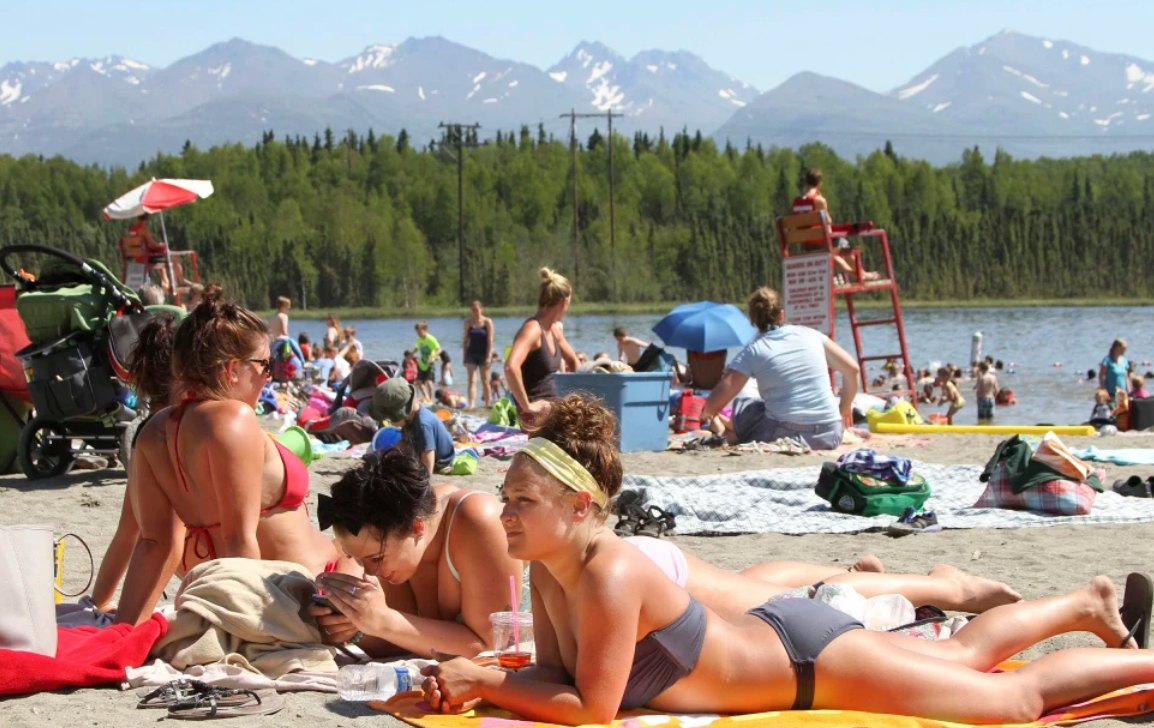
For the first time in its recorded history, Alaska has issued an official heat advisory, marking a historic milestone in the state’s climate record. This unprecedented alert reflects a growing trend of unusually high temperatures sweeping across the traditionally cool northern state.
Alaska, known for its cold Arctic climate, typically experiences mild summers with average highs ranging from 15°C to 25°C (59°F to 77°F) depending on the region. However, in late June 2025, meteorologists observed sustained temperatures climbing well above 30°C (86°F) in several interior and southern communities—including Fairbanks, Anchorage, and the Yukon River basin. The National Weather Service (NWS) issued the state’s first-ever heat advisory to warn residents about the dangers of prolonged heat exposure in an area unaccustomed to such warmth (NWS Alaska, 2025).
Heat advisories are common in lower latitudes, but in Alaska, they represent a new chapter in the climate narrative. The state’s infrastructure, public health systems, and ecosystems are not designed for extended hot spells. Key concerns include:
Several meteorological factors combined to produce this historic heat event:
 mkweather.com
"
Only in one of the last articles we have informed, that Alaska has experienced with extremely cold start of Summer 2025 /https://mkweather.com/deadhorse-in-...f-june-in-history-2-1c-28-2f-in-average-only//, but everything is going to change.
For the first time in its recorded history, Alaska has issued an official heat advisory, marking a historic milestone in the state’s climate record. This unprecedented alert reflects a growing trend of unusually high temperatures sweeping across the traditionally cool northern state.
 Breaking the Cool Barrier
Alaska, known for its cold Arctic climate, typically experiences mild summers with average highs ranging from 15°C to 25°C (59°F to 77°F) depending on the region. However, in late June 2025, meteorologists observed sustained temperatures climbing well above 30°C (86°F) in several interior and southern communities—including Fairbanks, Anchorage, and the Yukon River basin. The National Weather Service (NWS) issued the state’s first-ever heat advisory to warn residents about the dangers of prolonged heat exposure in an area unaccustomed to such warmth (NWS Alaska, 2025). Why Is This Significant?
Heat advisories are common in lower latitudes, but in Alaska, they represent a new chapter in the climate narrative. The state’s infrastructure, public health systems, and ecosystems are not designed for extended hot spells. Key concerns include:- Health risks: According to the Alaska Division of Public Health, cases of heat exhaustion and heat-related illnesses have surged during this heatwave, particularly affecting vulnerable groups like the elderly and children (Alaska DHSS, 2025).
- Wildfire danger: Hotter and drier conditions have increased wildfire risk across interior Alaska, as reported by the Alaska Wildfire Service’s seasonal outlook (Alaska Wildfire Service, 2025).
- Permafrost thaw: Scientists warn that thawing permafrost could destabilize infrastructure and release greenhouse gases, exacerbating warming (NOAA Arctic Report Card, 2025).
 What’s Driving the Heat?
Several meteorological factors combined to produce this historic heat event:- Jet stream alterations: A highly “wavy” jet stream pattern allowed warmer air masses to penetrate far north and stall over Alaska, as described in recent studies on Arctic atmospheric circulation (Francis and Vavrus, 2015).
- Arctic amplification: The Arctic is warming at more than twice the global average rate, intensifying heatwaves and disrupting weather patterns (NOAA Arctic Report Card, 2025).
- Persistent high pressure: A blocking high-pressure system brought clear skies and prolonged sunshine, further heating the surface.
Alaska Sees First-Ever Heat Advisory in History - mkweather
Only in one of the last articles we have informed, that Alaska has experienced with extremely cold start of Summer 2025
mkweather.com