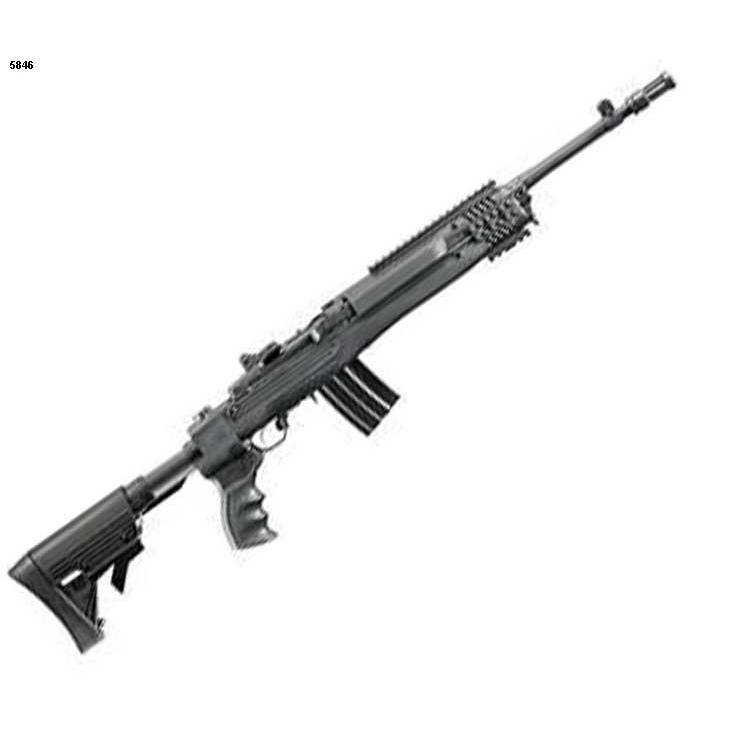
Price and endless modifications would be my guess. To some degree aesthetics, but that's a function of the sea of aftermarket parts out there. If the AR disappeared tomorrow it would have no impact on mass shootings.
I think we're both struggling to make sense of this because it doesn't really make any. It's a hail mary lawsuit.
If Remington knew how to identify those likely to shoot a place up they sure as fuck wouldn't target those folks. The extra handful of sales each year wouldn't be worth the backlash. And in the case of Sandy Hook, how could advertising be blamed when the kid was never the customer? The mom was. If anything this falls at the feet of parenting, but that doesn't fit the agenda.
No, it makes perfect sense to me. I've used trade practice violations plenty of times to find a liability angle that otherwise wouldn't exist. That's why those statutes are drafted. I tend to be looking at contractors but the angle is pretty similar. I think this is a very smart way to get around the PLCCA.
I struggle with explaining why the judge ruled that way without getting into a bunch of law that isn't directly related.
I read a little more and this part of the facts stands out. The shooter expressed a desire to join the Army Rangers when he turned 18. The mother bought the gun to connect with him. Later, he did not join the Rangers. However, he did use the weapon for his assault on the school.
So, if I'm raising a deceptive trade practices claim here's where it goes. Something in the advertising by Remington suggested to the mother than this weapon would align with her son's desire to be a highly trained soldier. There's no reason this Ct. mother would make that determination on her own. Basically, it's a non-military weapon being advertised as having military parallels thus appealing to people looking for military uses.
Which is basically what the lawyer alleges:
They contend that the defendants have sought to grow the AR-15 market by extolling the militaristic and assaultive qualities of their AR-15 rifles and, specifically, the weapon’s suitability for offensive combat missions.
In greater detail:
The plaintiffs further contend that the defendants unethically promoted their assault weapons for offensive, military style missions by publishing advertisements and distributing product catalogs that
(1) promote the AR-15 as ‘‘the uncompromising choice when you demand a rifle as mission adaptable as you are,’’
(2) depict soldiers moving on patrol through jungles, armed with Bushmaster rifles,
(3) feature the slogan ‘‘[w]hen you need to perform under pressure, Bushmaster delivers,’’ superimposed over the silhouette of a soldier holding his helmet against the backdrop of an American flag,
(4) tout the ‘‘military proven performance’’ of firearms like the XM15-E2S,
(5) promote civilian rifles as ‘‘the ultimate combat weapons system,’’
(6) invoke the unparalleled destructive power of their AR-15 rifles,
(7) claim that the most elite branches of the United States military, including the United States Navy SEALs, the United States Army Green Berets and Army Rangers, and other special forces, have used the AR-15, and
(8) depict a close-up of an AR-15 with the following slogan: ‘‘Forces of opposition, bow down. You are single-handedly outnumbered.’’
I have no idea if that's true but if it is then a trade practices claim makes sense. Still doesn't prove liability though.