
You are using an out of date browser. It may not display this or other websites correctly.
You should upgrade or use an alternative browser.
You should upgrade or use an alternative browser.
International Russia/Ukraine Megathread V10
- Thread starter Strychnine
- Start date
- Status
- Not open for further replies.


- Joined
- Oct 9, 2005
- Messages
- 8,614
- Reaction score
- 5,018
I don’t think it was a trap in the sense that they were lured into Bakhmut. Putin chose it and he wants it, and there is strategic reasoning behind it. I think Ukraine just saw and opportunity and is bleeding them out.
Before the Kharkiv offensive Bakhmut represented an obvious starting point to close an encirclement around a large portion of Eastern Ukraine; but that stopped being relevant the moment they lost the land in the north.
The current "strategic" reason for Russia taking Bakhmut is really dismal..... it actually represents the path of least resistance. War is largely about your ability to perform logistics and this is the one major areas where the Russian army has apparently learned from it's mistakes. They've realised the need to keep the logistics as simple as possible, and Bahkmut has several major highways and a railway line leading into their territory, so it's the easiest place for them to operate.
If they take Bakhmut it's unlikely to lead to a huge breakthrough. The next towns are Kramatorsk and Slovyansk which are much bigger and will take even more men to capture. The Russian prisons will be empty by that point and they'll be on about the 8th wave of mobilizations.

- Joined
- Nov 14, 2018
- Messages
- 27,351
- Reaction score
- 42,906
Some worry in Wall street journal that ukr might run out of anti-air missiles by may according to leaked documents.
https://www.wsj.com/amp/articles/uk...y-may-leaked-pentagon-documents-warn-b96b0655
https://www.wsj.com/amp/articles/uk...y-may-leaked-pentagon-documents-warn-b96b0655

- Joined
- Mar 9, 2013
- Messages
- 37,020
- Reaction score
- 36,740
"A vacation for you, comrade!"the only part of russia they'll be leaving is their apartment windows

- Joined
- Aug 20, 2009
- Messages
- 51,000
- Reaction score
- 36,047
It would be interesting if such documents were among the ones stashed at Mar a Lago but that's just idle speculation. In any event, it's funny to me how people are willing to accept stuff like this at face value, not questioning at all their authenticity--when it suits them.Russians can't even get their propaganda right...
https://www.yahoo.com/news/documents-appear-classified-us-nato-010940311.html
"
Documents that appear to be classified US-NATO war plans were leaked or stolen and can now be found on Twitter and Telegram
41
Charles R. Davis
Thu, April 6, 2023 at 6:09 PM PDT

soldier from a Ukrainian assault brigade walks across a muddy road used to transport and position British made L118 105mm Howitzers on March 4, 2023 near Bakhmut, Ukraine.John Moore/Getty Images
Documents that appear to be classified plans that detail Ukraine's combat readiness and preparations for an upcoming offensive against Russia were leaked or stolen and appeared this week on social media, The New York Times reported Thursday, with the outlet describing them as "secret American and NATO plans."
- Apparent classified US-Ukraine war plans were leaked or stolen, The New York Times reported Thursday.
- The documents, which may have been doctored, appeared on Twitter and Telegram.
- A spokesperson for the Department of Defense said the matter is under review.
One document appears to detail the expenditure rates of HIMARS artillery systems provided by the US, information that has been a closely guarded secret, while another describes the state of a dozen Ukrainian combat brigades, including their equipment and dates for when they might be ready to take on Russian forces, the Times noted.
The documents are currently circulating on Twitter and Telegram.
"We are aware of the reports of social media posts and the department is reviewing the matter," a Pentagon spokesperson told the Times.
But experts have cautioned that the documents, while seemingly authentic, may have been altered for propaganda purposes. One slide, purportedly from a presentation, provides an estimate for Russian soldiers killed in Ukraine — as many as 17,500, it states — that is well below the figure Western governments have cited publicly. The British Ministry of Defense, for example, said in February that between 40,000 and 60,000 Russian soldiers had likely been killed since President Vladimir Putin ordered a full-scale invasion of Ukraine last year.
"They've obviously been doctored," Michael Weiss, a Russia expert and senior correspondent at Yahoo News, posted on social media. "Still bad that they were leaked — or stolen."
"
Last edited:

- Joined
- Feb 6, 2017
- Messages
- 9,036
- Reaction score
- 6,327
Museum/parade tank offensive is coming...
I see they tried to get the turret to imitate a drone.
Let me guess, got airborne but IDed a coupla Russians and came down n squashed them ?
Denazification a success.

- Joined
- Dec 8, 2006
- Messages
- 67,678
- Reaction score
- 101,481
The Russians have now achieved "Tetris" levels of cope cage technology.
- Joined
- Dec 8, 2006
- Messages
- 67,678
- Reaction score
- 101,481
Russia posted a $29 billion deficit in the first quarter as energy revenue plummets — and it could spell trouble for the country's military bills

Russia's energy revenues may not be able to foot its military bills for long— the country just posted a $29 billion deficit in the first quarter. Contributor/Getty Images
"Russia's spending jumped 34% in 1Q to 8.1 trillion rubles, or $99 billion, amid the Ukraine war.
The Kremlin has wildly reversed a 1.13-trillion-ruble, or $14 billion, surplus in the first quarter of 2022, to post a 2.4 trillion ruble quarterly budget deficit this year as the country's expenditures exceeded its revenues.
Government income declined nearly 21% to 5.7 trillion rubles during the quarter compared to a year ago, per data released by Russia's finance ministry on Friday. In particular, Russia posted a 45% plunge in energy revenues to 1.64 trillion rubles due to a fall in prices for Russia's flagship Urals oil grade and a decline in natural gas exports.
The Russian finance ministry did not explain why expenditures spiked so sharply, but the country's defense spending went over budget by 54% in 2022, according to Gaidar Institute, an independent Moscow-based think tank, Reuters reported on April 4.
The country is likely to continue plowing money into defense and security, with combined spending expected to hit 9.4 trillion rubles in 2023, according to a Reuters budget analysis in November. That's nearly one-third of the national budget.
The Kremlin plans to post a deficit of no more than 2% of its GDP in 2023, Finance Minister Anton Siluanov told the state-owned Rossiya 24 news channel on February 17, per Reuters. However, analysts told the news agency the deficit will likely exceed 2%, with one estimate coming in in the 4% to 5% range."
Russia posted a $29 billion deficit in the first quarter as energy revenue plummets — and it could spell trouble for the country's military bills (msn.com)
Yeah, Pres. Putin took the passports of the Oligarchs for good reason. He's not going to let them take "his" money and flee the country.
Russia's energy revenues may not be able to foot its military bills for long— the country just posted a $29 billion deficit in the first quarter. Contributor/Getty Images
"Russia's spending jumped 34% in 1Q to 8.1 trillion rubles, or $99 billion, amid the Ukraine war.
- However, energy revenues plunged 45% to 1.6 trillion rubles due to boycotts and sanctions.
- As a result, Russia posted a deficit of 2.4 trillion rubles in the first quarter of 2023.
The Kremlin has wildly reversed a 1.13-trillion-ruble, or $14 billion, surplus in the first quarter of 2022, to post a 2.4 trillion ruble quarterly budget deficit this year as the country's expenditures exceeded its revenues.
Government income declined nearly 21% to 5.7 trillion rubles during the quarter compared to a year ago, per data released by Russia's finance ministry on Friday. In particular, Russia posted a 45% plunge in energy revenues to 1.64 trillion rubles due to a fall in prices for Russia's flagship Urals oil grade and a decline in natural gas exports.
The Russian finance ministry did not explain why expenditures spiked so sharply, but the country's defense spending went over budget by 54% in 2022, according to Gaidar Institute, an independent Moscow-based think tank, Reuters reported on April 4.
The country is likely to continue plowing money into defense and security, with combined spending expected to hit 9.4 trillion rubles in 2023, according to a Reuters budget analysis in November. That's nearly one-third of the national budget.
The Kremlin plans to post a deficit of no more than 2% of its GDP in 2023, Finance Minister Anton Siluanov told the state-owned Rossiya 24 news channel on February 17, per Reuters. However, analysts told the news agency the deficit will likely exceed 2%, with one estimate coming in in the 4% to 5% range."
Russia posted a $29 billion deficit in the first quarter as energy revenue plummets — and it could spell trouble for the country's military bills (msn.com)
Yeah, Pres. Putin took the passports of the Oligarchs for good reason. He's not going to let them take "his" money and flee the country.
Last edited:
- Joined
- Mar 9, 2013
- Messages
- 37,020
- Reaction score
- 36,740
No no no, @grimballer assures me their economy is thriving and it's the West which is teetering on the brink of ruinRussia posted a $29 billion deficit in the first quarter as energy revenue plummets — and it could spell trouble for the country's military bills
Russia's energy revenues may not be able to foot its military bills for long— the country just posted a $29 billion deficit in the first quarter. Contributor/Getty Images
"Russia's spending jumped 34% in 1Q to 8.1 trillion rubles, or $99 billion, amid the Ukraine war.
Russia's falling energy revenues may not be able to foot its military bills for long — the country's just posted an almost $30 billion deficit in the first quarter.
- However, energy revenues plunged 45% to 1.6 trillion rubles due to boycotts and sanctions.
- As a result, Russia posted a deficit of 2.4 trillion rubles in the first quarter of 2023.
The Kremlin has wildly reversed a 1.13-trillion-ruble, or $14 billion, surplus in the first quarter of 2022, to post a 2.4 trillion ruble quarterly budget deficit this year as the country's expenditures exceeded its revenues.
Government income declined nearly 21% to 5.7 trillion rubles during the quarter compared to a year ago, per data released by Russia's finance ministry on Friday. In particular, Russia posted a 45% plunge in energy revenues to 1.64 trillion rubles due to a fall in prices for Russia's flagship Urals oil grade and a decline in natural gas exports.
The Russian finance ministry did not explain why expenditures spiked so sharply, but the country's defense spending went over budget by 54% in 2022, according to Gaidar Institute, an independent Moscow-based think tank, Reuters reported on April 4.
The country is likely to continue plowing money into defense and security, with combined spending expected to hit 9.4 trillion rubles in 2023, according to a Reuters budget analysis in November. That's nearly one-third of the national budget.
The Kremlin plans to post a deficit of no more than 2% of its GDP in 2023, Finance Minister Anton Siluanov told the state-owned Rossiya 24 news channel on February 17, per Reuters. However, analysts told the news agency the deficit will likely exceed 2%, with one estimate coming in in the 4% to 5% range."
Russia posted a $29 billion deficit in the first quarter as energy revenue plummets — and it could spell trouble for the country's military bills (msn.com)
Yeah, Pres. Putin took the passports of the Oligarchs for good reason. He's not going to let them take "his" money.
And that must be true, he read it on the dirty old sack his rotten turnips came in last month

- Joined
- May 11, 2014
- Messages
- 18,590
- Reaction score
- 39,231
dont forget @cottagecheesefan made a whole thread dedicated to how great the russian economy is. Rubles coming in so fast we couldn't count them.No no no, @grimballer assures me their economy is thriving and it's the West which is teetering on the brink of ruin
And that must be true, he read it on the dirty old sack his rotten turnips came in last month
- Joined
- Dec 8, 2006
- Messages
- 67,678
- Reaction score
- 101,481
No no no, @grimballer assures me their economy is thriving and it's the West which is teetering on the brink of ruin
And that must be true, he read it on the dirty old sack his rotten turnips came in last month


- Joined
- Feb 13, 2006
- Messages
- 10,667
- Reaction score
- 11,559
I hope they find whoever stole/leaked it.
https://www.yahoo.com/news/latest-leaked-documents-different-past-115554708.html
"
How the Latest Leaked Documents Are Different From Past Breaches
2.2k
David E. Sanger
Mon, April 10, 2023 at 4:55 AM PDT

The Pentagon in Arlington, Va., on Sept. 7, 2021. (Stefani Reynolds/The New York Times)
When WikiLeaks spilled a huge trove of State Department cables 13 years ago, it gave the world a sense of what American diplomats do each day — the sharp elbows, the doubts about wavering allies and the glimpses at how Washington was preparing for North Korea’s eventual collapse and Iran’s nuclear breakout.
When Edward Snowden swept up the National Security Agency’s secrets three years later, Americans suddenly discovered the scope of how the digital age had ushered in a remarkable new era of surveillance by the agency — enabling it to pierce China’s telecommunications industry and to drill into Google’s servers overseas to pick up foreign communications.
Sign up for The Morning newsletter from the New York Times
The cache of 100 or so newly leaked briefing slides of operational data on the war in Ukraine is distinctly different. The data revealed so far is less comprehensive than those vast secret archives but far more timely. And it is the immediate salience of the intelligence that most worries White House and Pentagon officials.
Some of the most sensitive material — maps of Ukrainian air defenses and a deep dive into South Korea’s secret plans to deliver 330,000 rounds of much-needed ammunition in time for Ukraine’s spring counteroffensive — is revealed in documents that appear to be barely 40 days old.
It is the freshness of the “secret” and “top secret” documents, and the hints they hold for operations to come, that make these disclosures particularly damaging, administration officials say.
On Sunday, Sabrina Singh, a Pentagon spokesperson, said U.S. officials had notified congressional committees of the leak and referred the matter to the Justice Department, which had opened an investigation.
The 100-plus pages of slides and briefing documents leave no doubt about how deeply enmeshed the United States is in the day-to-day conduct of the war, providing the precise intelligence and logistics that help explain Ukraine’s success thus far. While President Joe Biden has barred U.S. troops from firing directly on Russian targets, and blocked sending weapons that could reach deep into Russian territory, the documents make clear that a year into the invasion, the United States is heavily entangled in almost everything else.
The U.S. is providing detailed targeting data and coordinating the long, complex logistical train that delivers weapons to the Ukrainians. And as a Feb. 22 document makes clear, U.S. officials are planning ahead for a year in which the battle for the Donbas is “likely heading toward a stalemate” that will frustrate Russian President Vladimir Putin’s goal of capturing the region — and Ukraine’s goal of expelling the invaders.
One senior Western intelligence official summed up the disclosures as “a nightmare.” Dmitri Alperovitch, the Russia-born chair of Silverado Policy Accelerator, who is best known for pioneering work in cybersecurity, said Sunday that he feared there were “a number of ways this can be damaging.” He said that included the possibility that Russian intelligence is able to use the pages, spread out over Twitter and Telegram, “to figure out how we are collecting” the plans of the GRU, Russia’s military intelligence service, and the movement of military units.
In fact, the documents released so far are a brief snapshot of how the United States viewed the war in Ukraine. Many pages seem to come right out of the briefing books circulating among the Joint Chiefs of Staff, and in a few cases updates from the CIA’s operations center. They are a combination of the current order of battle and — perhaps most valuable to Russian military planners — U.S. projections of where the air defenses being rushed into Ukraine could be located next month.
Mixed in are a series of early warnings about how Russia might retaliate, beyond Ukraine, if the war drags on. One particularly ominous CIA document refers to a pro-Russian hacking group that had successfully broken into Canada’s gas distribution network and was “receiving instructions from a presumed Federal Security Service (FSB) officer to maintain network access to Canadian gas infrastructure and wait for further instruction.” So far there is no evidence that Russian actors have begun a destructive attack, but that was the explicit fear expressed in the document.
Because such warnings are so sensitive, many of the “top secret” documents are limited to American officials or to the “Five Eyes” — the intelligence alliance of the United States, Britain, Australia, New Zealand and Canada. That group has an informal agreement not to spy on the other members. But it clearly does not apply to other American allies and partners. There is evidence that the United States has plugged itself into Ukrainian President Volodymyr Zelenskyy’s internal conversations and those of even the closest U.S. allies, such as South Korea.
In a dispatch very reminiscent of the 2010 WikiLeaks disclosures, one document based on what is delicately referred to as “signals intelligence” describes the internal debate in South Korea over how to handle American pressure to send more lethal aid to Ukraine, which would violate the country’s practice of not directly sending weapons into a war zone. It reports that South Korea’s president, Yoon Suk Yeol, was concerned that Biden might call him to press for greater contributions to Ukraine’s military.
It is an enormously sensitive subject among South Korean officials. During a recent visit to Seoul, the South Korean capital, before the leaked documents appeared, government officials dodged a reporter’s questions about whether they were planning to send 155-mm artillery rounds, which they produce in large quantities, to aid in the war effort. One official said South Korea did not want to violate its own policies, or risk its delicate relationship with Russia.
Now the world has seen the Pentagon’s “delivery timeline” for sea shipments of those shells, along with estimates of the cost of the shipments, $26 million.
With every disclosure of secret documents, of course, there are fears of lasting damage, sometimes overblown. That happened in 2010, when The New York Times started publishing a series called “State’s Secrets,” detailing and analyzing selected documents from the trove of cables taken by Chelsea Manning, then an Army private in Iraq, and published by Julian Assange, the WikiLeaks founder. Soon after the first articles were published, Secretary of State Hillary Clinton expressed fear that no one would ever talk to U.S. diplomats again.
“In addition to endangering particular individuals, disclosures like these tear at the fabric of the proper function of responsible government,” she told reporters in the Treaty Room of the State Department. Of course, they did keep talking — although many foreign officials say that when they speak today, they edit themselves with the knowledge that they may be quoted in department cables that leak in the future.
When Snowden released vast amounts of data from the National Security Agency, collected with a $100 piece of software that just gathered up archives he had access to at a facility in Hawaii, there was similar fear of setbacks in intelligence collection. The agency spent years altering programs, at a cost of hundreds of millions of dollars, and officials say they are still monitoring the damage a decade later. In September, Putin granted Snowden, a low-level intelligence contractor, full Russian citizenship; the United States is still seeking to bring him back to face charges.
Both Manning and Snowden said they were motivated by a desire to reveal what they viewed as transgressions by the United States. “This time it doesn’t look ideological,” Alperovitch said. The first appearance of some of the documents seems to have taken place on gaming platforms, perhaps to settle an online argument over the status of the fight in Ukraine.
“Think about that,” Alperovitch said. “An internet fight that ends up in a massive intelligence disaster.”
https://www.yahoo.com/news/latest-leaked-documents-different-past-115554708.html
"
How the Latest Leaked Documents Are Different From Past Breaches
2.2k
David E. Sanger
Mon, April 10, 2023 at 4:55 AM PDT
The Pentagon in Arlington, Va., on Sept. 7, 2021. (Stefani Reynolds/The New York Times)
When WikiLeaks spilled a huge trove of State Department cables 13 years ago, it gave the world a sense of what American diplomats do each day — the sharp elbows, the doubts about wavering allies and the glimpses at how Washington was preparing for North Korea’s eventual collapse and Iran’s nuclear breakout.
When Edward Snowden swept up the National Security Agency’s secrets three years later, Americans suddenly discovered the scope of how the digital age had ushered in a remarkable new era of surveillance by the agency — enabling it to pierce China’s telecommunications industry and to drill into Google’s servers overseas to pick up foreign communications.
Sign up for The Morning newsletter from the New York Times
The cache of 100 or so newly leaked briefing slides of operational data on the war in Ukraine is distinctly different. The data revealed so far is less comprehensive than those vast secret archives but far more timely. And it is the immediate salience of the intelligence that most worries White House and Pentagon officials.
Some of the most sensitive material — maps of Ukrainian air defenses and a deep dive into South Korea’s secret plans to deliver 330,000 rounds of much-needed ammunition in time for Ukraine’s spring counteroffensive — is revealed in documents that appear to be barely 40 days old.
It is the freshness of the “secret” and “top secret” documents, and the hints they hold for operations to come, that make these disclosures particularly damaging, administration officials say.
On Sunday, Sabrina Singh, a Pentagon spokesperson, said U.S. officials had notified congressional committees of the leak and referred the matter to the Justice Department, which had opened an investigation.
The 100-plus pages of slides and briefing documents leave no doubt about how deeply enmeshed the United States is in the day-to-day conduct of the war, providing the precise intelligence and logistics that help explain Ukraine’s success thus far. While President Joe Biden has barred U.S. troops from firing directly on Russian targets, and blocked sending weapons that could reach deep into Russian territory, the documents make clear that a year into the invasion, the United States is heavily entangled in almost everything else.
The U.S. is providing detailed targeting data and coordinating the long, complex logistical train that delivers weapons to the Ukrainians. And as a Feb. 22 document makes clear, U.S. officials are planning ahead for a year in which the battle for the Donbas is “likely heading toward a stalemate” that will frustrate Russian President Vladimir Putin’s goal of capturing the region — and Ukraine’s goal of expelling the invaders.
One senior Western intelligence official summed up the disclosures as “a nightmare.” Dmitri Alperovitch, the Russia-born chair of Silverado Policy Accelerator, who is best known for pioneering work in cybersecurity, said Sunday that he feared there were “a number of ways this can be damaging.” He said that included the possibility that Russian intelligence is able to use the pages, spread out over Twitter and Telegram, “to figure out how we are collecting” the plans of the GRU, Russia’s military intelligence service, and the movement of military units.
In fact, the documents released so far are a brief snapshot of how the United States viewed the war in Ukraine. Many pages seem to come right out of the briefing books circulating among the Joint Chiefs of Staff, and in a few cases updates from the CIA’s operations center. They are a combination of the current order of battle and — perhaps most valuable to Russian military planners — U.S. projections of where the air defenses being rushed into Ukraine could be located next month.
Mixed in are a series of early warnings about how Russia might retaliate, beyond Ukraine, if the war drags on. One particularly ominous CIA document refers to a pro-Russian hacking group that had successfully broken into Canada’s gas distribution network and was “receiving instructions from a presumed Federal Security Service (FSB) officer to maintain network access to Canadian gas infrastructure and wait for further instruction.” So far there is no evidence that Russian actors have begun a destructive attack, but that was the explicit fear expressed in the document.
Because such warnings are so sensitive, many of the “top secret” documents are limited to American officials or to the “Five Eyes” — the intelligence alliance of the United States, Britain, Australia, New Zealand and Canada. That group has an informal agreement not to spy on the other members. But it clearly does not apply to other American allies and partners. There is evidence that the United States has plugged itself into Ukrainian President Volodymyr Zelenskyy’s internal conversations and those of even the closest U.S. allies, such as South Korea.
In a dispatch very reminiscent of the 2010 WikiLeaks disclosures, one document based on what is delicately referred to as “signals intelligence” describes the internal debate in South Korea over how to handle American pressure to send more lethal aid to Ukraine, which would violate the country’s practice of not directly sending weapons into a war zone. It reports that South Korea’s president, Yoon Suk Yeol, was concerned that Biden might call him to press for greater contributions to Ukraine’s military.
It is an enormously sensitive subject among South Korean officials. During a recent visit to Seoul, the South Korean capital, before the leaked documents appeared, government officials dodged a reporter’s questions about whether they were planning to send 155-mm artillery rounds, which they produce in large quantities, to aid in the war effort. One official said South Korea did not want to violate its own policies, or risk its delicate relationship with Russia.
Now the world has seen the Pentagon’s “delivery timeline” for sea shipments of those shells, along with estimates of the cost of the shipments, $26 million.
With every disclosure of secret documents, of course, there are fears of lasting damage, sometimes overblown. That happened in 2010, when The New York Times started publishing a series called “State’s Secrets,” detailing and analyzing selected documents from the trove of cables taken by Chelsea Manning, then an Army private in Iraq, and published by Julian Assange, the WikiLeaks founder. Soon after the first articles were published, Secretary of State Hillary Clinton expressed fear that no one would ever talk to U.S. diplomats again.
“In addition to endangering particular individuals, disclosures like these tear at the fabric of the proper function of responsible government,” she told reporters in the Treaty Room of the State Department. Of course, they did keep talking — although many foreign officials say that when they speak today, they edit themselves with the knowledge that they may be quoted in department cables that leak in the future.
When Snowden released vast amounts of data from the National Security Agency, collected with a $100 piece of software that just gathered up archives he had access to at a facility in Hawaii, there was similar fear of setbacks in intelligence collection. The agency spent years altering programs, at a cost of hundreds of millions of dollars, and officials say they are still monitoring the damage a decade later. In September, Putin granted Snowden, a low-level intelligence contractor, full Russian citizenship; the United States is still seeking to bring him back to face charges.
Both Manning and Snowden said they were motivated by a desire to reveal what they viewed as transgressions by the United States. “This time it doesn’t look ideological,” Alperovitch said. The first appearance of some of the documents seems to have taken place on gaming platforms, perhaps to settle an online argument over the status of the fight in Ukraine.
“Think about that,” Alperovitch said. “An internet fight that ends up in a massive intelligence disaster.”

- Joined
- Dec 18, 2014
- Messages
- 4,978
- Reaction score
- 8,517
No no no, @grimballer assures me their economy is thriving and it's the West which is teetering on the brink of ruin
And that must be true, he read it on the dirty old sack his rotten turnips came in last month
Fake news for sure, Russia is doing even better then before the sanctions and boycotts, not to mention spending a 3rd of their money of Military. It's weird but somehow they are doing great....according to some.

- Joined
- Mar 7, 2006
- Messages
- 27,664
- Reaction score
- 78,846
- Joined
- Dec 18, 2014
- Messages
- 4,978
- Reaction score
- 8,517
I hope they find whoever stole/leaked it.
https://www.yahoo.com/news/latest-leaked-documents-different-past-115554708.html
"
How the Latest Leaked Documents Are Different From Past Breaches
2.2k
David E. Sanger
Mon, April 10, 2023 at 4:55 AM PDT
The Pentagon in Arlington, Va., on Sept. 7, 2021. (Stefani Reynolds/The New York Times)
When WikiLeaks spilled a huge trove of State Department cables 13 years ago, it gave the world a sense of what American diplomats do each day — the sharp elbows, the doubts about wavering allies and the glimpses at how Washington was preparing for North Korea’s eventual collapse and Iran’s nuclear breakout.
When Edward Snowden swept up the National Security Agency’s secrets three years later, Americans suddenly discovered the scope of how the digital age had ushered in a remarkable new era of surveillance by the agency — enabling it to pierce China’s telecommunications industry and to drill into Google’s servers overseas to pick up foreign communications.
Sign up for The Morning newsletter from the New York Times
The cache of 100 or so newly leaked briefing slides of operational data on the war in Ukraine is distinctly different. The data revealed so far is less comprehensive than those vast secret archives but far more timely. And it is the immediate salience of the intelligence that most worries White House and Pentagon officials.
Some of the most sensitive material — maps of Ukrainian air defenses and a deep dive into South Korea’s secret plans to deliver 330,000 rounds of much-needed ammunition in time for Ukraine’s spring counteroffensive — is revealed in documents that appear to be barely 40 days old.
It is the freshness of the “secret” and “top secret” documents, and the hints they hold for operations to come, that make these disclosures particularly damaging, administration officials say.
On Sunday, Sabrina Singh, a Pentagon spokesperson, said U.S. officials had notified congressional committees of the leak and referred the matter to the Justice Department, which had opened an investigation.
The 100-plus pages of slides and briefing documents leave no doubt about how deeply enmeshed the United States is in the day-to-day conduct of the war, providing the precise intelligence and logistics that help explain Ukraine’s success thus far. While President Joe Biden has barred U.S. troops from firing directly on Russian targets, and blocked sending weapons that could reach deep into Russian territory, the documents make clear that a year into the invasion, the United States is heavily entangled in almost everything else.
The U.S. is providing detailed targeting data and coordinating the long, complex logistical train that delivers weapons to the Ukrainians. And as a Feb. 22 document makes clear, U.S. officials are planning ahead for a year in which the battle for the Donbas is “likely heading toward a stalemate” that will frustrate Russian President Vladimir Putin’s goal of capturing the region — and Ukraine’s goal of expelling the invaders.
One senior Western intelligence official summed up the disclosures as “a nightmare.” Dmitri Alperovitch, the Russia-born chair of Silverado Policy Accelerator, who is best known for pioneering work in cybersecurity, said Sunday that he feared there were “a number of ways this can be damaging.” He said that included the possibility that Russian intelligence is able to use the pages, spread out over Twitter and Telegram, “to figure out how we are collecting” the plans of the GRU, Russia’s military intelligence service, and the movement of military units.
In fact, the documents released so far are a brief snapshot of how the United States viewed the war in Ukraine. Many pages seem to come right out of the briefing books circulating among the Joint Chiefs of Staff, and in a few cases updates from the CIA’s operations center. They are a combination of the current order of battle and — perhaps most valuable to Russian military planners — U.S. projections of where the air defenses being rushed into Ukraine could be located next month.
Mixed in are a series of early warnings about how Russia might retaliate, beyond Ukraine, if the war drags on. One particularly ominous CIA document refers to a pro-Russian hacking group that had successfully broken into Canada’s gas distribution network and was “receiving instructions from a presumed Federal Security Service (FSB) officer to maintain network access to Canadian gas infrastructure and wait for further instruction.” So far there is no evidence that Russian actors have begun a destructive attack, but that was the explicit fear expressed in the document.
Because such warnings are so sensitive, many of the “top secret” documents are limited to American officials or to the “Five Eyes” — the intelligence alliance of the United States, Britain, Australia, New Zealand and Canada. That group has an informal agreement not to spy on the other members. But it clearly does not apply to other American allies and partners. There is evidence that the United States has plugged itself into Ukrainian President Volodymyr Zelenskyy’s internal conversations and those of even the closest U.S. allies, such as South Korea.
In a dispatch very reminiscent of the 2010 WikiLeaks disclosures, one document based on what is delicately referred to as “signals intelligence” describes the internal debate in South Korea over how to handle American pressure to send more lethal aid to Ukraine, which would violate the country’s practice of not directly sending weapons into a war zone. It reports that South Korea’s president, Yoon Suk Yeol, was concerned that Biden might call him to press for greater contributions to Ukraine’s military.
It is an enormously sensitive subject among South Korean officials. During a recent visit to Seoul, the South Korean capital, before the leaked documents appeared, government officials dodged a reporter’s questions about whether they were planning to send 155-mm artillery rounds, which they produce in large quantities, to aid in the war effort. One official said South Korea did not want to violate its own policies, or risk its delicate relationship with Russia.
Now the world has seen the Pentagon’s “delivery timeline” for sea shipments of those shells, along with estimates of the cost of the shipments, $26 million.
With every disclosure of secret documents, of course, there are fears of lasting damage, sometimes overblown. That happened in 2010, when The New York Times started publishing a series called “State’s Secrets,” detailing and analyzing selected documents from the trove of cables taken by Chelsea Manning, then an Army private in Iraq, and published by Julian Assange, the WikiLeaks founder. Soon after the first articles were published, Secretary of State Hillary Clinton expressed fear that no one would ever talk to U.S. diplomats again.
“In addition to endangering particular individuals, disclosures like these tear at the fabric of the proper function of responsible government,” she told reporters in the Treaty Room of the State Department. Of course, they did keep talking — although many foreign officials say that when they speak today, they edit themselves with the knowledge that they may be quoted in department cables that leak in the future.
When Snowden released vast amounts of data from the National Security Agency, collected with a $100 piece of software that just gathered up archives he had access to at a facility in Hawaii, there was similar fear of setbacks in intelligence collection. The agency spent years altering programs, at a cost of hundreds of millions of dollars, and officials say they are still monitoring the damage a decade later. In September, Putin granted Snowden, a low-level intelligence contractor, full Russian citizenship; the United States is still seeking to bring him back to face charges.
Both Manning and Snowden said they were motivated by a desire to reveal what they viewed as transgressions by the United States. “This time it doesn’t look ideological,” Alperovitch said. The first appearance of some of the documents seems to have taken place on gaming platforms, perhaps to settle an online argument over the status of the fight in Ukraine.
“Think about that,” Alperovitch said. “An internet fight that ends up in a massive intelligence disaster.”
The thing with the leaks is that there has been so many recently both sides will take any leak with a grain of salt unless otherwise proven. Leaks have always been a part of any military gameplan especially when a massive counter offensive is involved.

- Joined
- Jan 20, 2004
- Messages
- 34,944
- Reaction score
- 28,152
He seen it on 4Ch next to the leaked documents lol.No no no, @grimballer assures me their economy is thriving and it's the West which is teetering on the brink of ruin
And that must be true, he read it on the dirty old sack his rotten turnips came in last month
Last edited:
- Joined
- Jan 20, 2004
- Messages
- 34,944
- Reaction score
- 28,152
Goddamn, looks like a scene from Escape from New York

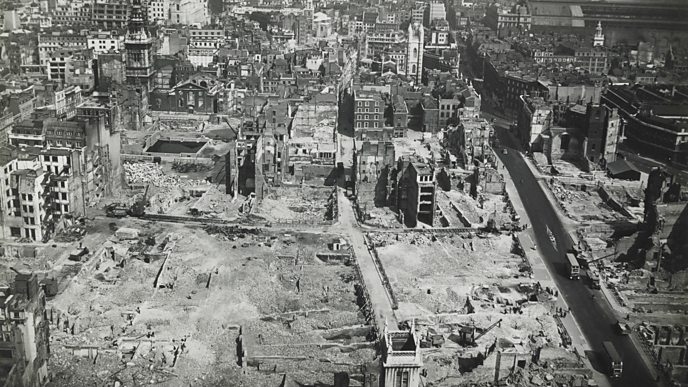
Looks like Berlin and London after the war such extreme destruction from WW2. Dams were blown up and rails where flooded with thousands hiding in them because of Hitler see similarities. My father was fighting in the area and Hitler had his own people hiding in the subway and he ordered the retaining wall blown up to drown 1,000's of his own people. My father was in the area afterwards and saw the carnage of bodies floating to the surface horrible.
London after WW2 German bombing.
Last edited:
- Status
- Not open for further replies.


