
- Joined
- Aug 6, 2020
- Messages
- 5,565
- Reaction score
- 9,677
Why stop at guns? Scorpion had hellfire and a kunai shot out of his palm.Why stop at knives? Stryker had a gun

Why stop at guns? Scorpion had hellfire and a kunai shot out of his palm.Why stop at knives? Stryker had a gun
Tko via calf kick.20 bucks these same people want to ban calf kicks

We've seen more injuries from knee bars. Why is this a thing because Khalil was able to do actual damage with it


lolThere's always boxing.
Personally, I want everything legal. Even biting and knives.

They should ban concussions.So can a concussion

that's way too hard to observe and police. this is ridiculous. if you can't enforce a ban on eye pokes, how can you enforce one on oblique leg kicks, much less ones to a specific side of the knee?the one that landed for roundtree was to the side of the knee. i think when its to the front its okay. its a quick snap that often does not deal serious damage and usually less than a knee bar would. to the side though there is nothing the leg can do to flex or brace for that. its hard to land how he did but that strike should be banned. to the side of the knee like roundtree did. otherwise its fine. they never end from it hitting the front of the knee.


Calf kicks don't potentially destroy a joint..... so, no.20 bucks these same people want to ban calf kicks

The oblique kick appears in Savate as the chasse frontal. It is used like a jab by many practitioners and is an exceedingly common technique, with the knee being a very frequent target during bouts. This is taken for granted. Yet despite this, there aren't many savateurs walking (hobbling?) around Europe with blown-out knees.
Everytime I ask why this is or why some fighters seem to be able to defend the oblique kick just fine while others are not like in that compilation that was posted of its users getting viciously countered, all I get is crickets chirping from the Ban Crowd.
I don't understand this mentality at all. I'll be the first to acknowledge that a lot of people who argue against banning it do so in a very wrong-headed manner (and vice versa) that does not properly acknowledge and address the points being raised by those who express concerns about the strike. But why is it inherently a hard man mentality to support the continued legalization of a technique that can break a leg? Plenty of "legitimate" MMA techniques target limbs with the intent to disable them and if the damage to the opponent is only short term rather than long-term, then it's more a happy accident than anything. Not to mention the techniques intended to knock them unconscious or fracture facial bones. Yet this one gets labeled as dirty. It all seems very arbitrary.
It's not a hard man thing at all to defend it with logic, yours is a great post doing that. That bit from me was for the wannabe bros who are like "only pussies don't want their leg broken".
My issue with it in MMA is it's a lot busier than savate in terms of different fighters)styles, it's always on the feet and fighters are always in stance. For example savate for self defense has elbow, knees, throws that are removed for sport fighting. What you have to defend and are prepared to defend allows you to stay in a nice stance.
The other thing is with more traditional martial arts, respect and not wanting to hurt the opponent. You'd never see anyone intentionally break the knee outside of MMA or Cobra Kai in a sport.
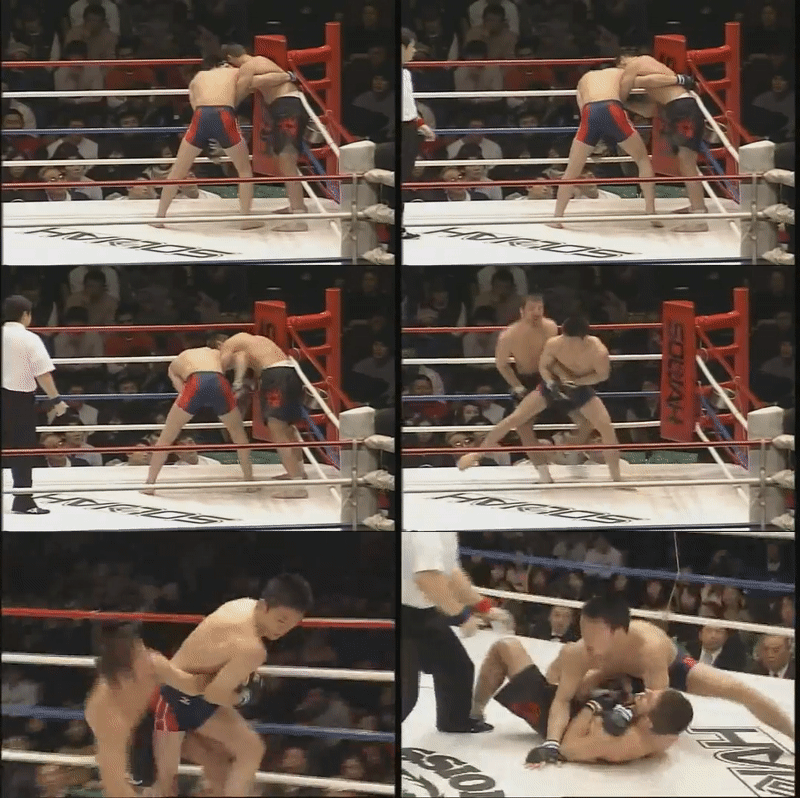


Golf clubs should be banned from the UFC.Go watch golf instead
you can enforce eye poke rule because accidents happen. it is mostly due to glove design that the eye pokes happen so often and so brutally. there is a fix for it. you are right it would be hard to enforce to that degreee but it would make guys more cautious in throwing it recklessly. so roundtrees win would have been a dq because it was blatantthat's way too hard to observe and police. this is ridiculous. if you can't enforce a ban on eye pokes, how can you enforce one on oblique leg kicks, much less ones to a specific side of the knee?

It's not a hard man thing at all to defend it with logic, yours is a great post doing that. That bit from me was for the wannabe bros who are like "only pussies don't want their leg broken".
My issue with it in MMA is it's a lot busier than savate in terms of different fighters)styles, it's always on the feet and fighters are always in stance. For example savate for self defense has elbow, knees, throws that are removed for sport fighting. What you have to defend and are prepared to defend allows you to stay in a nice stance.
The other thing is with more traditional martial arts, respect and not wanting to hurt the opponent. You'd never see anyone intentionally break the knee outside of MMA or Cobra Kai in a sport.

The oblique kick appears in Savate as the chasse frontal. It is used like a jab by many practitioners and is an exceedingly common technique, with the knee being a very frequent target during bouts. This is taken for granted. Yet despite this, there aren't many savateurs walking (hobbling?) around Europe with blown-out knees.
Everytime I ask why this is or why some fighters seem to be able to defend the oblique kick just fine while others are not like in that compilation that was posted of its users getting viciously countered, all I get is crickets chirping from the Ban Crowd.
I don't understand this mentality at all. I'll be the first to acknowledge that a lot of people who argue against banning it do so in a very wrong-headed manner (and vice versa) that does not properly acknowledge and address the points being raised by those who express concerns about the strike. But why is it inherently a hard man mentality to support the continued legalization of a technique that can break a leg? Plenty of "legitimate" MMA techniques target limbs with the intent to disable them and if the damage to the opponent is only short term rather than long-term, then it's more a happy accident than anything. Not to mention the techniques intended to knock them unconscious or fracture facial bones. Yet this one gets labeled as dirty. It all seems very arbitrary.


