• Xenforo Cloud is upgrading us to version 2.3.8 on Monday February 16th, 2026 at 12:00 AM PST. Expect a temporary downtime during this process. More info here

How could asceticism have evolved?

Tycho- Taylor's Version

Wild ferocious creature
Platinum Member
Joined
Mar 7, 2010
Messages
12,952
Reaction score
2,796
To start, I take it pretty much as a given that every human actuality (mental, behavioural, anatomical, etc) was enabled somehow by biological evolution, though not necessarily selected for.

But sometimes the potential routes to a particular endpoint are baffling. I suspect that part of the religous resistance to evolution stems from this perception that there's no conceivable way of getting from A to B.

The evolution of abstract thought itself is murky. In mathematics, for example, we went from what must have been a primitive understanding of the numbers of things to a conception of numbers in general. Maybe this had something to do with trade - two of this isn't often equal in value to two of that, so I come to realize that numbers are a property of groups of things. Then I develop symbolic representations of that property and its variants and make the relationships between the symbols explicit. Then math happens.

Spirituality probably emerged similarly, as relationships between abstract entities. Except these relationships are less absolute, more human even, and leave room for lots of interpretation.

But to be able to take those entities and those interpretations and commit a life to contemplating them, is such a turn away from basic evolutionary practicality that it's mind-boggling.

There's a world of distance between us and animals. I sympathize with those who let that fact become an obstacle to an understanding of our origins, because it really is quite crazy.
 
I suppose the fact that it is such a turn away from evolutionary practicality - and something which we find across history, regardless of the cultural context or religious framework - would lead me to think that there is something going on with human beings beyond simple evolutionary accidents. But obviously it is equally a fact that human beings evolved to get to the point we are at now. Neanderthals were also capable of abstract thought though. It's a fascinating question the more you think about it, I wonder if there's been much written on this? If you've read anything I'd be curious to have a look.
 
Who is to say that these thought processes are not a part of evolution in some manner, and don't contribute to its' advancement?
 
ScientificQuestionableIchthyosaurs-size_restricted.gif


I'm not sure what your boggle exactly is...?
 
I suppose the fact that it is such a turn away from evolutionary practicality - and something which we find across history, regardless of the cultural context or religious framework - would lead me to think that there is something going on with human beings beyond simple evolutionary accidents. But obviously it is equally a fact that human beings evolved to get to the point we are at now. Neanderthals were also capable of abstract thought though. It's a fascinating question the more you think about it, I wonder if there's been much written on this? If you've read anything I'd be curious to have a look.

In my experience most of what's written on the evolution of abstract thought breaks down into speculation pretty quickly. The newest stuff is still very academic and out of my reach.

A couple leads have come from slightly tangential directions: the philosophy of evolution and the evolution of culture.

For the first: Dan Dennett's "Darwin's Dangerous Idea" is a classic. More recently "Darwin's Unfinished Symphony" gets into the emergence of creativity and the capacity to innovate in different species. Raymond Tallis is an MD turned philosopher whose thinking on the subject is clearer than most.

See what you think of those!
 
In my experience most of what's written on the evolution of abstract thought breaks down into speculation pretty quickly. The newest stuff is still very academic and out of my reach.

A couple leads have come from slightly tangential directions: the philosophy of evolution and the evolution of culture.

For the first: Dan Dennett's "Darwin's Dangerous Idea" is a classic. More recently "Darwin's Unfinished Symphony" gets into the emergence of creativity and the capacity to innovate in different species. Raymond Tallis is an MD turned philosopher whose thinking on the subject is clearer than most.

See what you think of those!

I'll certainly look into them when I get a chance, interesting topic as always a chara!
 
Who is to say that these thought processes are not a part of evolution in some manner, and don't contribute to its' advancement?

I expect they do, actually. Perhaps indirectly.

Its just difficult to see exactly how, and how we got so far away from easily recognizable adaptations.

i think you’d be surprised

Doubtful.

I'm aware of the countless similarities, and the story they support is seductive. But they tend to ignore the extreme achievements of human psychology, which can't be touched by the animal kingdom.
 
How could asceticism have evolved? ...but sometimes the potential routes to a particular endpoint are baffling. I suspect that part of the religous resistance to evolution stems from this perception that there's no conceivable way of getting from A to B.

Deep!
Not sure what the title of this thread has to do with your first post.

Asceticism = Asceticism is a lifestyle characterized by abstinence from sensual pleasures, often for the purpose of pursuing spiritual goals. Severe self-discipline and avoidance of all forms of indulgence.

So, are you asking why some humans practice asceticism? I believe for purification. Usually only found with individuals who practice a certain religion.

The opposite would be the rest of us = Sex, drugs (alcohol), pizza, and rock-and-roll. Sex is too appealing to me to be able to abstain from it.
 
I would guess the basic of abstraction probably first evolved when planning hunting and then maybe developed though tribal memory, for instance...

"my father said that in times of drought there were great beasts to hunt in a valley a days walk to the setting sun"

That might be describing real things but theres things that the person being told has never experienced. Mathematics as you say probably evolved to deal with some form of early trade.
 
I expect they do, actually. Perhaps indirectly.

Its just difficult to see exactly how, and how we got so far away from easily recognizable adaptations.


Doubtful.

I'm aware of the countless similarities, and the story they support is seductive. But they tend to ignore the extreme achievements of human psychology, which can't be touched by the animal kingdom.

No one has defined existence and no one knows for sure if the universe had a beginning. We are getting ahead of ourselves here
 
But they tend to ignore the extreme achievements of human psychology, which can't be touched by the animal kingdom.

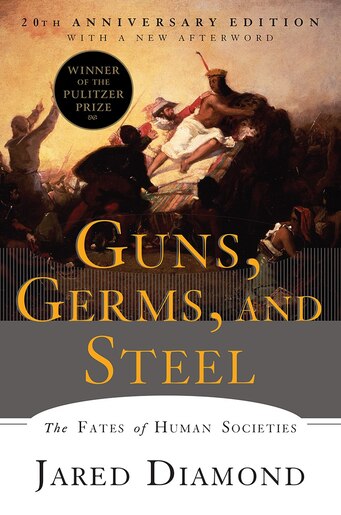
What exactly does that mean? 'Achievements'. Since when is psychology something humans achieve? I think you are trying too hard to sound intellectual. No offence. Animals have no psychology? I beg the difference. Still don't understand the title of this thread and your posts. Maybe you should read this for some explanations and answers:

 
...no one knows for sure if the universe had a beginning.

Ah, this issue has already been debated for years by scientists - physicists. Yes, we have proof the universe had a beginning. It will have an end too. Not sure what all this, and math, have to do with asceticism.
 
No one has defined existence...

Existence: The fact or state of living or having objective reality. The ability to, directly or indirectly, interact with reality or, in more specific cases, the universe.

@rj144, you may want to get involved. These are the kind of threads you like.
 
biological evolution determines abstract principles? What?
 
Ah, this issue has already been debated for years by scientists - physicists. Yes, we have proof the universe had a beginning. It will have an end too. Not sure what all this, and math, have to do with asceticism.

You should keep up to date, because it's anything but clear. Nor will it ever be clear. The best we have are models. Models do not represent truth they are at best approximations. But for our purposes we can view them as truthful.

"
No Big Bang? Quantum equation predicts universe has no beginning"

https://phys.org/news/2015-02-big-quantum-equation-universe.html

Scientists observe supermassive black hole in infant universe

https://phys.org/news/2017-12-scientists-supermassive-black-hole-infant.html
 
Existence: The fact or state of living or having objective reality. The ability to, directly or indirectly, interact with reality or, in more specific cases, the universe.

@rj144, you may want to get involved. These are the kind of threads you like.

What's a fact? What's a state of living? What is objective reality? What is an interaction? Etc. Do you see where this is going?
 
Deep!
Not sure what the title of this thread has to do with your first post.

Asceticism = Asceticism is a lifestyle characterized by abstinence from sensual pleasures, often for the purpose of pursuing spiritual goals. Severe self-discipline and avoidance of all forms of indulgence.

So, are you asking why some humans practice asceticism? I believe for purification. Usually only found with individuals who practice a certain religion.

The opposite would be the rest of us = Sex, drugs (alcohol), pizza, and rock-and-roll. Sex is too appealing to me to be able to abstain from it.

Asceticism isn't just randomly pursued though - as you say yourself something like "purification" can be a goal.

But the very concept of spiritual purification, and the requirement to deny material pleasures that, on the surface, justify themselves.. the human psychological ability to understand and commit to that sort of thing is incredible, considering where we came from.

What exactly does that mean? 'Achievements'. Since when is psychology something humans achieve? I think you are trying too hard to sound intellectual. No offence. Animals have no psychology? I beg the difference. Still don't understand the title of this thread and your posts. Maybe you should read this for some explanations and answers:


Individual humans reach new psychological achievements all the time. Using willpower to overcome environmental resistance is a psychological achievement. The true understanding of a complex physical theory is an achievement. Forgiveness of a loathed enemy can be an achievement.

It's not much of a stretch to consider these analogously to achievements of the species. There necessarily had to have been a first overcoming, a first understanding, a first forgiveness - or something like them.

But not for animals. Just for us and our unique (social) cognition.

And yea I know the book - it's not really related. Harari's Sapiens would be closer to the mark from the anthropological direction.
 
Last edited:
Back
Top