
You are using an out of date browser. It may not display this or other websites correctly.
You should upgrade or use an alternative browser.
You should upgrade or use an alternative browser.
Favourite sword?
- Thread starter deucesarewild
- Start date


- Joined
- Aug 2, 2008
- Messages
- 52,575
- Reaction score
- 27,200
@Iroh
If it was, you'd get carded or banned for posting dickpicks.
Either that or the mods like what they see.

Nah, as long as it's not the genuine article...
And yeah, I think the mods like it.. a lot. Not that there's anything wrong with that!

- Joined
- Apr 10, 2005
- Messages
- 31,924
- Reaction score
- 34,288
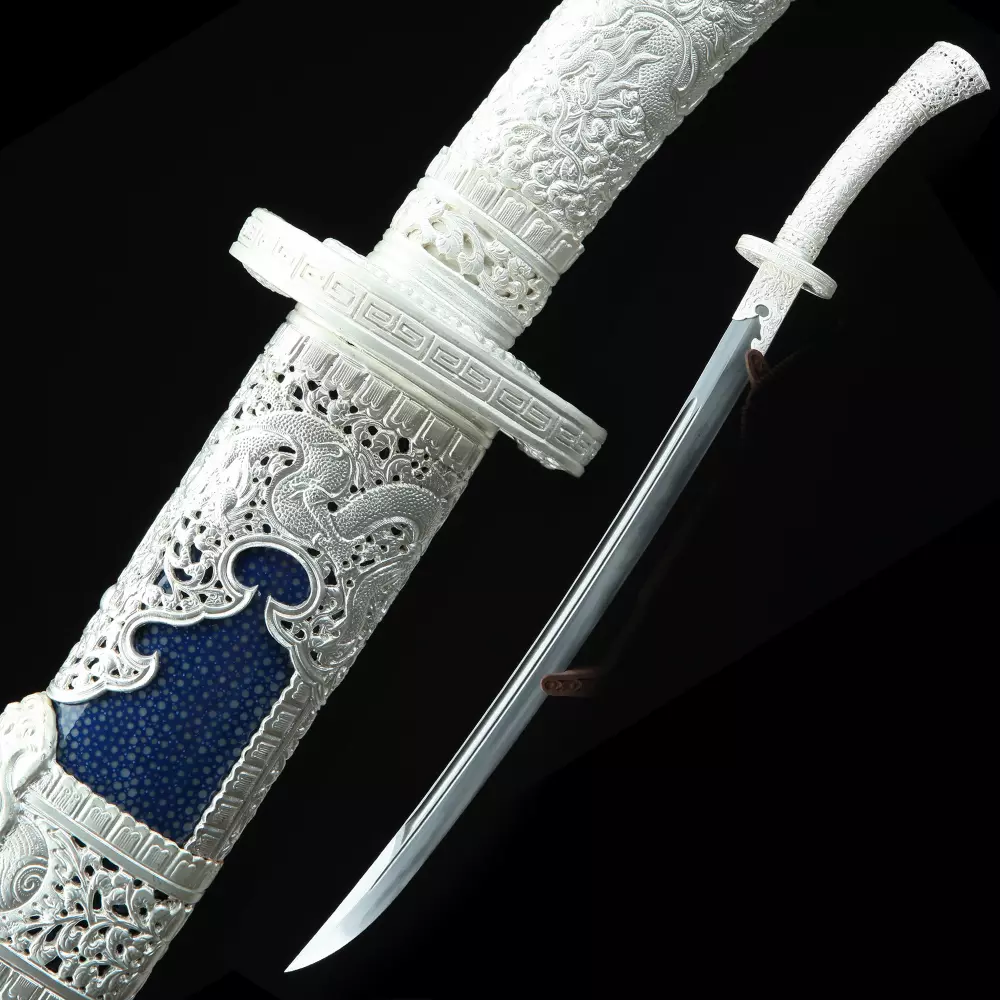
This thing is absolutely gorgeous. Has a decent tip, long reach and doesn't seem as cumbersome as some of the heavy pigs posted in here. Not like I'm any sort of an expert on swords or anything, but still. That thing is just beautiful.

- Joined
- Apr 23, 2005
- Messages
- 3,089
- Reaction score
- 1,843
If you have any good sources please let me know.You can pick up Dutch 'Klewangs' for pretty reasonable money though not all of them have retained their hand protection .
- Joined
- Apr 23, 2005
- Messages
- 3,089
- Reaction score
- 1,843
You can pick up Dutch 'Klewangs' for pretty reasonable money though not all of them have retained their hand protection .
i have an antique small sword that looks pretty much like this. would be cool to get a more robust practical weapon as well
- Joined
- Aug 2, 2008
- Messages
- 52,575
- Reaction score
- 27,200
If you have any good sources please let me know.
Where are you located? There are a good number of sites that deal in second hand/antique swords that operate in my general area at least.
- Joined
- Apr 23, 2005
- Messages
- 3,089
- Reaction score
- 1,843
Where are you located? There are a good number of sites that deal in second hand/antique swords that operate in my general area at least.
im in Australia. i sourced my small sword through some antique sword forums about 6 years ago but havent searched since.

- Joined
- Oct 11, 2012
- Messages
- 23,340
- Reaction score
- 12,324
I Don't really have a favourite, but One of my wife's brothers has One that looks like this. I've only seen it once, but it looked pretty cool. He has a replica, that is Nice and shiny,but These were Apparently used in combat by the Kazakhs and other central Asians in 16-19th Century.
I Asked my wife for some info, but she doesn't give a fuck about it. She gave me a Fedor shrug and said it's a sword. Well, no shit, I Can see that myself. <45>
View attachment 851232
A sword designed for use from camel, they were often given as high military honours, a weapon of the elite.
- Joined
- Apr 23, 2005
- Messages
- 3,089
- Reaction score
- 1,843
perfect balance of function and practicalityMy Victorian Constabulary Cutlass , a managable size a good cutter and spear pointed so useful for delivering thrusts too .
- Joined
- Aug 2, 2008
- Messages
- 52,575
- Reaction score
- 27,200
im in Australia. i sourced my small sword throygh some antique sword forms about 6 years ago but havent searched since.
Ouch, I imagine the import costs are insane for you. I would suggest just googling second hand/used/antique swords sites or just general, all round trading sites, and I'm sure you should find something that's best suited for where you are.
Or ask on an Aussie swords/weapons forum, where they get their swords.
- Joined
- Apr 23, 2005
- Messages
- 3,089
- Reaction score
- 1,843
Last time I found a dealer in the UK and shipping wasnt prohibitive. I had to do some research- but if you know someone good that is trustworthy let me know.Ouch, I imagine the import costs are insane for you. I would suggest just googling second hand/used/antique swords sites or just general, all round trading sites, and I'm sure you should find something that's best suited for where you are.
Or ask on an Aussie swords/weapons forum, where they get their swords.
- Joined
- Aug 2, 2008
- Messages
- 52,575
- Reaction score
- 27,200
Last time I found a dealer in the UK and shipping wasnt prohibitive. I had to do some research- but if you know someone good that is trustworthy let me know.
I've never bought anything here, but the owner has a YT channel that's really legit about swords, so I'm guessing his shop is too. I'm guessing it's pricey though.
https://www.antique-swords.co.uk/
- Joined
- Apr 23, 2005
- Messages
- 3,089
- Reaction score
- 1,843
cool, ill check it out, thanksI've never bought anything here, but the owner has a YT channel that's really legit about swords, so I'm guessing his shop is too. I'm guessing it's pricey though.
https://www.antique-swords.co.uk/
- Joined
- Aug 2, 2008
- Messages
- 52,575
- Reaction score
- 27,200

- Joined
- Jan 29, 2016
- Messages
- 11,031
- Reaction score
- 18,145
I love Viking (or Caroling) swords. They look wicked.

Then, later, there's gothic medieval sword which is ultra cool with its minimalistic and yet elegant look, and stabby.
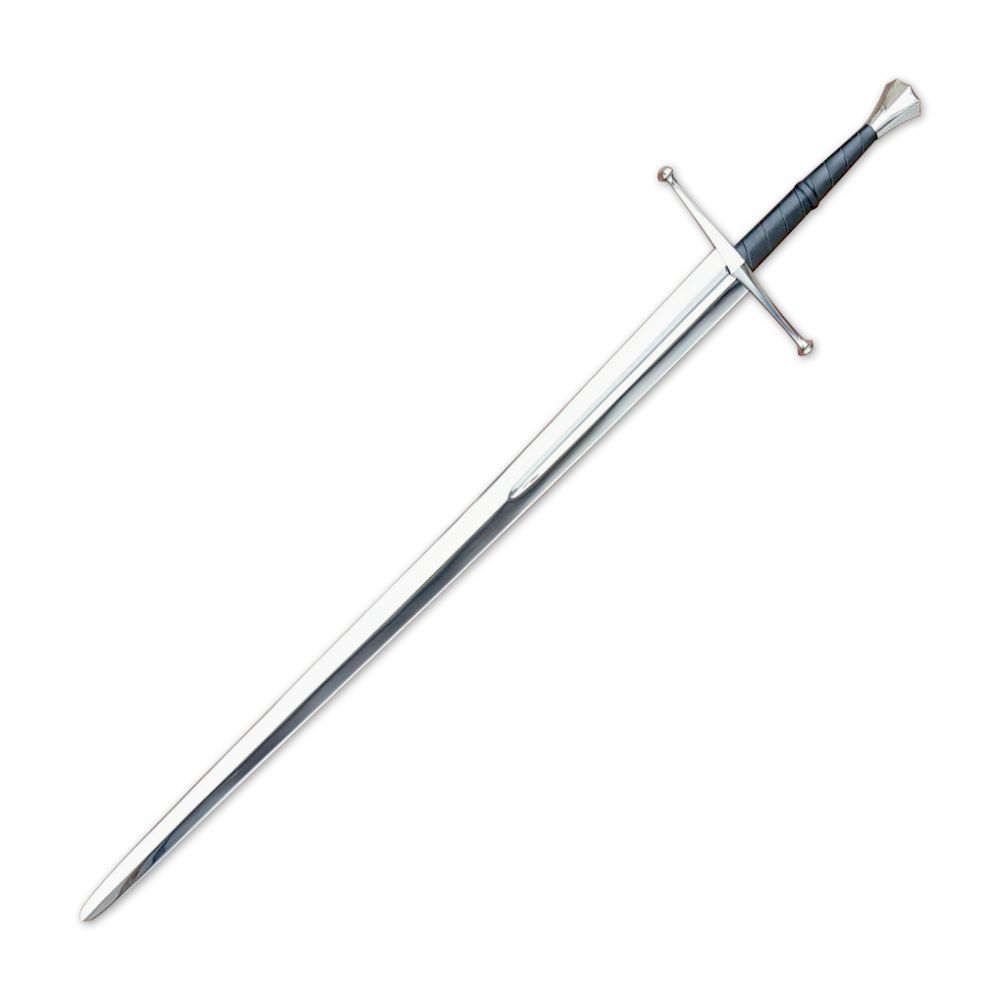
And even later on, the walloon swords, the kind of sword that is already intricate in design but havent morphed into dress sword which looks like a decorated toothpick.

Then, later, there's gothic medieval sword which is ultra cool with its minimalistic and yet elegant look, and stabby.
And even later on, the walloon swords, the kind of sword that is already intricate in design but havent morphed into dress sword which looks like a decorated toothpick.

- Joined
- Jan 29, 2016
- Messages
- 11,031
- Reaction score
- 18,145
That is a pretty classic Osman saber, they were abundant through most of AsiaI Don't really have a favourite, but One of my wife's brothers has One that looks like this. I've only seen it once, but it looked pretty cool. He has a replica, that is Nice and shiny,but These were Apparently used in combat by the Kazakhs and other central Asians in 16-19th Century.
I Asked my wife for some info, but she doesn't give a fuck about it. She gave me a Fedor shrug and said it's a sword. Well, no shit, I Can see that myself. <45>
View attachment 851232

- Joined
- Nov 2, 2011
- Messages
- 41,982
- Reaction score
- 26,772
taken from the japanese swordsmithing page on wiki. you are correct.Let me know what you find. That was my impression anyway.
The best known part of the manufacturing process is the folding of the steel, where the swords are made by repeatedly heating, hammering and folding the metal. The process of folding metal to improve strength and remove impurities is frequently attributed to specific Japanese smiths in legends. The folding removes impurities and helps even out the carbon content, while the alternating layers combine hardness with ductility to greatly enhance the toughness.[12][8][13]
In traditional Japanese sword making, the low-carbon iron is folded several times by itself, to purify it. This produces the soft metal to be used for the core of the blade. The high-carbon steel and the higher-carbon cast-iron are then forged in alternating layers. The cast-iron is heated, quenched in water, and then broken into small pieces to help free it from slag. The steel is then forged into a single plate, and the pieces of cast-iron are piled on top, and the whole thing is forge welded into a single billet, which is called the age-kitae process. The billet is then elongated, cut, folded, and forge welded again. The steel can be folded transversely, (from front to back), or longitudinally, (from side to side). Often both folding directions are used to produce the desired grain pattern.[13] This process, called the shita-kitae, is repeated from 8 to as many as 16 times. After 20 foldings, (220, or 1,048,576 individual layers), there is too much diffusion in the carbon content. The steel becomes almost homogeneous in this respect, and the act of folding no longer gives any benefit to the steel.[14] Depending on the amount of carbon introduced, this process forms either the very hard steel for the edge (hagane) or the slightly less hardenable spring steel (kawagane) which is often used for the sides and the back.[13]
During the last few foldings, the steel may be forged into several thin plates, stacked, and forge welded into a brick. The grain of the steel is carefully positioned between adjacent layers, with the configuration dependent on the part of the blade for which the steel will be used.[8]
https://en.wikipedia.org/wiki/Japanese_swordsmithing
- Joined
- Aug 2, 2008
- Messages
- 52,575
- Reaction score
- 27,200
taken from the japanese swordsmithing page on wiki. you are correct.
The best known part of the manufacturing process is the folding of the steel, where the swords are made by repeatedly heating, hammering and folding the metal. The process of folding metal to improve strength and remove impurities is frequently attributed to specific Japanese smiths in legends. The folding removes impurities and helps even out the carbon content, while the alternating layers combine hardness with ductility to greatly enhance the toughness.[12][8][13]
In traditional Japanese sword making, the low-carbon iron is folded several times by itself, to purify it. This produces the soft metal to be used for the core of the blade. The high-carbon steel and the higher-carbon cast-iron are then forged in alternating layers. The cast-iron is heated, quenched in water, and then broken into small pieces to help free it from slag. The steel is then forged into a single plate, and the pieces of cast-iron are piled on top, and the whole thing is forge welded into a single billet, which is called the age-kitae process. The billet is then elongated, cut, folded, and forge welded again. The steel can be folded transversely, (from front to back), or longitudinally, (from side to side). Often both folding directions are used to produce the desired grain pattern.[13] This process, called the shita-kitae, is repeated from 8 to as many as 16 times. After 20 foldings, (220, or 1,048,576 individual layers), there is too much diffusion in the carbon content. The steel becomes almost homogeneous in this respect, and the act of folding no longer gives any benefit to the steel.[14] Depending on the amount of carbon introduced, this process forms either the very hard steel for the edge (hagane) or the slightly less hardenable spring steel (kawagane) which is often used for the sides and the back.[13]
During the last few foldings, the steel may be forged into several thin plates, stacked, and forge welded into a brick. The grain of the steel is carefully positioned between adjacent layers, with the configuration dependent on the part of the blade for which the steel will be used.[8]
https://en.wikipedia.org/wiki/Japanese_swordsmithing
Buddeh, do you happen to have some swords for sale? @esotamoc is looking for a nice cutlass I believe or something similar.

- Joined
- Jan 23, 2006
- Messages
- 19,691
- Reaction score
- 14,663
The green ranger's flute dagger was pretty freaking badass


