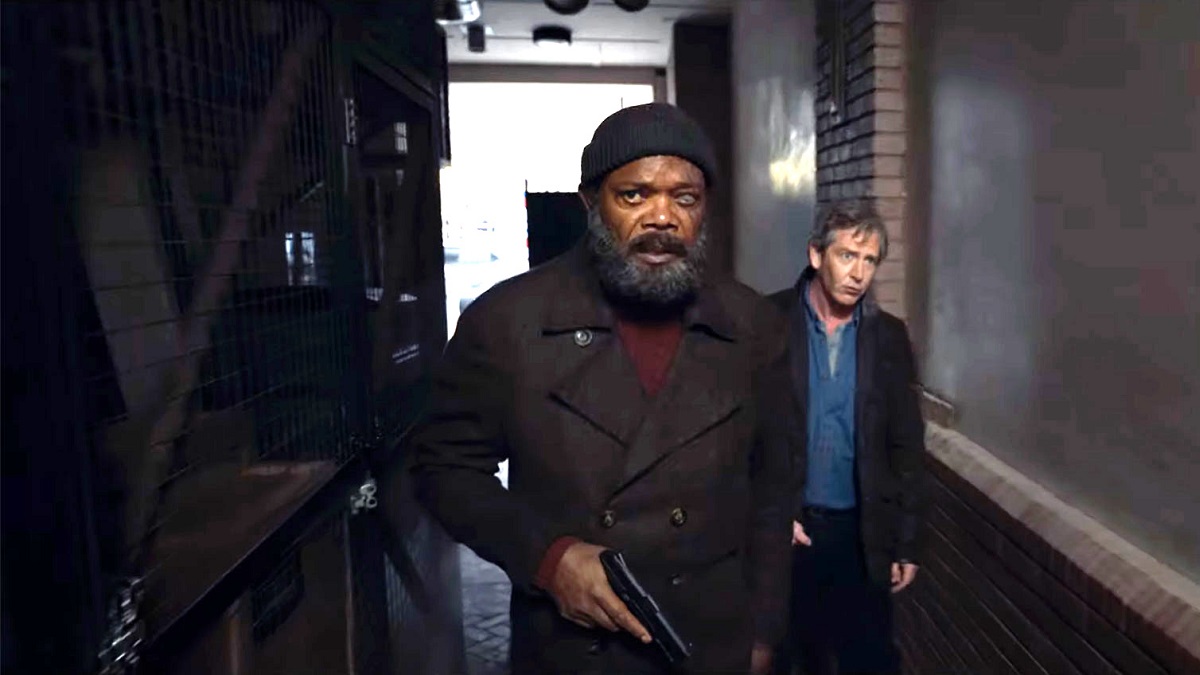
Television DAREDEVIL: BORN AGAIN (Season 2 Teaser Trailer, post #848)

What did you think of DAREDEVIL: BORN AGAIN Season One?


  • Total voters
    17
No way will they go with heroin thing, too dark

Agreed. Which means changing the story considerably. Although depending how much of the Netflix shows are canon, Fisk already knows that Matt is Daredevil.
 
Agreed. Which means changing the story considerably. Although depending how much of the Netflix shows are canon, Fisk already knows that Matt is Daredevil.

That being said would be hilarious if MCU went like "our light hearted joke every 2 minutes approach is not working anymore" and went entirely other way and made this rated R
 
There's also no in-universe explanation so far as to how Fisk managed to get himself released from jail between DD season 3 and Hawkeye. Although the character was changed so much in the latter, they might as well have ignored the Netflix shows entirely.
 
That being said would be hilarious if MCU went like "our light hearted joke every 2 minutes approach is not working anymore" and went entirely other way and made this rated R

An R-rated Born Again would be the GOAT comic book series. At least until someone has the balls to adapt Punisher MAX: The Slavers:cool:

It will never happen, though. Marvel would never take the chance. Hell, they turned the Punisher in the comics into a ninja, replaced his guns with swords and changed the iconic Skull into a demon:rolleyes:
 
John bernthal is probably my favorite newer actor. Ive liked pretty much everything hes been in. There is no way it will be close to DD s02 punisher which is a shame. They should have gotten the same writers and cinematographers from the netflix show.
 
Stuff I read indicate DD show isn't a continuation of Netflix DD, and "Born Again" isn't based on the comic storyline. Good for the Punisher actor who proved he can do the role in Netflix.
 
Stuff I read indicate DD show isn't a continuation of Netflix DD, and "Born Again" isn't based on the comic storyline. Good for the Punisher actor who proved he can do the role in Netflix.

So Disney/Marvel are doing a bait & switch.

<TheWire1>

What a shocker. No one could have expected this.
 
Bring in Miller as a show runner/writer

He's 66 going on 86.

frank-miller-2016.jpg


But if Disney was planning on making this show good, which they aren't, they'd bring back the original showrunner, Steven DeKnight, who also was the showrunner of Spartacus for all 4 seasons.
 
Bring in Miller as a show runner/writer

Nice idea, but it wouldn't make any difference unless they gave Miller complete freedom to run the show the way he wanted. And Disney would never take that risk.

Sadly, this has all the makings of a dumpster fire.
 
An R-rated Born Again would be the GOAT comic book series. At least until someone has the balls to adapt Punisher MAX: The Slavers:cool:

It will never happen, though. Marvel would never take the chance. Hell, they turned the Punisher in the comics into a ninja, replaced his guns with swords and changed the iconic Skull into a demon:rolleyes:

The knee jerk reaction by Marvel to try and distance the character from the co opting by the far right is just sad as hell.
 
The knee jerk reaction by Marvel to try and distance the character from the co opting by the far right is just sad as hell.

Not just the Alt Right, but the Cops who painted Punisher logos on their weapons and kit. While that was in very poor taste, Marvel threw the baby out with the bathwater.

In fact, there was a Punisher story a few years back when Frank meets two cops who are fans of his, and keep a Skull sticker on their car. They tell him, "We do what you do" Frank is not happy. He tears up the sticker and tells them,

"Listen carefully, because I'm only going to say this once: you don't do what I do. No one does. You took an oath to Serve and Protect. I gave all that up a long time ago.

You boys want a Hero? His name is Captain America, and he'll be glad to have you"
 
Not just the Alt Right, but the Cops who painted Punisher logos on their weapons and kit. While that was in very poor taste, Marvel threw the baby out with the bathwater.

In fact, there was a Punisher story a few years back when Frank meets two cops who are fans of his, and keep a Skull sticker on their car. They tell him, "We do what you do" Frank is not happy. He tears up the sticker and tells them,

"Listen carefully, because I'm only going to say this once: you don't do what I do. No one does. You took an oath to Serve and Protect. I gave all that up a long time ago.

You boys want a Hero? His name is Captain America, and he'll be glad to have you"

 
Update: October 10, 2023

DAREDEVIL: BORN AGAIN Hits Reset Button as Writers, Directors Fired; Marvel Searching for New Creative Team

29rep_opener-marvelTV-main.jpg


It didn’t take long to see the problem after Marvel Studios’ Daredevil: Born Again paused production in mid-June during the writers strike. Fewer than half of the series’ 18 episodes had been shot, but it was enough for Marvel executives, including chief Kevin Feige, to review the footage and come away with a clear-eyed assessment: The show wasn’t working.

So, in late September, Marvel quietly let go of head writers Chris Ord and Matt Corman and also released the directors for the remainder of the season as part of a significant creative reboot of the series, The Hollywood Reporter has learned. The studio is now on the hunt for new writers and directors for the project, which stars Charlie Cox as Matt Murdock, a blind lawyer turned superhero.

The Daredevil revamp is the latest in a series of growing pains for Marvel television. Since debuting the Emmy-winning WandaVision in January 2021, the studio, which dominated the film industry in the 2010s, has released more than 50 hours of TV programming after creating a small-screen division from the ground up during the pandemic.

Through it all, the company eschewed the traditional TV-making model. It didn’t commission pilots but instead shot entire $150 million-plus seasons of TV on the fly. It didn’t hire showrunners, but instead depended on film executives to run its series. And as Marvel does for its movies, it relied on postproduction and reshoots to fix what wasn’t working.

Even though they remain, along with Star Wars titles, the most watched shows on Disney+, Marvel series have recently faced a number of creative challenges and cries of diminishing returns from critics and audience metrics, causing a major shift at the studio to move to make TV shows the more traditional way.

“We’re trying to marry the Marvel culture with the traditional television culture,” says Brad Winderbaum, Marvel’s head of streaming, television and animation. “It comes down to, ‘How can we tell stories in television that honor what’s so great about the source material?’”

With Daredevil’s new direction, Marvel hopes to right the ship on a project with sky-high expectations. The show is Marvel’s first to feature a hero who already had a successful series on Netflix, running three seasons. But sources say that Corman and Ord crafted a legal procedural that did not resemble the Netflix version, known for its action and violence. Cox didn’t even show up in costume until the fourth episode. Marvel, after greenlighting the concept, found itself needing to rethink the original intention of the show.

Marvel plans to keep some scenes and episodes, though other serialized elements will be injected, with Corman and Ord becoming executive producers on the two-season series.

Daredevil is far from the first Marvel series to undergo drastic behind-the-scenes changes. Those who work with Marvel on the TV side have complained of a lack of central vision that has, according to sources, begun to afflict the studio’s shows with creative differences and tension. “TV is a writer-driven medium,” says one insider familiar with the Marvel process. “Marvel is a Marvel-driven medium.”

On the Oscar Isaac starrer Moon Knight, show creator and writer Jeremy Slater quit and director Mohamed Diab took the reins. Jessica Gao developed and wrote She-Hulk: Attorney at Law but was sidelined once director Kat Coiro came on board. Production was challenging, with COVID hitting cast and crew, and Gao was brought back to oversee postproduction, a typical showrunner duty, but it’s the rare Marvel head writer who has such oversight.

Even though the company does not have a writers-first approach to TV, directors could feel short-changed as well. “The whole ‘fix it in post’ attitude makes it feel like a director doesn’t matter sometimes,” says one person familiar with the process.

As its shows ramped up during the pandemic, Marvel stepped outside its usual staffing approach and brought in outside execs after years of internally promoting creatives who had been sufficiently trained in the Marvel method.

secret-invasion-1.jpg


This change was felt most severely on Secret Invasion, the Samuel L. Jackson-led thriller that stands as Marvel’s worst-reviewed series. Kyle Bradstreet, a writer and executive producer on USA Network Emmy winner Mr. Robot, had been working on the scripts for Secret Invasion for about a year when he was fired after Marvel decided on a different direction. Enter new writer Brian Tucker, who penned the crime thriller Broken City. Thomas Bezucha, who helmed the thriller Let Him Go, and Ali Selim, who worked on Hulu’s 9/11 drama The Looming Tower, were on board as directors and to help crack the story.

So far, so normal, at least by Marvel’s creative development standards. Details are murky, but what happened next, in the summer of 2022, debilitated the production as factions became entrenched and leaders vied for supremacy during Secret Invasion’s preproduction in London. “It was weeks of people not getting along, and it erupted,” says an insider. Marvel declined to directly comment on the matter.

The company dispatched Jonathan Schwartz, a senior executive and member of Marvel’s creative steering committee known as The Parliament, to get Secret Invasion back on track when it was falling behind schedule and on the verge of losing some actors because of other commitments.

By early September, a good portion of the Invasion team had been replaced, with new line producers, unit production managers and assistant directors. And Bezucha, who was supposed to direct three episodes, left the show because of new scheduling conflicts. The Marvel executive overseeing the show, Chris Gary, was reassigned and, according to sources, is expected to depart Marvel when his contract is up at the end of the year.

As it moves forward, Marvel is making concrete changes in how it makes TV. It now has plans to hire showrunners. Gao’s postproduction work on She-Hulk helped Marvel see that it would be helpful for its shows to have a creative throughline from start to finish.

“It’s a term we’ve not only grown comfortable with but also learned to embrace,” says Winderbaum of showrunners and Marvel TV’s intention to hire them.

The studio also plans on having full-time TV execs, rather than having executives straddle both television and film.

“We need executives that are dedicated to this medium, that are going to focus on streaming, focus on television,” says Winderbaum, “because they are two different forms.”

It also is revamping its development process. Showrunners will write pilots and show bibles. The days of Marvel shooting an entire series, from She-Hulk to Secret Invasion, then looking at what’s working and what’s not, are done.

And just as Loki, which returned Oct. 5, marked Marvel’s first season two of a series (out of nine TV shows to date), the studio plans on leaning into the idea of multiseason serialized TV, stepping away from the limited-series format that has defined it. Marvel wants to create shows that run several seasons, where characters can take time to develop relationships with the audience rather than feeling as if they are there as a setup for a big crossover event.

Some of its next shows, in fact, promise to be more personal stories. Echo, which premieres in January, is a grounded crime story with few visual effects, revolving around deaf Native American antihero Maya Lopez (Alaqua Cox). Wonder Man, a show that was paused because of the writers and actors strikes, is meant to be a behind-the-scenes look at Hollywood and a character study of Simon Williams (Yahya Abdul-Mateen II), a superhero who has a side gig as an actor and stuntperson.

Winderbaum says he wants people to watch the shows because they love the characters. It should work, he says, “beyond the fact that it ties into [other projects] or if they are going to be in a movie or if it is setting up an Avengers film.”

https://www.hollywoodreporter.com/tv/tv-news/daredevil-marvel-disney-1235614518/

 
Update: October 10, 2023

DAREDEVIL: BORN AGAIN Hits Reset Button as Writers, Directors Fired; Marvel Searching for New Creative Team

29rep_opener-marvelTV-main.jpg


It didn’t take long to see the problem after Marvel Studios’ Daredevil: Born Again paused production in mid-June during the writers strike. Fewer than half of the series’ 18 episodes had been shot, but it was enough for Marvel executives, including chief Kevin Feige, to review the footage and come away with a clear-eyed assessment: The show wasn’t working.

So, in late September, Marvel quietly let go of head writers Chris Ord and Matt Corman and also released the directors for the remainder of the season as part of a significant creative reboot of the series, The Hollywood Reporter has learned. The studio is now on the hunt for new writers and directors for the project, which stars Charlie Cox as Matt Murdock, a blind lawyer turned superhero.

The Daredevil revamp is the latest in a series of growing pains for Marvel television. Since debuting the Emmy-winning WandaVision in January 2021, the studio, which dominated the film industry in the 2010s, has released more than 50 hours of TV programming after creating a small-screen division from the ground up during the pandemic.

Through it all, the company eschewed the traditional TV-making model. It didn’t commission pilots but instead shot entire $150 million-plus seasons of TV on the fly. It didn’t hire showrunners, but instead depended on film executives to run its series. And as Marvel does for its movies, it relied on postproduction and reshoots to fix what wasn’t working.

Even though they remain, along with Star Wars titles, the most watched shows on Disney+, Marvel series have recently faced a number of creative challenges and cries of diminishing returns from critics and audience metrics, causing a major shift at the studio to move to make TV shows the more traditional way.

“We’re trying to marry the Marvel culture with the traditional television culture,” says Brad Winderbaum, Marvel’s head of streaming, television and animation. “It comes down to, ‘How can we tell stories in television that honor what’s so great about the source material?’”

With Daredevil’s new direction, Marvel hopes to right the ship on a project with sky-high expectations. The show is Marvel’s first to feature a hero who already had a successful series on Netflix, running three seasons. But sources say that Corman and Ord crafted a legal procedural that did not resemble the Netflix version, known for its action and violence. Cox didn’t even show up in costume until the fourth episode. Marvel, after greenlighting the concept, found itself needing to rethink the original intention of the show.

Marvel plans to keep some scenes and episodes, though other serialized elements will be injected, with Corman and Ord becoming executive producers on the two-season series.

Daredevil is far from the first Marvel series to undergo drastic behind-the-scenes changes. Those who work with Marvel on the TV side have complained of a lack of central vision that has, according to sources, begun to afflict the studio’s shows with creative differences and tension. “TV is a writer-driven medium,” says one insider familiar with the Marvel process. “Marvel is a Marvel-driven medium.”

On the Oscar Isaac starrer Moon Knight, show creator and writer Jeremy Slater quit and director Mohamed Diab took the reins. Jessica Gao developed and wrote She-Hulk: Attorney at Law but was sidelined once director Kat Coiro came on board. Production was challenging, with COVID hitting cast and crew, and Gao was brought back to oversee postproduction, a typical showrunner duty, but it’s the rare Marvel head writer who has such oversight.

Even though the company does not have a writers-first approach to TV, directors could feel short-changed as well. “The whole ‘fix it in post’ attitude makes it feel like a director doesn’t matter sometimes,” says one person familiar with the process.

As its shows ramped up during the pandemic, Marvel stepped outside its usual staffing approach and brought in outside execs after years of internally promoting creatives who had been sufficiently trained in the Marvel method.

secret-invasion-1.jpg


This change was felt most severely on Secret Invasion, the Samuel L. Jackson-led thriller that stands as Marvel’s worst-reviewed series. Kyle Bradstreet, a writer and executive producer on USA Network Emmy winner Mr. Robot, had been working on the scripts for Secret Invasion for about a year when he was fired after Marvel decided on a different direction. Enter new writer Brian Tucker, who penned the crime thriller Broken City. Thomas Bezucha, who helmed the thriller Let Him Go, and Ali Selim, who worked on Hulu’s 9/11 drama The Looming Tower, were on board as directors and to help crack the story.

So far, so normal, at least by Marvel’s creative development standards. Details are murky, but what happened next, in the summer of 2022, debilitated the production as factions became entrenched and leaders vied for supremacy during Secret Invasion’s preproduction in London. “It was weeks of people not getting along, and it erupted,” says an insider. Marvel declined to directly comment on the matter.

The company dispatched Jonathan Schwartz, a senior executive and member of Marvel’s creative steering committee known as The Parliament, to get Secret Invasion back on track when it was falling behind schedule and on the verge of losing some actors because of other commitments.

By early September, a good portion of the Invasion team had been replaced, with new line producers, unit production managers and assistant directors. And Bezucha, who was supposed to direct three episodes, left the show because of new scheduling conflicts. The Marvel executive overseeing the show, Chris Gary, was reassigned and, according to sources, is expected to depart Marvel when his contract is up at the end of the year.

As it moves forward, Marvel is making concrete changes in how it makes TV. It now has plans to hire showrunners. Gao’s postproduction work on She-Hulk helped Marvel see that it would be helpful for its shows to have a creative throughline from start to finish.

“It’s a term we’ve not only grown comfortable with but also learned to embrace,” says Winderbaum of showrunners and Marvel TV’s intention to hire them.

The studio also plans on having full-time TV execs, rather than having executives straddle both television and film.

“We need executives that are dedicated to this medium, that are going to focus on streaming, focus on television,” says Winderbaum, “because they are two different forms.”

It also is revamping its development process. Showrunners will write pilots and show bibles. The days of Marvel shooting an entire series, from She-Hulk to Secret Invasion, then looking at what’s working and what’s not, are done.

And just as Loki, which returned Oct. 5, marked Marvel’s first season two of a series (out of nine TV shows to date), the studio plans on leaning into the idea of multiseason serialized TV, stepping away from the limited-series format that has defined it. Marvel wants to create shows that run several seasons, where characters can take time to develop relationships with the audience rather than feeling as if they are there as a setup for a big crossover event.

Some of its next shows, in fact, promise to be more personal stories. Echo, which premieres in January, is a grounded crime story with few visual effects, revolving around deaf Native American antihero Maya Lopez (Alaqua Cox). Wonder Man, a show that was paused because of the writers and actors strikes, is meant to be a behind-the-scenes look at Hollywood and a character study of Simon Williams (Yahya Abdul-Mateen II), a superhero who has a side gig as an actor and stuntperson.

Winderbaum says he wants people to watch the shows because they love the characters. It should work, he says, “beyond the fact that it ties into [other projects] or if they are going to be in a movie or if it is setting up an Avengers film.”

https://www.hollywoodreporter.com/tv/tv-news/daredevil-marvel-disney-1235614518/

Anyone surprised by this? We all knew Marvel would fuck up Born Again, one of the greatest comic books ever written. The very fact that Disney Plus would have a much lower threshold for violence than Netflix rules out a lot of the darker elements of the story. And the Kingpin we got in Hawkeye was nowhere near the terrifying Big Bad of the comic. D'onofrio is one of the best actors working, but even he can only do so much with a dog-shit script.

My interest in this show is limited to a morbid curiosity as to how bad it will actually be.
 
They should just make this a movie with punisher as a side character going against fisk. Its a pretty easy story to make and tell.
 
Update: October 10, 2023

DAREDEVIL: BORN AGAIN Hits Reset Button as Writers, Directors Fired; Marvel Searching for New Creative Team

29rep_opener-marvelTV-main.jpg


It didn’t take long to see the problem after Marvel Studios’ Daredevil: Born Again paused production in mid-June during the writers strike. Fewer than half of the series’ 18 episodes had been shot, but it was enough for Marvel executives, including chief Kevin Feige, to review the footage and come away with a clear-eyed assessment: The show wasn’t working.

So, in late September, Marvel quietly let go of head writers Chris Ord and Matt Corman and also released the directors for the remainder of the season as part of a significant creative reboot of the series, The Hollywood Reporter has learned. The studio is now on the hunt for new writers and directors for the project, which stars Charlie Cox as Matt Murdock, a blind lawyer turned superhero.

The Daredevil revamp is the latest in a series of growing pains for Marvel television. Since debuting the Emmy-winning WandaVision in January 2021, the studio, which dominated the film industry in the 2010s, has released more than 50 hours of TV programming after creating a small-screen division from the ground up during the pandemic.

Through it all, the company eschewed the traditional TV-making model. It didn’t commission pilots but instead shot entire $150 million-plus seasons of TV on the fly. It didn’t hire showrunners, but instead depended on film executives to run its series. And as Marvel does for its movies, it relied on postproduction and reshoots to fix what wasn’t working.

Even though they remain, along with Star Wars titles, the most watched shows on Disney+, Marvel series have recently faced a number of creative challenges and cries of diminishing returns from critics and audience metrics, causing a major shift at the studio to move to make TV shows the more traditional way.

“We’re trying to marry the Marvel culture with the traditional television culture,” says Brad Winderbaum, Marvel’s head of streaming, television and animation. “It comes down to, ‘How can we tell stories in television that honor what’s so great about the source material?’”

With Daredevil’s new direction, Marvel hopes to right the ship on a project with sky-high expectations. The show is Marvel’s first to feature a hero who already had a successful series on Netflix, running three seasons. But sources say that Corman and Ord crafted a legal procedural that did not resemble the Netflix version, known for its action and violence. Cox didn’t even show up in costume until the fourth episode. Marvel, after greenlighting the concept, found itself needing to rethink the original intention of the show.

Marvel plans to keep some scenes and episodes, though other serialized elements will be injected, with Corman and Ord becoming executive producers on the two-season series.

Daredevil is far from the first Marvel series to undergo drastic behind-the-scenes changes. Those who work with Marvel on the TV side have complained of a lack of central vision that has, according to sources, begun to afflict the studio’s shows with creative differences and tension. “TV is a writer-driven medium,” says one insider familiar with the Marvel process. “Marvel is a Marvel-driven medium.”

On the Oscar Isaac starrer Moon Knight, show creator and writer Jeremy Slater quit and director Mohamed Diab took the reins. Jessica Gao developed and wrote She-Hulk: Attorney at Law but was sidelined once director Kat Coiro came on board. Production was challenging, with COVID hitting cast and crew, and Gao was brought back to oversee postproduction, a typical showrunner duty, but it’s the rare Marvel head writer who has such oversight.

Even though the company does not have a writers-first approach to TV, directors could feel short-changed as well. “The whole ‘fix it in post’ attitude makes it feel like a director doesn’t matter sometimes,” says one person familiar with the process.

As its shows ramped up during the pandemic, Marvel stepped outside its usual staffing approach and brought in outside execs after years of internally promoting creatives who had been sufficiently trained in the Marvel method.

secret-invasion-1.jpg


This change was felt most severely on Secret Invasion, the Samuel L. Jackson-led thriller that stands as Marvel’s worst-reviewed series. Kyle Bradstreet, a writer and executive producer on USA Network Emmy winner Mr. Robot, had been working on the scripts for Secret Invasion for about a year when he was fired after Marvel decided on a different direction. Enter new writer Brian Tucker, who penned the crime thriller Broken City. Thomas Bezucha, who helmed the thriller Let Him Go, and Ali Selim, who worked on Hulu’s 9/11 drama The Looming Tower, were on board as directors and to help crack the story.

So far, so normal, at least by Marvel’s creative development standards. Details are murky, but what happened next, in the summer of 2022, debilitated the production as factions became entrenched and leaders vied for supremacy during Secret Invasion’s preproduction in London. “It was weeks of people not getting along, and it erupted,” says an insider. Marvel declined to directly comment on the matter.

The company dispatched Jonathan Schwartz, a senior executive and member of Marvel’s creative steering committee known as The Parliament, to get Secret Invasion back on track when it was falling behind schedule and on the verge of losing some actors because of other commitments.

By early September, a good portion of the Invasion team had been replaced, with new line producers, unit production managers and assistant directors. And Bezucha, who was supposed to direct three episodes, left the show because of new scheduling conflicts. The Marvel executive overseeing the show, Chris Gary, was reassigned and, according to sources, is expected to depart Marvel when his contract is up at the end of the year.

As it moves forward, Marvel is making concrete changes in how it makes TV. It now has plans to hire showrunners. Gao’s postproduction work on She-Hulk helped Marvel see that it would be helpful for its shows to have a creative throughline from start to finish.

“It’s a term we’ve not only grown comfortable with but also learned to embrace,” says Winderbaum of showrunners and Marvel TV’s intention to hire them.

The studio also plans on having full-time TV execs, rather than having executives straddle both television and film.

“We need executives that are dedicated to this medium, that are going to focus on streaming, focus on television,” says Winderbaum, “because they are two different forms.”

It also is revamping its development process. Showrunners will write pilots and show bibles. The days of Marvel shooting an entire series, from She-Hulk to Secret Invasion, then looking at what’s working and what’s not, are done.

And just as Loki, which returned Oct. 5, marked Marvel’s first season two of a series (out of nine TV shows to date), the studio plans on leaning into the idea of multiseason serialized TV, stepping away from the limited-series format that has defined it. Marvel wants to create shows that run several seasons, where characters can take time to develop relationships with the audience rather than feeling as if they are there as a setup for a big crossover event.

Some of its next shows, in fact, promise to be more personal stories. Echo, which premieres in January, is a grounded crime story with few visual effects, revolving around deaf Native American antihero Maya Lopez (Alaqua Cox). Wonder Man, a show that was paused because of the writers and actors strikes, is meant to be a behind-the-scenes look at Hollywood and a character study of Simon Williams (Yahya Abdul-Mateen II), a superhero who has a side gig as an actor and stuntperson.

Winderbaum says he wants people to watch the shows because they love the characters. It should work, he says, “beyond the fact that it ties into [other projects] or if they are going to be in a movie or if it is setting up an Avengers film.”

https://www.hollywoodreporter.com/tv/tv-news/daredevil-marvel-disney-1235614518/
Reading this, basically as soon as their product requires consistently good writing and can't rely on flashy things, they struggle to produce anything good. No wonder they are having issues with their shows, they don't even use showrunners and execs make all the decisions. Making a TV series is entirely different from making a loud blockbuster movie.

In this instance here with Daredevil, while a courtroom drama might not have been what the execs were aiming for, at least the writers had a clear vision. Shuffling things around again and wanting to put more action in for the sake of it doesn't inspire a lot of faith. The saving grace is that they have three excellent actors in Cox, D'onofrio and Bernthal attached to the project. The portrayal of Daredevil, Kingpin and the Punisher is what made the original Netflix show great, so hopefully we see them interact as much as possible.
 
I support this decision. If it wasn't working then scrap it.

Although I don't know how they didn't realize this on the script stage. They could see the first 4 episodes were a courtroom drama by reading the script. Why waste the time and money to shoot half the episodes before cancelling?
 
Back
Top