Law Cannabis is not reducing opioid deaths

Many prescription opioids are synthetic. I assume you mean some guy in a lab in China making carfentanil? People don’t just wake up one day and overdose on a bad batch of heroin. Probably 90% of IV heroin users start with prescription pain pills.
you do know they literally prescribe and sell pharmaceutical meth
 
I don't think it ever was going to. I don't think doctors are using weed as an alternative for opiods. The gateway drug thing being nonsense cuts both ways, weed use isn't really connected at all with heavier stuff or an alternative to it. Off of anecdotal experience, people who've struggled with opiods have not been former potheads, open to stats that contradict that.
They usually become the highest tolerance pothead out there, many people who are dabbing 50-100$ of nug run errl a day have problems
 
If people really want to get loaded and high they sure as hell aren't just smoking joints and bong rips. They go to concentrated THC like Wax and harder drugs. Lots of pill addicts contributing to the get fucked up culture. Also tons still drink Codeine and Syrup.. They love getting leaned back.
 
Contrary to sensationalized news reporting and public opinion, a study out of Stanford published a few days ago in the Proceedings of the National Academy of Sciences shows that legalization and broader access to cannabis has not has a positive effect on opioid overdose death rates. Legalized marijuana was actually associated with a 23% increase in overdose deaths.

I suspected the initial hype of the 2014 JAMA study was too good to be true. Many people were drawing causal conclusions based on ecological correlations.
Opioid overdose deaths is not a test of Canibus’ benefit to society. Fake news.
 
I never heard that cannabis would impact opioid use or deaths? Without reading the study I can't imaging how the legalization of cannabis can be related to opioid deaths. CBD on the other hand has shown promise in treating some pain and therefore another alternative to opioids -- which, if used as often as appropriate, should reduce the number of opioids prescribed, leading to fewer deaths related to prescription opioids.

This of course isn't going to affect the current epidemic with regards to people who have transitioned to street opioids. And of course this population was never the target for cannabis legalization in the first place. People don't transition to cannabis from heroin.
 
The only thing that truly stops opioid addicts is making them totally legal and giving anyone free lifetime access to it. Ironically enough they choose to stop using and get their life together when enough support is present.

Having said that, I've seen enough first hand accounts of weed saving addicts lives...mostly former combat vets addicted to pills and alcohol.

I would never trust any of these studies as the powers that be and special lobbyists have way too much power and wealth to lose, now on both sides, for any study to be released that's not completely bias
 
I'm just reading an article that is discussing the study:

A study published Monday in PNAS contradicts that widely cited paper, raising new questions about whether and how medical marijuana can affect the opioid crisis.

The 2014 study found that between 1999 and 2010, states with medical cannabis laws had a nearly 25% lower average rate of opioid overdose deaths than states without such laws. Much has changed since 2010 — 34 states have now legalized medical marijuana and the number of opioid overdose deaths was six times higher in 2017 than it was in 1999 — so Stanford University researchers decided to replicate the original study and expand its analysis to include seven more years of data.

So their point is that there are more opioid deaths in 2017 than 1999... and they're positioning this as an 'in spite-of' increased cannabis legalization.

First of all, of course there are more opioid deaths in 2017 than 1999:

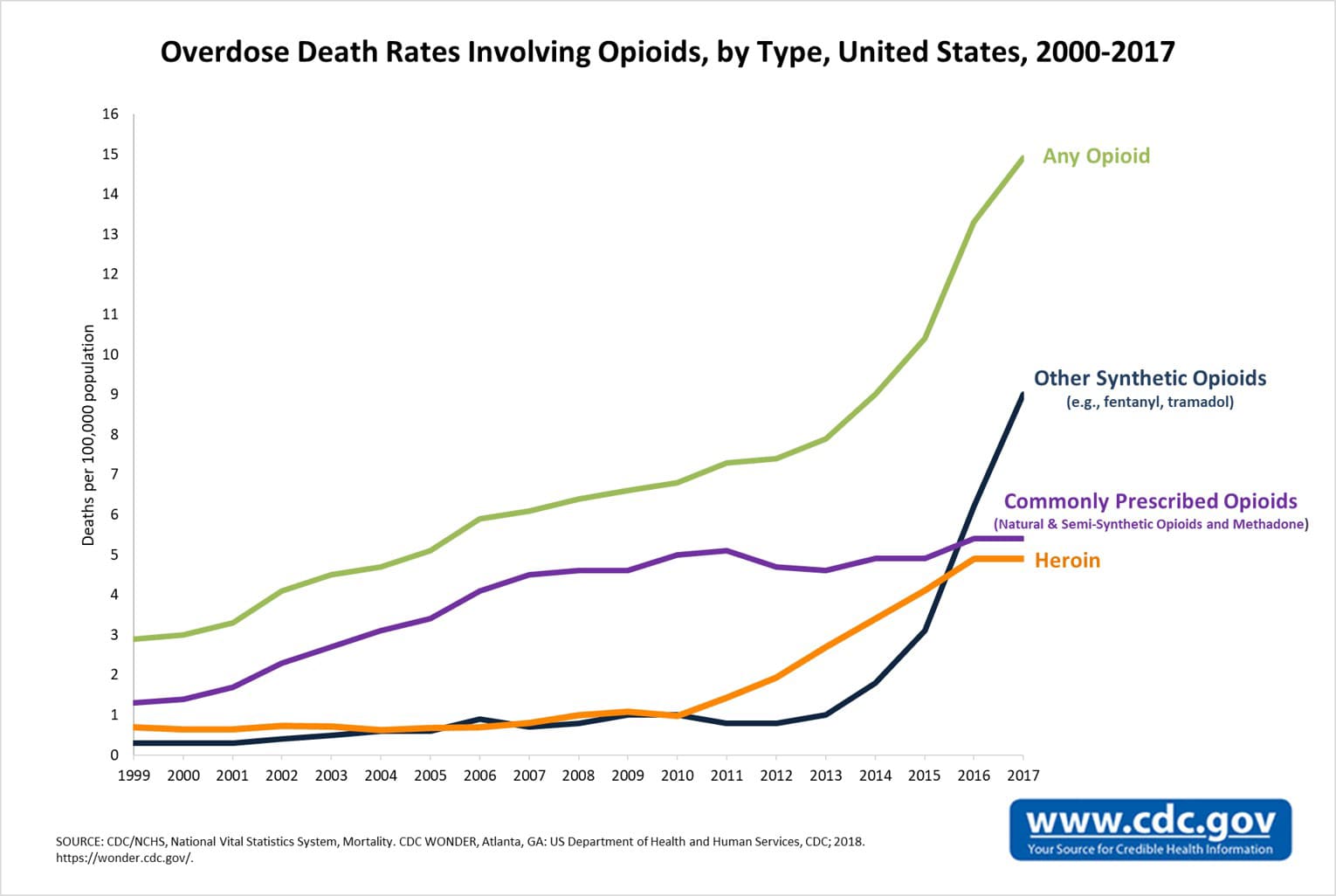
OpioidDeathsByTypeUS.PNG


I'm just going to let this graph speak for itself. I don't know if it was the study's purpose to study the affects of cannabis on opioid deaths, or if it was just a data point of a more sensible study that the media is running with, but if it was the purpose of the study it seems like a huge waste of time in light of the evidence we already had.

 
I'm just reading an article that is discussing the study:

A study published Monday in PNAS contradicts that widely cited paper, raising new questions about whether and how medical marijuana can affect the opioid crisis.

The 2014 study found that between 1999 and 2010, states with medical cannabis laws had a nearly 25% lower average rate of opioid overdose deaths than states without such laws. Much has changed since 2010 — 34 states have now legalized medical marijuana and the number of opioid overdose deaths was six times higher in 2017 than it was in 1999 — so Stanford University researchers decided to replicate the original study and expand its analysis to include seven more years of data.

So their point is that there are more opioid deaths in 2017 than 1999... and they're positioning this as an 'in spite-of' increased cannabis legalization.

First of all, of course there are more opioid deaths in 2017 than 1999:

OpioidDeathsByTypeUS.PNG


I'm just going to let this graph speak for itself. I don't know if it was the study's purpose to study the affects of cannabis on opioid deaths, or if it was just a data point of a more sensible study that the media is running with, but if it was the purpose of the study it seems like a huge waste of time in light of the evidence we already had.

?

It's not about more deaths, it's the death rate in States with medical marijuana vs. without. Before it was lower. Now it's higher.
 
?

It's not about more deaths, it's the death rate in States with medical marijuana vs. without. Before it was lower. Now it's higher.

Yeah, before the epidemic they were lower, now they're higher.
 
?

It's not about more deaths, it's the death rate in States with medical marijuana vs. without. Before it was lower. Now it's higher.
Meaningless. If you don’t understand how to form conclusions it might sound like you’ve said something, but you truly haven’t.
 
I never heard that cannabis would impact opioid use or deaths? Without reading the study I can't imaging how the legalization of cannabis can be related to opioid deaths. CBD on the other hand has shown promise in treating some pain and therefore another alternative to opioids -- which, if used as often as appropriate, should reduce the number of opioids prescribed, leading to fewer deaths related to prescription opioids.

This of course isn't going to affect the current epidemic with regards to people who have transitioned to street opioids. And of course this population was never the target for cannabis legalization in the first place. People don't transition to cannabis from heroin.
it reduces the length and amount used to combat pain when both are used, most people prefer to just use cannabis over pain meds. when i fucked my back up when i was 16 when I ragdolled out of a pool and back in while skating and 6-8 vicodins and 2 mouthfuls of rum didn't compare to the pain alleviation I got from using weed. those pills would last me maybe 2-4 hours before i'd have to have my mom pick me up from school for back pain
 
According to the same study, having legal recreational use is associated with a 14% decrease. Doubtful there's a correlation of any kind here. Disappointing.
 
I'm just reading an article that is discussing the study:

A study published Monday in PNAS contradicts that widely cited paper, raising new questions about whether and how medical marijuana can affect the opioid crisis.

The 2014 study found that between 1999 and 2010, states with medical cannabis laws had a nearly 25% lower average rate of opioid overdose deaths than states without such laws. Much has changed since 2010 — 34 states have now legalized medical marijuana and the number of opioid overdose deaths was six times higher in 2017 than it was in 1999 — so Stanford University researchers decided to replicate the original study and expand its analysis to include seven more years of data.

So their point is that there are more opioid deaths in 2017 than 1999... and they're positioning this as an 'in spite-of' increased cannabis legalization.

First of all, of course there are more opioid deaths in 2017 than 1999:

OpioidDeathsByTypeUS.PNG


I'm just going to let this graph speak for itself. I don't know if it was the study's purpose to study the affects of cannabis on opioid deaths, or if it was just a data point of a more sensible study that the media is running with, but if it was the purpose of the study it seems like a huge waste of time in light of the evidence we already had.
well if you look at whose writing these research papers you'll find its literally all the same people, not a lot of new ideas coming into play
 
According to the same study, having legal recreational use is associated with a 14% decrease. Doubtful there's a correlation of any kind here. Disappointing.
Demographics yo
 
Right. The relationship between the death rates totally reversed.

That's a non-trivial discovery.

Reversed? No. Opioid deaths rose regardless of cannabis laws.
The original study has more progressive states that had lower opioid deaths due to other factors unrelated to their cannabis laws.
You need only look at the graph to see opioid deaths rising in spite of cannabis being legalized in more and more places.

And even then, those original states were studied pre-full blown epidemic, so their numbers probably caved by 2017, too.

Again, I haven't read the original study's purpose, but it would be a fail if that were its main focus.
However, it does appear that it may have uncovered more nuanced data to suggest ways in which the states from the original study helped reduce opioid related deaths unrelated to cannabis.
 
Back
Top