
-
Xenforo Cloud is upgrading us to version 2.3.8 on Monday February 16th, 2026 at 12:00 AM PST. Expect a temporary downtime during this process. More info here
You are using an out of date browser. It may not display this or other websites correctly.
You should upgrade or use an alternative browser.
You should upgrade or use an alternative browser.
Astrophotography shot from last night
- Thread starter rj144
- Start date


- Joined
- Jul 7, 2016
- Messages
- 26,116
- Reaction score
- 16,458
Jesus dude, Your pictures get better and better!
Thanks. It's decent, but I should, hopefully, get it to come out a better if I take some more pics.

- Joined
- Jun 2, 2013
- Messages
- 8,053
- Reaction score
- 5,802
Seeing your photos makes me wish that we'd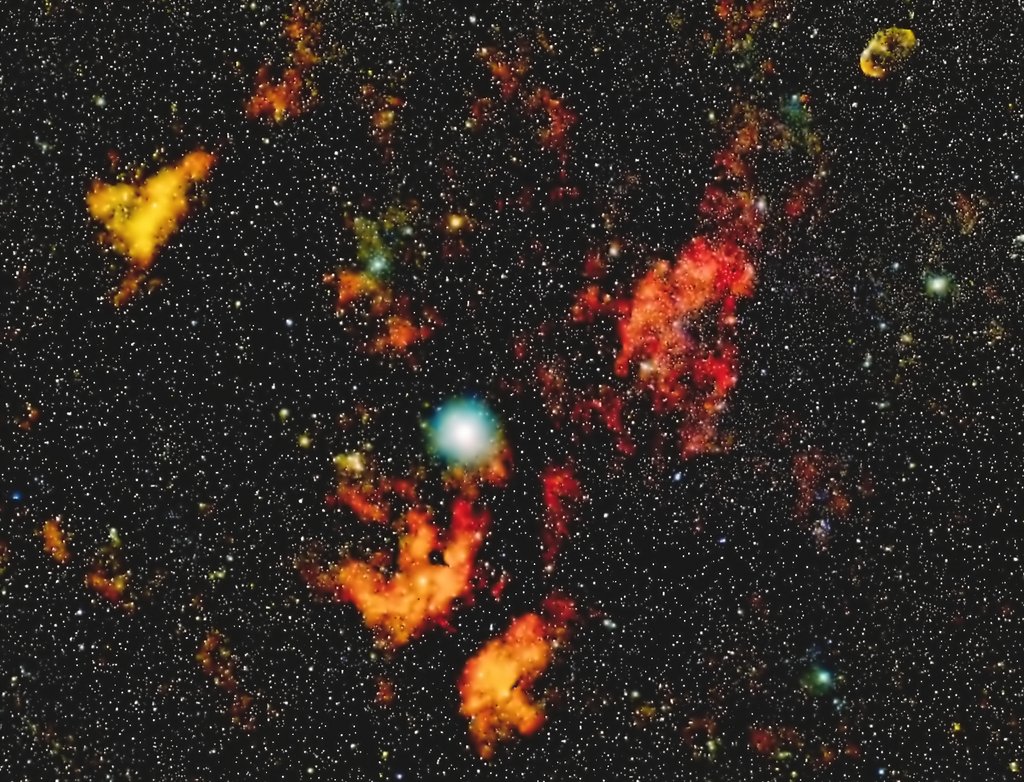
Looks cool, but it should look better after a while. This whole area is supposed to be filled with the colored stuff you can see now (nebula), but I need more time to get it. I'm going to try to add to it tonight.
do more manned space flights. We need to get
these millionaires to go mars.
- Joined
- Jul 7, 2016
- Messages
- 26,116
- Reaction score
- 16,458
This is what it looks before I process in black and white:

I need to get rid of most of the gray there which is noise and light pollution. To get rid of most of, I need to get rid of a lot of nebula which kind of sucks. But, if I add to it, the fainter nebula should become more white (brighter) and stand out when I kill the noise and light polution.
You can kind of see though what is killed though in the final pic so far.
I need to get rid of most of the gray there which is noise and light pollution. To get rid of most of, I need to get rid of a lot of nebula which kind of sucks. But, if I add to it, the fainter nebula should become more white (brighter) and stand out when I kill the noise and light polution.
You can kind of see though what is killed though in the final pic so far.
- Joined
- Jul 7, 2016
- Messages
- 26,116
- Reaction score
- 16,458
Seeing your photos makes me wish that we'd
do more manned space flights. We need to get
these millionaires to go mars.
I think in 30 to 50 years, space tourism will be fairly obiquitous though. Hopefully it's closer to 30 though. Probably won't be able to do if it's 50 years.

- Joined
- Sep 16, 2015
- Messages
- 3,599
- Reaction score
- 3,929
Another awesome pic and thread, thanks dude!

- Joined
- Jun 9, 2007
- Messages
- 6,883
- Reaction score
- 5,048
Out of likes but wanted to chime in.
Looks cool, but it should look better after a while. This whole area is supposed to be filled with the colored stuff you can see now (nebula), but I need more time to get it. I'm going to try to add to it tonight.
Have checked out your threads but haven't replied due to feelings of inadequacy over the relative shiddiness of my years-ago effort in long exposure nighttime sky photos (not with telescopy or a camera body built for it, aka an IR camera iirc)
Your photos are superb and speak loudly of your dedication in pre and post work.
I bet I missed where you gave a rundown of your equipment, but would you mind recapping?
Also any info on exposure length, degrees (or percentages of?) of FOV would be appreciated.
When you discuss more photos to be able to eliminate the sensor noise and light pollution I take that to mean you are also doing hard work with layering in post?
Overall, regardless of proportion of pre/post (purists shit on post editing a lot) gotta commend you on the final (at this point, I know things can always be tweaked and fine tuned) product; in my limited experience I at least was able to experience the joys and sorrows of successful and aborted hour-long exposure attempts (though usually shorter) and even just the act of being out there doing it, patiently, while the world sleeps is a very unique experience shared by few!
- Joined
- Jul 7, 2016
- Messages
- 26,116
- Reaction score
- 16,458
Out of likes but wanted to chime in.
Have checked out your threads but haven't replied due to feelings of inadequacy over the relative shiddiness of my years-ago effort in long exposure nighttime sky photos (not with telescopy or a camera body built for it, aka an IR camera iirc)
Your photos are superb and speak loudly of your dedication in pre and post work.
I bet I missed where you gave a rundown of your equipment, but would you mind recapping?
Also any info on exposure length, degrees (or percentages of?) of FOV would be appreciated.
When you discuss more photos to be able to eliminate the sensor noise and light pollution I take that to mean you are also doing hard work with layering in post?
Overall, regardless of proportion of pre/post (purists shit on post editing a lot) gotta commend you on the final (at this point, I know things can always be tweaked and fine tuned) product; in my limited experience I at least was able to experience the joys and sorrows of successful and aborted hour-long exposure attempts (though usually shorter) and even just the act of being out there doing it, patiently, while the world sleeps is a very unique experience shared by few!
Thanks. I'm still learning though as I've been doing at around a half year.
I just use a Nikon D750 with a Sigma 150 to 600 mm zoom most of the time on IExos 100 tracking mount. I don't guide and don't use any software for polar aligning as I'll do that later. So, I eyeball the polar alignment, take some pics, and adjust to get it aligned. I usually take between 20 and 30 second sub exposures.
Then, of course, I stack and post process using a bunch of different methods depending on the target.
I also shoot from Bortle 8/9, surrounded by artificial light too, so it's not the best environment.

- Joined
- Sep 28, 2009
- Messages
- 28,890
- Reaction score
- 18,258
Is that Hell in the sky?
- Joined
- Jun 9, 2007
- Messages
- 6,883
- Reaction score
- 5,048
Thanks! I never used a tracking mount so my experience was single exposures, no stacking, and working with object trails. Remarkable you are getting these shots with such a short exposure imo but I guess overlaying multiples helps too.Thanks. I'm still learning though as I've been doing at around a half year.
I just use a Nikon D750 with a Sigma 150 to 600 mm zoom most of the time on IExos 100 tracking mount. I don't guide and don't use any software for polar aligning as I'll do that later. So, I eyeball the polar alignment, take some pics, and adjust to get it aligned. I usually take between 20 and 30 second sub exposures.
Then, of course, I stack and post process using a bunch of different methods depending on the target.
I also shoot from Bortle 8/9, surrounded by artificial light too, so it's not the best environment.
Bortle Scale...!
Never came across that before even in my years of rearing photo mags, good to know about that!
- Joined
- Jul 7, 2016
- Messages
- 26,116
- Reaction score
- 16,458
Thanks! I never used a tracking mount so my experience was single exposures, no stacking, and working with object trails. Remarkable you are getting these shots with such a short exposure imo but I guess overlaying multiples helps too.
Bortle Scale...!
Never came across that before even in my years of rearing photo mags, good to know about that!
What did you do? Star trails? You have any examples?
Sorry, you weren't familiar with Bortle zones?
I guess I got too technical. I thought you tried this at one point in the past.

- Joined
- Jul 13, 2020
- Messages
- 3,739
- Reaction score
- 2,586
do you think any of those stars house life in their solar system?
Looks cool, but it should look better after a while. This whole area is supposed to be filled with the colored stuff you can see now (nebula), but I need more time to get it. I'm going to try to add to it tonight.
- Joined
- Jul 7, 2016
- Messages
- 26,116
- Reaction score
- 16,458
do you think any of those stars house life in their solar system?
Probably not the visible ones here. They're around 2000 light years away or so.
In my other pics, yes.
- Joined
- Jun 9, 2007
- Messages
- 6,883
- Reaction score
- 5,048
There it is...View attachment 869431
almost high enough to appreciate this
I just got back to the bay and took care of it, so you can stop burning one for me now haha!
No, no worries, none of that lost me, the scale is a pretty simple concept that I instinctually was aware of in practice, just not in name.What did you do? Star trails? You have any examples?
Sorry, you weren't familiar with Bortle zones?
I guess I got too technical. I thought you tried this at one point in the past.
I found this great page about its intracacies from a home astrophotographer who was in an 8 then moved to a 6.
Interestingly, where he lists out detailed descriptions of each class, he mentions that in a zone 1 looking at Jupiter or Venus will lessen your level of night adaption in your vision, and a couple clusters in the Milky Way will cast visible shadows on the ground!
https://astrobackyard.com/the-bortle-scale/
I've mostly worked in an 8, but have had a few oportunities to shoot in a 2 or 3 (estimating, haven't looked them up on a light pollution map yet), and honestly it's very noticeable. Although not as noticeable as the difference in moon phases from my experience, although an area with less humidity would probably lessen some of its pollution.
I don't have anything posted online, but this weekend will put some up here for ya...it's really nothing compared to yours
I'll post a couple Grobby (@Graves The Elder ) will appreciate or at least recognize from this area too
*edit*
@rj144 I looked them up and I was close, two 3's and a 4
Last edited:
- Joined
- Jun 9, 2007
- Messages
- 6,883
- Reaction score
- 5,048
Oh and yes, star trails, planet trails, some solar and lunar eclipses, and a meteor shower. Long time ago I haven't seen the shower pics in a minute and can't remember how they came out.What did you do? Star trails? You have any examples?
Sorry, you weren't familiar with Bortle zones?
I guess I got too technical. I thought you tried this at one point in the past.
- Joined
- Jul 7, 2016
- Messages
- 26,116
- Reaction score
- 16,458
There it is...
I just got back to the bay and took care of it, so you can stop burning one for me now haha!
No, no worries, none of that lost me, the scale is a pretty simple concept that I instinctually was aware of in practice, just not in name.
I found this great page about its intracacies from a home astrophotographer who was in an 8 then moved to a 6.
Interestingly, where he lists out detailed descriptions of each class, he mentions that in a zone 1 looking at Jupiter or Venus will lessen your level of night adaption in your vision, and a couple clusters in the Milky Way will cast visible shadows on the ground!
https://astrobackyard.com/the-bortle-scale/
I've mostly worked in an 8, but have had a few oportunities to shoot in a 2 or 3 (estimating, haven't looked them up on a light pollution map yet), and honestly it's very noticeable. Although not as noticeable as the difference in moon phases from my experience, although an area with less humidity would probably lessen some of its pollution.
I don't have anything posted online, but this weekend will put some up here for ya...it's really nothing compared to yours
I'll post a couple Grobby (@Graves The Elder ) will appreciate or at least recognize from this area too
*edit*
@rj144 I looked them up and I was close, two 3's and a 4
Yeah...I know astrobackyard well. He just got a little observatory.
I would love to go to a Bortle 1 or 2. Closest I can get is Bortle 4 about 1,5 hours away.
- Joined
- Jul 7, 2016
- Messages
- 26,116
- Reaction score
- 16,458
Oh and yes, star trails, planet trails, some solar and lunar eclipses, and a meteor shower. Long time ago I haven't seen the shower pics in a minute and can't remember how they came out.
Planet trails with a telescope?
Meteor showers are cool.
- Joined
- Jun 9, 2007
- Messages
- 6,883
- Reaction score
- 5,048
No telescope, 600mm is my max but much was done at 24mm length for benefit of wider aperture and shorter exposure times/lower ISO. Much more naked eye feel than yours.Planet trails with a telescope?
Meteor showers are cool.
- Joined
- Jul 7, 2016
- Messages
- 26,116
- Reaction score
- 16,458
No telescope, 600mm is my max but much was done at 24mm length for benefit of wider aperture and shorter exposure times/lower ISO. Much more naked eye feel than yours.
You mean longer exposure, right?
What was your 600mm lens?


