All Things Space

I thought this was really cool.
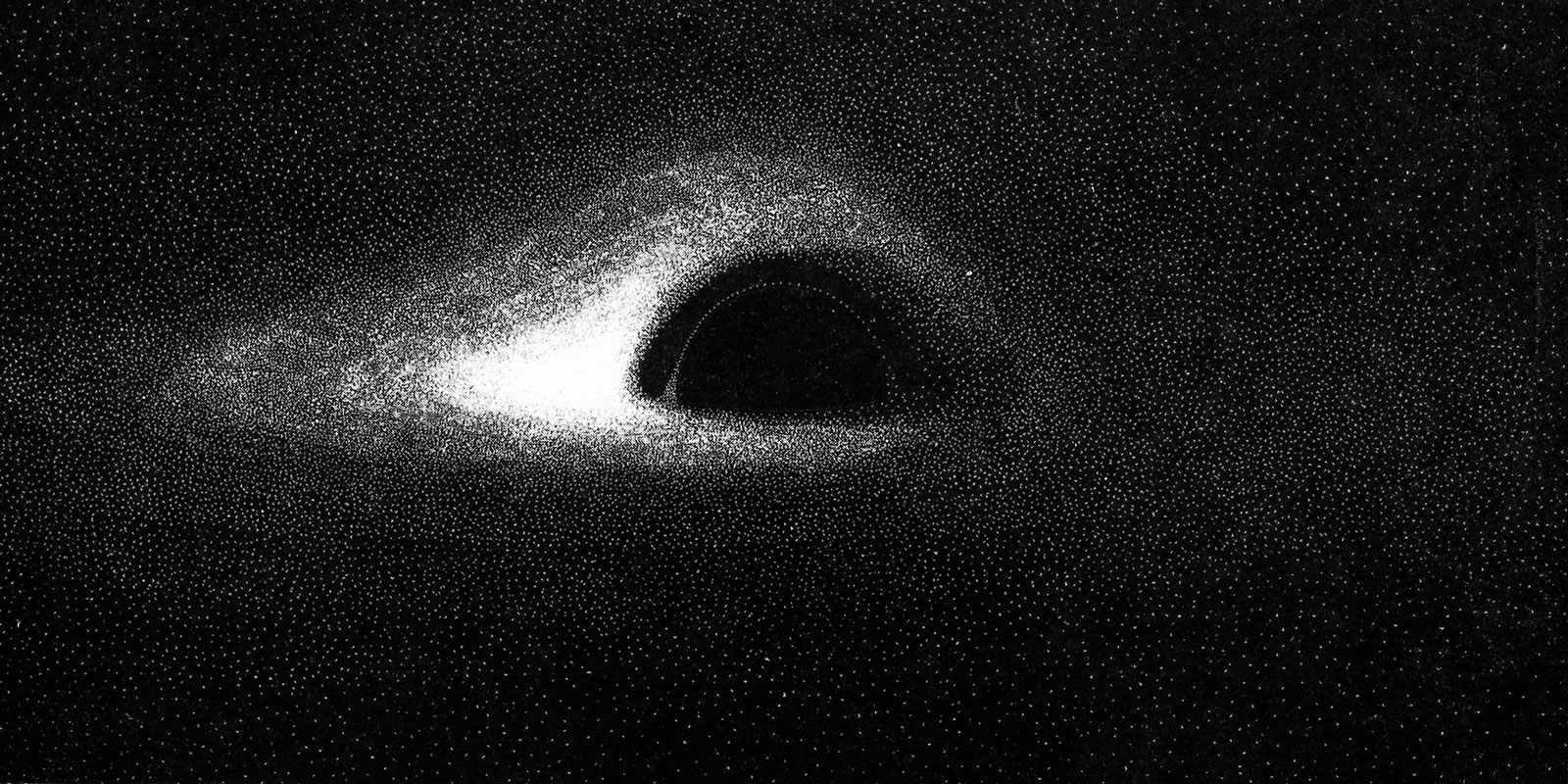
The first accurate rendering of a black hole from 1979.
Calculate brightness distribution on one of these:
800px-IBM_7040_front_panel.jpg


Then hand inked the points of density using black ink, then made a negative of his drawing to get this:
TN-JPL1978-300dpi-ed2.jpg


https://www.engadget.com/2017/04/19/black-hole-image-jean-pierre-luminet/
 
Since the world seems to be in a New Age Space Race with China going to the moon and India going to Mars and such, i figured we can use this thread to just talk about everything that related to such things.
No fuckin way is India getting to mars before us. The fuck outta here with that commie talk.
 
so we should be getting an image of sorts of a black holes event horizon. did some reading on this the other day. Very interesting on what they think it will look like (see Interstellar).

I heard this mentioned on a program the other day but didn't catch the entire story. Is this supposedly a capability of the James Webb telescope that isn't up there yet, or some existing telescope? I believe it was the latter; can you refresh my memory?
Never mind, found it:
Event Horizon Telescope will soon take the first black hole photo
Looks awesome. Too bad we have to wait for such a long time to see the result, but what a result it will be. Not ground breaking, necessarily*, but really fookin cool.

*I mean we already know what we think it looks like so if it matches that it won't be too surprising. The proof of concept of the technology will be the most exciting thing.
 
That's awesome
Agreed, but to me, it mainly shows that Math is king, not computers. No matter how smart computers get, you're always still going to need a person to figure out the computational method in the first place.
 
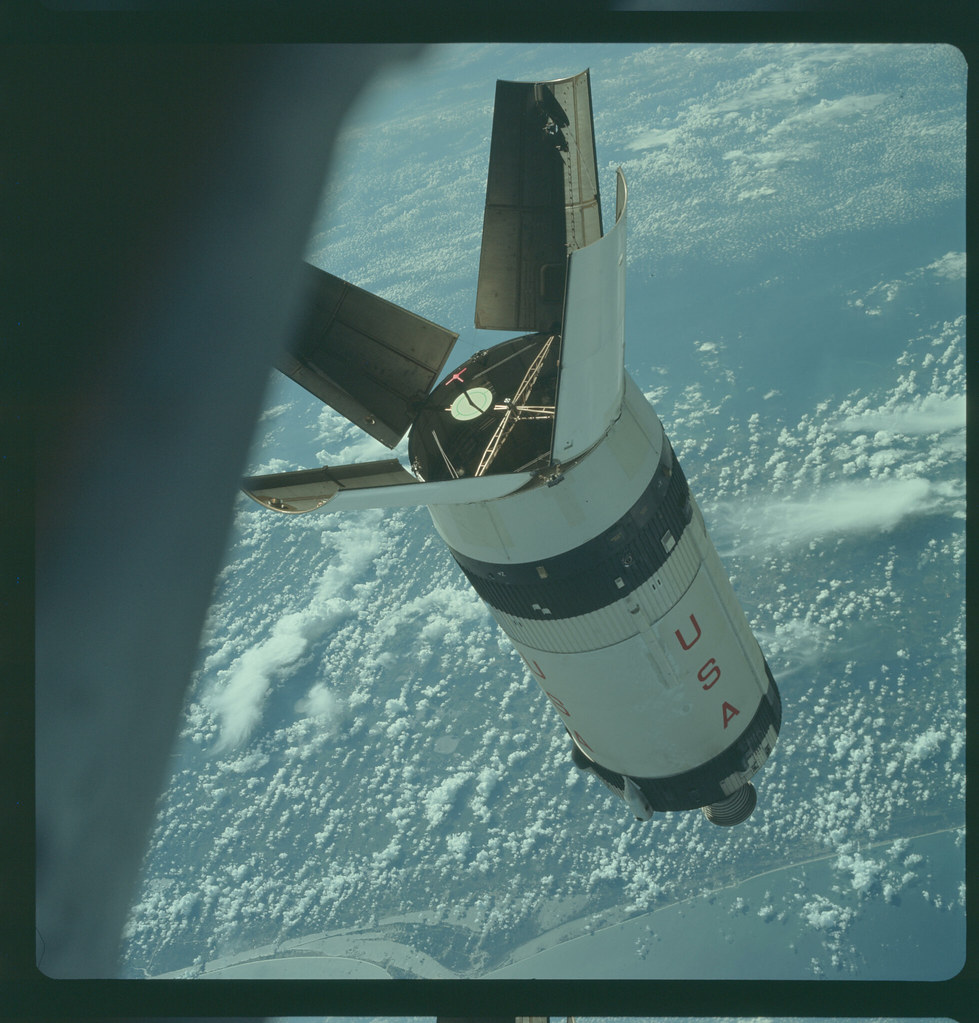
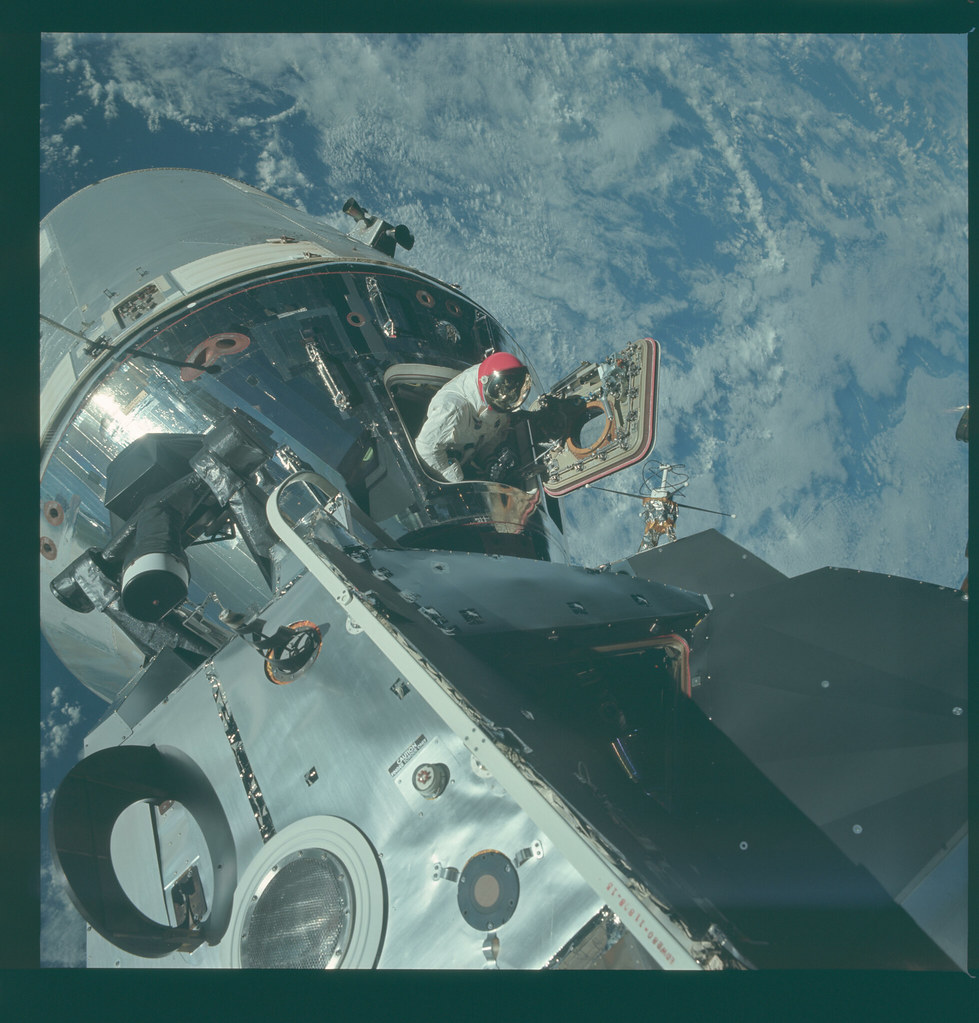
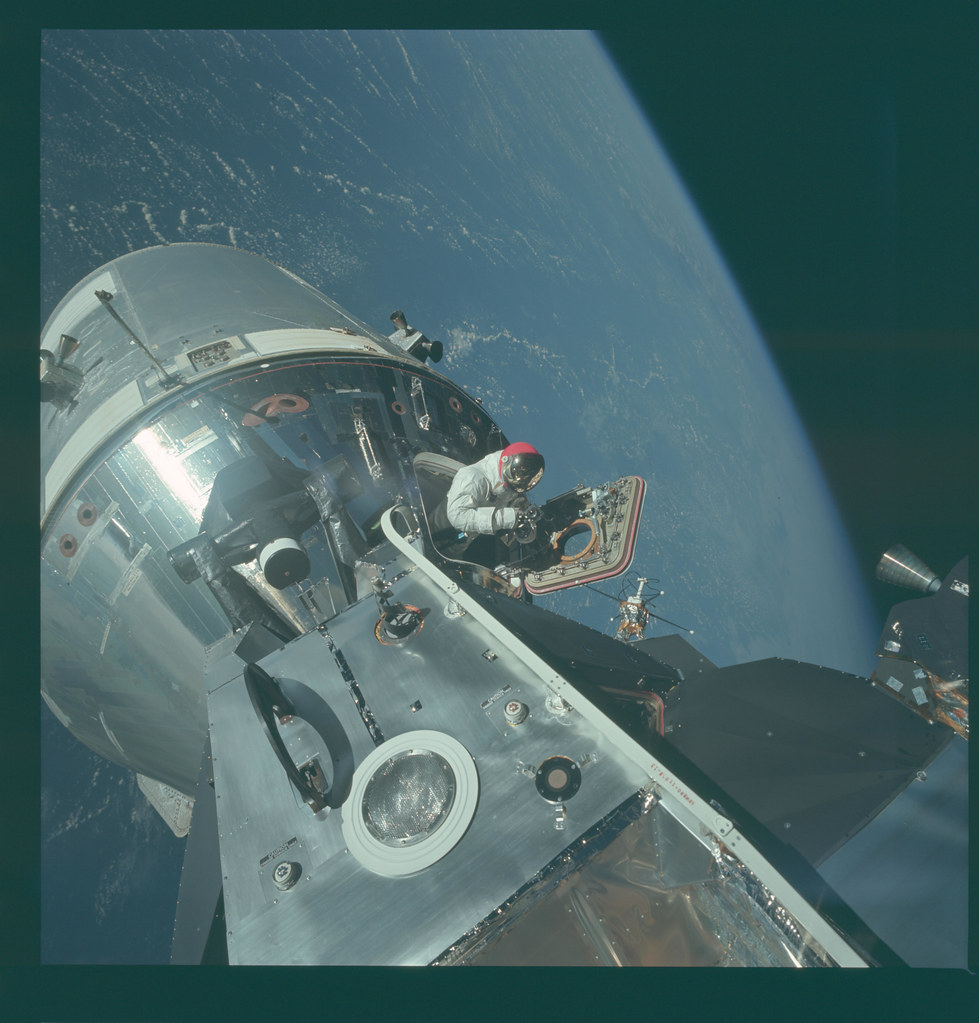
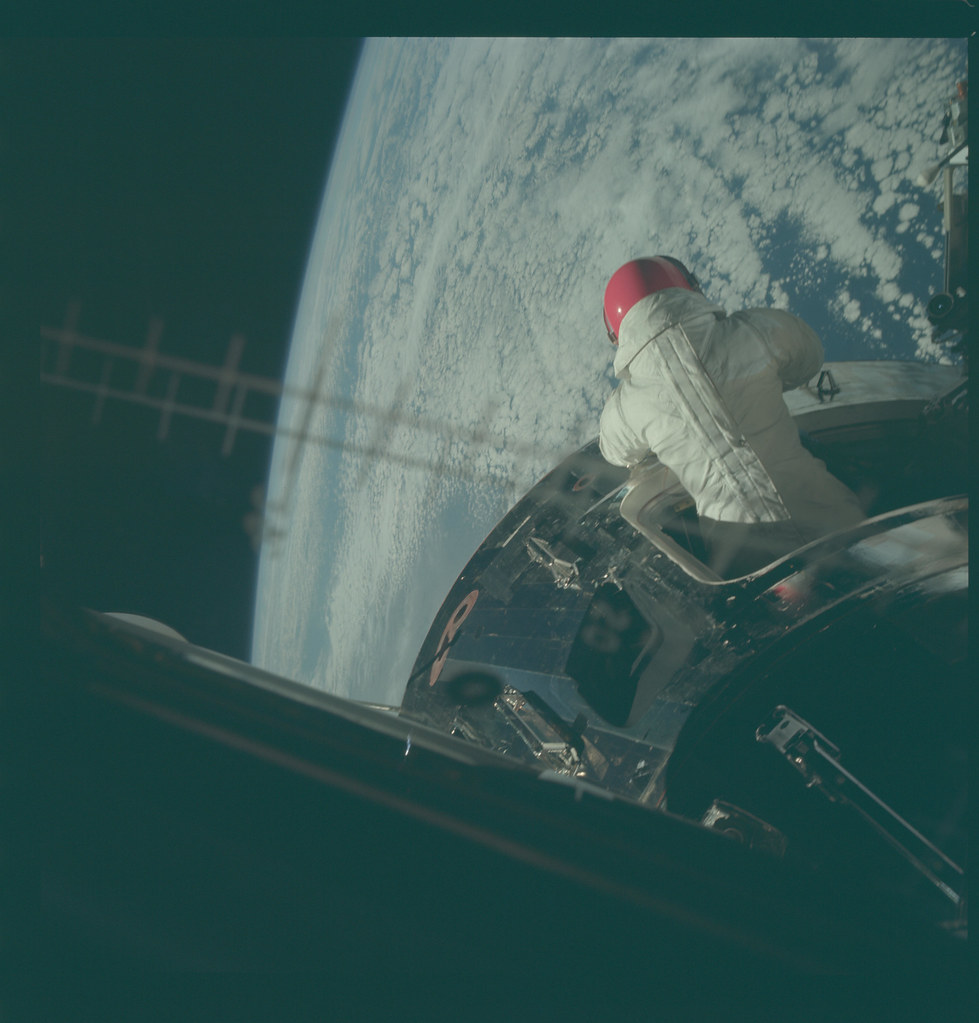
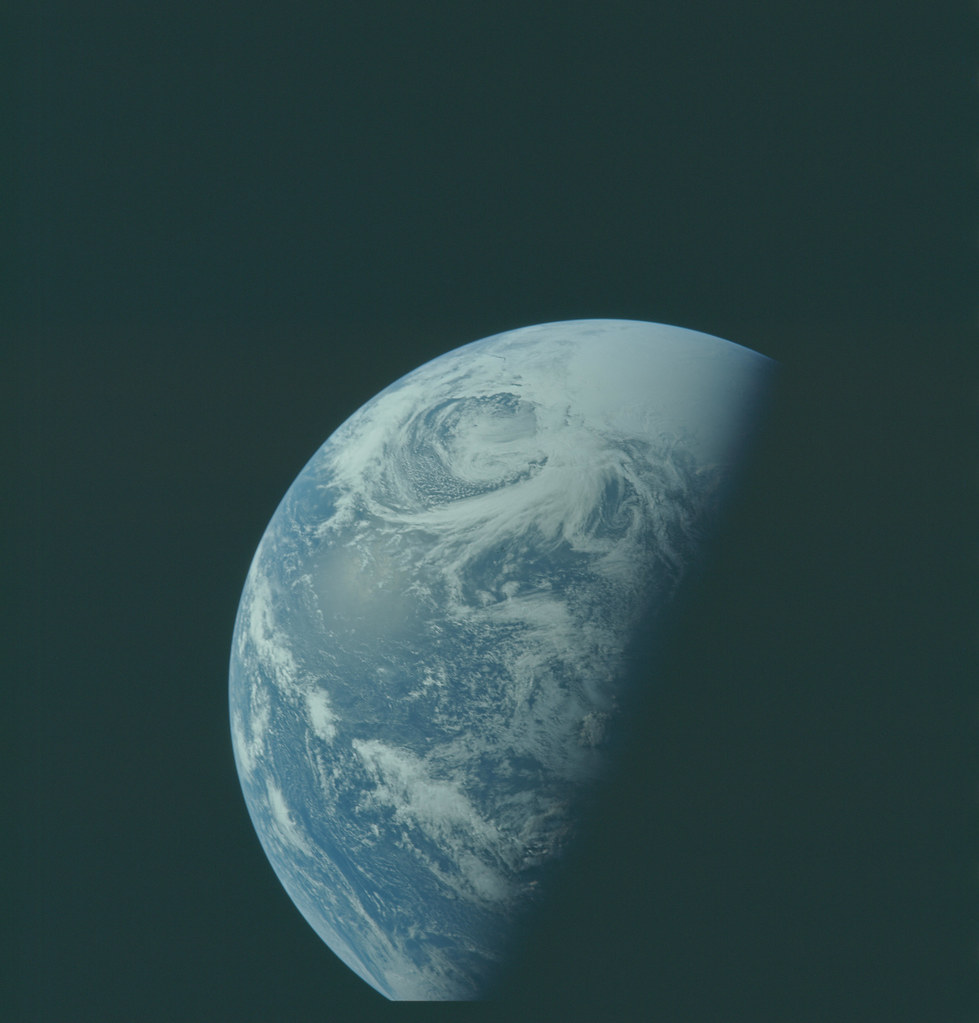
In October 2015, NASA dumped over 10,000 unprocessed photos in their original form from the Apollo missions out of their archives and onto the internet. All scanned at a resolution of 1800 DPI and even sorted by the roll of film they were on. Funny thing is, the photos have always been available in the public domain albeit not so painstakingly well organized in one place and this effort was actually an independent one by Kipp Teague, a long time employee at the NASA history office

Project Apollo Archive (Link)

21921286201_0d0e62ef1e_b.jpg

21912171516_4fdd4f7b4f_b.jpg

21912173266_44fc56c029_b.jpg

21315601374_d37a2b7725_b.jpg

22034835585_8e1d93fde0_b.jpg


I wish America would go through a new "Space Race" age. Something like that would be very inspiring for the country.

Hell yeah I feel the same way. What would spark that? We should shady be doing it for alternative energy sources.

Yeah, when people ask and wonder why there hasn't been any moon missions since the early 1970s, which human-rated SHLLV capable of supporting manned exploration of the moon do they suggest they should have gone back with by now? There hasn't been one in production since 1973. The Saturn V was capable of launching a payload of 140 metric tons (not 130) into low earth orbit and nearly 50 to the moon. By comparison, the Space Shuttle which ran overlong from 1981-2011, ate up a significant portion of NASA's budget and wasn't capable of space travel beyond LEO had max lift capacity of 25 MT.

Put another way: The Saturn V could've theoretically launched the International Space Station in three payloads as opposed to the several dozen it's actually taken to assemble it on far lesser launch vehicles. It did launch an entire space station into orbit (Skylab) in its final mission in one shot. The Russians had four catastrophes on their hands with the N1 attempting to level with Wernher von Braun's masterwork. It's arguably the greatest engineering feat in human history. And they absolutely do not have anywhere near the funding they did in the late 60s and early 70s . If it stayed at peak levels, it would put their 2017 FY budget at over $40 billion (see bottom). It's less than half of that.


saturn-v-moon-rocket-45th-anniversary-121112a-02.jpg

800px-Saturn_V_launches.jpg


800px-NASA-Budget-Federal.svg.png


As far as cutting edge space technology: Just this past Winter, the long doubted - and even maligned - EM Drive passed peer-review and the paper was published in the AIAA's Journal of Propulsion and Power. Doesn't get more legitimate than that really, although we're still quite a way from being able to utilize it for practical space exploration purposes. Crazy part is that it's been done fairly low key and really without much hype or more importantly: funding. Just dedicated work from a small group at the JSC facility in Houston.

Article: NASA's 'Impossible' EM Drive Passes Peer-Review

Research Paper: https://arc.aiaa.org/doi/10.2514/1.B36120

 
In October 2015, NASA dumped over 10,000 unprocessed photos in their original form from the Apollo missions out of their archives and onto the internet. All scanned at a resolution of 1800 DPI and even sorted by the roll of film they were on. Funny thing is, the photos have always been available in the public domain albeit not so painstakingly well organized in one place and this effort was actually an independent one by Kipp Teague, a long time employee at the NASA history office

Project Apollo Archive (Link)

21921286201_0d0e62ef1e_b.jpg

21912171516_4fdd4f7b4f_b.jpg

21912173266_44fc56c029_b.jpg

21315601374_d37a2b7725_b.jpg

22034835585_8e1d93fde0_b.jpg


Yeah, when people ask and wonder why there hasn't been any moon missions since the early 1970s, which human-rated SHLLV capable of supporting manned exploration of the moon do they suggest they should have gone back with by now? There hasn't been one in production since 1973. The Saturn V was capable of launching a payload of 140 metric tons (not 130) into low earth orbit and nearly 50 to the moon. By comparison, the Space Shuttle which ran overlong from 1981-2011, ate up a significant portion of NASA's budget and wasn't capable of space travel beyond LEO had max lift capacity of 25 MT.

Put another way: The Saturn V could've theoretically launched the International Space Station in three payloads as opposed to the several dozen it's actually taken to assemble it on far lesser launch vehicles. It did launch an entire space station into orbit (Skylab) in its final mission in one shot. The Russians had four catastrophes on their hands with the N1 attempting to level with Wernher von Braun's masterwork. It's arguably the greatest engineering feat in human history. And they absolutely do not have anywhere near the funding they did in the late 60s and early 70s . If it stayed at peak levels, it would put their 2017 FY budget at over $40 billion (see bottom). It's less than half of that.


saturn-v-moon-rocket-45th-anniversary-121112a-02.jpg

800px-Saturn_V_launches.jpg


800px-NASA-Budget-Federal.svg.png


As far as cutting edge space technology: Just this past Winter, the long doubted - and even maligned - EM Drive passed peer-review and the paper was published in the AIAA's Journal of Propulsion and Power. Doesn't get more legitimate than that really, although we're still quite a way from being able to utilize it for practical space exploration purposes. Crazy part is that it's been done fairly low key and really without much hype or more importantly: funding. Just dedicated work from a small group at the JSC facility in Houston.

Article: NASA's 'Impossible' EM Drive Passes Peer-Review

Research Paper: https://arc.aiaa.org/doi/10.2514/1.B36120

What worries me about the EM drive is they have no idea how that is working. So, it is either some factor influencing the experiment they haven't taken into account, or it is truly revolutionary and they will have to rewrite many theories of physics that have been proven to be true over and over again. At least, that's what I read. I think the former is more likely.
 
What worries me about the EM drive is they have no idea how that is working. So, it is either some factor influencing the experiment they haven't taken into account, or it is truly revolutionary and they will have to rewrite many theories of physics that have been proven to be true over and over again. At least, that's what I read. I think the former is more likely.
Explain. What do you mean, "...they have no idea how that is working." My recollection is the design is based upon sound, well-understood principles.

EDIT:
Well, that's funny, I have to admit. An article I just read suggests they don't know how it works. It seems likely they will. I wouldn't worry.
 
Last edited:
Never mind, found it:
Event Horizon Telescope will soon take the first black hole photo
Looks awesome. Too bad we have to wait for such a long time to see the result, but what a result it will be. Not ground breaking, necessarily*, but really fookin cool.

*I mean we already know what we think it looks like so if it matches that it won't be too surprising. The proof of concept of the technology will be the most exciting thing.

Digging the Schwarzschild radius in the custom title, dude. That's going to be pretty damn incredible. Of all the astounding consequences of SR/GR from the Big Bang, expanding universe, relative velocity / gravitational time dilation to gravitational waves, length contraction and the like, it's always been black holes that have drawn the greatest amount of intrigue and fascination out of me. Considering the theoretical existence of wormholes is also predicted by TGR, it's truly the stuff that science fiction is made out of.

It's almost an afterthought these days that Einstein also identified the force carrier of electromagnetism and proved the existence of atoms, which without the former there are no industries for or even the existence of computers, semiconductors, cell phones, etc. although in the most fundamental sense Michael Faraday and James Clerk Maxwell are even more responsible where electric, radio and optical technologies are concerned.

How sad is it that the overwhelming majority of people aren't even aware - or at least don't seem to be - of what he's most known for?

SMBH.jpg
 
Digging the Schwarzschild radius in the custom title, dude. That's going to be pretty damn incredible. Of all the astounding consequences of SR/GR from the Big Bang, expanding universe, relative velocity / gravitational time dilation to gravitational waves, length contraction and the like, it's always been black holes that have drawn the greatest amount of intrigue and fascination out of me. Considering the theoretical existence of wormholes is also predicted by TGR, it's truly the stuff that science fiction is made out of.

It's almost an afterthought these days that Einstein also identified the force carrier of electromagnetism and proved the existence of atoms, which without the former there are no industries for or even the existence of computers, semiconductors, cell phones, etc. although in the most fundamental sense Michael Faraday and James Clerk Maxwell are even more responsible where electric, radio and optical technologies are concerned.

How sad is it that the overwhelming majority of people aren't even aware - or at least don't seem to be - of what he's most known for?

SMBH.jpg

What are you saying? That a majority a people don't know what black holes are?
 
No, that the majority of people don't know what Albert Einstein is even known for. The majority of Americans cannot even name a single active scientist for that matter either. The Black Hole infographic was more directly in relation to the article he posted for lurkers in the thread.

Well, technically, Schwartzchild is more directly responsible as he solved the field equations. Also, Wheeler coined the term.

I think most people know E = m c^2 and associate Einstein with that
 
What are you saying? That a majority a people don't know what black holes are?
I thought he may be referring to the paper for which Einstein won the Nobel Prize (an explanation of something called the photoelectric effect) because it had nothing whatsoever to do with Relativity. It's an interesting story by the way. Anyone interested in the history of science should ask Mr. Google about Einstein's work in that area. Funny how someone who famously said, "God does not play dice with the Universe," in reference to his distaste for the uncertainty of quantum physics, did massive amounts to advance the science.
 
Well, technically, Schwartzchild is more directly responsible as he solved the field equations. Also, Wheeler coined the term.

Yeah, Einstein didn't even (want to) believe black holes existed, I was just using Rebound59's post about black holes as an opportunity to bring up Einstein, GR and his other contributions to physics on the whole, though there's an innate association with black holes as a prediction of General Relativity as solved by Schwarzschild. I wasn't claiming they're what he's most known for, or arguing over who should be given credit or claiming that the majority of people don't know what they are. Wheeler didn't coin the term so much as he popularized it.

I think most people know E = mc^2 and associate Einstein with that

Exactly, and as much of a tremendous insight that was, what he's most known for (in scientific circles) is erecting one of the two pillars of modern physics nearly singlehandedly by providing the most thorough description of gravity yet known and verified through experiment. Newton had stood for centuries prior to Einstein's brainchild, though still very accurate in most circumstances, mind.

I thought he may be referring to the paper for which Einstein won the Nobel Prize (an explanation of something called the photoelectric effect) because it had nothing whatsoever to do with Relativity. It's an interesting story by the way. Anyone interested in the history of science should ask Mr. Google about Einstein's work in that area. Funny how someone who famously said, "God does not play dice with the Universe," in reference to his distaste for the uncertainty of quantum physics, did massive amounts to advance the science.

Amusingly ironic in hindsight, and no doubt extending Max Planck's hypothesis of energy quanta with the formula for black body radiation by identifying photons via the photoelectric effect was one of the principle contributions to the foundation of QM. The history of science is endlessly fascinating, particularly physics in the first half of the last century. Talk about a "Big Bang", we're still essentially building off the work that was done in the first quarter of the 20th.

Physics.png
 
I thought he may be referring to the paper for which Einstein won the Nobel Prize (an explanation of something called the photoelectric effect) because it had nothing whatsoever to do with Relativity. It's an interesting story by the way. Anyone interested in the history of science should ask Mr. Google about Einstein's work in that area. Funny how someone who famously said, "God does not play dice with the Universe," in reference to his distaste for the uncertainty of quantum physics, did massive amounts to advance the science.

Well, it was for...

"for his services to Theoretical Physics, and especially for his discovery of the law of the photoelectric effect"

He did so much, relativity is also under that umbrella of Theoretical Physics.
 
...


Exactly, and as much of a tremendous insight that was, what he's most known for (in scientific circles) is erecting one of the two pillars of modern physics nearly singlehandedly by providing the most thorough description of gravity yet known and verified through experiment. Newton had stood for centuries prior to Einstein's brainchild, though still very accurate in most circumstances, mind.


...

Depends what scientific circles you belong... if you're a condensed matter guy, he's more known for Bose-Einstein condensates.

;)
 
Yeah, Einstein didn't even (want to) believe black holes existed, I was just using Rebound59's post about black holes as an opportunity to bring up Einstein, GR and his other contributions to physics on the whole, though there's an innate association with black holes as a prediction of General Relativity as solved by Schwarzschild. I wasn't claiming they're what he's most known for, or arguing over who should be given credit or claiming that the majority of people don't know what they are. Wheeler didn't coin the term so much as he popularized it.


Exactly, and as much of a tremendous insight that was, what he's most known for (in scientific circles) is erecting one of the two pillars of modern physics nearly singlehandedly by providing the most thorough description of gravity yet known and verified through experiment. Newton had stood for centuries prior to Einstein's brainchild, though still very accurate in most circumstances, mind.


Amusingly ironic in hindsight, and no doubt extending Max Planck's hypothesis of energy quanta with the formula for black body radiation by identifying photons via the photoelectric effect was one of the principle contributions to the foundation of QM. The history of science is endlessly fascinating, particularly physics in the first half of the last century. Talk about a "Big Bang", we're still essentially building off the work that was done in the first quarter of the 20th.

Physics.png
I think it's important to remember many advances in mathematics over the same period (and earlier) helped make this all possible. Even though physics is what is deemed to be what helps us describe the universe, it all comes down to the math.

Speaking of all things science, NASA recently had a press conference where they announced the release of the final data of the Kepler survey. The new results include 219 additional exoplanet candidates with 10 inside their parent stars' respective habitable zones. Since the mission began, Kepler has found more than 2300 confirmed exoplanets, 49 in the habitable zone.

Scientists are now excited to refine and expand these results with K2, the upcoming Transiting Exoplanet Survey Sattellite (TESS), and the James Webb Space Telescope (JWST). [bold]-And about damned time, emphasis mine.[/bold]
Credit - Molly Michelson, Science Today
https://www.calacademy.org/explore-science/the-end-or-beginning-of-the-kepler-era
 
Well, it was for...

"for his services to Theoretical Physics, and especially for his discovery of the law of the photoelectric effect"

He did so much, relativity is also under that umbrella of Theoretical Physics.
I think you're minimizing the achievement of the photoelectric effect paper. He proved quanta/discrete photons exist. That's fundamental to quantum physics, wouldn't you say?

Anyway, the point was that it was hugely significant the average joe has not heard about it.
 
Last edited:
Absolutely no doubt, Mathematics is the original science and I've got a lot of appreciation for the likes of Euclid, Archimedes, Eratosthenes, et al. That specific timeline cut off was only made in relation to the recent discussion in here.

More than just knowledge of the Universe, mathematics applied to nature has often been the driving force and laid the foundation for a lot of the world's technological advancement, particularly when considering the utilization of practical electricity, power generation and supply, all of the infrastructure, machinery and appliances in the world that run on it and every electric, radio and optical technology that's ever been produced for that matter is underpinned by the discoveries, principles and advancements made in physics. Some of the more experimental physicists like a Michael Faraday or Ernest Rutherford have been critically important as well.

I admittedly haven't kept up to speed with the Kepler scope and mission as much as I would've liked but I'm pretty excited about the JWST being launched next year. That's one wildly expensive and advanced piece of space tech hardware.
Only so expensive, I think, because of all the funding shenanigans making it so delayed. Man, those kinds of delays are agonizing. I thought I was going to rupture something waiting for the LHC to go online. When they blew the magnet and flooded the place with helium, I think I started bleeding from my asshole LOL.

But woot!
"June 22, 2017
NASA's Webb Telescope Gets Freezing Summertime Lodging in Houston
NASA’s James Webb Space Telescope was placed in Johnson Space Center’s historic Chamber A on June 20, 2017, to prepare for its final three months of testing in a cryogenic vacuum that mimics temperatures in space."
 
Back
Top