• Xenforo Cloud is upgrading us to version 2.3.8 on Monday February 16th, 2026 at 12:00 AM PST. Expect a temporary downtime during this process. More info here

Nature & Animals Zookeeper Gabe’s Animal Thread Vol 10.0

Ever been so hungry you'd jump off a cliff.

Well this maniac was!


I will be sore tomorrow just from watching this video. The durability and toughness of animals is amazing. I recently took a tumble down a slight decline on the AT and was a wreck for a week.
 
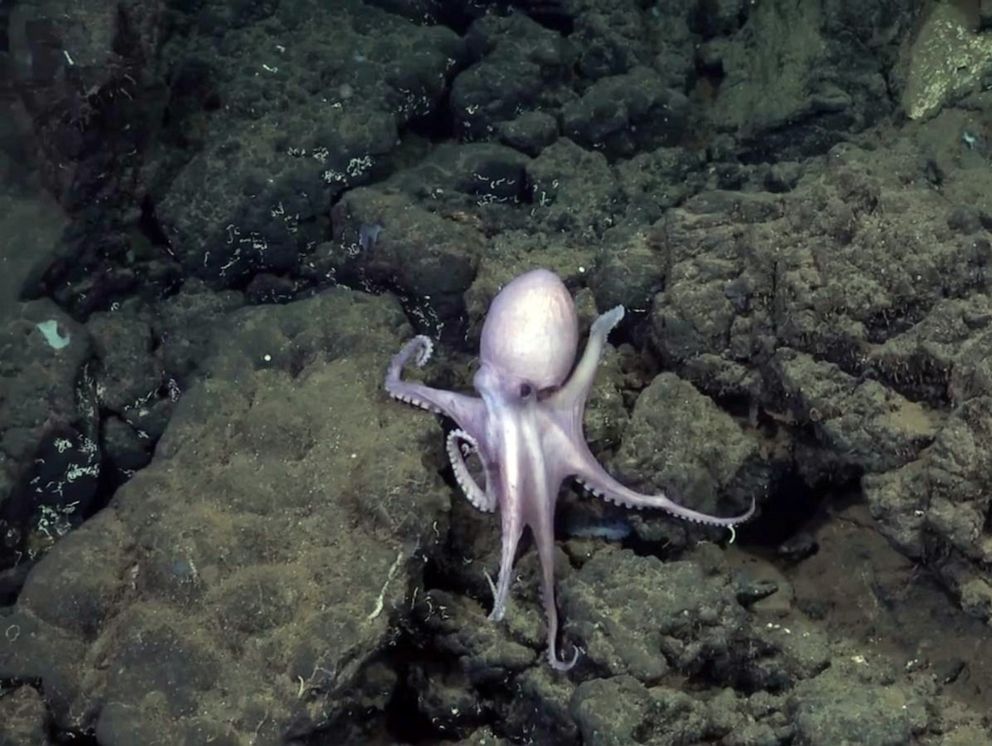
Rare deep-sea octopus nursery discovered off Costa Rica

The scientists believe the octopus is a new species of Muusoctopus.

A deep-sea octopus nursery, just the third known to exist, has been discovered off the coast of Costa Rica, according to the Schmidt Ocean Institute.

Scientists were able to see an active octopus nursery and witness babies hatching while exploring deep-sea seamounts -- underwater mountains that facilitate biodiversity in the deep sea, the scientists said.

The team of 18 international scientists found the nursery at a low-temperature hydrothermal vent about 9,000 feet below the surface of the ocean. They believe the octopus is potentially a new species of Muusoctopus, a group of small- to medium-sized deep-sea octopus without an ink sac, the Schmidt Ocean Institute said in a statement.

octopus1-ht-ml-230630_1688133486539_hpEmbed_4x3_992.jpg

Footage released by the Schmidt Ocean Institute shows the deep-sea discovery in an area previously thought to be "inhospitable" to young octopuses.
Schmidt Ocean Institute via Storyful

Scientists used an underwater robot, ROV SuBastian, to observe the seamounts and baby octopuses.

"The discovery of a new active octopus nursery over 2,800 meters beneath the sea surface in Costa Rican waters proves there is still so much to learn about our Ocean," said Schmidt Ocean Institute Executive Director Jyotika Virmani.

octopus3-ht-ml-230630_1688133639685_hpEmbed_16x9_992.jpg


The scientists made the discovery while on a 19-day expedition studying the biodiversity of unprotected seamounts off the coast of Costa Rica, according to the Schmidt Ocean Institute.

Witnessing the species hatch disproved the idea that the area is inhospitable for developing octopuses, according to the Schmidt Ocean Institute.

The site where scientists witnessed the hatching was discovered in 2013, and was the first time scientists witnessed female octopus gathered together to brood their eggs. But at the time, scientists did not see developing embryos leading them to believe the Dorado Outcrop might not support octopus growth, according to the Schmidt Ocean Institute.

"The deep-sea off Costa Rica rides the edge of human imagination, with spectacular footage collected by ROV SuBastian of tripod fish, octopus hatchlings, and coral gardens. We look forward to continuing to help the world witness and study the wonders of our incredible Ocean," Virmani said.

https://abcnews.go.com/Internationa...-discovered-off-costa-rica/story?id=100539349
 
293e526b807c047420701965543101de.jpeg

Bumped into a few snakes recently, got two different groups of kookaburras about 9 birds I think roam the property...

I think they've been slack compared to that fellow.


Bonus kookaburra laugh for those that haven't heard it.


Extremely loud buggers and always seem to time it well to make you think they're laughing at the dogs
 
Grey whales seen seeking human help to remove parasites

Captain of tourist boat from Baja California, Mexico, says grey whales return repeatedly for ‘grooming’

Grey whales have learned to approach whale-watching boats to have parasites removed by human beings, it has been claimed.

Video footage documenting the behaviour in the Ojo de Liebre lagoon, off the coast of Baja California, Mexico, shows a grey whale having whale lice picked off its head by the captain of a small boat. “I have done it repeatedly with the same whale and others,” Paco Jimenez Franco told a US news site. “It is very exciting for me.”

Whale lice or cyamids – pale, crab-like creatures that crawl about on the animal’s heads – can be beneficial for whales, eating algae on their bodies and feeding on flaking skin and the sites of wounds. However, it is assumed that they also irritate the animal.


“I think the grey whales have a love-hate relationship with their whale lice,” said Mark Carwardine, a British zoologist with wide experience in the region. “They have very sensitive skin, and thousands of these little creatures holding on tight, or moving about, with their exceedingly sharp, recurved claws, must drive them nuts.”

He added: “It can actually hurt when a whale louse grabs hold of your finger – it feels like tiny pinpricks.”

Franco picked a louse off the head of the whale the first time it came close enough for him to do so. “Once I removed the first one, she approached again so that I could continue,” he said. The same individual whale has returned repeatedly for more “grooming”, according to Franco.

Like many of the relatively slow-moving great whales, including humpbacks and right whales, grey whales – which can grow up to 15 metres (50ft) in length – are particularly susceptible to parasites. They also acquire barnacles as they graze on minute amphipods at the silty bottom of the sea.

The grey whales off Baja California are celebrated for their inquisitive behaviour towards boats, even though they were hunted drastically in the 20th century. They were known to whalers as “devil fish” on account of their ferocity in fighting back against hunters, whose tactics included killing a nursing female’s calf to ensure the adult came close enough to be harpooned. The whale’s only other predator is the orca.

While he could not confirm that approaching humans for delousing help constituted new behaviour in whales, Carwardine said he had not seen it before. “The whales certainly don’t seem to mind when people pick them off, although you’d have to pick off hundreds to make much of a difference,” he said.

Because the lice eat sloughed whale skin and damaged tissue, he noted that “rather than parasites, they are really what we call symbionts – in other words, each animal benefits from the other”.

The new grooming behaviour could be considered similarly symbiotic. Given that grey whales can live for at least 80 years, it is possible that animals that were alive during the period of hunting have since adapted to benefit from interaction with humans.

https://www.theguardian.com/environ...s-seen-seeking-human-help-to-remove-parasites



If this seems random it was supposed to be quoting the snow leopard jumping. I don't know what happened I posted this several days ago.
 
Last edited:
Realized I never uploaded some of the pictures from my Japan trip. While we were going to Kyoto for a wedding (my wife’s friend is from the region), I had managed to get connected with a fellow keeper over in Hiroshima. He is a keeper and researcher of the Japanese giant salamander, which is by far one of my favorite animals. We had planned to meet at his zoo and see their captive breeding project (one of only two facilities to breed the Japanese giant salamander) and then go out into the field to search for them in the wild. The chances were low due to recent extremely heavy rains, but we were successful in catching two individuals taking measurement and one was a new individual to their study so it got a pit tag to identify it.
Spitted from a bridge with flashlights at around 9:00pm
vJONSML.jpg

Captured in a net
lOVKw5G.jpg

Me borderline crying looking at this magnificent beast.
LXGbS5K.jpg

To give you some scale, about 96cm and 7.5kilo
qysPkRd.jpg

This was the second slightly smaller one
QN0nIyq.jpg

20uzdZl.mp4


The video is from my iPhone which I risked losing due to rapid waters, but man the footage is worth it. Literally put the camera underwater and so happy with the results
 
Realized I never uploaded some of the pictures from my Japan trip. While we were going to Kyoto for a wedding (my wife’s friend is from the region), I had managed to get connected with a fellow keeper over in Hiroshima. He is a keeper and researcher of the Japanese giant salamander, which is by far one of my favorite animals. We had planned to meet at his zoo and see their captive breeding project (one of only two facilities to breed the Japanese giant salamander) and then go out into the field to search for them in the wild. The chances were low due to recent extremely heavy rains, but we were successful in catching two individuals taking measurement and one was a new individual to their study so it got a pit tag to identify it.
Spitted from a bridge with flashlights at around 9:00pm
vJONSML.jpg

Captured in a net
lOVKw5G.jpg

Me borderline crying looking at this magnificent beast.
LXGbS5K.jpg

To give you some scale, about 96cm and 7.5kilo
qysPkRd.jpg

This was the second slightly smaller one
QN0nIyq.jpg

20uzdZl.mp4


The video is from my iPhone which I risked losing due to rapid waters, but man the footage is worth it. Literally put the camera underwater and so happy with the results
This is very cool. I'm happy for you that you were able to experience this
 
This is very cool. I'm happy for you that you were able to experience this
Almost all of it was filmed too, a local journalist is working on a film about them. So multiple times when I was getting misty eyed about the whole ordeal, she would notice and a giant camera and bank of lights would get blasted into my face lol
 
https://www.theguardian.com/science...etal-by-using-anti-bird-spikes-to-build-nests

1296.jpg

One of the nests made from anti-bird spikes

Nests recovered from trees in Rotterdam in the Netherlands and Antwerp in Belgium were found to be constructed almost entirely from strips of long metal spikes that are often attached to buildings to deter birds from setting up home on the structures.

The discovery prompted researchers at the Natural History Museum in Rotterdam and the Naturalis Biodiversity Center in Leiden to scour the internet for further examples, leading to the identification of two more anti-bird spike nests: one in Enschede in the Netherlands and another in Glasgow.

PqHzRT5FnGPSoEUMfmGSWH-1200-80.jpg

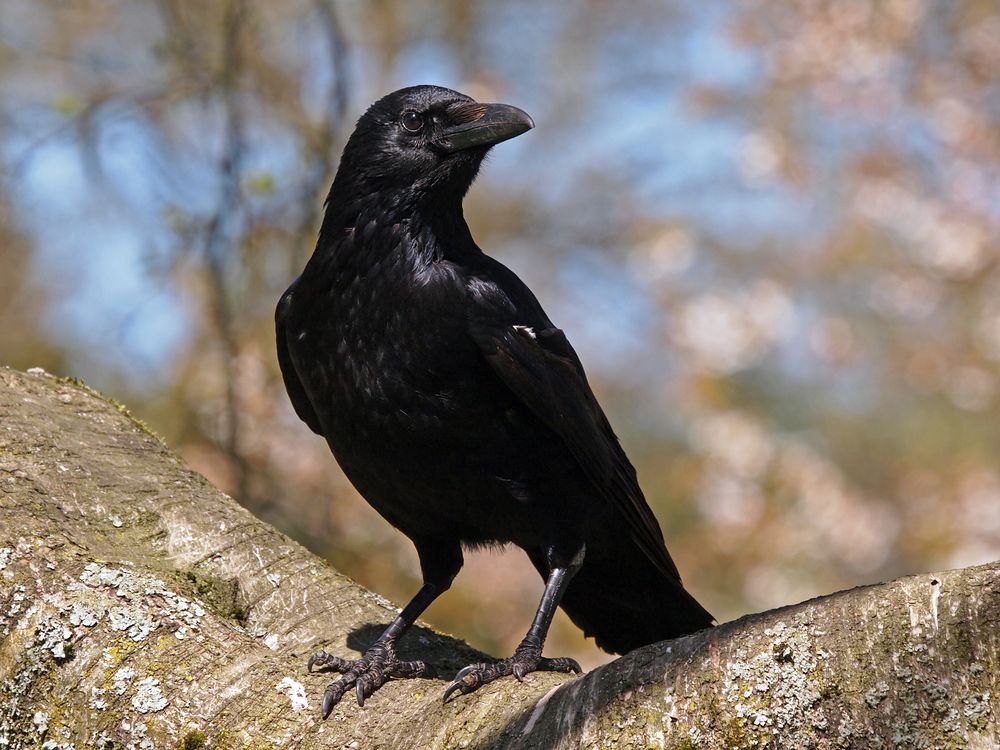
Crow

While the Rotterdam nest was made by crows, the other three were built by magpies, which construct large dome-like nests. The crows used the anti-bird spikes as a sturdy construction material, but the magpies may have appreciated their intended use: they placed most of the spikes on the nest’s roof where they could deter predators, including other birds and weasels.

1200px-Pica_pica_-_Compans_Caffarelli_-_2012-03-16.jpg

Magpie

Auke-Florian Hiemstra, a biologist at the Naturalis Biodiversity Center, said: “Even for me as a nest researcher, these are the craziest bird nests I’ve ever seen.”

1379.jpg

Bird’s nest made from anti-bird spikes and a strip of the spikes (bottom right)
 
Back
Top