
-
Xenforo Cloud is upgrading us to version 2.3.8 on Monday February 16th, 2026 at 12:00 AM PST. Expect a temporary downtime during this process. More info here
You are using an out of date browser. It may not display this or other websites correctly.
You should upgrade or use an alternative browser.
You should upgrade or use an alternative browser.
Boxing bends over backwards to turn away potential fans.
- Thread starter MC Paul Barman
- Start date


- Joined
- Jun 9, 2022
- Messages
- 8,467
- Reaction score
- 14,118
Yes.
This fight was viewed GLOBALLY, in the top spot for Netflix in over 30 countries, and top 10 in 90. It's safe to say that his complaints about "Time" are egocentric, and as it was NOT a ppv event, the focus on USA audience is much less than it would have otherwise been. To quote the great Punk band "The Exploited"
Boxing events are nearly always comprised of ONE major fight and a bunch of lesser known fighters, the casual audience doesn't have the time or the desire to spend all day watching an entire card, that's only for the hardcore fans. The ME will have a set walk out time, and everything else is in service of that event. If a 12 round fight ends in 3... you've got space to fill...because contractually, those ME fighters aren't moving until it's showtime. In teh UFC, the fighters are like the canvass...Dana Says "Pick that Cotton" and it gets done.
In Boxing, the fighters are supposed to come first, and the idea is that preparation and warm ups at this level are critical to in ring performance, and so you don't fuck with the ME's feng shui.
Boxing used to make good use of dead air with swing bouts..... ie) if they had time to kill they put in a 4 or 6 rounder in between full length features, but that has mainly gone by the wayside. I'd like to think it's because they want to be fair to the fighters, and it's shit to not know if/when you are fighting, but "fair to the fighters" isn't how any prize fight runs, so I'm sure there are ulterior motives.
But, as a Boxing fan, I know that if a 10/12 rounder ends, I've got time to make a drink/shower, whatever ...the UFC uses WMMA for that purpose.
im just giving you a like and a quote cause i love old Exploited

- Joined
- Feb 22, 2005
- Messages
- 55,495
- Reaction score
- 38,207
Aside from the litany of other problems with boxing (promoters who don't regularly give meaningful fights... boxers not working with their promoters to make meaningful fights... boxers who underwhelm the fans when they're actually in the ring)....
What a terribly shitty product in which your showcase match airs at 12:30 fucking AM (central time... those poor souls on the Pacific coast).... after what, 35 minutes of mariachi music? Now that's a great way to win over the imaginations of young fans. Great production work there. Might as well have grandmothers knitting scarves being showcased.
This was the first big fight I have watched in awhile. My son was actually interested in wanting to see it. He slipped off into the land of nod by 11:20pm.... Prior to that he got to be amazed at watching that all too regular spectacle of a SPLIT DRAW. "Oh wow, no one actually wins.... how entertaining!!".
Fighters that seem like they would rather be fencing... outcomes where voila: no actual winner. More mariachi music than you typically hear in a decade. Main fight start times that make it the goal to outsprint the interests of the potential fans and current fans.
What a horse shit of a product that boxing all to often offers up.
Barman...are we not going to address who the promoters were and exactly WHY that card sucked so bad that even one of the promoters, who also happens to be just a generally terrible combat sports promoter and insanely politically connected at this moment, was wearing a scowl through the whole thing?
I've known the Vargas Family for 20 years now and putting Fernando Jr as the co-main and not Emiliano is an unprecedented level of stupidity. As is not putting Brandon Adams as co-main. Guy is a warrior and his entrances alone are worth a watch.

- Joined
- Mar 6, 2002
- Messages
- 23,237
- Reaction score
- 2,009
Barman...are we not going to address who the promoters were and exactly WHY that card sucked so bad that even one of the promoters, who also happens to be just a generally terrible combat sports promoter and insanely politically connected at this moment, was wearing a scowl through the whole thing?
I've known the Vargas Family for 20 years now and putting Fernando Jr as the co-main and not Emiliano is an unprecedented level of stupidity. As is not putting Brandon Adams as co-main. Guy is a warrior and his entrances alone are worth a watch.
I’m talking in general about the promoter issue.
Think of all of the good fights that just got pissed away. Whoever is to blame… there’s someone (some few).
Remember back when Gamboa and JuanMa held the attention of this forum?
So much debate about who would win? But then the posters who were rightfully pointing out that chances were, based on the tendency of the players in this sport, the fight would never happen. And, after both suffered bad losses, the fight became irrelevant.
How many times has just this one issue bubbled up?
I used to think that a Dana white over the whole sport was a bad thing. That it would breed corruption… funny being a boxing fan and worried about corruption in other sports.
But now I’ve flipped. Boxing needs a league… and a head honcho to rule over the fighters associated with that league.
- Joined
- Dec 28, 2008
- Messages
- 2,050
- Reaction score
- 216
Yes that's what we need. Then we can look forward to boxing attracting subpar athletes desperately looking for a payday who will issue call outs to badminton players that they will beat them in badminton like Topuria is doing to Crawford. You don't even see the corruption in MMA with your rose tinted glasses because there what boxing fans consider corruption is actually legal!But now I’ve flipped. Boxing needs a league… and a head honcho to rule over the fighters associated with that league.
Questionable rankings by a sanctioning body after taking money from a promoter? In MMA the promoter does his own rankings based on his own whims, he gives title shots based on his whims (usually to the more popular fighter), & its completely legal. At least in boxing you can whine online about the corrupt sanctioning body, in MMA its not even considered wrong
Tom Aspinall’s father open to son booking boxing match: ‘The UFC ain’t paying that type of money’
by Alexander K. Lee
Sep 1, 2025

Tom Aspinall’s father open to son booking boxing match: ‘The UFC ain’t paying that type of money’
How would Tom Aspinall fare in the boxing ring?www.mmafighting.com
Resurfaced video of Tom Aspinall with Tommy Fury emerges as he pondered boxing career decision
Just 23 at the time and sat next to a baby-faced Fury before his Love Island fame, Aspinall said in the gym: “Yeah, that's right, it's not my first day.
- Callum Vurley
- Published: 20:28, 31 Jul 2024
"I've actually been coming quite a bit to do the sparring, but it's my first day that I've decided to focus solely on boxing, but it's time to learn the trade now.
"I've been doing MMA for a long time. I've been struggling to make it pay financially and just not getting many rewards from it because I'm struggling to get fights, so it's time to switch over and do the boxing."

Resurfaced video of Aspinall with Fury emerges as he pondered boxing decision
Tom Aspinall’s career could have been very different in 2016 had he decided to ditch MMA for boxing. Aspinall has experienced a rapid rise in MMA, flying up through the ranks to become one of…talksport.com
We can also look forward to promoter controlled rankings & belts with no co-promotion. Conflict of interest in having a promoter rank his own fighters? What's that?
Can't wait for Bob Arum & Eddie Hearn to come up with Matchroom rankings, Top rank rankings, Matchroom belt, Top rank belt
Also your sort of crying has existed as long as boxing has been a mass spectator sport
Dempsey Foresees Boxing's Doom; Calls for Czar to Clean Up Game; Ex-Champion Gives Sport One More Year of Life If Present Tendencies Are Unchecked--Schmeling's Right to Title Boat Defended--Louis's Qualifications Questioned
April 23, 1937
One more year at its present pace and the fight game will be washed up, Jack Dempsey bluntly predicted today. "Something must be done, and if it isn't done within the next year we just won't have any boxing," flared the 42-year-old former heavyweight master. "In the past five years boxing has deteriorated so much that all other sports have gone far ahead.
https://www.nytimes.com/1937/04/23/...ngs-doom-calls-for-czar-to-clean-up-game.html
Rocky Marciano did with WFLD TV in Chicago on the day before he died on Aug. 31, 1969.
Just a minute or so into the interview, Marciano was asked a question that floored me.
"Rocky, when you started up the ladder, boxing was not tainted," the interviewer began. "Boxing was a legitimate, highly respected sport. You great athletes came into boxing ... because you were hungry, apparently. What caused the demise of the indecency of boxing and certainly today, while I'll not just it as being indecent, it certainly is not an acceptable form of sport like it used to be. Why is that?"
This interview was done Aug. 30, 1969. Muhammad Ali was still banned from boxing because of his refusal to be inducted into the military service. A 20-year-old George Foreman had raised his record to 4-0 when he knocked out Chuck Wepner two weeks earlier. Richard Nixon was in his first term as president, and Watergate had yet to enter the lexicon.
Marciano did not disagree with the premise of the question. He did not stop the interview and say, "What are you talking about? Boxing is in great shape now."
Rather, he addressed the question thoughtfully and echoed points that fans still moan about today.
"Well, I think it's because boxing has become a money game," Marciano said. "It's very, very commercial. The fighters today only think of what they're going to earn. They don't have the competitive spirit any more. They've lost the boyish enthusiasm of what was once a great sport, really.
"They lost that college spirit. Today, it's how much can I make and who can I fight. I don't want to fight him because he's too good and I won't make enough money. I'd rather fight this fellow, because he's a bigger drawing card and I'll make more money and he's less of a risk."
You could take that last part and it would fit perfectly into so many of the stories written about boxing now.
Boxing fans have never been happy with the state of the sport, not even during the mythical so called "golden age". They were whining then, they whine now with irrelevant complaints (wah wah it was at 12 Pacific Time as if the world revolves around US timezones only for a Netflix show targeted towards the global audience), wah wah there was a split draw (never mind what a nonstop slugfest it was & how close the fight it was)
Boxing had its UFC, it was called the IBC of New York, & it was forcibly disbanded by the SCOTUS for breaking anti trust laws in the 1950's, & rightly so
Last edited:
- Joined
- Feb 22, 2005
- Messages
- 55,495
- Reaction score
- 38,207
I’m talking in general about the promoter issue.
Think of all of the good fights that just got pissed away. Whoever is to blame… there’s someone (some few).
Remember back when Gamboa and JuanMa held the attention of this forum?
So much debate about who would win? But then the posters who were rightfully pointing out that chances were, based on the tendency of the players in this sport, the fight would never happen. And, after both suffered bad losses, the fight became irrelevant.
How many times has just this one issue bubbled up?
I used to think that a Dana white over the whole sport was a bad thing. That it would breed corruption… funny being a boxing fan and worried about corruption in other sports.
But now I’ve flipped. Boxing needs a league… and a head honcho to rule over the fighters associated with that league.
I agree a league would be good, but not Dana White. Hes horrible at this and that Canelo card proves it. His.dirsct involvement and the card sucked. And he knew it sucked.
Also I'd prefer someone who would let the boxers Unionize. That d*ckhead wants to treat Boxing like the UFC where fighters make a fraction of a percent of what he would make.
- Joined
- Dec 28, 2008
- Messages
- 2,050
- Reaction score
- 216
Boxing had its UFC, it was called the IBC of New York, & it was forcibly disbanded by the SCOTUS for breaking anti trust laws in the 1950's, & rightly so
THE CASE AGAINST THE IBC
Here for the first time SI presents the government case in the attempt of the Department of Justice to break up the boxing monopoly of James D. Norris, IBC, et al.March 23, 1956
The government case rests on a 1955 decision of the Supreme Court of the United States, delivered by Chief Justice Earl Warren, that boxing is a business in interstate commerce and therefore comes under the antitrust laws.
That decision permitted the Antitrust Division of the Department of Justice to move against IBC on allegations that it had bought control of boxing championships, bought out competitors, acquired exclusive use of the big stadiums and forced championship contenders to agree that, if they won the championship, they would fight only for IBC. Through these means, the government contends, IBC has become boxing's colossus, promoting 80% of championship bouts in the period involved (June 1949 to May 1953, for purposes of the suit), with revenues in that period of more than $7 million. The extent of the IBC's control of champions—and the lucrativeness of that control—are set forth in the tables, from the government's brief, on the opposite page and on pages 28 and 29.
In addition to controlling the championships, of course, IBC promotes nonchampionship bouts, including the big television shows on Wednesday and Friday nights.
By controlling the champions—in all but the flyweight and bantamweight divisions, which are no longer important in the United States—IBC has been able to force the loyalty of lesser fighters, managers and copromoters. For if a fighter wants to get a crack at the championship some day he must be an IBC-pleaser as well as a crowd-pleaser. If a promoter or a manager wants an occasional IBC-TV fight he must be an amiable fellow.
But if the government wins its case, then championship fight promotion will be wide open to competition. Other promoters will be able to bid for the fighters' services and have access to the big indoor and outdoor arenas where such fights can be staged profitably. Fighters and managers will not have to consider IBC wishes when they sign for a fight in the hinterlands outside its domain. Some good fighters who have found it difficult and even impossible to win national recognition may at last have their chance.
The immediate result, if all this comes to pass, is likely to be the kind of confusion that comes with word of a gold strike in hitherto inaccessible territory. Managers of top fighters will be in the saddle (though the bridle in some cases may still be held by the likes of Frankie Carbo). Promoters and would-be promoters will doubtless join in a frantic scramble for fights. Television promotion will be affected, since managers will be able to drive hard bargains for more than the current $4,000 minimum, and the IBC, recently re-signed to its $962,000 Pabst-Mennen contract for 52 weekly TV fights (in addition to its similar Gillette contract), may have difficulty in guaranteeing schedules of acceptable matches to the sponsors. Competition, of a sort long since gone from boxing, will be restored.
A government-favored decision will have an effect, too, on the hoodlums who have infested the sport for many a long year but thrive best under monopoly conditions. Fight managers have long known that the man to see, if you want to be sure of getting fights for your boy, is the hoodlum and killer Carbo, who wants first to know whether the manager and his fighter are "businessmen." If they are (and "businessmen" is a hoodlum euphemism for those willing to do as they are told) they get fights. With independent promoters running loose, Carbo may be reduced to his stature of the '40s when, for the most part, though a big-time betting operator, he could offer only sporadic money bribes to a fighter or manager instead of a steady livelihood. As IBC took over more and more of boxing, Carbo's influence, whether real or pretended, mounted in managerial circles. He and Norris had known each other for 20 years. The Carbo name became a whispered byword. But his influence could now decline...
By 1951 every champion—except Joey Maxim, who held the light heavyweight title, and the bantam and flyweight champions—was under exclusive contract to IBC. Maxim's manager is Jack (Doc) Kearns, a loner. That failure was corrected in 1952 when Archie Moore won the title from Maxim and went into the IBC bag.
As the government points out in its brief, "control of the heavyweight championship is usually the most lucrative source of revenue in boxing." It cost IBC $165,000 to win control of those first four heavyweight contenders but, after all, the first Charles-Walcott fight alone brought in more than $179,000 in gate receipts, as well as $35,000 from home TV and radio and $2,500 from theater TV, then in its infancy. (By the time of the Marciano-Walcott fight in September 1952, theater TV brought in $108,000, movies $273,000, and even greater returns were realized in later fights.)
Since that Charles-Walcott fight IBC has promoted or participated in the promotion of every heavyweight championship bout held in the United States. In order to get a shot at the current champion the current contender had to agree to fight title bouts exclusively for IBC if he won.
And so it went through the other divisions. From Archie Moore to Sandy Saddler, IBC came eventually to own them all, under a system which almost assured perpetual ownership.
(Recently Rocky Marciano's exclusive contract with IBC expired and was not renewed. A fortuitous public feud between Norris and Rocky's manager, Al Weill, may or may not be genuine, but should provide a very timely portion of grist for IBC's defense. IBC can now claim that it no longer controls the heavyweight championship. But IBC certainly controlled Rocky's services during the lush years.)...
And, of course, if IBC controls the fighter's goal—the championship—its influence on him as to where and when and whom he fights is enormous. If it determines, as promoter-matchmaker for TV sponsors, who fights whom on television and what loyal copromoter shall share its fees in an occasional Washington, Miami, Los Angeles or San Francisco TV bout, its influence on boxing is greater than any promotional organization has ever enjoyed in the history of the sport.
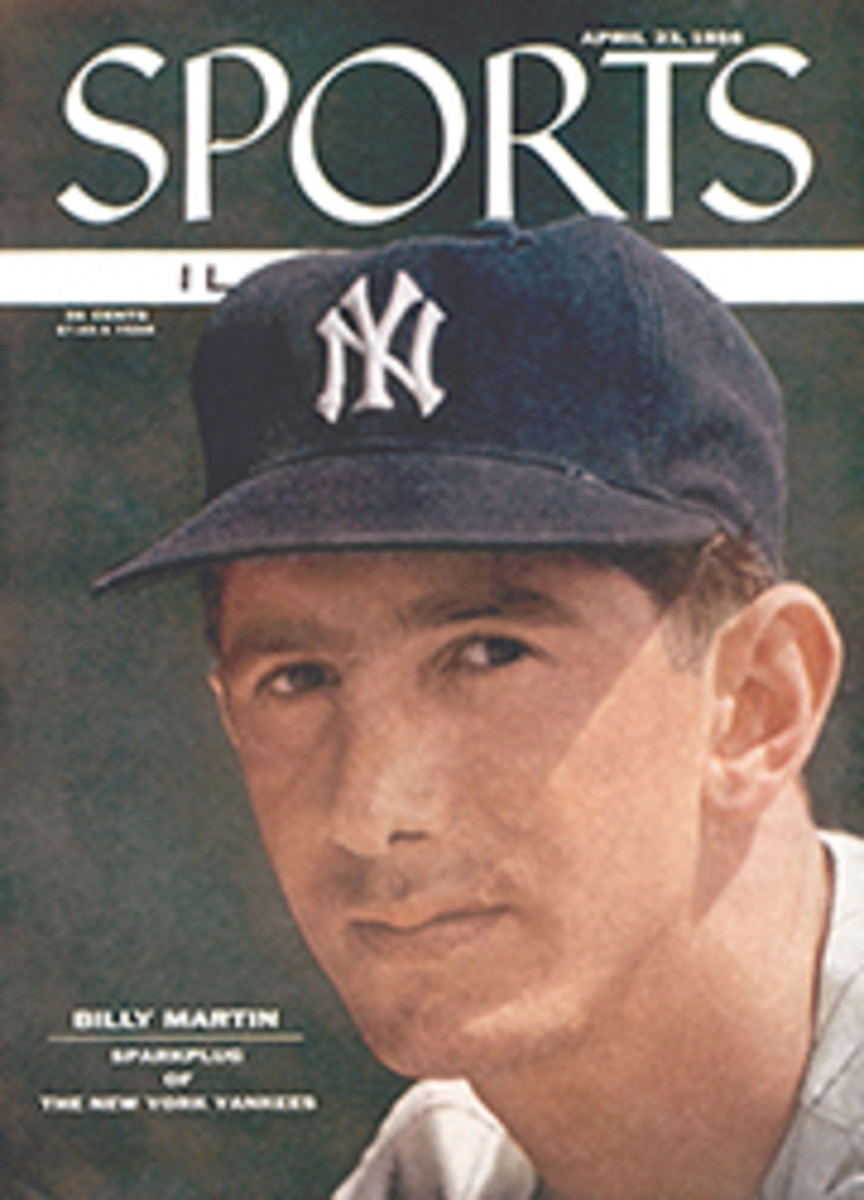
THE CASE AGAINST THE IBC
This case presents classic instances of violations of the antitrust laws. A group of men have banded together to seek domination of a field. In this, they
 vault.si.com
The funny thing is that just 14 years later in 1969 a reporter was interviewing Rocky about the "good old days" of 1950's vs the sad state of boxing then & Rocky wasn't correcting him about the reality of mob linked IBC dominating boxing & boxers (including himself) back then. Instead he joined in & was giving the usual talk about how fighters now are so risk averse & only fight for money blah blah blah
Note too all the now so called "golden age" decades that people now nostalgically jerk off to came after IBC was disbanded. Boxing produced its 2 global icons in Ali & Tyson long after the IBC was dead. The 4 kings era of Hearns, Leonard, Hagler, & Duran also came long after these events
Boxing didn't die in 1 year for lack of a Czar "to clean up the game" as Dempsey was demanding in 1937 nor did it die with the death of IBC (the closest thing to UFC that Boxing ever had), many of the people who have predicted the imminent death of boxing over the last 100+ years though are dead. For as Kid McCoy once told us here:
"Fear not, when all the kid games have faded to lore, people will still fight with their fists for money."
Last edited:
Latest posts
-
 Futbol Premier League 2025/26 Thread - v2 - From Bad To Wirtz Edition
- Latest: fingercuffs
-
 News KHAMZAT CHIMAEV – USA TOUR 2026 - Chicago tonight, NY tomorrow
- Latest: Last Falconry
-

